


Expanded Metal 1 8
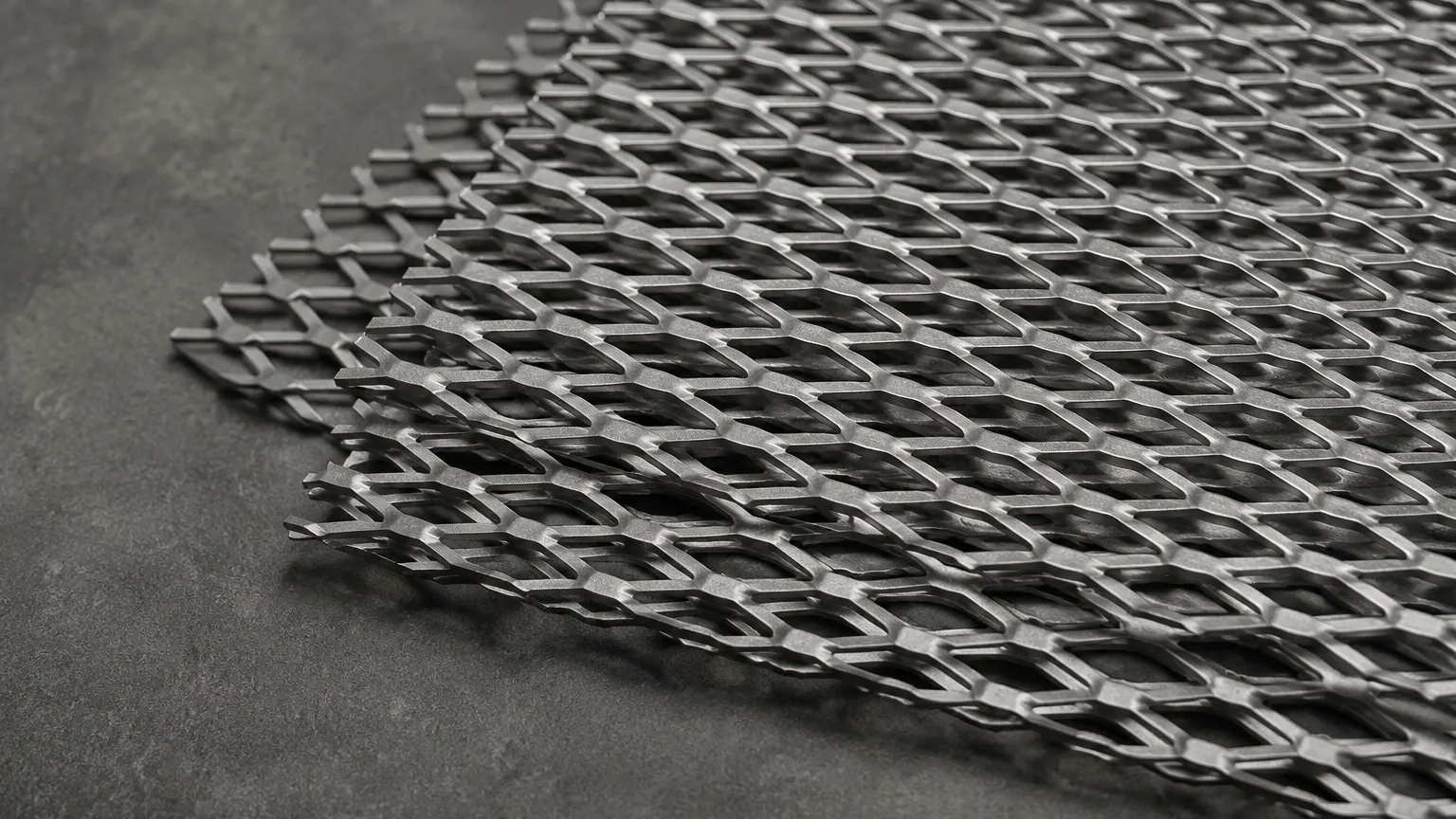
In the landscape of industrial filtration and structural reinforcement, precision in material specification is the difference between operational efficiency and system failure. Expanded metal 1 8 refers to a specific mesh size—typically characterized by a 1/8-inch Short Way of Design (SWD)—that serves as a critical component in various high-performance applications. This material is produced by simultaneously slitting and stretching a metal sheet, creating a diamond-shaped pattern without the waste associated with traditional perforation.
For engineers and procurement professionals, understanding the nuances of expanded metal 1 8 involves more than just recognizing the hole size. It requires a deep dive into material science, mechanical properties, and the specific demands of the industrial environment, whether it be chemical processing, hydraulic systems, or water treatment. As a specialist in Perforated & Expanded Metal solutions, Kaifil provides the technical expertise necessary to integrate these components into complex filtration assemblies.
Technical Dimensions and Geometry of Expanded Metal 1 8
When specifying expanded metal 1 8, the "1/8" designation usually refers to the nominal dimension of the diamond opening's short axis. However, a complete technical profile requires several other measurements to ensure the component meets the required tolerances.
SWD and LWD (Short and Long Way of Design)
* SWD (Short Way of Design): This is the distance from the center of a bond to the center of the next bond across the short axis of the diamond. In a 1/8-inch specification, this is the primary defining characteristic.
* LWD (Long Way of Design): This is the distance across the long axis of the diamond. The ratio between SWD and LWD determines the shape of the diamond and, consequently, the open area percentage.
Strand Width and Thickness
The strand width refers to the amount of metal between the openings, while the strand thickness refers to the thickness of the original base metal. These two factors are the primary drivers of the material's mechanical strength and weight. For industrial filtration, a thinner strand might be preferred to maximize flow, whereas a thicker strand is necessary for high-pressure support cores.
Open Area Percentage
The open area is a critical calculation for any filtration engineer. It dictates the flow rate and pressure drop across the medium. Expanded metal 1 8 provides a high open-area-to-weight ratio, often exceeding that of perforated metal with similar hole sizes. This makes it an ideal choice for applications where weight reduction is necessary without sacrificing structural integrity.
Material Selection for Corrosive and High-Temperature Environments
The performance of expanded metal 1 8 is heavily dependent on the alloy from which it is manufactured. In B2B industrial sectors, material selection is driven by the chemical composition of the fluid being filtered and the thermal conditions of the process.
Stainless Steel 304 and 316L
Stainless steel is the industry standard for filtration due to its excellent corrosion resistance.
* Type 304: Suitable for general industrial use, providing good resistance to oxidation and many organic and inorganic chemicals.
* Type 316L: The "L" stands for low carbon, which is essential for components that require welding. 316L contains molybdenum, providing superior resistance to chlorides and pitting, making it the preferred choice for pharmaceutical and marine applications.
Carbon Steel and Aluminum
While stainless steel is prominent in Kaifil’s filtration solutions, carbon steel is often used in hydraulic oil systems where moisture is not a primary concern but cost-effectiveness is. Aluminum expanded metal is utilized in lightweight aerospace or ventilation applications where corrosion resistance is needed but weight must be minimized.
Raised vs. Flattened Expanded Metal
One of the most important decisions an engineer must make when selecting expanded metal 1 8 is whether to use the material in its "raised" or "flattened" state.
Raised Expanded Metal (Standard)
In its standard form, the strands of the metal are set at an angle to the plane of the sheet. This creates a three-dimensional surface that provides excellent grip and a unique flow pattern. In filtration, raised expanded metal can create turbulence, which may be desirable in certain mixing or heat-exchange applications, though it also increases the overall thickness of the part.
Flattened Expanded Metal
Flattened expanded metal is produced by passing the raised sheet through a cold-roll reducing mill. This process levels the strands and bonds into a single plane, resulting in a smooth surface. Flattened expanded metal 1 8 is frequently used as a support layer for fine wire mesh filters. Because the surface is smooth, it prevents the delicate mesh from being punctured or abraded under high pressure.
Applications in Industrial Filtration Systems
Expanded metal 1 8 is a versatile component that serves multiple roles within a filtration assembly. Its primary function is often structural, but it can also serve as a coarse filtration stage.
Support Cores and Outer Guards
In stainless steel filter cartridges, the expanded metal often forms the inner core or the outer protective wrap. The 1/8-inch opening is small enough to provide continuous support to the filter media (such as pleated paper or fine wire cloth) while being large enough to ensure minimal resistance to fluid flow. This prevents the media from collapsing under the differential pressure that builds up as the filter captures contaminants.
Pre-Filtration and Debris Removal
In water treatment or large-scale chemical processing, expanded metal 1 8 can act as a primary strainer. It is effective at removing larger particulates, such as scale, wood chips, or plastic fragments, before the fluid reaches finer, more expensive filtration stages. This extends the life of the secondary filters and reduces the total cost of ownership for the system.
Flame Arrestors and EMI Shielding
Beyond fluid filtration, the precise geometry of expanded metal 1 8 is used in specialized safety equipment. In flame arrestors, the metal dissipates heat and prevents the passage of a flame front. In electronics, it can be used for EMI (Electromagnetic Interference) shielding, where the 1/8-inch diamond pattern is sized to block specific frequencies while allowing for ventilation.
Perforated & Expanded Metal: A Comparative Analysis
Choosing between Perforated & Expanded Metal is a common challenge for design engineers. Both materials offer unique advantages depending on the application requirements.
| Feature | Expanded Metal 1 8 | Perforated Metal |
| :— | :— | :— |
| Manufacturing Waste | Near zero; material is stretched. | High; slugs are punched out. |
| Strength-to-Weight | Excellent; the uncut bonds are stronger. | Good; depends on hole pattern. |
| Flow Characteristics | High open area, creates turbulence. | Consistent flow, predictable pressure drop. |
| Surface Profile | Can be 3D (raised) or flat. | Always flat. |
| Cost | Generally lower for large volumes. | Higher due to material waste and tooling. |
For applications requiring expanded metal 1 8, the primary advantage is often the structural integrity. Since the metal is not cut through at the bonds, the sheet remains a single piece of material with no joints or welds to fail. This makes it exceptionally resilient under mechanical stress.
Engineering Considerations for Integration
When integrating expanded metal 1 8 into a system, engineers must account for several mechanical and fluid dynamic factors to ensure long-term reliability.
Pressure Drop (Delta P)
Every component in a flow path introduces a pressure drop. For expanded metal, the angle of the strands in the raised version can significantly impact the coefficient of resistance. Engineers should use flow simulation or empirical testing to determine how the diamond orientation (LWD vs. SWD) relative to the flow direction affects system performance.
Edge Finishing and Welding
Expanded metal has "open" edges where the diamonds are cut. For many industrial filters, these edges must be finished or framed to prevent them from damaging seals or causing injury during maintenance. Kaifil provides custom fabrication services to ensure that expanded metal components are delivered with safe, weldable edges or integrated into complete filter housings.
Mechanical Loading and Fatigue
In hydraulic applications, filters are often subjected to pressure pulses. The fatigue resistance of expanded metal 1 8 is superior to many woven meshes because the bonds are integral to the material. However, the orientation of the mesh is important; the LWD should generally be oriented to handle the primary stress load to maximize the lifespan of the component.
Customization and Procurement Guidance
Standard off-the-shelf expanded metal may not meet the stringent requirements of specialized industrial processes. Customization is often necessary to achieve the exact filtration accuracy and mechanical durability required.
Specifying Custom Requirements
When contacting a manufacturer like Kaifil, it is helpful to provide the following specifications:
1. Material Grade: (e.g., SS316L, SS304).
2. Style: Raised or Flattened.
3. Opening Size: Confirm if 1/8 refers to the SWD or a clear opening.
4. Strand Dimensions: Thickness and width.
5. Sheet Dimensions: Width and length, or specific part drawings.
6. Quantity: For OEM production runs.
Quality Assurance and Standards
In industries such as food and beverage or pharmaceuticals, the cleanliness and finish of the metal are paramount. Kaifil ensures that all expanded metal products are free from burrs, oils, and manufacturing residues that could contaminate the process stream. Electropolishing or passivation treatments can be applied to stainless steel components to further enhance corrosion resistance and surface smoothness.
Maintenance and Total Cost of Ownership
The durability of expanded metal 1 8 contributes to a lower total cost of ownership by reducing the frequency of replacement. Unlike synthetic filter media, stainless steel expanded metal can often be cleaned and reused.
Cleaning Protocols
Depending on the contaminant, expanded metal components can be cleaned using:
* Backwashing: Reversing the flow to dislodge particles.
* Ultrasonic Cleaning: Using high-frequency sound waves in a solvent bath to remove fine particulates from the diamond intersections.
* Chemical Cleaning: Using mild acids or bases to dissolve scale or organic buildup, provided the metal alloy is compatible.
Replacement Indicators
While expanded metal is robust, it should be inspected during routine maintenance for signs of "blinding" (permanent clogging) or mechanical deformation. If the diamond pattern begins to distort, it indicates that the system is operating beyond its design pressure limits, and a thicker strand or different alloy may be required.
Conclusion
Expanded metal 1 8 is a fundamental building block in modern industrial filtration. Its unique combination of strength, high open area, and material efficiency makes it an indispensable choice for engineers designing support structures, protective guards, and coarse filtration stages. By selecting the appropriate material grade, strand thickness, and finish, purchasing teams can ensure their systems operate with maximum uptime and minimal maintenance.
As a dedicated provider of high-performance filtration components, Kaifil supports global industries with precision-engineered solutions. Whether you require standard sheets or custom-fabricated filter cores, our team is equipped to provide the technical guidance and manufacturing excellence your project demands. For more information on our capabilities and to explore our full range of products, please visit our page on Perforated & Expanded Metal.
