


Expanded Metal 1 8 Thick
In the realm of industrial filtration and structural engineering, material selection is dictated by the precise balance of mechanical strength, open area, and chemical compatibility. Among the various configurations of Perforated & Expanded Metal, the expanded metal 1 8 thick specification stands out as a robust solution for demanding environments. This thickness—equivalent to approximately 0.125 inches or 11-gauge in steel—provides the necessary rigidity to withstand high-pressure differentials while maintaining the lightweight advantages inherent to the expanded metal manufacturing process.
For engineers and procurement specialists, understanding the technical nuances of 1/8" thick expanded metal is essential for optimizing filter performance and ensuring the longevity of industrial components. This article examines the technical specifications, material considerations, and engineering applications of this specific thickness in the context of professional filtration solutions.
The Fundamentals of 1/8" Thick Expanded Metal in Industrial Applications
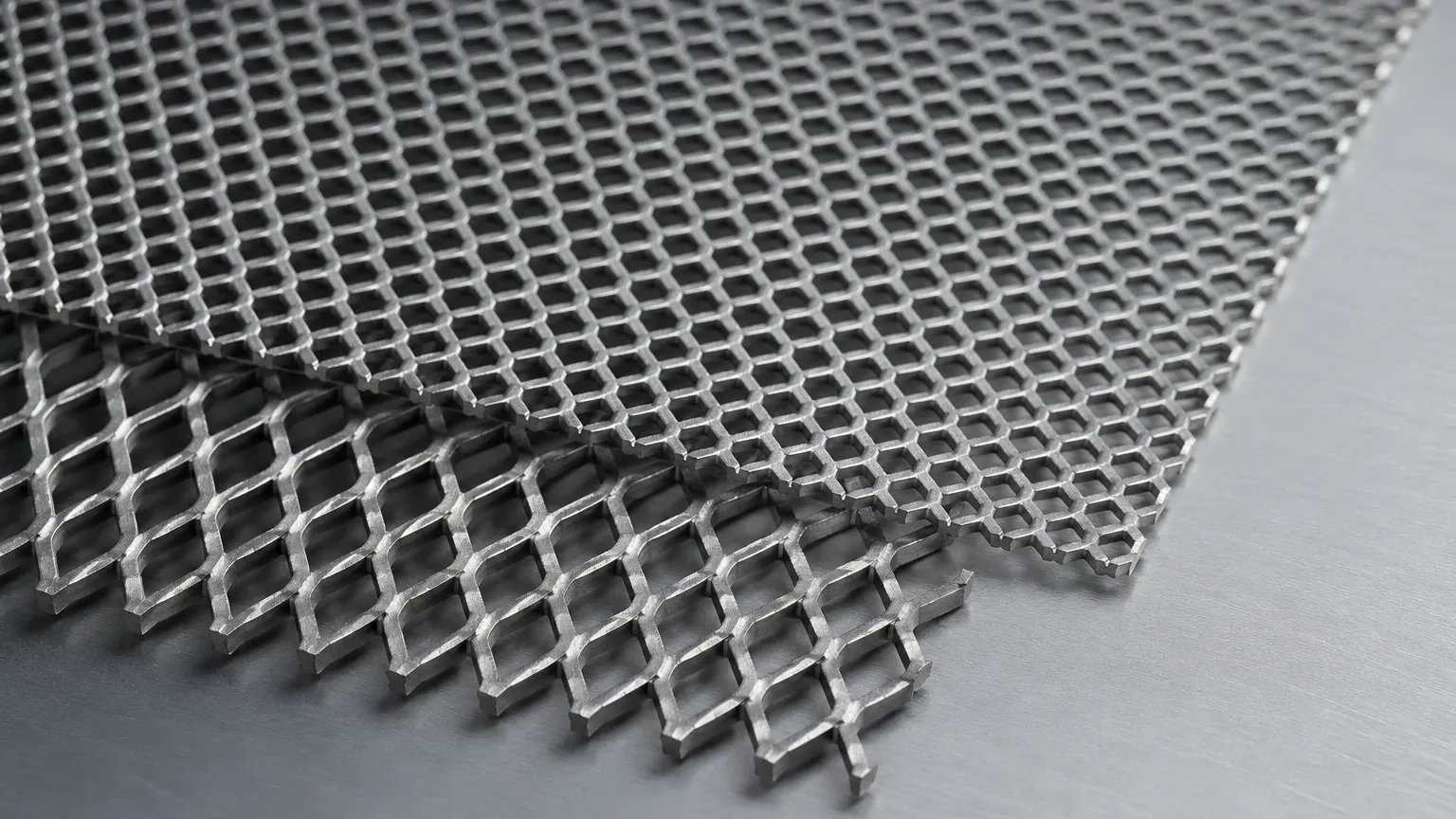
Expanded metal is produced by simultaneously slitting and stretching a solid metal sheet or plate. Unlike perforated metal, which involves punching out material and creating waste, the expanding process creates a diamond-shaped pattern without any loss of material. When specifying expanded metal 1 8 thick, the "1/8 inch" refers to the original thickness of the plate before it undergoes the expansion process.
This specific thickness is frequently categorized as "heavy-duty" in the context of filtration. While thinner gauges (such as 18 or 22 gauge) are suitable for light air filtration or decorative grilles, the 1/8" profile is engineered for industrial-grade support. In hydraulic systems, chemical processing units, and large-scale water treatment facilities, the material must resist deformation under the weight of the filter media or the force of fluid flow. The 1/8" thickness provides a high strength-to-weight ratio, making it an ideal substrate for multi-stage filtration assemblies.
Technical Specifications: LWD, SWD, and Strand Geometry
When evaluating expanded metal 1 8 thick for a project, engineers must look beyond the base thickness and consider the geometry of the diamond openings. The performance of the metal is defined by four primary measurements:
1. LWD (Long Way of Diamond): The distance from the center of one joint to the center of the next joint across the long axis of the diamond.
2. SWD (Short Way of Diamond): The distance across the short axis of the diamond.
3. Strand Width: The amount of metal fed into the expanding machine between slits. For 1/8" thick material, the strand width is often adjusted to achieve specific rigidity or open area targets.
4. Strand Thickness: In "raised" expanded metal, this is equal to the original plate thickness (1/8"). In "flattened" expanded metal, this thickness is slightly reduced during the cold-rolling process.
For filtration applications, the SWD and LWD determine the size of the particles that can be captured (if used as a primary filter) or the level of support provided to a finer wire mesh. A smaller diamond pattern with a 1/8" thickness results in a very stiff, nearly impenetrable barrier, whereas a larger diamond pattern maximizes flow while retaining structural integrity.
Material Selection: Why Stainless Steel Dominates Industrial Filtration
While 1/8" thick expanded metal can be manufactured from carbon steel or aluminum, stainless steel is the preferred choice for the industries Kaifil serves, such as pharmaceutical, food and beverage, and chemical processing. The choice of alloy significantly impacts the total cost of ownership and the safety of the filtration process.
* Stainless Steel 304: This is the standard grade for general industrial use. It offers excellent corrosion resistance and is suitable for most water treatment and hydraulic applications. Its mechanical properties ensure that the 1/8" thickness remains stable under thermal cycling.
* Stainless Steel 316/316L: For more aggressive environments, such as those involving chlorides or acidic chemicals, 316L is required. The addition of molybdenum enhances pitting resistance. In pharmaceutical and food-grade applications, the 1/8" thick 316L expanded metal ensures that the filtration system does not contaminate the product stream through oxidation or material degradation.
* Specialty Alloys: In high-temperature or highly corrosive chemical reactors, alloys like Monel or Inconel may be used, though 304 and 316 remain the industry benchmarks for the majority of custom filtration solutions.
Structural Integrity and Support in Multi-Layer Filter Elements
One of the primary roles of expanded metal 1 8 thick is serving as a support structure for finer filtration media. In a typical stainless steel filter cartridge, a fine wire mesh (which performs the actual particle separation) lacks the structural strength to resist high pressure. By wrapping or pleating the mesh around a 1/8" thick expanded metal core, the assembly can handle significant pressure drops without collapsing.
Engineering considerations for support structures include:
* Mechanical Bonding: The "bonds" (the intersections of the diamonds) in expanded metal provide natural anchor points for welding or sintering fine mesh layers.
* Resistance to Bursting: In high-pressure hydraulic applications, the 1/8" thickness ensures that the internal core of the filter does not burst outward during flow surges.
* Vibration Dampening: In industrial machinery, constant vibration can cause thinner metals to fatigue and crack. The mass and rigidity of 1/8" thick material provide superior fatigue resistance, extending the replacement cycle of the filter element.
Flattened vs. Raised Expanded Metal: Choosing the Right Profile
When ordering Perforated & Expanded Metal, engineers must specify whether they require a "raised" (standard) or "flattened" profile. This decision is critical when working with a specific thickness like 1/8".
* Raised Expanded Metal: This is the material as it comes off the expanding machine. The strands are set at an angle to the plane of the sheet. This creates a three-dimensional surface that can help break up laminar flow and increase turbulence, which is sometimes desirable in heat exchange or specific mixing-filtration applications. However, the overall "depth" of a 1/8" raised sheet will be significantly greater than 1/8".
* Flattened Expanded Metal: The raised sheet is passed through a cold-rolling reducing mill. This flattens the strands and bonds into a single plane. For filtration, flattened expanded metal is often preferred because it provides a smooth surface that will not tear or abrade the fine wire mesh layers placed against it. It also allows for more precise tolerances in the outer diameter (OD) and inner diameter (ID) of cylindrical filter cartridges.
Engineering Considerations for Flow Control and Pressure Drop
The "Open Area" percentage is a vital metric for any filtration component. With expanded metal 1 8 thick, the open area is determined by the relationship between the strand width and the diamond size.
In B2B procurement, it is common to encounter a trade-off: increasing the thickness to 1/8" improves strength but can decrease the open area if the diamond size is kept small. Engineers must calculate the required flow rate (GPM or CFM) and ensure that the expanded metal support does not create an excessive pressure drop (Delta P).
Kaifil’s engineering team often assists clients in selecting the optimal diamond configuration to ensure that the 1/8" thickness provides maximum reinforcement without impeding the efficiency of the fluid system. For example, in high-viscosity oil filtration, a larger diamond with a 1/8" thickness is often used to minimize resistance while still preventing the filter mesh from deforming.
Quality Control and Procurement Guidelines for Engineers
When sourcing expanded metal 1 8 thick for industrial use, several factors must be confirmed to ensure the material meets the rigorous standards of sectors like aerospace, pharmaceutical, or chemical processing. Before finalizing a purchase, technical teams should verify the following:
1. Material Certification: Ensure the stainless steel (304, 316, etc.) meets ASTM or ISO standards to prevent premature failure due to incorrect alloy composition.
2. Dimensional Tolerances: For custom filter components, tolerances on the LWD and SWD are critical. Even minor deviations can affect the fit of the filter within its housing.
3. Surface Finish: In the food and beverage industry, the expanded metal must be free of burrs, oils, and manufacturing residues. Electropolishing or ultrasonic cleaning may be required for 1/8" thick components to ensure they meet sanitary standards.
4. Weldability: Since 1/8" thick material is often welded into cylinders or frames, the carbon content (e.g., using 316L instead of 316) should be considered to prevent carbide precipitation during the welding process.
Conclusion
Selecting expanded metal 1 8 thick is a strategic decision for industrial applications requiring high durability and reliable support. Its ability to serve as a rigid skeleton for complex filtration systems makes it indispensable in high-pressure and corrosive environments. By understanding the geometric variables, material properties, and the differences between raised and flattened profiles, engineers can specify components that optimize both performance and longevity.
Kaifil provides professional, customized filtration solutions, leveraging advanced manufacturing to deliver precision metal components. Whether you require standard sheets or custom-fabricated filter cores, our expertise ensures that your Perforated & Expanded Metal requirements are met with technical precision and industrial-grade quality.
