


Expanded Metal 4 8
In the landscape of industrial fabrication and filtration, expanded metal remains one of the most versatile and cost-effective materials available. Among the various formats produced, the expanded metal 4 8 sheet—referring to the standard 4-foot by 8-foot dimensions—serves as the foundational unit for a wide array of engineering applications. From providing structural support in high-pressure filtration systems to serving as primary screening media in heavy-duty industrial environments, understanding the technical specifications and material properties of these sheets is essential for effective procurement and system design.
At Kaifil, we specialize in precision metal components, integrating Perforated & Expanded Metal into comprehensive filtration solutions. This article provides a technical overview of the engineering considerations, material selections, and performance metrics associated with 4' x 8' expanded metal sheets in professional B2B contexts.
Understanding the Geometry of Expanded Metal 4 8
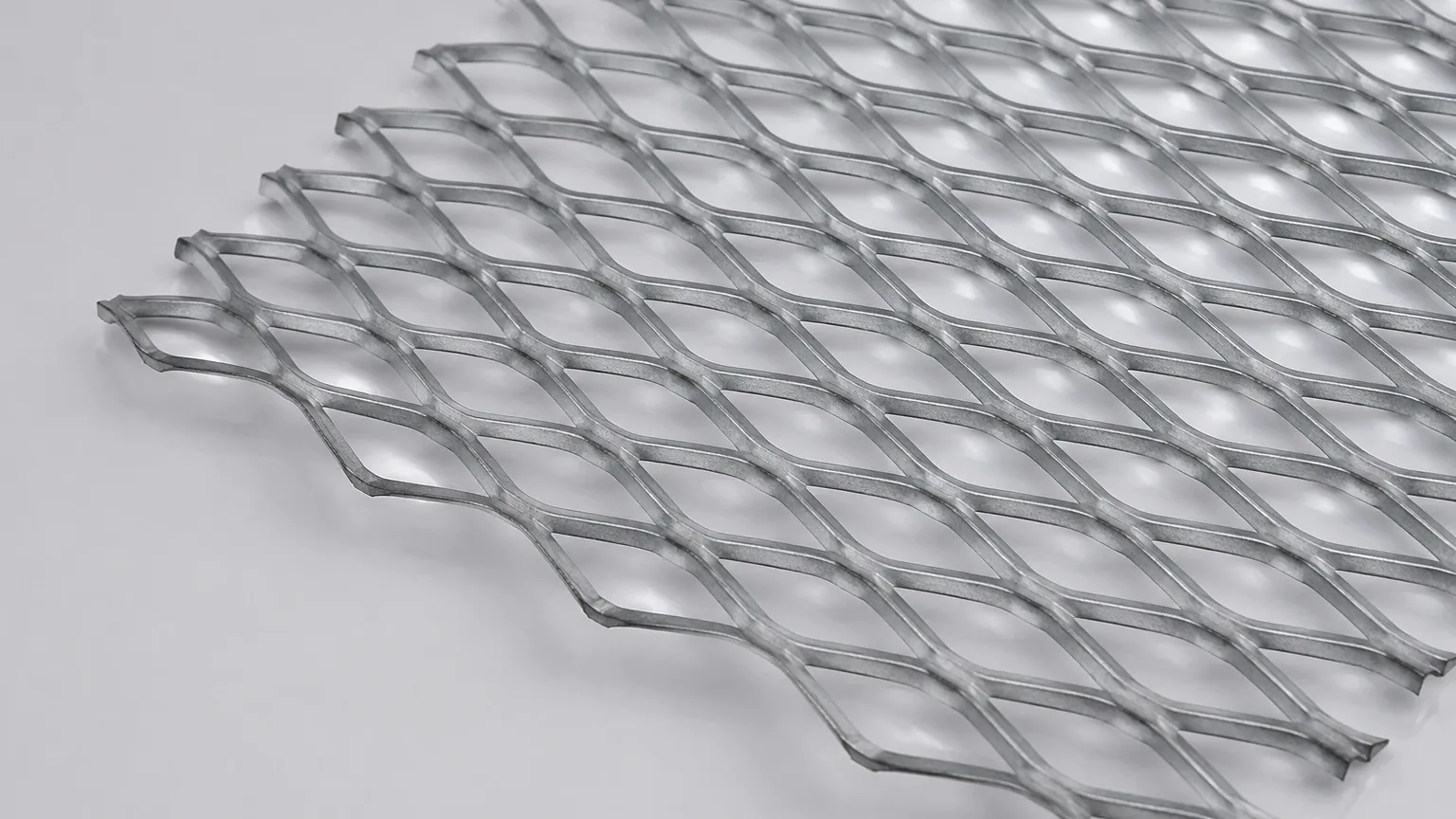
Unlike perforated metal, which is created by punching holes and removing material, expanded metal is manufactured by simultaneously slitting and stretching the base metal. This process creates a diamond-shaped pattern without any material waste, making it an inherently sustainable and cost-efficient choice. When specifying an expanded metal 4 8 sheet, engineers must look beyond the outer dimensions and focus on the internal geometry of the mesh.
SWD and LWD Dimensions
The diamond pattern is defined by two primary measurements: the Short Way of Design (SWD) and the Long Way of Design (LWD).
* SWD (Short Way of Design): The distance from the center of one bond to the center of the next bond measured across the short diamond diagonal.
* LWD (Long Way of Design): The distance from the center of one bond to the center of the next bond measured across the long diamond diagonal.
In a standard 4' x 8' sheet, the orientation of these diamonds is critical. Typically, the LWD runs parallel to the length of the sheet (the 8-foot side), while the SWD runs parallel to the width (the 4-foot side). However, for specific filtration or architectural requirements, "reversed diamond" orientations can be manufactured. Engineers must confirm the direction of the diamond pattern to ensure the material performs as expected under mechanical stress or fluid flow.
Strand Width and Thickness
The performance of the mesh is further dictated by the strand width (the amount of metal between the openings) and the strand thickness (the thickness of the original base metal). These factors determine the weight per square foot and the overall structural integrity of the sheet. For industrial filtration, thinner strands may be preferred for higher open area percentages, whereas thicker strands are necessary for support grids in high-viscosity hydraulic applications.
Material Selection for Industrial Filtration Environments
The longevity and performance of expanded metal are heavily dependent on the alloy selected. Because Kaifil focuses on demanding industrial sectors like chemical processing and pharmaceuticals, material compatibility is a primary engineering concern.
Stainless Steel (304, 316, and 316L)
Stainless steel is the gold standard for expanded metal used in filtration.
* Grade 304: Offers excellent corrosion resistance and strength for general industrial use, such as water treatment or HVAC pre-filtration.
* Grade 316/316L: Contains molybdenum, which provides superior resistance to chlorides and pitting. This is the preferred choice for marine environments, pharmaceutical processing, and chemical filtration where aggressive cleaning agents or corrosive fluids are present.
Carbon Steel and Galvanized Options
For applications where corrosion is less of a concern, or where the metal will be coated or submerged in non-corrosive oils (such as in certain hydraulic systems), carbon steel expanded metal 4 8 sheets provide a high strength-to-weight ratio at a lower price point. Galvanized steel offers a middle ground, providing a protective zinc coating that prevents oxidation in outdoor or humid environments.
Specialty Alloys
In high-temperature or highly acidic environments, specialty alloys like Monel, Inconel, or Titanium may be required. These materials ensure that the expanded metal structure does not degrade or leach contaminants into the process stream, which is vital for maintaining the purity of food and beverage or pharmaceutical products.
Standard vs. Flattened Expanded Metal
When sourcing expanded metal 4 8 sheets, one of the most important distinctions is whether the material is "standard" (raised) or "flattened."
Standard (Raised) Expanded Metal
In its standard form, the strands are set at a sharp angle to the plane of the sheet. This creates a three-dimensional surface that offers several advantages:
* Rigidity: The angled strands provide significant structural strength, making it ideal for walkways, grates, or heavy-duty filter supports.
* Flow Dynamics: The raised edges can help break up fluid flow, which may be beneficial in certain mixing or coarse-filtration applications.
* Grip: The textured surface provides natural slip resistance.
Flattened Expanded Metal
Flattened expanded metal is produced by passing the standard expanded sheet through a cold-roll reducing mill. This process flattens the strands and bonds into a single plane, resulting in a smooth, flat surface.
* Precision Filtration: Flattened metal is often used as a support substrate for fine wire mesh. The smooth surface prevents the delicate mesh from being damaged or punctured by the raised edges of a standard expanded sheet.
* Uniform Thickness: Flattening ensures a consistent thickness across the entire 4' x 8' sheet, which is critical for components that must fit into tight tolerances within filter housings.
* Ease of Cleaning: The flat surface is easier to sanitize, making it the preferred choice for food processing and pharmaceutical applications.
Engineering Calculations: Open Area and Flow Rates
For engineers designing filtration systems, the "Open Area" percentage is perhaps the most critical metric. This value determines the pressure drop across the filter and the volume of fluid that can pass through the medium per unit of time.
Calculating the open area of expanded metal is more complex than with perforated metal due to the angled strands. However, as a general rule, the open area is determined by the relationship between the strand width and the SWD. A larger SWD with a narrower strand width results in a higher open area and lower flow resistance.
In high-velocity systems, engineers must also consider the "Effective Open Area," which accounts for the angle of the strands in raised expanded metal. If the fluid hits the sheet at an angle, the apparent obstruction may be higher than the calculated flat open area. This is why flattened expanded metal is often preferred when precise flow calculations are required.
Common Applications for 4' x 8' Expanded Metal Sheets
The 4' x 8' format is widely used across various industries due to its compatibility with standard fabrication equipment and transport methods. In the context of industrial filtration and component manufacturing, these sheets are typically utilized in the following ways:
1. Filter Support Cores: Expanded metal is rolled into cylinders to act as the internal or external support core for pleated filter cartridges. This prevents the filter media from collapsing under high differential pressure.
2. Strainers and Coarse Filters: In water treatment and chemical processing, expanded metal 4 8 sheets are cut and formed into large-scale baskets or strainers to remove large debris from process streams.
3. Diffuser Plates: The diamond pattern helps to evenly distribute gas or liquid flow across a larger surface area, preventing channeling in filtration beds.
4. Protective Guards: Expanded metal provides a robust barrier for sensitive filtration equipment, protecting it from mechanical damage while allowing for adequate ventilation and visibility.
5. Acoustic Damping: When combined with specialized acoustic media, expanded metal sheets are used in industrial environments to reduce noise levels from high-pressure machinery.
Quality Control and Procurement Considerations
When purchasing expanded metal 4 8 sheets for technical applications, several quality factors must be confirmed with the manufacturer to avoid system failure or premature wear.
Tolerances and Squareness
Standard commercial tolerances for expanded metal can vary. For precision engineering, it is vital to specify tolerances for the sheet dimensions (length and width), the diamond size (SWD and LWD), and the flatness. A sheet that is out of square can lead to significant alignment issues during the welding or assembly of filter housings.
Surface Finish and Cleanliness
For the pharmaceutical and food industries, the surface finish of the expanded metal is paramount. Burrs or sharp edges left over from the slitting process can trap contaminants or shed metal particles into the process stream. Kaifil recommends secondary processes such as:
* Deburring: Removing sharp edges through mechanical or chemical means.
* Pickling and Passivation: For stainless steel, these processes remove surface impurities and restore the protective oxide layer, ensuring maximum corrosion resistance.
* Electropolishing: Provides a mirror-like finish and the highest level of cleanliness for sterile environments.
Total Cost of Ownership (TCO)
While carbon steel or lower-grade alloys may have a lower initial purchase price, engineers should evaluate the Total Cost of Ownership. In many industrial applications, the cost of system downtime and filter replacement far outweighs the initial investment in high-quality 316L stainless steel expanded metal. Choosing a durable, corrosion-resistant material ensures a longer service life and more reliable performance.
Customization Beyond the Standard Sheet
While the expanded metal 4 8 sheet is the industry standard, many complex filtration projects require customized dimensions or secondary processing. At Kaifil, we provide comprehensive OEM services that transform raw expanded metal into ready-to-install components. This includes precision shearing, circular cutting, forming, and welding into custom shapes or multi-layered filter assemblies.
By working closely with an experienced manufacturer, engineers can optimize the mesh design—adjusting the SWD, LWD, and strand thickness—to meet the specific pressure, flow, and filtration requirements of their unique application.
Conclusion
Expanded metal 4 8 sheets are a staple of industrial engineering, offering a unique combination of strength, open area, and cost-efficiency. Whether used as a primary filter or a structural support for finer media, the success of the component depends on a deep understanding of material grades, diamond geometry, and surface finishes. By focusing on technical accuracy and selecting the appropriate specifications for the environment, purchasing teams and engineers can ensure their filtration systems operate at peak efficiency with minimal maintenance requirements.
