


Expanded Metal #7
In industrial filtration and structural engineering, the selection of support media is as critical as the selection of the primary filtration layer. Expanded metal, a versatile material produced by simultaneously slitting and stretching a metal sheet, provides a unique combination of structural rigidity and permeability. Among the various specifications available, expanded metal #7—often referring to a specific gauge or weight-based designation—serves as a robust solution for demanding industrial environments.
For engineers and procurement professionals, understanding the technical nuances of expanded metal #7 is essential for optimizing the performance of filtration systems, protective guards, and structural components. This guide examines the technical specifications, material considerations, and application-specific benefits of this material within the context of high-performance industrial filtration.
Understanding Expanded Metal #7 in Industrial Applications
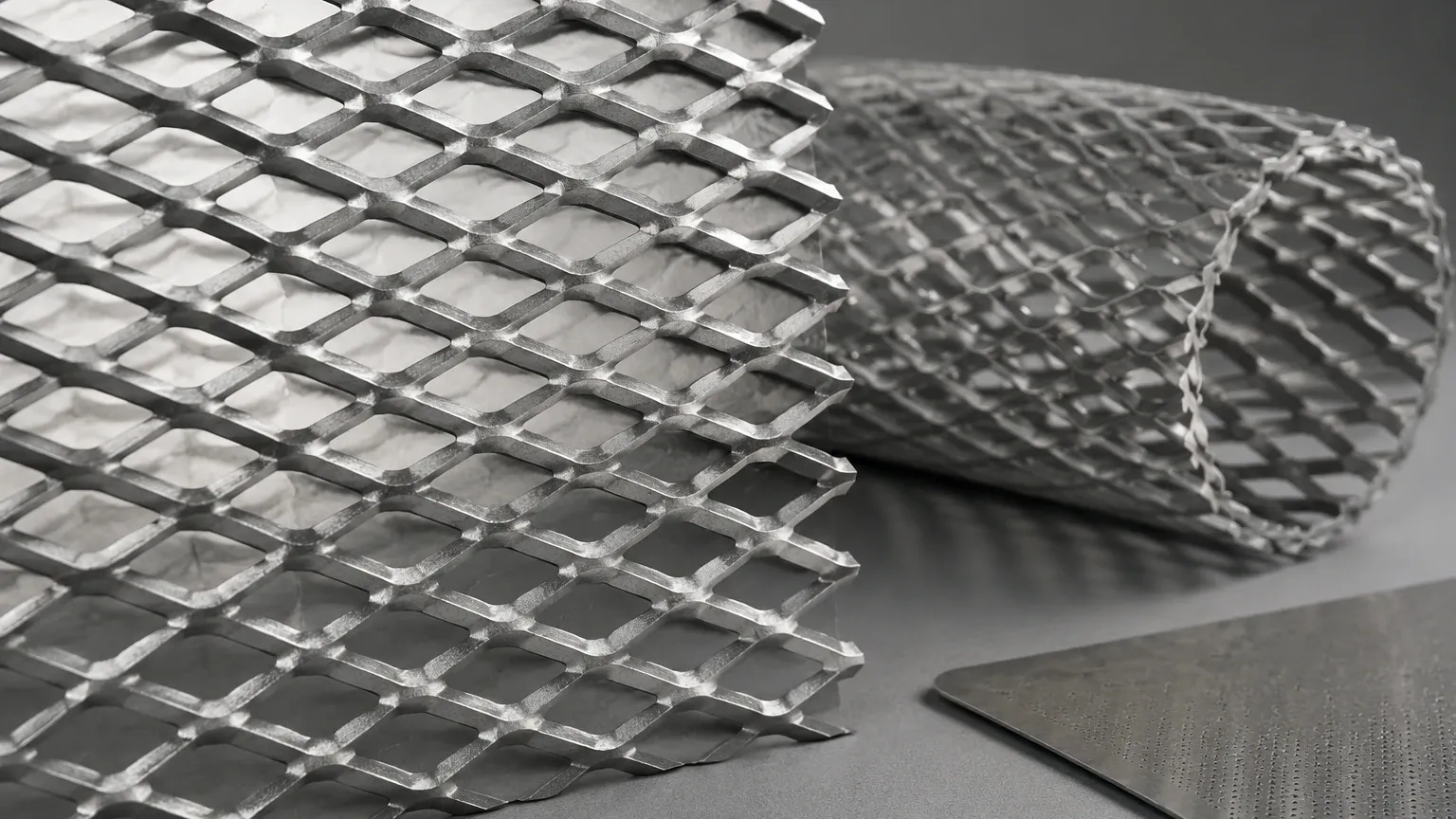
Expanded metal is manufactured through a cold-forming process that expands a solid sheet into a diamond-patterned mesh. Unlike woven wire mesh or perforated sheets, expanded metal is a single-piece construction with no joins or welds. This inherent structural integrity makes it ideal for applications where mechanical stress and vibration are prevalent.
The designation "#7" typically refers to the thickness or the weight per square foot, depending on the specific industrial standard being cited (such as the traditional gauge system or manufacturer-specific numbering). In many contexts, expanded metal #7 corresponds to a heavy-duty 7-gauge material, providing significant thickness (approximately 0.180 inches or 4.5mm) and high load-bearing capacity. This makes it a preferred choice for heavy-duty filtration housings and support structures where thinner materials might fail under hydraulic pressure or mechanical impact.
Technical Specifications and Structural Geometry
To specify expanded metal #7 correctly, engineers must look beyond the simple numerical designation and evaluate the geometry of the diamond opening. The performance of the mesh is defined by several key parameters:
* SWD (Short Way of Diamond): The distance from the center of a bond to the center of the next bond across the short axis of the diamond.
* LWD (Long Way of Diamond): The distance across the long axis of the diamond.
* Strand Width: The amount of metal fed into the expanding machine between slits.
* Strand Thickness: The gauge of the original base metal.
* Open Area: The percentage of the total area that allows for the passage of fluids or air.
For expanded metal #7, the open area is a critical calculation. In filtration, a high open area is generally desired to minimize pressure drop, but this must be balanced against the need for structural support. Because expanded metal is stretched, the strands are set at an angle to the plane of the sheet. This creates a three-dimensional profile that can influence flow dynamics, often creating beneficial turbulence in certain chemical processing applications.
Material Selection: Stainless Steel vs. Carbon Steel
While expanded metal can be produced from various alloys, stainless steel is the standard for industrial filtration due to its chemical compatibility and thermal stability. When evaluating Perforated & Expanded Metal for high-stakes environments, material selection is the first line of defense against premature failure.
1. 304 Stainless Steel: The most common grade, offering excellent corrosion resistance for water treatment and general industrial use.
2. 316/316L Stainless Steel: Contains molybdenum, providing superior resistance to chlorides and pitting. This is the preferred choice for pharmaceutical, food and beverage, and marine applications.
3. Specialty Alloys: In highly corrosive chemical processing, materials like Monel, Inconel, or Duplex stainless steel may be required to maintain the integrity of the expanded metal #7 structure.
Choosing the right material ensures that the filter support does not become a source of contamination through oxidation or chemical degradation, which is a common risk in pharmaceutical and food-grade processes.
The Role of Expanded Metal in Filtration Systems
Expanded metal #7 is rarely used as the primary filtration medium for fine particles; instead, it serves as a critical functional component in complex filter assemblies. Its primary roles include:
Structural Support Cores
In high-pressure hydraulic or liquid filtration, fine wire mesh or pleated paper media lack the structural strength to withstand the differential pressure. Expanded metal #7 is rolled into cylinders to act as an internal core or an external cage, preventing the primary media from collapsing or bursting.
Pre-Filtration and Large Particle Removal
In systems dealing with heavy debris—such as raw water intake or industrial wastewater—expanded metal #7 acts as a primary screen. Its rigid diamond pattern effectively captures large solids, protecting downstream pumps and finer filtration stages from mechanical damage.
Pleat Support
For pleated filter cartridges, expanded metal provides a rigid backing that maintains the spacing between pleats. This ensures that the maximum surface area of the filter media remains exposed to the fluid flow, preventing "pleat bunching" which can lead to localized clogging and increased pressure drop.
Evaluating Performance: Flow Rate and Pressure Drop
Engineers must carefully evaluate the impact of expanded metal #7 on the system's overall hydraulic profile. Because the strands of expanded metal are angled (in "raised" or "standard" expanded metal), they do not present a flat surface to the flow.
This geometry can cause a higher pressure drop compared to a perforated sheet of the same open area. However, the 3D nature of the mesh can also be leveraged to promote mixing or to break up laminar flow, which can be advantageous in heat exchange or specific catalytic reactions. If a low profile is required to minimize flow resistance or to provide a smooth surface for bonding to other layers, "flattened" expanded metal is used. Flattened expanded metal #7 is processed through a cold-rolling mill, which reduces the thickness and levels the strands into a single plane.
Common Risks and Quality Control in Procurement
When sourcing expanded metal #7 for OEM projects, several technical risks must be mitigated to ensure the longevity of the filtration system:
* Burrs and Sharp Edges: The slitting and stretching process can leave sharp edges on the strands. In filtration, these burrs can puncture fine wire mesh or delicate membranes. High-quality manufacturers like Kaifil utilize deburring and polishing processes to ensure the metal is safe for multi-layer assembly.
* Dimensional Tolerances: Variation in SWD or LWD can lead to fitment issues in precision-engineered filter housings. Confirming tight tolerances on the camber and out-of-squareness of the sheets is vital.
* Material Certification: For industries such as food and beverage or pharmaceuticals, material traceability is non-negotiable. Procurement teams should always request mill test reports (MTRs) to verify the chemical composition of the stainless steel.
* Flatness Issues: In flattened expanded metal, improper rolling can lead to "waves" in the sheet, which complicates the welding or forming of filter cartridges.
Customization and OEM Considerations
Industrial filtration often requires bespoke solutions that standard off-the-shelf expanded metal cannot provide. When working with a specialized manufacturer, engineers should consider the following customization options for expanded metal #7:
* Custom Dimensions: Ordering sheets or coils cut to exact sizes reduces material waste and streamlines the manufacturing process for filter cages.
* Forming and Welding: Expanded metal can be difficult to weld due to the open areas. Specialized resistance welding or TIG welding techniques are often required to create seamless cylindrical supports.
* Surface Finishes: Electropolishing or passivating stainless steel expanded metal #7 enhances its corrosion resistance and ensures a clean, smooth surface free of microscopic contaminants.
* Hybrid Designs: Combining expanded metal with perforated metal or fine wire mesh in a single welded assembly can optimize both strength and filtration precision.
Conclusion: Making Informed Purchasing Decisions
Expanded metal #7 is a powerhouse component in the industrial filtration world, offering the durability and structural integrity required for the most demanding applications. By focusing on the technical details—from diamond geometry and open area to material grades and finishing processes—engineers can ensure their filtration systems operate at peak efficiency with minimal downtime.
When selecting a partner for these components, it is essential to choose a manufacturer that understands the intersection of metallurgy and filtration science. A deep expertise in Perforated & Expanded Metal allows for the development of customized solutions that address specific pressure, temperature, and chemical challenges, ultimately reducing the total cost of ownership through extended service life and improved performance.
Before proceeding with a purchase, technical teams should confirm the exact SWD/LWD requirements, the necessity of flattened versus raised profiles, and the specific environmental conditions the material will face. This proactive approach ensures that the expanded metal #7 integrated into your project is not just a component, but a high-performance asset.
