


Expanded Metal 7504
In the landscape of industrial filtration and structural support, expanded metal remains a cornerstone material due to its unique combination of strength, ventilation, and cost-efficiency. Among the various specifications available to engineers and procurement teams, expanded metal 7504 stands out as a versatile standard often utilized in demanding environments. This technical guide explores the specifications, engineering considerations, and application nuances of the 7504 pattern, particularly within the context of high-performance filtration and industrial shielding.
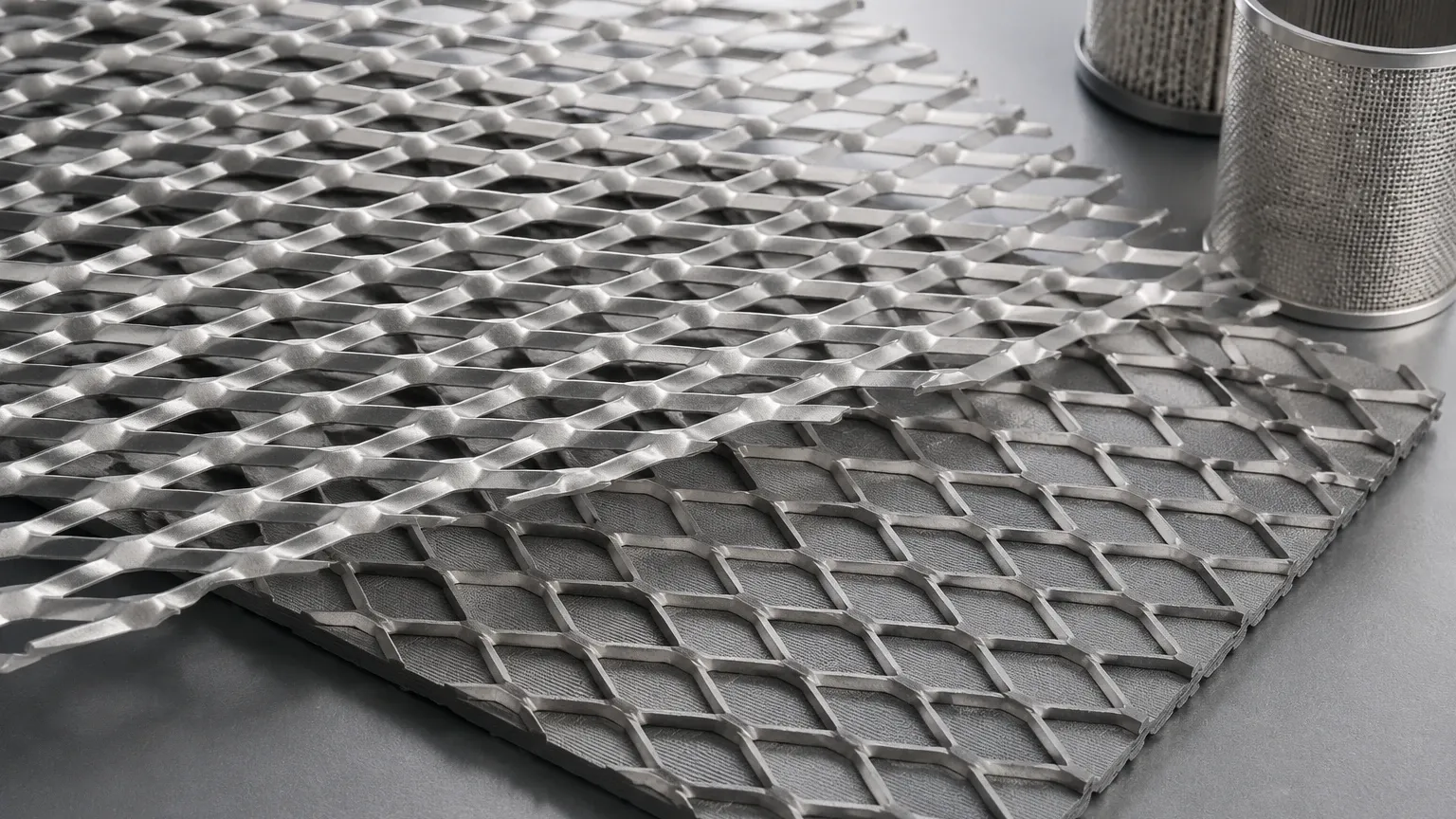
Understanding the technical nuances of expanded metal 7504 is essential for ensuring that the material meets the rigorous demands of chemical processing, hydraulic systems, and architectural safety. Unlike woven wire mesh, expanded metal is produced from a single sheet of material that is simultaneously slit and stretched, resulting in a jointless structure that maintains its integrity even when cut into complex shapes.
Decoding the Expanded Metal 7504 Specification
The nomenclature in the expanded metal industry can vary slightly between manufacturers, but "7504" typically refers to a specific diamond size and strand configuration. In most industrial contexts, the "75" denotes the Long Way of the Diamond (LWD), which is approximately 0.75 inches (3/4"). The "04" suffix often identifies the specific gauge or the strand width and thickness combination designed for medium-duty applications.
Geometric Properties
When evaluating expanded metal 7504, engineers must focus on four primary dimensions:
1. LWD (Long Way of Diamond): The distance from a point on a diamond to the corresponding point on the next diamond measured across the long axis. For 7504, this is nominally 0.75 inches.
2. SWD (Short Way of Diamond): The distance across the short axis. This dimension influences the "openness" of the pattern and the flow rate in filtration applications.
3. Strand Width: The amount of metal between the diamonds. This determines the overall weight and mechanical strength of the sheet.
4. Strand Thickness: The thickness of the base metal used. In stainless steel variants, this is a critical factor for corrosion resistance and pressure ratings.
Standard vs. Flattened 7504
Expanded metal 7504 is available in two primary forms: standard (raised) and flattened. Standard expanded metal features strands that are turned at a sharp angle to the plane of the sheet, providing a slip-resistant surface and high structural rigidity. However, for filtration applications—where the expanded metal often serves as a support layer for finer wire mesh—flattened 7504 is preferred. Flattening involves passing the standard expanded metal through a cold-roll reducing mill, which levels the strands and creates a smooth, consistent surface that prevents mechanical wear on adjacent filter media.
Material Selection for Expanded Metal 7504
The performance of expanded metal 7504 is heavily dependent on the alloy selected. While carbon steel is common for general industrial use, Perforated & Expanded Metal solutions for the filtration industry almost exclusively utilize stainless steel or high-nickel alloys to ensure longevity in corrosive environments.
Stainless Steel 304 and 316L
Stainless steel 304 is the standard choice for general-purpose filtration and guarding. It offers excellent formability and sufficient corrosion resistance for most indoor and non-acidic outdoor applications. However, in chemical processing, marine environments, or pharmaceutical production, 316L stainless steel is the preferred specification. The addition of molybdenum in 316L provides superior resistance to pitting and crevice corrosion, which is vital when the expanded metal 7504 is exposed to chlorides or high-temperature cleaning cycles.
Specialty Alloys
For extreme environments, such as those found in petrochemical refining or aerospace, expanded metal 7504 may be manufactured from Monel, Inconel, or Titanium. These materials are selected when the total cost of ownership is calculated based on the frequency of replacement in highly aggressive chemical streams. Choosing the correct alloy for your 7504 specification ensures that the filtration system remains operational without premature structural failure due to oxidation or chemical degradation.
The Role of Expanded Metal 7504 in Industrial Filtration
In the filtration industry, expanded metal 7504 is rarely used as the primary filtration medium for fine particles. Instead, it serves as a critical structural component within complex filter cartridges and strainers. Its role is twofold: providing mechanical support and managing fluid dynamics.
Pleat Support and Cage Construction
In pleated filter cartridges, the delicate filter media (such as fiberglass or fine stainless steel wire mesh) must be supported against the force of high-pressure fluid flow. Expanded metal 7504 is often used as an outer wrap or an inner core. Its diamond-shaped openings provide a high percentage of open area, ensuring that the pressure drop across the filter remains low while the rigid structure prevents the pleats from collapsing or deforming under surge pressures.
Pre-Filtration and Coarse Straining
In large-scale water treatment or intake systems, expanded metal 7504 can act as a pre-filter. Its 3/4-inch LWD is ideal for capturing large debris, such as stones, wood chips, or plastic waste, before the fluid reaches more sensitive downstream filtration stages. Because the expanded metal is a single piece of material, it does not suffer from the "wire migration" issues that can occur with woven mesh under high-velocity flow, making it a safer choice for protecting expensive pumps and valves.
Engineering Considerations: Open Area and Flow Rates
One of the most critical metrics for any engineer specifying expanded metal 7504 is the percentage of open area. This figure dictates the flow capacity and the velocity of the fluid passing through the material. A higher open area reduces resistance (pressure drop) but may compromise the structural integrity of the sheet.
When designing a system around expanded metal 7504, it is necessary to calculate the "Effective Open Area." This is not just the geometric percentage of the holes but also accounts for the angle of the strands (in standard/raised versions) and how they might deflect flow. In filtration, an optimized 7504 pattern ensures that the fluid is evenly distributed across the surface of the primary filter media, preventing "hot spots" where high velocity could cause localized clogging or media breakthrough.
Evaluating Quality and Minimizing Risks in Procurement
Procuring expanded metal 7504 for industrial applications requires a focus on precision and material traceability. Substandard manufacturing can lead to several risks that compromise the efficiency of a filtration system or the safety of an industrial guard.
Common Manufacturing Defects to Avoid
* Camber: This refers to the bow in a sheet of expanded metal. For automated filter assembly lines, high camber can cause misalignment and machine downtime. High-quality 7504 should be leveled to strict tolerances.
* Burrs and Sharp Edges: In filtration, burrs on the expanded metal can puncture the fine mesh it is meant to support. Ensuring the material is properly deburred or flattened is a non-negotiable requirement for high-performance applications.
* Inconsistent Diamond Size: Variations in the LWD or SWD across a single sheet indicate poor tension control during the expansion process. This inconsistency can lead to uneven pressure distribution in hydraulic filters.
Verification and Certification
B2B buyers should always request Material Test Reports (MTRs) to verify the chemical composition of the alloy. Furthermore, for applications in the food and beverage or pharmaceutical sectors, it is essential to confirm that the expanded metal 7504 has been cleaned of residual lubricants used during the slitting process. Ultrasonic cleaning or chemical passivation may be required to meet industry hygiene standards.
Customization Options for 7504 Patterns
While expanded metal 7504 is a standard designation, it can be customized to meet specific project requirements. Manufacturers like Kaifil specialize in tailoring these components to fit unique engineering envelopes. Customization options include:
* Custom Sheet Sizes: Reducing waste by ordering sheets cut to the exact dimensions of the filter housing or guard frame.
* Edge Treatments: Options for "bond edges" (where the diamonds are closed) or "random edges" (where the diamonds are cut through) are available depending on whether the material will be welded or framed.
* Surface Coatings: Beyond the base metal properties, expanded metal can be powder-coated, galvanized, or electro-polished to enhance corrosion resistance or aesthetic appeal.
Conclusion: Selecting the Right Partner for Expanded Metal 7504
Selecting expanded metal 7504 involves more than just picking a part number from a catalog. It requires a deep understanding of how the material’s geometry, alloy, and finish will interact with the specific demands of the application. Whether used as a support structure in a high-pressure hydraulic filter or as a protective screen in a chemical reactor, the quality of the expanded metal directly impacts the reliability of the entire system.
For engineers and procurement professionals, the priority should be sourcing from manufacturers who understand the technical rigors of filtration. By focusing on dimensional accuracy, material purity, and application-specific customization, organizations can optimize their filtration performance and reduce long-term maintenance costs. When your project requires precision-engineered Perforated & Expanded Metal, confirming the exact tolerances and material grades with a specialist manufacturer is the most effective path to operational success.
