


Expanded Metal 7507
In the realm of industrial filtration and structural support, expanded metal 7507 represents a specific technical specification valued for its high strength-to-weight ratio and mechanical rigidity. As a specialized variant within the broader category of Perforated & Expanded Metal, this material is engineered to withstand demanding environments, particularly in chemical processing, hydraulic systems, and heavy-duty industrial filtration. Understanding the nuances of the 7507 designation is critical for engineers and procurement teams who must balance flow efficiency with structural integrity.
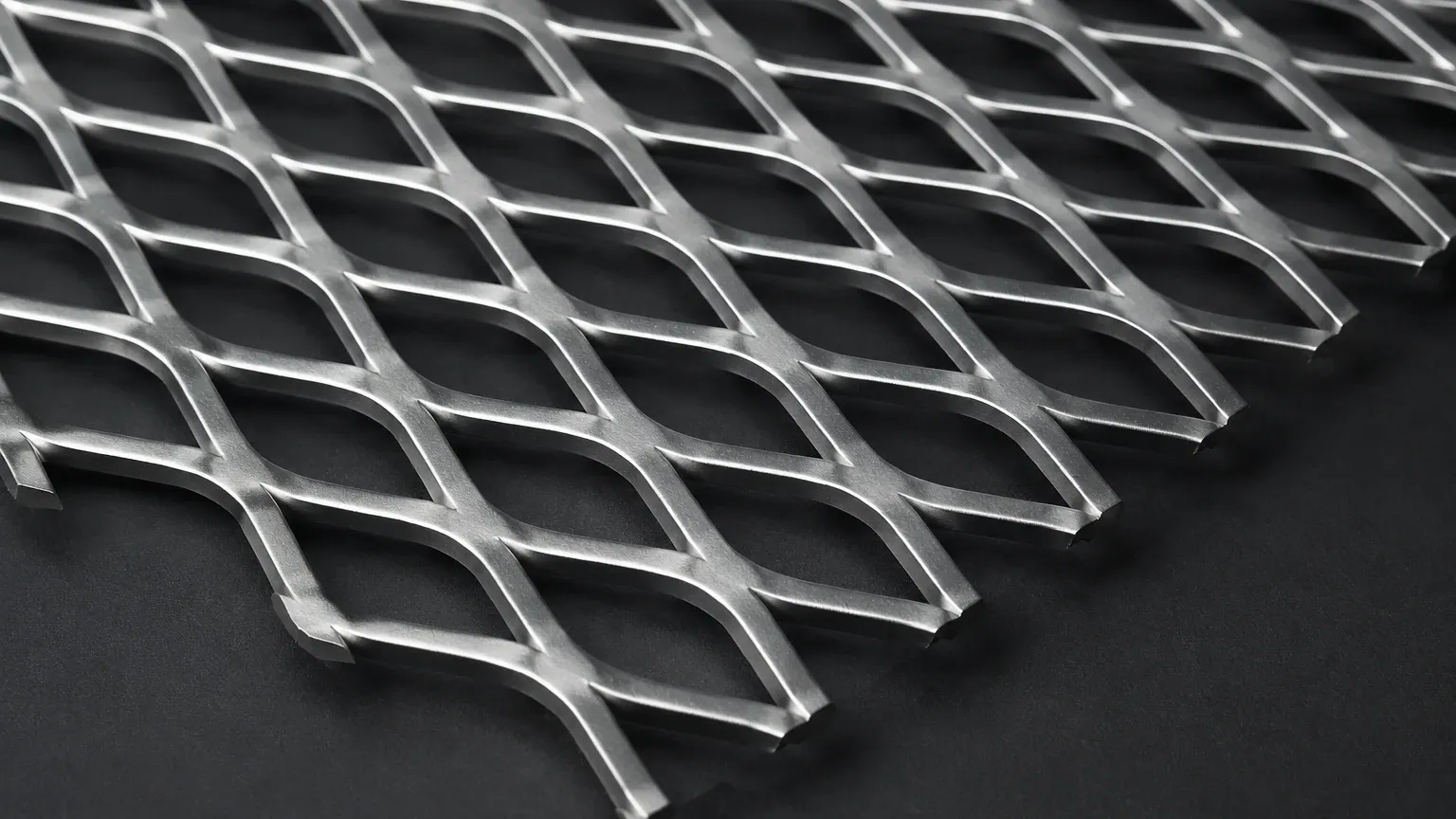
Expanded metal is produced by simultaneously slitting and stretching a solid metal sheet. This process creates a diamond-shaped pattern of openings, where the metal strands are interconnected without the need for welding or mechanical fasteners. The "7507" nomenclature typically refers to the specific dimensions of the diamond opening and the gauge of the material, which dictates its performance characteristics under pressure and its suitability for various filtration media support roles.
Technical Specifications and Dimensional Geometry
To accurately specify expanded metal 7507, engineers must look beyond the part number and evaluate the four primary dimensions that define its geometry: the Short Way of the Diamond (SWD), the Long Way of the Diamond (LWD), the strand width, and the strand thickness.
In the 7507 specification, the diamond pattern is oriented to provide maximum rigidity. The SWD is the distance measured across the sheet from the center of one bond to the center of the next bond in the short direction. The LWD is the corresponding measurement in the long direction. For 7507, these dimensions are calibrated to provide a medium-to-large opening that allows for high fluid or gas throughput while maintaining enough surface area to support finer filter meshes or membranes.
The strand thickness refers to the thickness of the base metal sheet used, while the strand width is the amount of metal fed into the precision dies to create each diamond. In heavy-duty applications, the 7507 pattern often utilizes a thicker gauge to prevent deformation under high differential pressures. Engineers must also specify whether they require "raised" or "flattened" expanded metal. Raised expanded metal retains the natural angularity of the strands, which can enhance turbulence and mechanical grip, whereas flattened expanded metal is cold-rolled to create a smooth, planar surface, which is often preferred when the mesh serves as a support layer for delicate filter paper or fine wire mesh.
The Manufacturing Advantage: Slitting and Stretching
The manufacturing process of expanded metal 7507 offers several advantages over traditional perforated metal. Because the material is stretched rather than punched, there is virtually no scrap or waste generated during production. This makes it a highly cost-effective solution, especially when working with expensive alloys like 316L stainless steel.
The stretching process also creates a continuous structural web. Unlike woven wire mesh, where individual wires can shift or fray at the edges, the bonds in expanded metal are solid. This inherent stability is vital for filter cartridges that undergo frequent cleaning cycles or backpulsing. The 7507 pattern, in particular, provides a robust framework that can be rolled into cylinders or formed into custom shapes without losing its dimensional tolerances.
Expanded Metal 7507 in Industrial Filtration Systems
Within industrial filtration, expanded metal 7507 serves three primary functions: as a support core, as an outer protective cage, or as a coarse pre-filter.
Internal Support Cores
In high-pressure hydraulic and liquid filtration, the filter media (such as fiberglass or fine stainless steel mesh) is often too thin to withstand the pressure of the fluid flow on its own. A central core made of expanded metal 7507 provides the necessary hoop strength to prevent the media from collapsing. The diamond openings are sized to minimize flow resistance while providing enough contact points to distribute the mechanical load evenly across the media.
Outer Protective Cages
For filter elements exposed to turbulent flows or mechanical handling, an outer cage of expanded metal 7507 acts as a shield. It protects the primary filtration layer from impact and abrasion during installation and maintenance. The open area of the 7507 pattern ensures that the cage does not introduce significant pressure drop, which is a critical consideration for maintaining system efficiency.
Pre-Filtration and Debris Removal
In some water treatment and cooling tower applications, expanded metal 7507 is used as a standalone coarse filter. Its angular strands are effective at capturing larger debris, such as leaves, scale, or plastic fragments, before they reach more sensitive downstream components. The rigidity of the stainless steel construction ensures that the filter remains functional even when partially blinded by contaminants.
Material Selection and Chemical Compatibility
The performance of expanded metal 7507 is heavily dependent on the alloy selected. While carbon steel and aluminum are available, stainless steel is the standard for B2B industrial filtration due to its corrosion resistance and thermal stability.
* Type 304 Stainless Steel: This is the most common choice for general industrial applications. It offers excellent resistance to atmospheric corrosion and many organic and inorganic chemicals. It is widely used in food and beverage processing where hygiene and durability are paramount.
* Type 316L Stainless Steel: For more aggressive environments, such as chemical processing plants or marine applications, 316L is preferred. The addition of molybdenum provides superior resistance to pitting and crevice corrosion, particularly in chloride-rich environments. The "L" (low carbon) designation ensures that the material remains resistant to intergranular corrosion after welding, which is essential for fabricated filter components.
* Specialty Alloys: In extreme cases involving high temperatures or highly acidic/alkaline fluids, materials like Monel, Inconel, or Hastelloy can be expanded into the 7507 pattern to meet specific engineering requirements.
Comparative Analysis: Perforated & Expanded Metal
When designing a filtration system, engineers often choose between Perforated & Expanded Metal. While both provide structural support, they differ in several key performance metrics.
Perforated metal offers a wider variety of hole shapes (round, square, slotted) and allows for precise control over the open area percentage. However, the punching process creates waste material, which increases the unit cost. Furthermore, perforated metal has a lower strength-to-weight ratio compared to expanded metal because the latter benefits from the work-hardening that occurs during the stretching process.
Expanded metal 7507 is typically the superior choice when the primary goal is maximizing strength while minimizing weight and cost. The 3D geometry of raised expanded metal can also assist in breaking up laminar flow, creating a slight turbulence that can improve filtration efficiency in certain liquid-solid separation processes. However, if the application requires a perfectly flat surface with zero sharp edges, flattened expanded metal or perforated metal may be required.
Engineering Evaluation and Selection Criteria
Selecting the correct expanded metal 7507 component requires a thorough evaluation of the application's operating parameters. Engineers should consider the following factors:
1. Differential Pressure (ΔP): What is the maximum pressure the mesh will encounter? The thickness and strand width of the 7507 spec must be sufficient to prevent buckling or permanent deformation.
2. Flow Rate and Velocity: The open area of the mesh must be calculated to ensure it does not become a bottleneck in the system. High-velocity flows can also cause vibration in the mesh, leading to fatigue failure if the material is not properly secured.
3. Filtration Accuracy: If the expanded metal is the primary filter, the SWD and LWD must be smaller than the smallest particle intended for capture. If it is a support layer, the openings must be large enough to allow the primary media to function without interference.
4. Temperature and Thermal Expansion: In high-temperature applications, the thermal expansion coefficient of the metal must be compatible with the filter housing to prevent stress on the welds and joints.
Quality Control and Procurement Considerations
When sourcing expanded metal 7507 for industrial projects, it is essential to confirm that the manufacturer adheres to strict quality control standards. Key areas for verification include:
* Dimensional Tolerances: Confirm that the SWD, LWD, and strand dimensions meet the engineering drawings. Minor variations in strand width can significantly impact the open area and mechanical strength.
* Surface Finish: For pharmaceutical or food-grade applications, the mesh may require electropolishing or passivating to remove surface contaminants and improve corrosion resistance. The mesh should be free of burrs, oil, and sharp edges that could damage the filter media or injure personnel.
* Flatness and Camber: For large panels or rolled cylinders, the material must be free of excessive camber (bowing) to ensure proper fitment within the filter housing.
* Edge Treatment: Specify whether the edges should be "random cut" (where diamonds are cut through the middle) or "bond cut" (where the cut follows the solid bond of the mesh). Bond cuts provide a smoother edge and are generally safer for handling.
By focusing on these technical details, engineers can ensure that expanded metal 7507 provides a reliable, long-lasting solution for their filtration and structural needs. Whether used as a core for a hydraulic filter or a protective screen in a chemical reactor, the 7507 specification remains a cornerstone of industrial mesh design.
