


Expanded Metal 7502
In the landscape of industrial materials, expanded metal 7502 represents a specific engineering specification widely utilized for its structural integrity, open-area efficiency, and versatility. Unlike perforated materials that are created by punching holes and generating scrap, expanded metal is produced through a process of simultaneous slitting and stretching. This manufacturing method ensures that the original sheet of metal—whether stainless steel, carbon steel, or aluminum—is transformed into a rigid mesh without any material loss. For engineers and procurement specialists in the chemical, pharmaceutical, and filtration sectors, understanding the technical nuances of expanded metal 7502 is essential for optimizing system performance and ensuring long-term durability.
Understanding the Geometry of Expanded Metal 7502
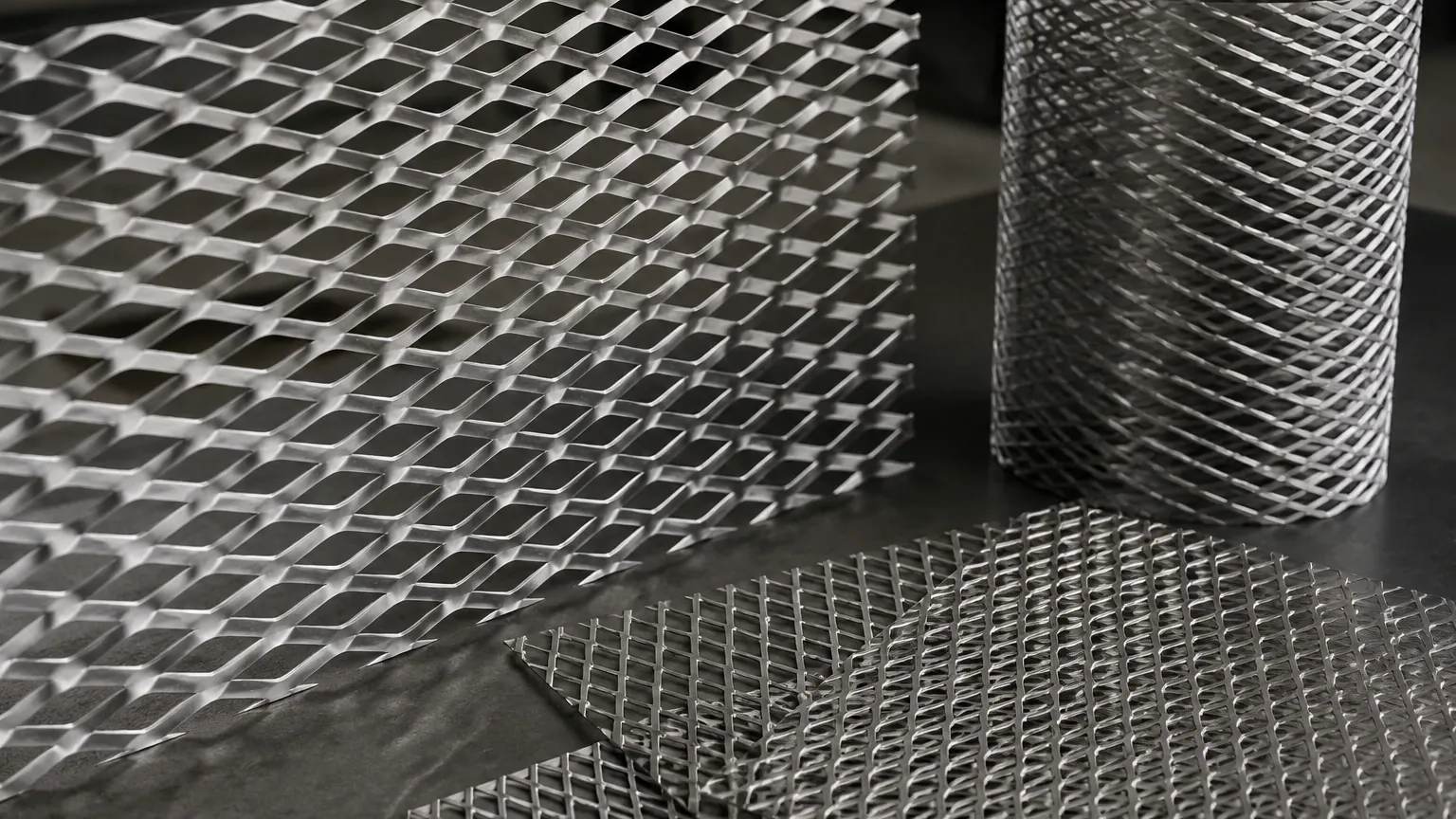
The performance of expanded metal 7502 is defined by its geometric properties. In the industry, "7502" typically refers to a specific diamond-shaped pattern characterized by its dimensions and strand thickness. To evaluate this material for a specific application, engineers must focus on four primary measurements: the Long Way of the Diamond (LWD), the Short Way of the Diamond (SWD), the strand width, and the strand thickness.
The LWD is the distance from the center of one joint to the center of the next joint across the long axis of the diamond. Conversely, the SWD measures the distance across the short axis. For the 7502 specification, these dimensions determine the percentage of open area, which directly impacts fluid flow rates and pressure drop in filtration applications. The strands—the metal strips that form the borders of the diamond openings—provide the mechanical strength. The thickness of these strands, combined with the material grade, dictates the mesh's ability to withstand hydraulic pressure or mechanical impact.
There are two primary forms of this material: raised (standard) and flattened. Raised expanded metal 7502 features strands that are set at an angle to the plane of the sheet, providing a three-dimensional texture that increases rigidity and offers excellent grip for walkways or coarse filtration stages. Flattened expanded metal 7502 undergoes an additional cold-rolling process that levels the strands and bonds into a single plane. This provides a smooth surface, which is often preferred when the mesh serves as a support structure for finer wire mesh layers in multi-stage filter cartridges.
Material Selection and Corrosion Resistance
Selecting the correct alloy for expanded metal 7502 is a critical decision that balances cost against operational environment demands. In industrial filtration and chemical processing, material compatibility is the foremost concern.
1. Stainless Steel (304 and 316L): This is the most common choice for high-performance applications. Grade 304 offers excellent strength and basic corrosion resistance, suitable for food and beverage processing. Grade 316L, which includes molybdenum, provides superior resistance to chlorides and acidic environments, making it the standard for pharmaceutical and marine applications.
2. Carbon Steel: Often used in hydraulic systems or structural supports where the environment is controlled or the mesh is coated. While cost-effective, it requires galvanizing or specialized coatings to prevent oxidation.
3. Aluminum: Preferred in aerospace or lightweight industrial equipment where weight reduction is prioritized over extreme mechanical strength.
When evaluating Perforated & Expanded Metal for OEM projects, engineers must confirm that the material grade meets the specific chemical resistance requirements of the processed media to prevent premature failure due to pitting or stress corrosion cracking.
Structural Performance and Load-Bearing Capabilities
One of the primary reasons expanded metal 7502 is selected over other mesh types is its inherent structural strength. Because the diamonds are formed from a solid sheet without welds or joins, the material distributes stress more evenly across the entire panel. This "truss-like" characteristic allows the mesh to support significant loads relative to its weight.
In filtration systems, the 7502 specification often acts as a "cage" or support core. When a filter cartridge is subjected to high-pressure differentials, the expanded metal provides the necessary hoop strength to prevent the collapse of the internal filter media. Engineers must calculate the maximum expected pressure (PSI) and ensure the strand thickness and SWD/LWD ratio of the 7502 mesh can handle these forces without deformation.
Furthermore, the orientation of the diamonds matters during installation. The LWD should typically run perpendicular to the support members to maximize the load-bearing capacity. If the mesh is being used as a protective guard or a walkway, deflection limits must be established based on the span between supports.
Applications in Industrial Filtration and Fluid Processing
Expanded metal 7502 serves several distinct roles within industrial fluid dynamics. Its unique geometry makes it more than just a structural component; it is an active participant in the filtration process.
Pre-Filtration and Coarse Straining
In many water treatment and chemical processing plants, expanded metal 7502 is used as a primary strainer. Its large open area allows for high flow rates while capturing large debris, protecting sensitive downstream equipment like pumps and fine membrane filters. The angled strands of the raised version can also help in breaking up laminar flow, inducing turbulence that can be beneficial in certain mixing or heat exchange applications.
Support for Fine Mesh Media
In complex multi-layer filter elements, the 7502 mesh provides a stable foundation for sintered wire mesh or non-woven fabrics. By using a flattened version of the 7502 specification, manufacturers ensure that there are no sharp edges to puncture the delicate inner filtration layers. This combination allows for high-precision filtration (down to micron levels) while maintaining the structural integrity required for high-pressure industrial cycles.
Diffusers and Flow Distributors
In gas filtration or catalytic reactors, expanded metal 7502 is often used to distribute flow evenly across a bed of media. The diamond pattern helps prevent "channeling," where the fluid takes the path of least resistance, thereby ensuring that the entire volume of the filter media is utilized effectively.
Comparing Expanded Metal 7502 with Perforated Metal Alternatives
When deciding between expanded metal and perforated metal, engineers must weigh several technical and economic factors. While both fall under the category of Perforated & Expanded Metal, their manufacturing profiles differ significantly.
* Material Efficiency: Expanded metal production generates zero waste. Perforated metal can result in 10% to 40% material loss depending on the hole pattern. This makes expanded metal 7502 a more cost-effective solution, especially when using expensive alloys like 316L stainless steel.
* Weight-to-Strength Ratio: Expanded metal is generally lighter per square foot than perforated metal of the same thickness, yet it offers comparable or superior rigidity due to the continuous strand structure.
* Aesthetics and Surface Profile: Perforated metal offers a wider variety of hole shapes (round, square, slotted) and a perfectly flat surface without additional processing. If a specific hole geometry is required for precise particle sizing, perforated metal may be the better choice. However, for support and general filtration, expanded metal 7502 is often the more efficient engineering choice.
Engineering Considerations for Customization and OEM Integration
For B2B purchasing teams and design engineers, specifying expanded metal 7502 involves more than just selecting a part number. Customization is often required to ensure the component fits seamlessly into existing industrial machinery.
Dimensional Tolerances
Standard industrial tolerances for expanded metal can vary. When ordering for a precision filter housing, it is vital to specify the allowable variance in sheet size, flatness, and camber (the bow in the sheet). Kaifil’s manufacturing process focuses on maintaining tight tolerances to ensure that custom-cut pieces fit perfectly into cylindrical or pleated filter assemblies.
Edge Treatment
Expanded metal naturally has "random" edges where diamonds are cut mid-pattern. For safety and ease of assembly, many industrial applications require "bond edges," where the cut is made exactly at the junction of the diamonds, or the addition of a U-edging frame. In filtration cartridges, the edges are often welded or crimped into end caps, requiring precise shearing to prevent bypass leaks.
Surface Finishes
Depending on the industry, the 7502 mesh may require additional treatment. Electropolishing is common in the pharmaceutical and food industries to remove burrs and create a mirror-like finish that prevents bacterial growth. For carbon steel variants, powder coating or hot-dip galvanizing is necessary to provide a barrier against environmental corrosion.
Maintenance, Longevity, and Total Cost of Ownership
The total cost of ownership for expanded metal 7502 is influenced by its durability and ease of maintenance. In high-fouling environments, the ability to clean the mesh is paramount. The open diamond structure of 7502 is relatively easy to backwash or clean via ultrasonic methods, provided the material has been properly finished to prevent particle entrapment in the joints.
Engineers should establish a replacement cycle based on the wear characteristics of the media being filtered. In abrasive applications, such as mining or slurry processing, the strands of the 7502 mesh will eventually thin due to erosion. Regular thickness measurements can help predict failure before it occurs, preventing costly downtime. Because expanded metal is a single-piece construction, it does not suffer from the "unraveling" issues that can affect woven wire mesh, making it a more reliable choice for heavy-duty industrial cycles.
Conclusion
Expanded metal 7502 is a cornerstone material for industrial filtration and structural support. Its balance of high open area, mechanical strength, and cost-efficiency makes it an ideal specification for demanding B2B applications. By carefully considering material grades, geometric variations (raised vs. flattened), and customization requirements, engineers can leverage this material to improve the efficiency and lifespan of their filtration systems. Whether used as a protective outer wrap, an internal support core, or a primary strainer, expanded metal 7502 provides a dependable solution for complex fluid processing challenges.
