


Expanded Metal 7506
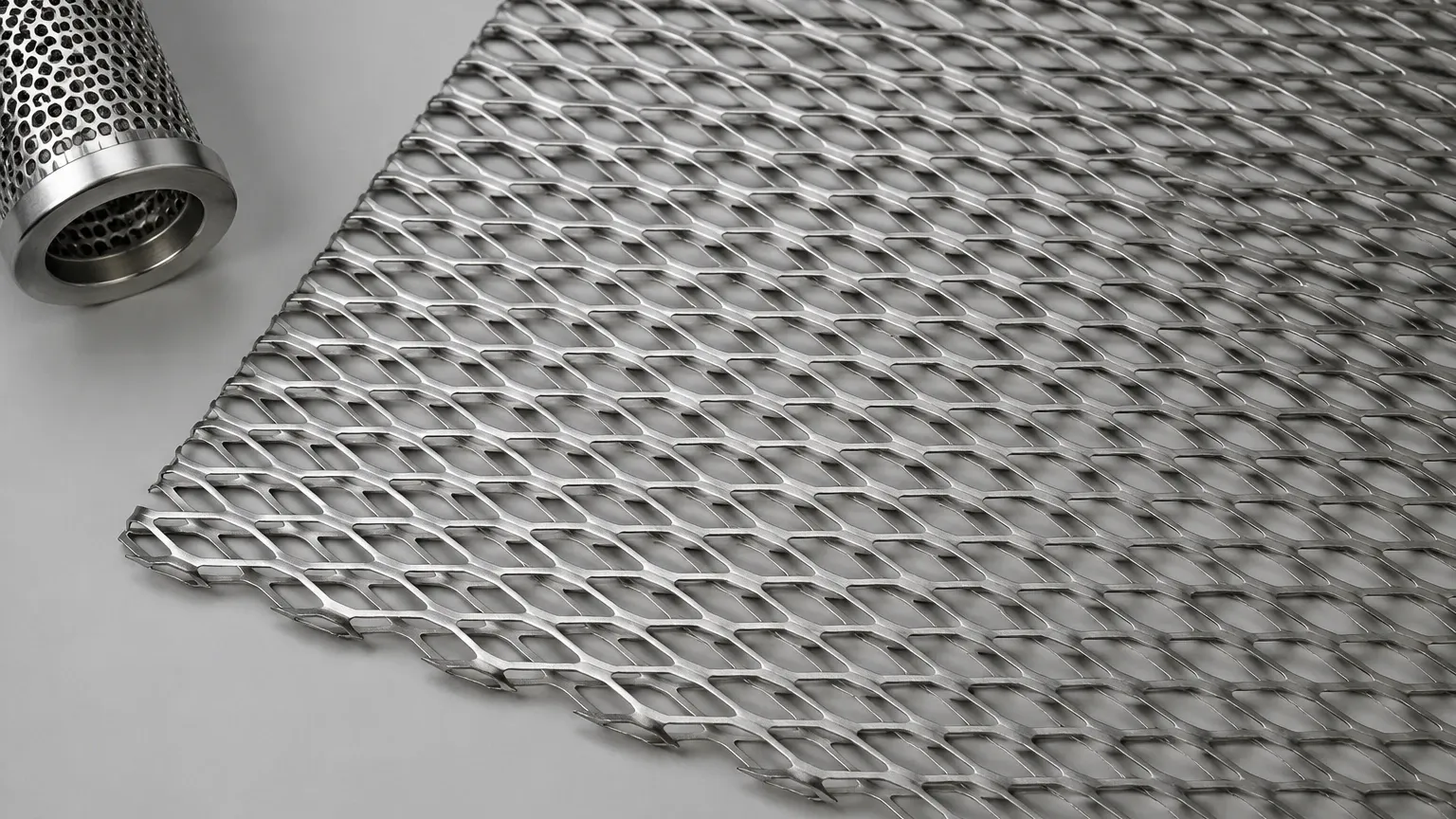
In the landscape of industrial filtration and structural engineering, material selection is driven by the need for a precise balance between mechanical strength, open area, and chemical resistance. Expanded metal 7506 has emerged as a critical specification for engineers requiring a robust medium that can withstand high-pressure environments while maintaining consistent flow characteristics. Unlike woven wire mesh or perforated sheets, expanded metal is produced through a process of simultaneous slitting and stretching, resulting in a continuous, jointless structure that offers unique structural advantages.
For technical professionals and procurement teams, understanding the nuances of the 7506 pattern is essential for optimizing the performance of filtration systems, safety enclosures, and industrial support structures. This guide explores the engineering specifications, material considerations, and application-specific benefits of expanded metal 7506 within the context of high-performance industrial solutions.
Understanding the Technical Specifications of Expanded Metal 7506
The designation "7506" in the context of expanded metal typically refers to a specific diamond pattern characterized by its nominal opening size and strand thickness. In most industrial nomenclature, the "75" signifies a 3/4-inch (0.75") nominal opening, while the "06" relates to the specific gauge or strand configuration designated by the manufacturer.
Geometric Parameters
To evaluate expanded metal 7506 for an engineering project, several geometric factors must be confirmed:
* SWD (Short Way of Diamond): The distance from the center of one bond to the center of the next bond across the short axis. For a 7506 pattern, this usually aligns with a 3/4-inch nominal dimension, though the actual opening might be slightly smaller depending on whether the material is standard or flattened.
* LWD (Long Way of Diamond): The distance across the long axis of the diamond. This dimension is critical for determining the orientation of the sheet in relation to fluid flow or structural load.
* Strand Width and Thickness: These parameters dictate the overall weight and strength of the mesh. In heavy-duty 7506 specifications, the strand width is engineered to provide maximum rigidity without excessively restricting the open area.
* Open Area Percentage: This is perhaps the most vital metric for filtration applications. It determines the flow rate and pressure drop across the medium. Expanded metal 7506 is favored because it provides a high strength-to-weight ratio while maintaining an open area typically ranging between 60% and 75%.
Standard vs. Flattened Configurations
Engineers must choose between "Standard" (raised) and "Flattened" expanded metal. Standard expanded metal 7506 features strands that are turned at an angle to the plane of the sheet, providing a three-dimensional texture that can assist in breaking up fluid flow or providing extra grip. Flattened expanded metal is processed through a cold-rolling mill, resulting in a smooth, flat surface. Flattened 7506 is often preferred for filter support cages where a smooth interface with a secondary fine mesh layer is required to prevent abrasion.
Material Selection and Durability Factors
The performance of expanded metal 7506 is heavily influenced by the alloy from which it is manufactured. In demanding industrial environments, material integrity is non-negotiable. As a specialist in stainless steel solutions, Kaifil emphasizes the use of high-grade alloys to ensure longevity and compliance with industry standards.
Stainless Steel (304 and 316L)
Stainless steel is the primary choice for Perforated & Expanded Metal used in chemical processing, food and beverage, and pharmaceutical industries.
* Grade 304: Offers excellent corrosion resistance and formability, making it suitable for general industrial filtration and protective guarding.
* Grade 316L: Contains molybdenum, providing superior resistance to chlorides and pitting. This is the standard for marine environments, medical applications, and aggressive chemical filtration where expanded metal 7506 must maintain structural integrity over years of exposure.
Carbon Steel and Aluminum
While stainless steel is preferred for filtration, carbon steel expanded metal 7506 is often used in structural applications where cost-efficiency is a priority and the environment is controlled. Aluminum 7506 offers a lightweight alternative, frequently used in aerospace or architectural applications where weight reduction is critical, though it lacks the high-temperature stability of steel alloys.
Role in Industrial Filtration Systems
In the realm of industrial filtration, expanded metal 7506 rarely acts alone. It is most frequently utilized as a structural component within a multi-stage filtration assembly. Its primary roles include:
Filter Media Support
Fine wire mesh filters, while excellent at capturing microscopic particulates, lack the inherent rigidity to withstand high differential pressures. Expanded metal 7506 serves as a robust "skeleton" or support cage. By wrapping the fine mesh around a 7506 expanded metal core, engineers can create filter cartridges capable of operating under significant hydraulic loads without collapsing.
Coarse Pre-Filtration
In systems dealing with large debris—such as water intake systems or heavy oil processing—expanded metal 7506 can serve as a primary strainer. Its diamond-shaped apertures are effective at capturing large contaminants while allowing the bulk of the fluid to pass through with minimal resistance. The angular nature of the strands in the "standard" configuration can also help deflect larger particles away from the filter surface.
Flow Distribution
When fluid enters a filtration vessel, uneven distribution can lead to "channeling," where certain areas of the filter media are overworked while others remain underutilized. The geometry of expanded metal 7506 helps to diffuse incoming fluid, promoting a more uniform flow across the entire surface area of the primary filter element.
Engineering Evaluation Criteria for Procurement
When specifying expanded metal 7506 for a project, purchasing teams and engineers should move beyond basic dimensions and consider the total cost of ownership and performance reliability. Key evaluation criteria include:
1. Load-Bearing Capacity: Engineers must calculate the maximum pressure the expanded metal will face. Because expanded metal is a single piece of material, it does not have the "unraveling" risk associated with woven mesh, but its deflection under load must still be modeled.
2. Edge Configurations: Depending on the installation method, you may require "random sheared" edges or "bond sheared" edges. Bond shearing provides a closed-loop edge that is safer to handle and easier to weld into frames or filter end caps.
3. Tolerances: Precision is paramount in OEM applications. Confirming the manufacturer's ability to maintain tight tolerances on sheet flatness and diamond consistency is essential for automated assembly processes.
4. Surface Finish: For pharmaceutical or food-grade applications, the expanded metal 7506 may require electropolishing or specialized degreasing to ensure no manufacturing oils or burrs remain on the surface.
Customization and OEM Capabilities
Standard off-the-shelf expanded metal often fails to meet the exacting requirements of specialized industrial equipment. This is where the value of a dedicated manufacturer like Kaifil becomes apparent. Customization of expanded metal 7506 goes beyond simply cutting a sheet to size.
Tailored Geometry
While 7506 is a standard pattern, the strand width can often be adjusted to meet specific flow or strength requirements. For instance, if a project requires a slightly higher open area for a high-viscosity fluid, the manufacturer can reduce the strand width while maintaining the 3/4-inch diamond pitch.
Integration into Filter Components
Kaifil specializes in taking raw Perforated & Expanded Metal and transforming it into finished components. This includes rolling expanded metal into cylinders, welding it to precision-machined end caps, or pleating it alongside other media. By sourcing a completed filtration component rather than raw material, OEM customers can reduce assembly time and ensure higher quality control.
Installation and Maintenance Best Practices
To maximize the service life of expanded metal 7506, proper installation and maintenance protocols must be followed.
Welding and Forming
Stainless steel expanded metal is highly weldable. TIG (Tungsten Inert Gas) welding is typically recommended for filtration components to ensure clean, strong joints that do not introduce contaminants. When forming expanded metal 7506 into cylinders, it is important to account for the "spring-back" of the material, which varies depending on the alloy and whether the material is flattened or standard.
Cleaning and Maintenance
In filtration applications, expanded metal components are subject to fouling. The open, diamond-shaped structure of 7506 is generally easier to clean than woven mesh because there are no overlapping wires where particles can become permanently wedged. High-pressure backwashing or ultrasonic cleaning are effective methods for restoring the flow capacity of expanded metal strainers. Engineers should specify 316L stainless steel if the cleaning process involves aggressive chemical solvents or high-temperature steam sterilization.
Conclusion
Expanded metal 7506 represents a versatile and high-performance solution for modern industrial challenges. Whether it is providing the structural backbone for a hydraulic filter or serving as a durable safety screen in a chemical plant, its unique geometric properties offer advantages that other metal forms cannot match.
By focusing on technical precision, material quality, and application-specific customization, engineers can leverage expanded metal 7506 to improve system efficiency and durability. For those seeking reliable, custom-engineered filtration components, partnering with a manufacturer that understands the complexities of metal expansion and fluid dynamics is the most effective path to project success. For more information on technical specifications and custom fabrication options, engineers are encouraged to review product options and application support regarding Perforated & Expanded Metal to ensure their specific operational requirements are met with precision.
