


Expanded Metal 8mm
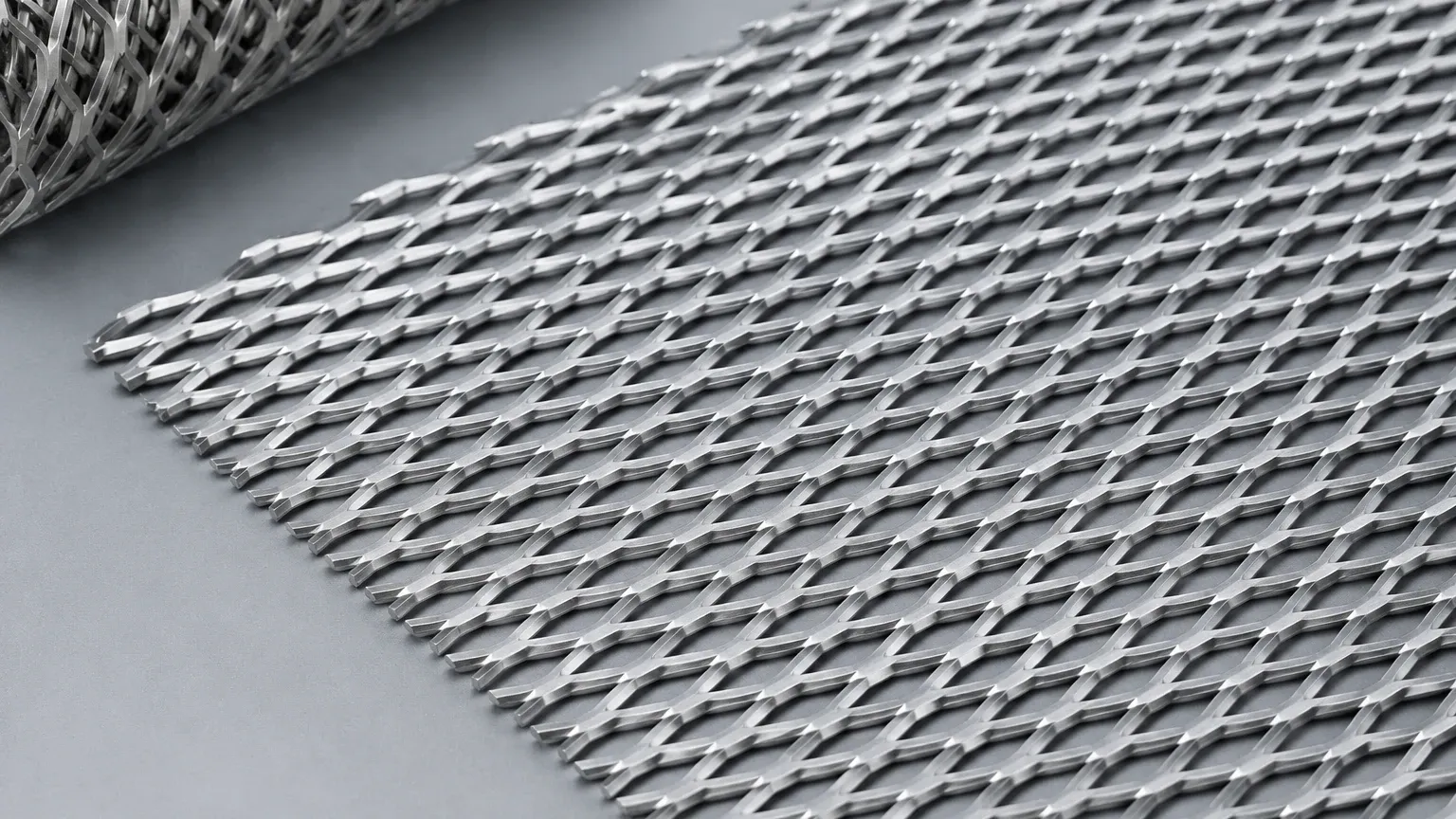
In the realm of industrial filtration and structural engineering, the selection of mesh materials is a critical decision that impacts the efficiency, durability, and safety of a system. Expanded metal 8mm refers to a specific mesh size produced through a process of slitting and stretching metal sheets, resulting in a diamond-shaped pattern. Unlike traditional woven wire or perforated sheets, expanded metal is a single-piece construction without joins or welds, offering a unique set of mechanical properties. For engineers and procurement specialists, understanding the technical nuances of 8mm expanded metal—specifically its aperture dimensions, material grades, and load-bearing characteristics—is essential for optimizing industrial performance.
Understanding Expanded Metal 8mm: Technical Specifications and Definitions
When discussing expanded metal 8mm, the measurement typically refers to either the Short Way of Design (SWD) or the Long Way of Design (LWD). In technical documentation, the diamond pattern is defined by these two axes. The SWD is the distance from the center of one bond to the center of the next bond across the short diamond axis, while the LWD follows the long axis.
An 8mm specification often indicates an aperture size that balances high open area with structural rigidity. For example, a mesh with an 8mm SWD provides a clear opening suitable for medium-coarse filtration or as a protective guard for mechanical components. Beyond the diamond dimensions, engineers must also specify:
* Strand Width: The amount of metal between the openings.
* Strand Thickness: The gauge of the original base material.
* Overall Thickness: In "raised" expanded metal, this is the total depth of the sheet; in "flattened" versions, this matches the strand thickness.
By manipulating these variables, manufacturers can tailor the Perforated & Expanded Metal to meet specific pressure drop requirements or weight constraints.
Manufacturing Process: Slitting, Stretching, and Material Efficiency
The production of expanded metal is a precision process that involves a reciprocating knife that slits the metal sheet while simultaneously stretching it. This expansion process creates the characteristic diamond openings without any loss of material. From a B2B procurement perspective, this "no-waste" manufacturing method often makes expanded metal a more cost-effective alternative to perforated metal, where the "slugs" or punch-outs are discarded as scrap.
The structural integrity of the 8mm expanded metal comes from the fact that the strands are not woven or welded but are part of a continuous piece of metal. This prevents the mesh from unraveling if a single strand is cut, a common failure point in high-vibration environments like hydraulic systems or industrial sifters. Furthermore, the process work-hardens the metal, increasing its yield strength compared to the original flat sheet.
Material Selection for Industrial Environments: Stainless Steel Grades
For the demanding applications found in chemical processing, pharmaceuticals, and food production, material selection is paramount. While expanded metal can be produced from carbon steel or aluminum, stainless steel is the standard for industrial filtration due to its corrosion resistance and thermal stability.
Grade 304 Stainless Steel
This is the most common grade used for expanded metal 8mm. It offers excellent corrosion resistance in most atmospheric conditions and is suitable for food-grade applications where frequent cleaning with mild detergents is required.
Grade 316 and 316L Stainless Steel
In environments involving chlorides, acids, or high-salinity water treatment, Grade 316 is preferred. The addition of molybdenum enhances pitting resistance. Grade 316L (low carbon) is specifically utilized when the expanded metal must be welded into a frame or housing, as it prevents carbide precipitation that could lead to intergranular corrosion at the weld sites.
Specialized Alloys
For extreme temperatures or highly aggressive chemical environments, alloys such as Duplex stainless steel or Monel may be used. These materials ensure that the 8mm mesh retains its structural dimensions and filtration accuracy over long service cycles.
Filtration and Structural Support: The Role of 8mm Mesh in B2B Applications
Expanded metal 8mm serves two primary roles in industrial filtration: as a primary filter medium for coarse debris and as a support structure for finer filter media.
Primary Filtration and Screening
In water treatment and intake systems, 8mm expanded metal acts as a robust screen to remove large particulates, organic matter, or debris that could damage downstream pumps. Its rigid structure allows it to withstand significant hydraulic pressure without deforming.
Support for Fine Mesh Cartridges
In high-pressure filtration systems, fine wire mesh or pleated filter media lack the inherent strength to resist collapsing under flow pressure. Expanded metal 8mm is frequently used as an inner or outer support core in stainless steel filter cartridges. The diamond pattern provides a high percentage of open area, ensuring that the support layer does not significantly contribute to pressure drop while providing the necessary mechanical reinforcement.
Comparing Perforated & Expanded Metal for Filtration Systems
Engineers often choose between perforated metal and expanded metal for their filtration housings and screens. While both have their merits, expanded metal 8mm offers distinct advantages in specific scenarios:
1. Strength-to-Weight Ratio: Expanded metal is generally stronger than a perforated sheet of the same weight because the strands are oriented at an angle, acting like a series of structural trusses.
2. Flow Dynamics: The raised edges of expanded metal can create controlled turbulence, which in some mixing or heat exchange applications is beneficial. However, if a smooth surface is required to prevent bypass or for easy cleaning, flattened expanded metal should be specified.
3. Cost Efficiency: As mentioned, the lack of material waste in the expansion process typically results in a lower price point per square foot compared to perforated metal with similar open area percentages.
Conversely, perforated metal provides more precise control over hole geometry and spacing, which may be necessary for ultra-fine particle separation where the "irregular" diamond shape of expanded metal might allow elongated particles to pass through.
Engineering Considerations: Open Area, Flow Rate, and Load Capacity
When integrating expanded metal 8mm into a system, engineers must calculate the effective open area. This percentage determines the flow velocity and the potential for pressure drop across the filter. An 8mm mesh with thin strands will have a much higher open area (often exceeding 60-70%) than one with wide strands.
Load Capacity is another critical factor. Because expanded metal is directional, its ability to support weight or resist pressure is greater along the LWD than the SWD. If the mesh is being used as a platform, walkway, or heavy-duty screen, the orientation of the diamonds relative to the support frame is a vital engineering detail. Failure to orient the LWD across the span can lead to premature sagging or structural failure under load.
Customization and OEM Solutions for Precision Filtration
Industrial applications rarely follow a one-size-fits-all approach. Customization of expanded metal 8mm is often required to meet the specific needs of OEM equipment manufacturers. This includes:
* Bespoke Dimensions: Cutting sheets to precise tolerances for integration into existing filter housings.
* Flattening: Passing the expanded metal through a cold-rolling mill to create a smooth, flat surface. This is essential for applications where the mesh will be in contact with delicate filter membranes.
* Edge Treatment: Providing framed edges or U-edging to ensure safety during handling and to facilitate easier installation into tracks or grooves.
* Surface Finishing: Electropolishing or pickling stainless steel expanded metal to remove surface impurities and enhance corrosion resistance, particularly for pharmaceutical and food-grade environments.
Procurement Checklist: What Engineers Should Confirm Before Ordering
To ensure the successful procurement of expanded metal 8mm, technical teams should confirm the following details with their manufacturer:
1. Aperture Orientation: Is the 8mm dimension the SWD or LWD? This affects both filtration and structural performance.
2. Material Certification: Request Mill Test Reports (MTRs) to verify the chemical composition of the stainless steel, ensuring it meets the required grade (e.g., 304 vs 316L).
3. Flattened vs. Raised: Specify whether the application requires the standard raised profile for grip and strength or a flattened profile for surface smoothness.
4. Tolerances: Define the allowable variance in sheet size and diamond dimensions, especially for automated assembly lines.
5. Environmental Compatibility: Confirm that the chosen alloy can withstand the operating temperature and chemical exposure of the specific industrial process.
By addressing these technical parameters, purchasing teams can secure high-performance components that reduce maintenance intervals and extend the service life of their filtration systems. For those seeking specialized configurations, exploring Perforated & Expanded Metal options with an experienced manufacturer allows for the development of tailored solutions that align with rigorous industrial standards.
Maintenance and Durability in Harsh Conditions
The durability of expanded metal 8mm is one of its primary selling points in B2B sectors. Because it is a single piece of metal, there are no welds to crack or wires to fray. However, in high-fouling environments, regular maintenance is necessary to prevent "blinding" of the mesh.
Cleaning protocols for stainless steel expanded metal typically involve backwashing, ultrasonic cleaning, or chemical baths. The open diamond pattern is generally easier to clean than woven wire mesh, as there are no overlapping wires where particles can become permanently wedged. Engineers should monitor the pressure differential across the mesh; a steady increase indicates that the 8mm openings are becoming restricted, necessitating a cleaning cycle to restore optimal flow rates.
In conclusion, expanded metal 8mm is a versatile and robust material essential for modern industrial filtration and structural support. By focusing on material integrity, precise manufacturing specifications, and application-specific customization, engineers can leverage this material to achieve efficient and cost-effective results in the most demanding environments.
