


Expanded Metal Bench
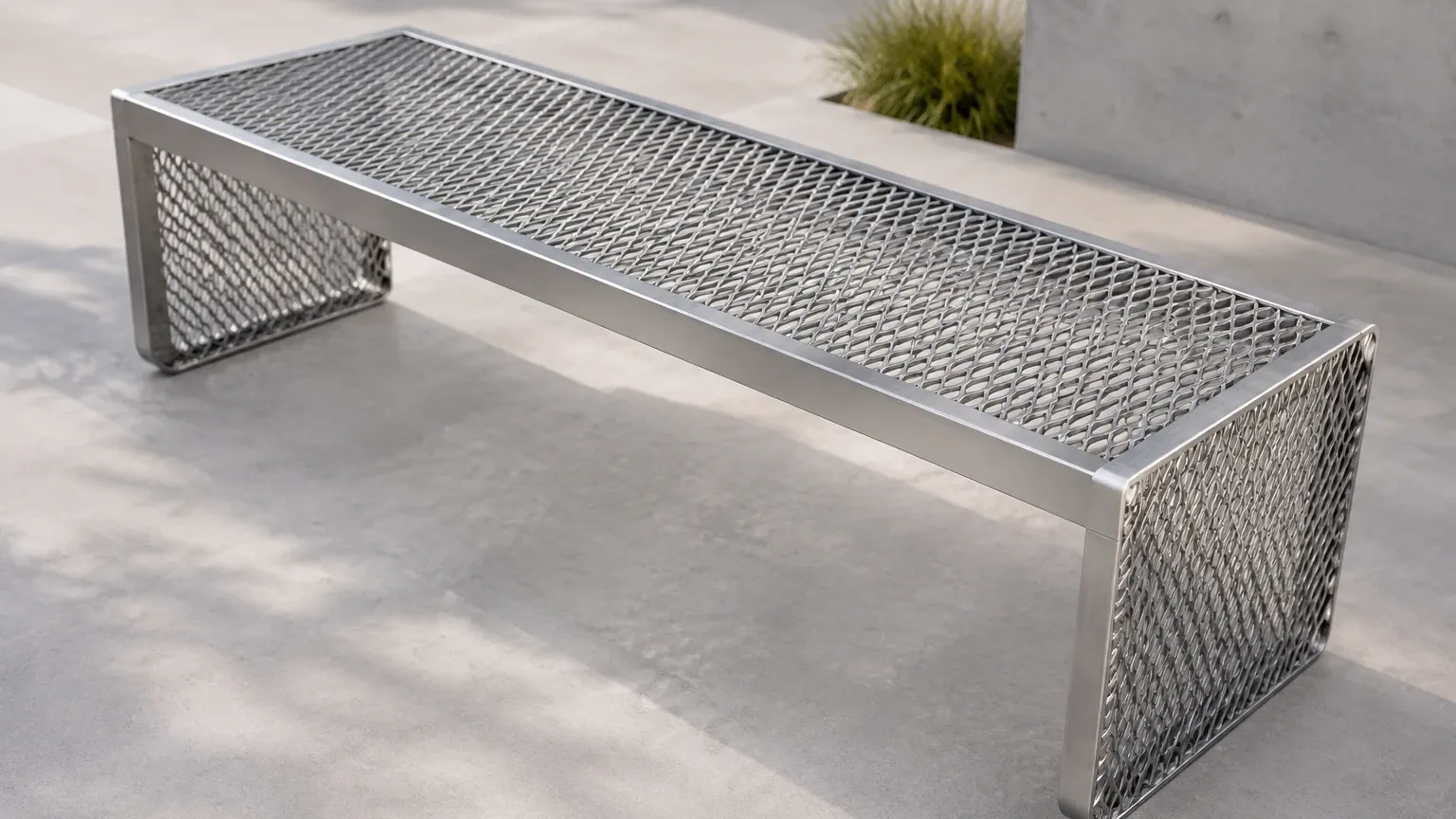
In industrial and commercial infrastructure, the selection of materials for high-traffic or specialized environments requires a balance between structural integrity, environmental resistance, and functional design. The expanded metal bench represents a critical application of precision metal fabrication, utilizing the unique mechanical properties of expanded mesh to provide durable seating and work surfaces. Unlike solid surfaces, these components offer specific advantages in drainage, weight management, and airflow, making them indispensable in sectors ranging from chemical processing plants to municipal facilities.
Understanding the engineering behind an expanded metal bench involves looking closely at the Perforated & Expanded Metal used in its construction. This article examines the technical specifications, material considerations, and engineering advantages that define high-performance expanded metal seating solutions.
Understanding the Role of Perforated & Expanded Metal in Industrial Seating
The foundation of any expanded metal bench is the mesh itself. Expanded metal is produced by simultaneously slitting and stretching a solid metal sheet. This process creates a diamond-shaped pattern of openings, where the "strands" and "bonds" (the intersections of the strands) form a continuous, one-piece structure. Because the metal is stretched rather than punched, there is zero material waste, making it a highly resource-efficient manufacturing method.
In the context of industrial benches, engineers must choose between "raised" and "flattened" expanded metal. Raised expanded metal retains the natural angularity of the stretching process, providing an inherent anti-slip surface that is ideal for industrial workbenches or step-stools where grip is paramount. Flattened expanded metal, however, undergoes an additional cold-rolling process to create a smooth, level surface. For seating applications where user comfort and clothing protection are concerns, flattened mesh is the standard choice.
Material Selection for Expanded Metal Bench Construction
The longevity of an expanded metal bench is dictated primarily by its material composition. Depending on the operating environment—whether it be a corrosive chemical lab, a high-humidity food processing area, or an outdoor public space—the choice of alloy is the most significant engineering decision.
Stainless Steel (Grade 304 and 316)
For pharmaceutical, food and beverage, and chemical industries, stainless steel is the preferred material. Grade 304 offers excellent corrosion resistance for most standard industrial applications. However, in environments exposed to chlorides or high saline concentrations, Grade 316 is specified due to its molybdenum content, which provides superior pitting resistance. Stainless steel expanded metal benches are often left uncoated or electropolished to maintain a sterile, easy-to-clean surface.
Carbon Steel with Protective Coatings
In many municipal or general industrial settings, carbon steel is used for its high tensile strength and cost-effectiveness. To prevent oxidation, these benches are typically finished with a thermoplastic or powder coating. Thermoplastic coatings are particularly valued for expanded metal benches because they provide a thick, rounded layer that covers the edges of the mesh, offering a "soft-touch" feel and exceptional weather resistance.
Aluminum
When weight is a primary constraint or when the bench must be frequently moved, aluminum expanded metal is utilized. Aluminum provides a high strength-to-weight ratio and natural atmospheric corrosion resistance, though it may lack the extreme durability of stainless steel in heavy-duty industrial impact zones.
Engineering Advantages: Why Expanded Metal is Preferred
Engineers specify an expanded metal bench over solid wood, plastic, or solid steel plate for several technical reasons related to performance in demanding environments.
1. Drainage and Debris Management: The open diamond pattern allows liquids, dust, and small debris to pass through the surface. In outdoor environments, this prevents the pooling of rainwater, which can lead to corrosion or safety hazards. In industrial workshops, it ensures that metal shavings or fluids do not accumulate on the work surface.
2. Airflow and Temperature Regulation: In facilities with high-temperature processes or strict HVAC requirements, the transparency of expanded metal allows for unobstructed airflow. This prevents the bench from becoming a heat sink and aids in maintaining ambient temperature control.
3. Strength-to-Weight Ratio: The truss-like structure of expanded metal provides significant structural rigidity while using less material than a solid plate of the same thickness. This allows for the design of large-span benches that are easier to install and transport without sacrificing load-bearing capacity.
4. Vandal and Impact Resistance: Unlike wood or plastic, expanded metal is extremely difficult to cut or damage. The interconnected bonds distribute impact loads across the entire sheet, preventing localized failures.
Technical Specifications and Customization Options
When procuring components for an expanded metal bench, engineers must define several key geometric parameters to ensure the product meets application requirements. These specifications are standardized within the Perforated & Expanded Metal industry.
* LWD (Long Way of Design): The distance from the center of one bond to the center of the next bond across the long axis of the diamond.
* SWD (Short Way of Design): The distance across the short axis of the diamond.
* Strand Width and Thickness: These dimensions determine the overall "heaviness" of the mesh and its load-bearing capability. For heavy-duty industrial benches, a thicker strand is required to prevent sagging under load.
* Percent Open Area: This calculation is vital for applications requiring specific airflow or light transmission. A typical expanded metal bench might feature an open area ranging from 40% to 70%.
Customization extends beyond dimensions. Benches can be fabricated with reinforced frames, ergonomic contours, or integrated mounting brackets for permanent floor installation. For cleanroom environments, the edges of the expanded metal must be carefully deburred and finished to ensure there are no sharp points that could snag PPE or harbor contaminants.
Application-Specific Requirements: From Cleanrooms to Chemical Plants
The utility of an expanded metal bench varies significantly across different industrial sectors. Each environment imposes unique stresses on the material.
Chemical and Pharmaceutical Processing
In these sectors, benches are often used as transit points for equipment or as seating in gowning rooms. The primary requirement is chemical compatibility. Stainless steel expanded metal is resistant to the harsh cleaning agents and disinfectants used in these facilities. The open mesh design ensures that cleaning fluids can reach all surfaces of the bench, reducing the risk of microbial growth.
Food and Beverage Industry
Hygiene is the priority here. An expanded metal bench in a food plant must be designed with "clean-in-place" (CIP) principles. This means avoiding lap joints or crevices where food particles could accumulate. The use of stainless steel expanded metal allows for high-pressure hosedowns and steam cleaning without degrading the material.
Industrial Workshops and Warehouses
In these settings, the expanded metal bench often serves as a heavy-duty workstation. The ability to withstand heavy tool impact and the accumulation of oils or grease is paramount. Often, these benches are integrated with secondary filtration or collection trays beneath the mesh to manage runoff.
Maintenance, Durability, and Total Cost of Ownership
One of the most compelling arguments for the expanded metal bench in a B2B context is the low total cost of ownership (TCO). While the initial investment in a high-grade stainless steel expanded metal bench may be higher than alternative materials, the maintenance requirements are minimal.
* Cleaning: The open structure is largely self-cleaning in outdoor rain or can be easily maintained with pressurized air or water.
* Repair: Because expanded metal is a single-piece structure, it does not suffer from the loosening of individual wires (as seen in woven wire mesh). If a section is damaged, it can often be patch-welded without replacing the entire unit.
* Longevity: A properly specified stainless steel or hot-dip galvanized expanded metal bench can have a service life exceeding 20 years, even in harsh outdoor or industrial environments.
Procurement Considerations: What Engineers Need to Confirm
Before finalizing a purchase or custom fabrication order for expanded metal benches, procurement teams and engineers should verify several critical factors with their manufacturer:
1. Load Calculations: What is the maximum static and dynamic load the bench must support? This will dictate the gauge of the metal and the spacing of the support frame.
2. Environment Compatibility: Will the bench be exposed to specific acids, bases, or extreme temperatures? This determines whether SS304, SS316, or a specific polymer coating is necessary.
3. Surface Finish: Is a flattened or raised surface required? Does the application demand an electropolished finish for sterility or a high-friction finish for safety?
4. Compliance Standards: Does the bench need to meet specific industry standards, such as OSHA safety requirements for industrial furniture or FDA/USDA guidelines for food contact surfaces?
5. Installation Method: Will the bench be free-standing, wall-mounted, or bolted to the floor? The design of the base and the gauge of the expanded metal must account for these mounting stresses.
By focusing on these technical nuances, organizations can ensure they select an expanded metal bench that provides the necessary durability and functionality for their specific industrial application. Whether utilized for its drainage capabilities or its high strength-to-weight ratio, expanded metal remains a premier choice for high-performance industrial furniture.
