


Expanded Metal Bbq Grate
In the realm of industrial food processing and commercial outdoor cooking equipment, the selection of grate material is a critical engineering decision. An expanded metal bbq grate offers a unique combination of structural rigidity, thermal efficiency, and cost-effectiveness that traditional wire mesh or cast iron often cannot match. As a specialized manufacturer of precision metal components, Kaifil understands that the performance of these components depends heavily on material science, geometric precision, and manufacturing techniques.
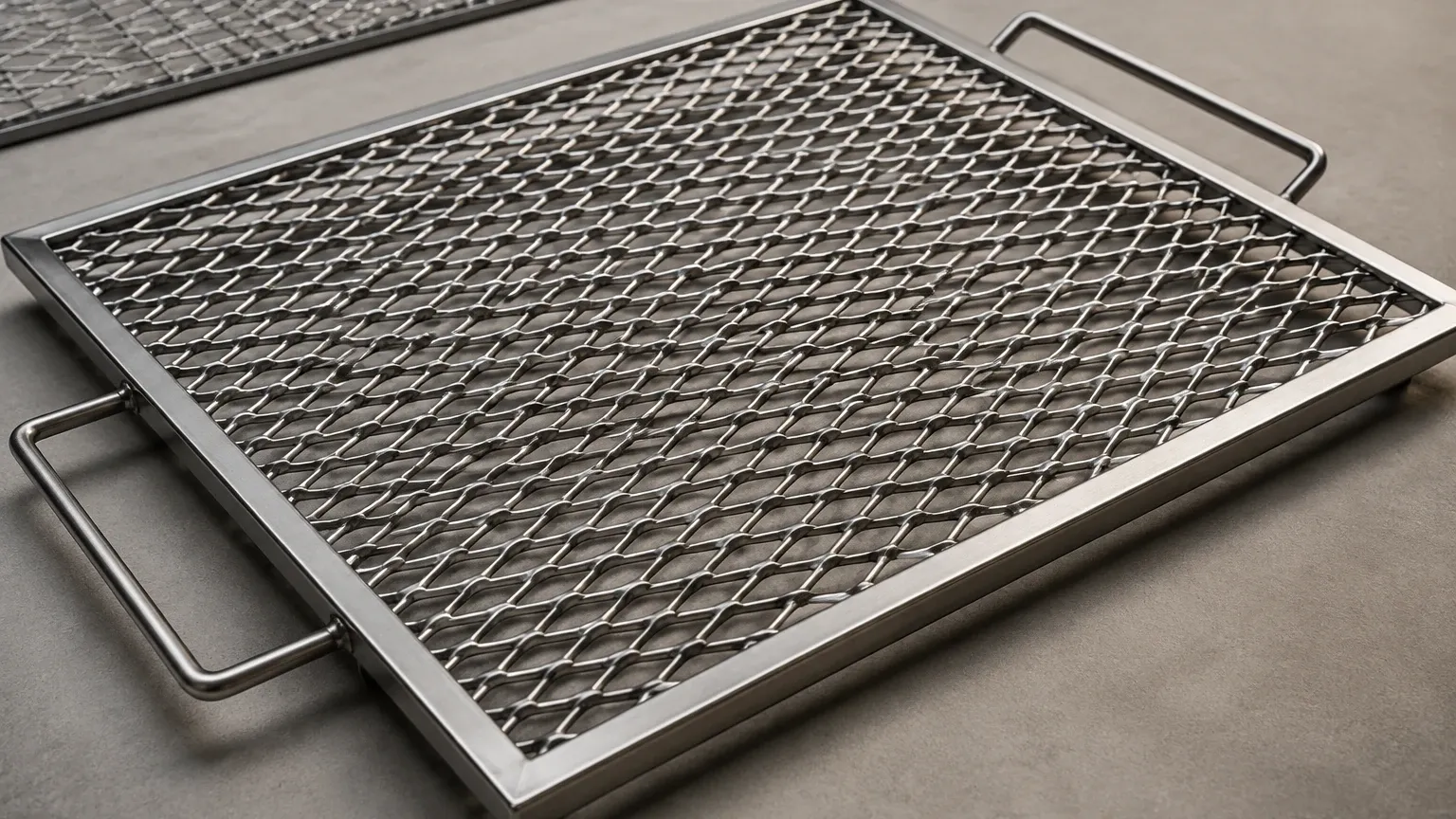
Expanded metal is produced by simultaneously slitting and stretching a solid metal sheet. This process creates a diamond-shaped pattern of openings, framed by interconnected strands of metal. Unlike woven wire, expanded metal is a single piece of material, which eliminates the risk of joint failure and provides superior structural integrity under high-heat conditions. For engineers and procurement professionals, understanding the nuances of Perforated & Expanded Metal is essential for specifying the right component for heavy-duty grilling and smoking applications.
Material Selection: Durability and Food Safety
The primary consideration when specifying an expanded metal bbq grate is the base material. The environment inside a commercial smoker or industrial grill is characterized by extreme temperature fluctuations, high humidity, and exposure to organic acids from food and combustion byproducts.
Stainless Steel (304 and 316 Grades)
For most professional and industrial applications, 304-grade stainless steel is the industry standard. It offers excellent corrosion resistance and can withstand temperatures up to 870°C (1600°F) without significant oxidation. In environments where the equipment is exposed to high saline levels—such as coastal regions or facilities using heavy brine treatments—316-grade stainless steel may be specified due to its molybdenum content, which provides enhanced resistance to pitting and chloride corrosion.
Carbon Steel
While carbon steel is a more economical choice, it requires significant maintenance to prevent oxidation. In industrial settings, carbon steel expanded metal is often used for large-scale pits where the grates are "seasoned" with oils to create a protective polymer layer. However, for longevity and hygiene, stainless steel remains the preferred choice for high-end OEM equipment.
Engineering Specifications: Mesh Geometry and Open Area
The performance of an expanded metal bbq grate is defined by its geometric specifications. These dimensions dictate airflow, heat distribution, and the ability of the grate to support heavy loads without sagging.
SWD and LWD
The diamond pattern is measured by the Short Way of Design (SWD) and the Long Way of Design (LWD). The SWD is the distance from the center of one bond to the center of the next bond across the short axis, while the LWD follows the long axis. For grilling applications, a smaller SWD is often preferred to prevent smaller food items from falling through, while a larger LWD can enhance the structural stiffness of the panel.
Strand Width and Thickness
The thickness of the original sheet and the width of the resulting strands determine the overall strength of the grate. In industrial BBQ applications, a heavier gauge (typically 9-gauge to 13-gauge) is required to ensure the grate does not warp under the weight of large meat cuts or during intense heat cycles. The "open area" percentage is a calculation of the void space versus the solid metal; a higher open area allows for better smoke penetration and convective heat transfer, which are vital for consistent cooking results.
Flattened vs. Raised Expanded Metal
One of the most important technical distinctions in the manufacturing of Perforated & Expanded Metal for food applications is the choice between raised and flattened profiles.
Raised Expanded Metal
Standard expanded metal comes off the machine with the strands at an angle to the plane of the sheet. This creates a textured, three-dimensional surface. While this provides excellent grip and a high strength-to-weight ratio, the angular edges can make cleaning difficult and may cause food to stick or tear during the cooking process.
Flattened Expanded Metal
To produce flattened expanded metal, the raised sheet is passed through a cold-rolling reducing mill. This process flattens the strands and bonds into a single, smooth plane. For an expanded metal bbq grate, the flattened variety is almost always superior. It provides a level cooking surface that is easier to scrape and clean, reduces the surface area where carbonized food can build up, and offers a more uniform contact point for heat conduction. Furthermore, the flattening process increases the surface area in contact with the food, which can help in achieving more pronounced sear marks.
Structural Integrity and Thermal Performance
In industrial filtration and metal component design, thermal expansion is a key variable. When a metal grate is subjected to temperatures exceeding 300°C, the material expands. If the grate is constrained within a rigid frame without accounting for this expansion, it will buckle or warp.
Expanded metal is inherently better at managing thermal stress than solid plates or rigid cast iron. The diamond lattice structure allows for localized expansion and contraction, which distributes thermal stress across the entire panel. This flexibility reduces the likelihood of permanent deformation. However, engineers must still specify the correct thickness. A grate that is too thin will lose its temper over time, leading to "dishing" in the center of the grill. By selecting a heavy-duty gauge and a proper bond configuration, manufacturers can ensure that the grate remains flat and functional through thousands of heating cycles.
Customization and Industrial OEM Solutions
As a manufacturer specializing in custom filtration and metal solutions, Kaifil provides tailored expanded metal components that meet specific OEM requirements. Customization goes beyond simple dimensions; it involves the optimization of every technical parameter to suit the intended application.
Precision Cutting and Framing
Industrial grates often require precise perimeter dimensions to fit into existing tracks or support ledges. Kaifil utilizes advanced cutting technologies to ensure that the edges of the expanded metal are clean and consistent. Furthermore, many commercial applications require the expanded metal to be welded into a perimeter frame (usually made of angle iron or stainless steel bar stock) to provide additional rigidity and to eliminate sharp edges.
Deburring and Surface Finishing
In the production of Perforated & Expanded Metal, the slitting process can leave small burrs or sharp edges. For food-contact surfaces, these must be removed. Kaifil employs various deburring processes, including vibratory finishing or electropolishing, to ensure the final product is safe for handling and food preparation. Electropolishing, in particular, is highly valued in the food and pharmaceutical industries as it not only removes burrs but also enhances the chromium layer on the surface of stainless steel, further improving its corrosion resistance and making it easier to sanitize.
Maintenance and Total Cost of Ownership
When evaluating the cost of an expanded metal bbq grate, purchasing teams should look beyond the initial acquisition price and consider the total cost of ownership (TCO). Factors affecting TCO include replacement frequency, cleaning labor, and the impact on food quality.
1. Cleaning Efficiency: Flattened stainless steel grates significantly reduce the labor hours required for cleaning. Because the surface is non-porous and smooth, carbonized proteins can be removed with standard industrial cleaning agents without damaging the substrate.
2. Longevity: A high-quality 304 stainless steel expanded metal grate can last for several years in a commercial environment, whereas cheaper carbon steel or thin-gauge wire alternatives may require replacement every few months due to rust or structural failure.
3. Heat Retention: While not as heavy as cast iron, a thick-gauge expanded metal grate provides sufficient thermal mass to maintain consistent temperatures, reducing the energy required to recover heat after the grill lid is opened.
Conclusion: Selecting the Right Partner for Filtration and Metal Components
Selecting an expanded metal bbq grate for industrial or commercial use requires a balance of material science and mechanical engineering. By focusing on high-grade stainless steel, flattened profiles, and appropriate gauge thickness, engineers can ensure their equipment performs reliably in demanding environments.
Kaifil's expertise in manufacturing precision metal components allows us to support global customers with high-performance solutions tailored to their specific needs. Whether you are designing a new line of commercial smokers or need replacement grates for an industrial food processing facility, our commitment to quality and technical precision ensures that every component meets the highest standards of durability and performance. For more information on our capabilities and to explore our range of metal solutions, please visit our product page on Perforated & Expanded Metal.
