


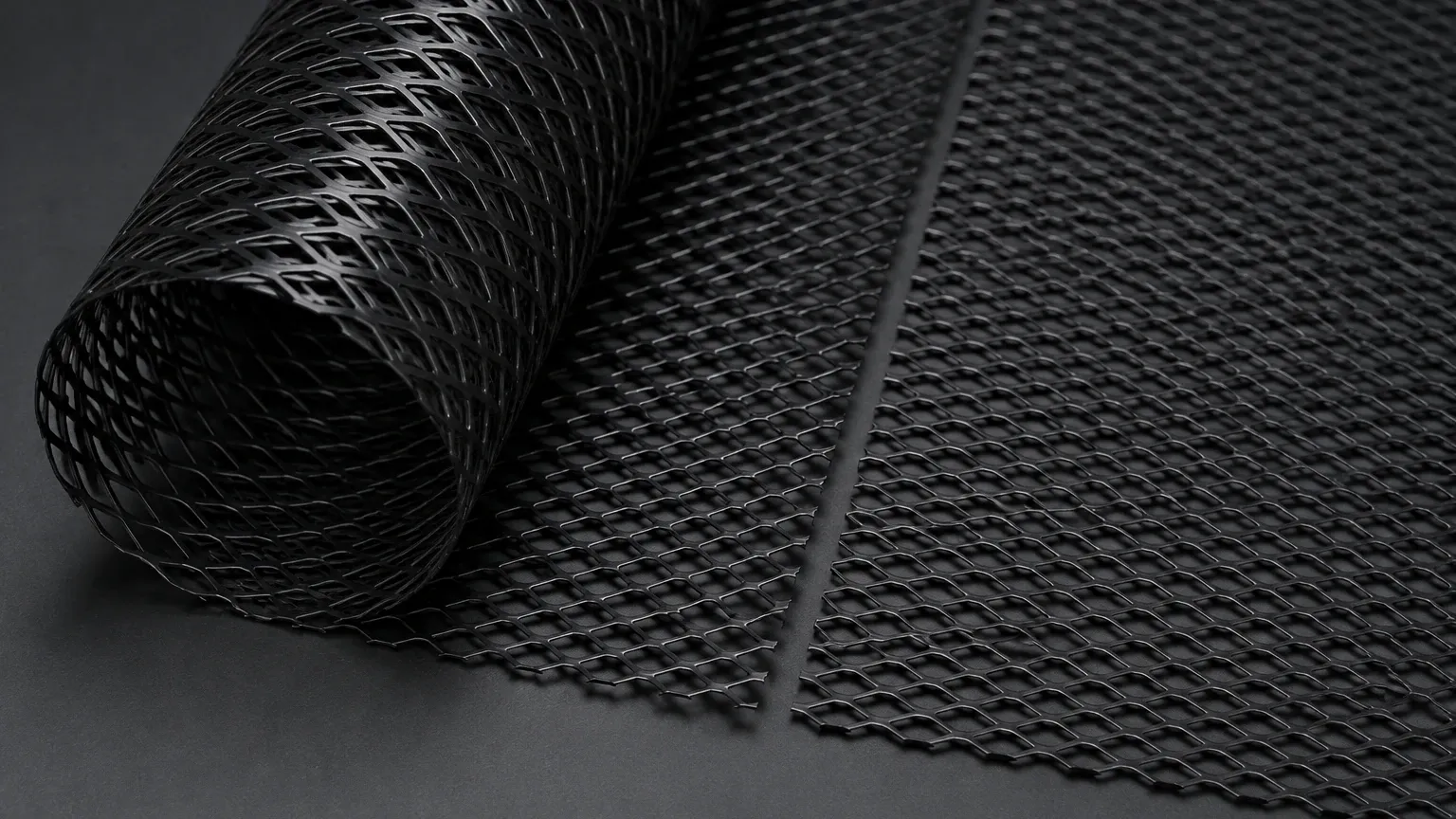
Expanded Metal Black
In industrial engineering and architectural design, the selection of materials often hinges on a balance between structural integrity and environmental resistance. Expanded metal black refers to expanded metal sheets—typically manufactured from carbon steel, aluminum, or stainless steel—that have undergone a specialized finishing process to achieve a black surface. This finish is not merely aesthetic; it serves critical functional roles in light management, corrosion protection, and chemical resistance. For engineers and procurement specialists, understanding the technical nuances of expanded metal black is essential for ensuring long-term performance in filtration, safety guarding, and structural applications.
Understanding the Manufacturing of Expanded Metal
Before exploring the specifics of the black finish, it is necessary to understand the underlying structure of the material. Expanded metal is produced by simultaneously slitting and stretching a solid metal sheet. This process creates a diamond-shaped pattern of openings, where the metal "strands" are interconnected by "bonds."
Unlike perforated metal, which involves punching holes and generating scrap material, expanded metal is manufactured without any waste. This makes it a highly cost-effective choice for large-scale industrial projects. The resulting mesh can be supplied in two primary forms:
1. Raised (Standard) Expanded Metal: The strands are set at a sharp angle to the plane of the sheet, providing a slip-resistant surface and high structural rigidity.
2. Flattened Expanded Metal: The raised sheet is passed through a cold-rolling reducing mill, which flattens the strands and bonds into a single plane. This is often preferred when a smooth surface is required for subsequent coating processes, such as those used to create expanded metal black.
Finishing Technologies for Expanded Metal Black
The term "black" in this context usually refers to one of several industrial coating processes. The choice of coating significantly impacts the material's durability and suitability for specific environments.
Powder Coating
Powder coating is the most common method for producing expanded metal black. It involves applying a dry powder—typically a thermoplastic or a thermoset polymer—electrostatically and then curing it under heat. This creates a hard, durable finish that is thicker than conventional paint. For industrial filtration support or safety guards, powder coating provides excellent resistance to chipping, scratching, and UV degradation.
PVC/Plastic Coating
In environments where chemical exposure or high humidity is a concern, PVC (Polyvinyl Chloride) coating is often utilized. This process involves dipping the metal into a liquid plastisol or applying a powder coating of PVC. The resulting finish is thicker and more flexible than standard powder coating, providing a "soft" touch and superior corrosion resistance in marine or wastewater treatment applications.
Black Oxide and Anodizing
For precision components where dimensional tolerances are tight, black oxide (for steel) or black anodizing (for aluminum) may be used. These are chemical conversion coatings that do not add significant thickness to the strands. While they provide less corrosion protection than powder coating, they are ideal for internal machine components where light reflection must be minimized without altering the mesh's physical dimensions.
Key Technical Specifications and Engineering Considerations
When specifying Perforated & Expanded Metal with a black finish, engineers must evaluate several geometric and mechanical properties to ensure the component meets the application's demands.
SWD and LWD
The diamond pattern is defined by the Short Way of Design (SWD) and the Long Way of Design (LWD). These measurements are taken from the center of the bond to the center of the next bond. The ratio between SWD and LWD determines the open area percentage, which is a critical factor in airflow and filtration efficiency.
Strand Width and Thickness
The strand width refers to the amount of metal between the openings, while the thickness refers to the gauge of the original sheet. In expanded metal black, the coating thickness must be factored into the final dimensions. A heavy powder coat can reduce the effective open area of a fine mesh, which may impact pressure drop in filtration systems.
Open Area Percentage
The open area is the ratio of the openings to the total area of the sheet. For ventilation and filtration, a higher open area is generally preferred to minimize resistance. However, for security or safety guarding, a smaller open area may be required to prevent the passage of tools or fingers.
Industrial Applications of Black Expanded Metal
The unique properties of expanded metal black make it suitable for a wide range of demanding industrial sectors.
Filtration Support and Protection
In complex filtration systems, expanded metal often serves as a rigid support structure for finer wire mesh or filter media. The black finish is frequently used in architectural filtration or HVAC systems where the filter components are visible. The dark surface helps the filter blend into the background while providing the necessary mechanical strength to withstand high-pressure differentials.
Safety Guarding and Machine Enclosures
In manufacturing environments, expanded metal black is used to create safety guards for moving machinery. The black coating reduces glare from overhead industrial lighting, improving visibility for operators who need to monitor equipment through the mesh. Furthermore, the coating provides an extra layer of electrical insulation and corrosion resistance in wash-down areas.
Architectural and Acoustic Panels
Beyond purely functional roles, expanded metal black is widely used in architectural applications, such as ceiling panels and wall cladding. In these contexts, the black finish is often used for acoustic dampening (when paired with an acoustic backing) and for its ability to hide mechanical systems (cables, pipes, and ducts) located behind the panels.
Selection Criteria for Engineers and Purchasing Teams
Selecting the right expanded metal black product requires a thorough assessment of the operating environment and performance expectations. Engineers should confirm the following details before procurement:
* Material Compatibility: Ensure the base metal (e.g., carbon steel vs. stainless steel) is compatible with the chemical environment, even if the coating is damaged. For high-corrosion areas, a stainless steel base with a black finish provides the highest level of security.
* Coating Integrity: In applications involving vibration or mechanical stress, the adhesion of the black coating is paramount. Specify the required coating thickness (measured in mils or microns) and any necessary pre-treatment, such as zinc phosphating, to enhance bond strength.
* Environmental Exposure: If the material will be exposed to direct sunlight, a UV-stabilized polyester powder coating is necessary to prevent chalking or fading. For indoor industrial use, an epoxy-based coating may offer better chemical resistance.
* Total Cost of Ownership (TCO): While carbon steel expanded metal black is more affordable initially, the long-term cost of maintenance or replacement due to corrosion should be weighed against the higher upfront cost of coated stainless steel or aluminum.
Maintenance and Durability Factors
The longevity of expanded metal black depends heavily on the maintenance of the surface coating. In industrial settings, the following practices are recommended:
1. Regular Inspection: Check for signs of coating failure, such as bubbling, cracking, or rusting at the bond points. These areas are under the most stress during the expansion process and are often the first to show signs of wear.
2. Cleaning Protocols: Use non-abrasive cleaning agents. Harsh chemicals or high-pressure power washing can strip the coating, especially if the water temperature exceeds the coating's thermal stability limit.
3. Touch-up Procedures: For safety guards or structural panels, keep a compatible black touch-up paint on hand to seal any scratches or abrasions that occur during installation or operation. This prevents sub-film corrosion from spreading.
Conclusion
Expanded metal black is a versatile and cost-effective solution for industrial applications requiring a combination of strength, visibility control, and environmental protection. Whether used as a support structure in a high-performance filtration system or as a safety barrier in a manufacturing plant, the effectiveness of the material depends on the precise specification of both the metal substrate and the finishing process. By understanding the technical trade-offs between different coating types and mesh geometries, engineering and purchasing teams can achieve optimized performance and durability for their specific filtration and industrial needs.
