


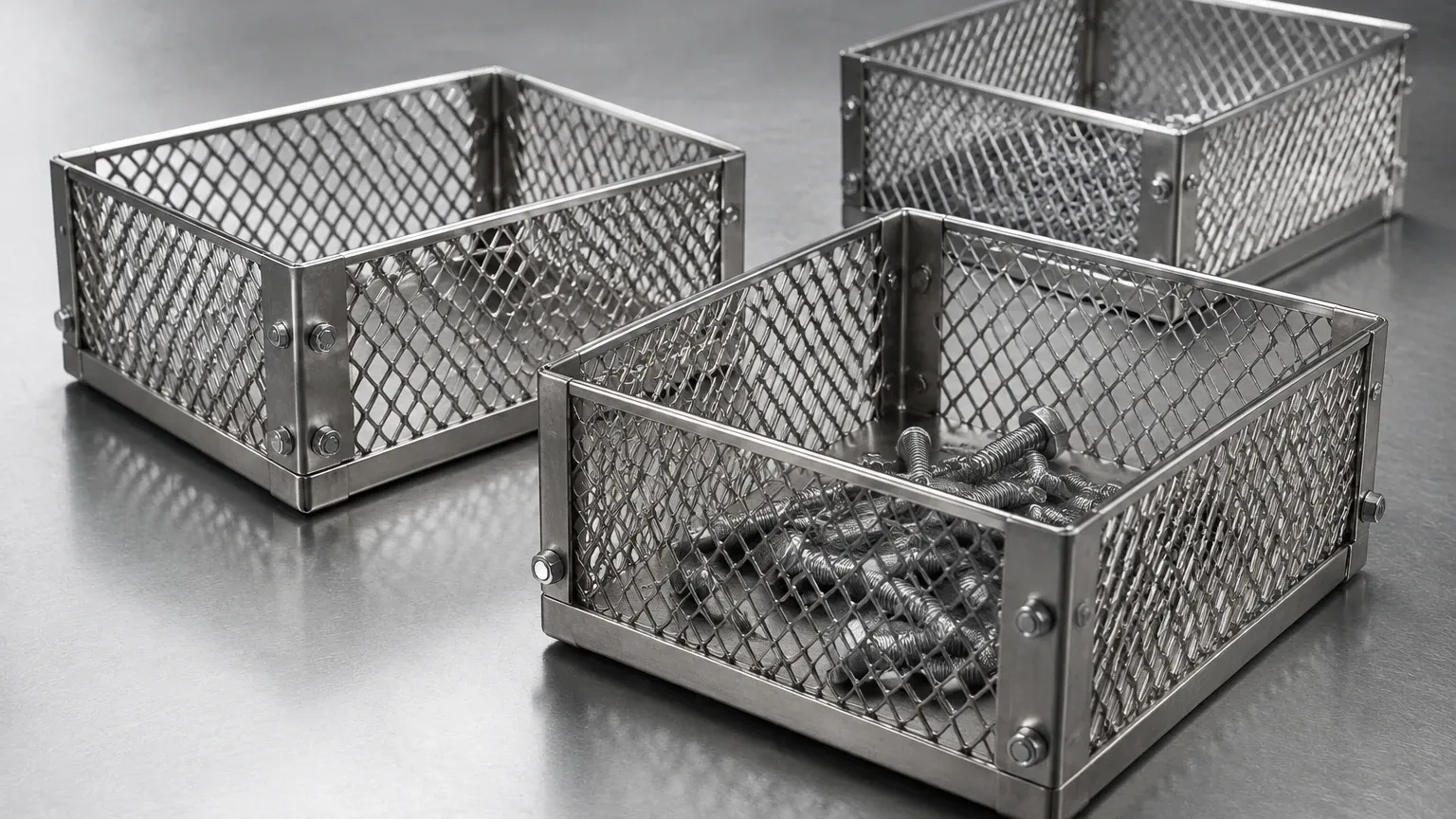
Expanded Metal Bolt Boxes
In industrial construction and heavy equipment installation, the precision of foundation anchoring is a critical factor in long-term structural integrity. Expanded metal bolt boxes serve as a fundamental component in this process, providing a reliable method for creating voids in concrete foundations to accommodate anchor bolts. These specialized components allow for the subsequent adjustment and grouting of bolts, ensuring that heavy machinery—ranging from chemical reactors to hydraulic presses—is secured with absolute accuracy.
For engineers and procurement teams, selecting the right Perforated & Expanded Metal components for bolt box fabrication involves understanding the intersection of material science, mechanical bonding, and structural requirements. This guide examines the technical considerations, material selection, and performance expectations of expanded metal bolt boxes in demanding industrial environments.
Engineering Principles of Expanded Metal in Bolt Box Design
The primary function of an expanded metal bolt box is to create a pre-formed cavity within a concrete pour. Unlike solid-walled sleeves, expanded metal provides a unique geometric profile that facilitates a superior mechanical bond between the primary foundation and the secondary grout pour.
The Expansion Process and Structural Integrity
Expanded metal is manufactured by simultaneously slitting and stretching a solid metal sheet. This process creates a continuous piece of mesh without joins or welds, which preserves the inherent strength of the base material. In the context of bolt boxes, this monolithic structure is vital. When concrete is poured around the box, the mesh must resist the hydrostatic pressure of the wet mix without collapsing or deforming, which would compromise the bolt's clearance.
Mechanical Keying and Grout Adhesion
The diamond-shaped apertures of expanded metal act as a "key" for the concrete. As the foundation is poured, the concrete partially penetrates the mesh, creating a rugged, high-friction interface. Once the anchor bolt is positioned and the box is filled with non-shrink grout, the grout interlocks through the mesh with the surrounding concrete. This creates a unified structural element that can withstand the significant shear and tensile forces generated by vibrating or heavy industrial equipment.
Material Selection and Compatibility
In industrial filtration and structural applications, material durability is non-negotiable. While mild steel bolt boxes are common in standard civil engineering, industrial applications—particularly in chemical processing, water treatment, and food production—often require the corrosion resistance of stainless steel.
Stainless Steel vs. Carbon Steel
Kaifil specializes in stainless steel solutions because of the material's performance in aggressive environments. For expanded metal bolt boxes, the choice of material impacts the total cost of ownership and the lifespan of the foundation:
* 304 Stainless Steel: Offers excellent resistance to atmospheric corrosion and is suitable for most food and beverage or general industrial applications.
* 316L Stainless Steel: Contains molybdenum, providing superior resistance to chlorides and acidic environments, making it the standard for chemical processing and marine-adjacent facilities.
* Galvanized Steel: A cost-effective alternative for less corrosive environments, though the expansion process can sometimes expose raw edges that require post-treatment to prevent rust.
Galvanic Corrosion Considerations
Engineers must also consider the compatibility between the bolt box, the anchor bolt itself, and any reinforcement bar (rebar) in the vicinity. Using a stainless steel bolt box with carbon steel rebar requires careful consideration of the electrochemical potential to prevent localized corrosion, especially in moisture-prone environments like water treatment plants.
Key Evaluation Criteria for Industrial Bolt Boxes
When specifying expanded metal bolt boxes, technical professionals should evaluate products based on several critical parameters to ensure they meet the project's engineering tolerances.
1. Mesh Aperture (SWD and LWD)
The Short Way of Design (SWD) and Long Way of Design (LWD) dimensions determine the size of the diamond openings. For bolt boxes, the aperture must be large enough to allow for effective mechanical keying but small enough to prevent excessive concrete ingress that might fill the void intended for the bolt. Typical industrial specifications often call for a medium-mesh density that balances these two needs.
2. Strand Thickness and Width
The gauge of the metal and the width of the strands dictate the box's rigidity. In deep foundations where the concrete head pressure is high, a heavier gauge is required to prevent the box from "crushing." Engineers should calculate the expected pressure during the pour to select a strand thickness that maintains the box's internal diameter.
3. Dimensional Accuracy
Industrial machinery often has very tight tolerances for bolt placement. Bolt boxes are typically tapered (conical or pyramidal) to allow for easier positioning and to prevent the box from being pulled out under tension. The accuracy of these dimensions—top diameter, bottom diameter, and total length—is essential for ensuring the anchor bolt has the necessary range of movement for final alignment.
Applications Across Industrial Sectors
Expanded metal bolt boxes are utilized across various sectors where heavy-duty filtration and structural stability are paramount. The expertise required to manufacture precision Perforated & Expanded Metal for filtration translates directly to the reliability of these structural components.
Chemical and Petrochemical Processing
In these environments, foundations support massive pressure vessels and heat exchangers. Bolt boxes must resist chemical runoff and soil-borne contaminants that could degrade the anchoring system over decades of service.
Food and Beverage Production
Hygiene is the primary concern here. Stainless steel expanded metal bolt boxes are preferred because they do not shed rust or scale into the production environment, and they can withstand the rigorous wash-down procedures involving caustic cleaning agents.
Hydraulic and Power Generation
High-vibration equipment, such as large hydraulic pumps or turbines, puts immense stress on anchor bolts. The superior mechanical bond provided by expanded metal ensures that the grout-to-concrete interface does not delaminate under cyclic loading, preventing equipment misalignment and potential failure.
Installation and Performance Expectations
Proper installation is as important as material quality. If a bolt box is installed incorrectly, the resulting foundation may require expensive remedial work.
Preventing Deformation and Floating
During the concrete pour, bolt boxes must be securely tied to the rebar cage. Because they contain air, they have a tendency to "float" or shift as the concrete is vibrated. Using expanded metal with an appropriate open area percentage helps by allowing some air to escape and providing more points for secure wire-tying.
Grouting and Finishing
Once the foundation has cured and the machinery is leveled, the bolt box is filled with grout. The design of the expanded metal ensures that the grout flows into every crevice of the diamond mesh. Performance expectations should include zero shrinkage at the interface and a load transfer mechanism that distributes stress evenly into the surrounding concrete mass.
Replacement and Maintenance
While bolt boxes are generally considered permanent parts of the foundation, their durability determines the maintenance cycle of the machinery they support. A failed anchor due to corrosion of the sleeve or poor bonding can lead to catastrophic equipment damage. By selecting high-quality stainless steel expanded metal from the outset, facilities can avoid the astronomical costs associated with foundation repair.
Customization and OEM Solutions
Every industrial project has unique requirements based on the equipment's footprint and the environmental conditions. Standard off-the-shelf bolt boxes may not satisfy the specific needs of a pharmaceutical cleanroom or a high-salinity desalination plant.
Tailored Engineering
Kaifil provides customized filtration and metal solutions, allowing engineers to specify exact dimensions, mesh types, and material grades. Customization options include:
* Variable Taper Angles: To accommodate specific bolt swing requirements.
* Integrated Flanges: For easier mounting to formwork.
* Specialized Coatings: For additional chemical resistance or to enhance the bond with specific types of polymer grouts.
Total Cost Considerations
When evaluating the cost of expanded metal bolt boxes, it is essential to look beyond the initial purchase price. The "total cost" includes the ease of installation, the reduction in potential rework, and the extended service life of the foundation. Investing in precision-manufactured stainless steel components reduces the risk of project delays and long-term structural liabilities.
Conclusion: Selecting a Technical Partner
Choosing the right supplier for expanded metal components requires a partner who understands the rigors of industrial applications. Whether the requirement is for precision filtration or structural bolt boxes, the quality of the metal and the accuracy of the manufacturing process are the determining factors in performance. Engineers and purchasing teams should seek manufacturers like Kaifil, who combine technical expertise in material science with advanced manufacturing capabilities to deliver reliable, high-performance solutions.
For those managing complex industrial projects, confirming material certifications, load-bearing specifications, and customization capabilities is the next logical step in ensuring a successful installation. High-quality Perforated & Expanded Metal remains the gold standard for creating the robust, dependable foundations required by modern industry.
