


Expanded Metal Bunnings
In the procurement process for industrial components, engineers and purchasing managers often encounter a crossroads between readily available retail products and custom-engineered industrial solutions. When searching for "expanded metal Bunnings," many users are looking for immediate, off-the-shelf solutions for small-scale repairs, architectural accents, or general-purpose screening. However, for industrial filtration, chemical processing, and high-pressure hydraulic applications, the requirements for material integrity, precise geometry, and chemical resistance often exceed the specifications of retail-grade products.
Understanding the distinction between general-purpose expanded metal and precision-engineered Perforated & Expanded Metal is critical for ensuring the longevity and efficiency of industrial systems. This guide explores the technical parameters, material considerations, and application-specific requirements that differentiate retail offerings from professional filtration components.
The Difference Between Retail and Industrial Expanded Metal
Retail outlets like Bunnings serve a vital role in providing accessible materials for DIY projects, residential fencing, and light-duty maintenance. The expanded metal found in these environments is typically optimized for cost and general utility. It is often available in standard sizes with limited material options, such as mild steel, aluminum, or galvanized steel.
In contrast, industrial-grade expanded metal, such as that manufactured by Kaifil, is designed to meet rigorous engineering standards. In industrial filtration, expanded metal often serves as the structural backbone for filter cartridges or as a primary screening element in harsh environments. The differences become apparent when evaluating three key areas:
1. Material Grade and Traceability: Industrial applications often require specific stainless steel grades like 304, 316, or 316L to withstand corrosive chemicals or high temperatures. Professional manufacturers provide material certifications and ensure that the alloy composition meets ASTM or ISO standards.
2. Manufacturing Tolerances: While a retail sheet might have slight variances in strand width or diamond size, industrial components require tight tolerances to ensure they fit perfectly into filter housings or assembly lines.
3. Edge Treatments and Finishing: Industrial expanded metal can be supplied with specific edge configurations—such as bonded edges or flattened profiles—to facilitate welding or to prevent damage to delicate filter media during the assembly of multi-layer cartridges.
Key Technical Specifications for Expanded Metal
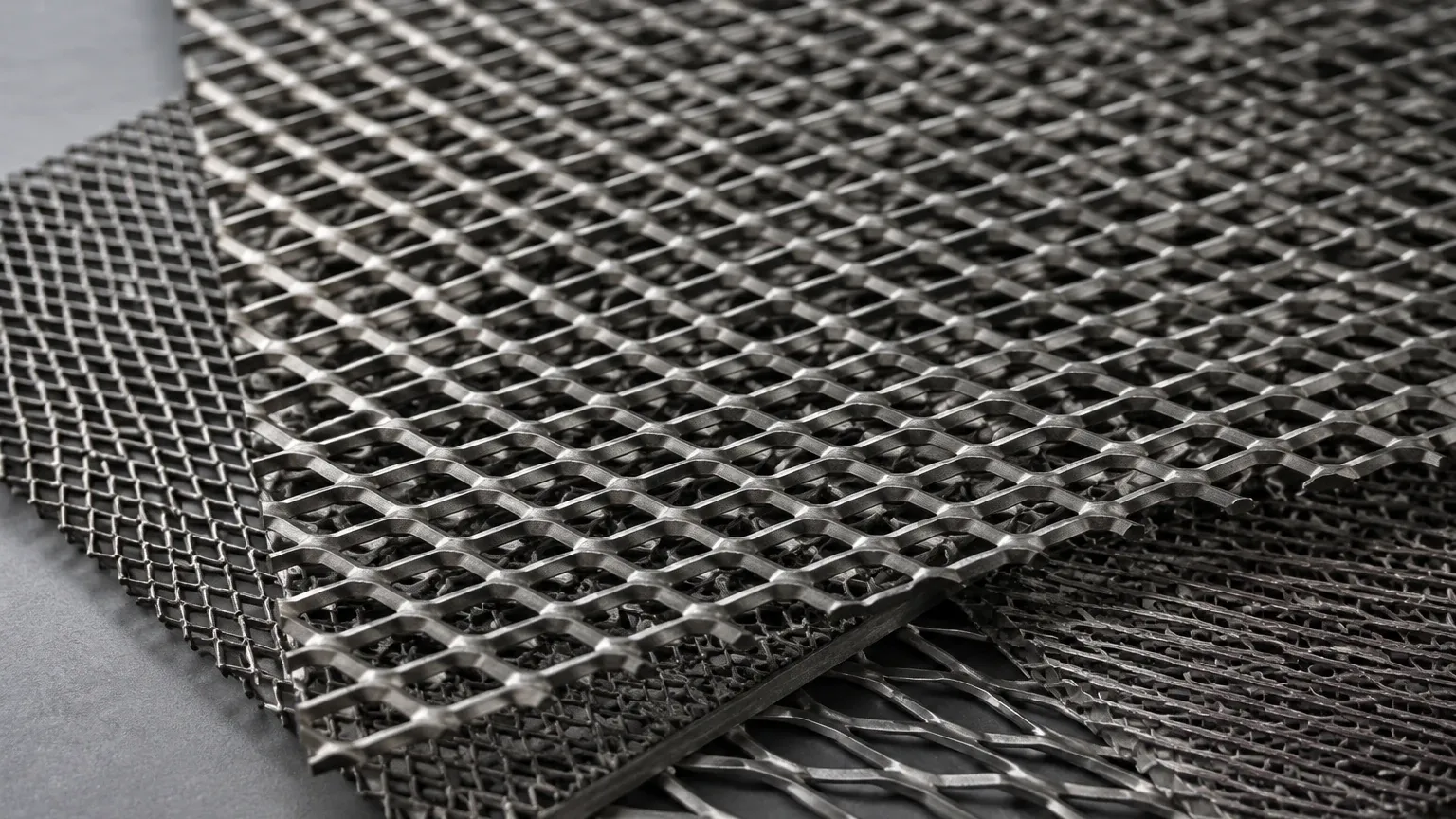
To move beyond the "expanded metal Bunnings" level of procurement, engineers must define the specific geometric and mechanical properties required for their application. Expanded metal is produced by simultaneously slitting and stretching a solid metal sheet, creating a diamond-shaped pattern without any material waste. This process results in several critical dimensions:
Long Way of Diamond (LWD) and Short Way of Diamond (SWD)
LWD refers to the distance from the center of the joint on one side to the center of the joint on the opposite side across the long axis. SWD is the equivalent measurement across the short axis. These dimensions determine the open area of the mesh, which directly impacts flow rates and pressure drops in filtration systems.
Strand Width and Thickness
The strand width is the amount of metal between the diamonds, while the thickness refers to the gauge of the original base metal. Together, these determine the mechanical strength of the mesh. In heavy-duty hydraulic filters, thicker strands are necessary to resist the collapsing forces of high-pressure fluid flow.
Open Area Percentage
For filtration professionals, the open area is perhaps the most critical metric. It defines the ratio of the openings to the total area of the sheet. A higher open area allows for greater throughput but may compromise the structural rigidity of the component. Balancing these two factors requires precise engineering calculations based on the viscosity of the fluid and the expected particulate load.
Applications in Industrial Filtration and Support
While expanded metal Bunnings products might be used for a garden trellis or a simple vent cover, industrial expanded metal is a foundational component in complex filtration systems. Its unique structure offers several advantages over woven wire mesh or perforated plate in specific scenarios.
Filter Media Support
In many liquid and gas filtration systems, the primary filter media (such as fine wire mesh or synthetic fabric) is too delicate to withstand the pressure of the flow. Expanded metal is used as a support cage, either on the inner or outer diameter of a filter cartridge. Its rigid, three-dimensional structure prevents the media from pleat-bunching or collapsing, ensuring the entire surface area of the filter remains active.
Coarse Pre-filtration
In water treatment and chemical processing, expanded metal acts as a robust pre-filter. It captures large debris before the fluid reaches more expensive, high-precision filter stages. Because it is made from a single piece of metal, there are no wires to unravel or welds to break, making it exceptionally durable in high-vibration environments.
Flame Arrestors and Heat Shields
The expanded metal process creates a series of angled strands that can break up flame fronts or dissipate heat. This makes it a preferred material for safety components in the petrochemical and power generation industries, where retail-grade materials would fail to meet safety certifications.
Material Selection: Beyond Standard Hardware Store Grades
When evaluating expanded metal for industrial use, the choice of material is dictated by the operating environment. While galvanized steel is common in retail settings for its basic rust resistance, industrial applications typically demand more specialized alloys.
* Stainless Steel (304/316): These are the workhorses of the filtration industry. Grade 316, containing molybdenum, offers superior resistance to chlorides and marine environments. For pharmaceutical and food-grade applications, stainless steel is mandatory due to its ease of cleaning and resistance to bacterial growth.
* Specialty Alloys: In highly acidic or high-temperature environments, materials like Monel, Inconel, or Titanium may be required. These materials are rarely, if ever, available through retail channels like Bunnings and must be sourced from specialized manufacturers like Kaifil.
* Aluminum: Used where weight is a primary concern, such as in aerospace filtration or mobile hydraulic systems. Industrial aluminum expanded metal is often anodized to improve surface hardness and corrosion resistance.
Customization: Why OEM Manufacturing Matters
The primary limitation of searching for "expanded metal Bunnings" for industrial projects is the lack of customization. Industrial filtration challenges are rarely solved with standard off-the-shelf sizes. OEM manufacturers provide several critical customization options:
Flattened vs. Raised Expanded Metal
Standard expanded metal (raised) has strands that are turned at an angle to the plane of the sheet. This creates a textured surface that is excellent for grip or breaking up flow. However, for many filtration assemblies, the mesh must be "flattened." This involves passing the raised mesh through a cold-rolling mill to create a smooth, flat surface. Flattened expanded metal is easier to weld and is less likely to abrade adjacent filter layers.
Custom Sheet Sizes and Shapes
Industrial projects often require non-standard dimensions to minimize waste and reduce assembly time. A manufacturer can provide expanded metal in coils for continuous production lines or in precision-cut circles and rectangles for specific filter housing designs.
Variable Mesh Patterns
In some advanced applications, engineers may require a mesh that transitions from a tight pattern to a more open pattern within a single sheet. This level of precision is only possible through controlled industrial manufacturing processes.
Evaluating Total Cost and Performance for Industrial Projects
While the initial price point of a retail product might seem attractive, the total cost of ownership (TCO) in an industrial setting tells a different story. Choosing the wrong grade of expanded metal can lead to catastrophic system failures, unplanned downtime, and frequent replacement cycles.
When sourcing Perforated & Expanded Metal, engineers should confirm the following with their supplier:
1. Pressure Ratings: Can the expanded metal support the maximum differential pressure expected across the filter media?
2. Chemical Compatibility: Is the chosen alloy resistant to the specific chemicals, cleaning agents, and temperatures present in the process?
3. Compliance: Does the material meet industry-specific standards, such as FDA requirements for food contact or ISO quality management standards?
4. Longevity: What is the expected service life of the component compared to a standard retail alternative?
By focusing on these technical benchmarks, purchasing teams can move beyond the limitations of general-purpose hardware and secure components that are purpose-built for the rigors of industrial filtration. Kaifil’s expertise in custom stainless steel solutions ensures that every piece of expanded metal is optimized for its specific role, providing the reliability and performance that demanding industrial environments require.
