


Expanded Metal Infill Panels
In industrial and architectural engineering, the selection of infill materials requires a balance between structural integrity, functional transparency, and long-term durability. Expanded metal infill panels have emerged as a primary solution for these requirements, offering a unique combination of strength-to-weight efficiency and versatile performance. Unlike woven wire or perforated sheets, expanded metal is produced from a single piece of material that is simultaneously slit and stretched, resulting in a continuous mesh without welds or joints.
For engineers and procurement professionals, understanding the technical nuances of expanded metal—from the geometry of the diamond opening to the material properties of the alloy—is essential for ensuring safety and performance in demanding environments. This guide explores the engineering considerations, selection criteria, and application benefits of expanded metal infill panels within industrial frameworks.
The Engineering Behind Expanded Metal Production
The manufacturing process of expanded metal distinguishes it from other forms of Perforated & Expanded Metal. The process begins with a solid metal sheet or coil, which is fed through a machine equipped with a specialized knife. This knife slits the metal at regular intervals while the machine stretches the material.
This simultaneous slitting and stretching creates a series of diamond-shaped openings. Because the metal is expanded rather than punched, there is zero material waste during production. This makes it a highly sustainable and cost-effective option compared to perforated metal, where the "slugs" or punched-out circles must be recycled.
Standard vs. Flattened Expanded Metal
Two primary forms of expanded metal are used for infill panels:
1. Standard (Raised) Expanded Metal: In this form, the strands and bonds are set at a uniform angle to the plane of the sheet. This creates a three-dimensional surface that provides excellent grip (when used for flooring) and unique light-diffusing properties. The raised structure adds significant rigidity to the panel.
2. Flattened Expanded Metal: Standard expanded metal is passed through a cold-rolling reducing mill, which flattens the strands and bonds into the same plane as the sheet. This results in a smooth, two-dimensional surface. Flattened expanded metal is often preferred for infill panels where a flush surface is required for safety or aesthetic reasons, such as in handrail systems or interior partitions.
Technical Specifications for Expanded Metal Infill Panels
When specifying expanded metal infill panels for a project, engineers must define several key geometric and material parameters to ensure the product meets the structural and filtration requirements of the application.
SWD and LWD Dimensions
The size of the diamond opening is defined by two primary measurements:
* SWD (Short Way of Design): The distance from the center of one bond to the center of the next bond measured across the short diamond diagonal.
* LWD (Long Way of Design): The distance from the center of one bond to the center of the next bond measured across the long diamond diagonal.
These dimensions dictate the "open area" of the panel, which is critical for applications requiring specific airflow, light transmission, or visibility. For example, in HVAC enclosures, a higher open area percentage is necessary to prevent static pressure drop, while in security fencing, a smaller SWD/LWD ratio may be chosen to prevent climbing or the passage of small objects.
Strand Width and Thickness
The strand width refers to the amount of metal between the diamond openings, while the strand thickness refers to the thickness of the original base material. Together, these determine the overall strength and weight of the panel. For industrial infill panels, using a heavier gauge stainless steel ensures the panel can withstand impact loads and environmental stressors without deforming.
Material Selection: Stainless Steel Advantages
While expanded metal can be produced from aluminum or carbon steel, stainless steel (specifically Grades 304 and 316) is the standard for high-performance industrial applications.
* Grade 304: Offers excellent corrosion resistance and is suitable for most indoor and moderate outdoor environments.
* Grade 316: Contains molybdenum, providing superior resistance to chlorides and marine environments. This is the preferred choice for chemical processing plants, offshore platforms, and wastewater treatment facilities.
Advantages of Expanded Metal in Industrial Infill Applications
Expanded metal infill panels offer several distinct advantages over alternative materials like glass, solid plate, or traditional wire mesh.
Structural Integrity and Load Distribution
Because the mesh is formed from a single piece of metal, there are no welds to break or weaves to unravel. This continuity allows for superior load distribution across the panel. In the event of an impact, the energy is dispersed throughout the interconnected strands, reducing the risk of localized failure. This makes it an ideal material for safety guards and protective barriers in manufacturing facilities.
Airflow and Visibility
In many industrial settings, infill panels must provide a physical barrier without obstructing airflow or line-of-sight. Expanded metal allows for high levels of transparency and ventilation. This is particularly important for machinery enclosures where heat dissipation is required, or in warehouse partitions where fire sprinkler systems must be able to penetrate the mesh effectively.
Security and Anti-Climb Properties
The geometry of expanded metal can be engineered to be "anti-climb." By selecting a small diamond size and orienting the LWD vertically, the openings become too small for toe-holds or finger-holds. Furthermore, the sharp edges of standard (raised) expanded metal act as a natural deterrent to unauthorized scaling of fences or barriers.
Customization and Framing Considerations
To function effectively as an infill panel, the expanded metal must be properly integrated into a frame or support structure. Customization is a core component of the manufacturing process at Kaifil, where panels are tailored to the specific dimensions and mounting requirements of the client.
Framing Options
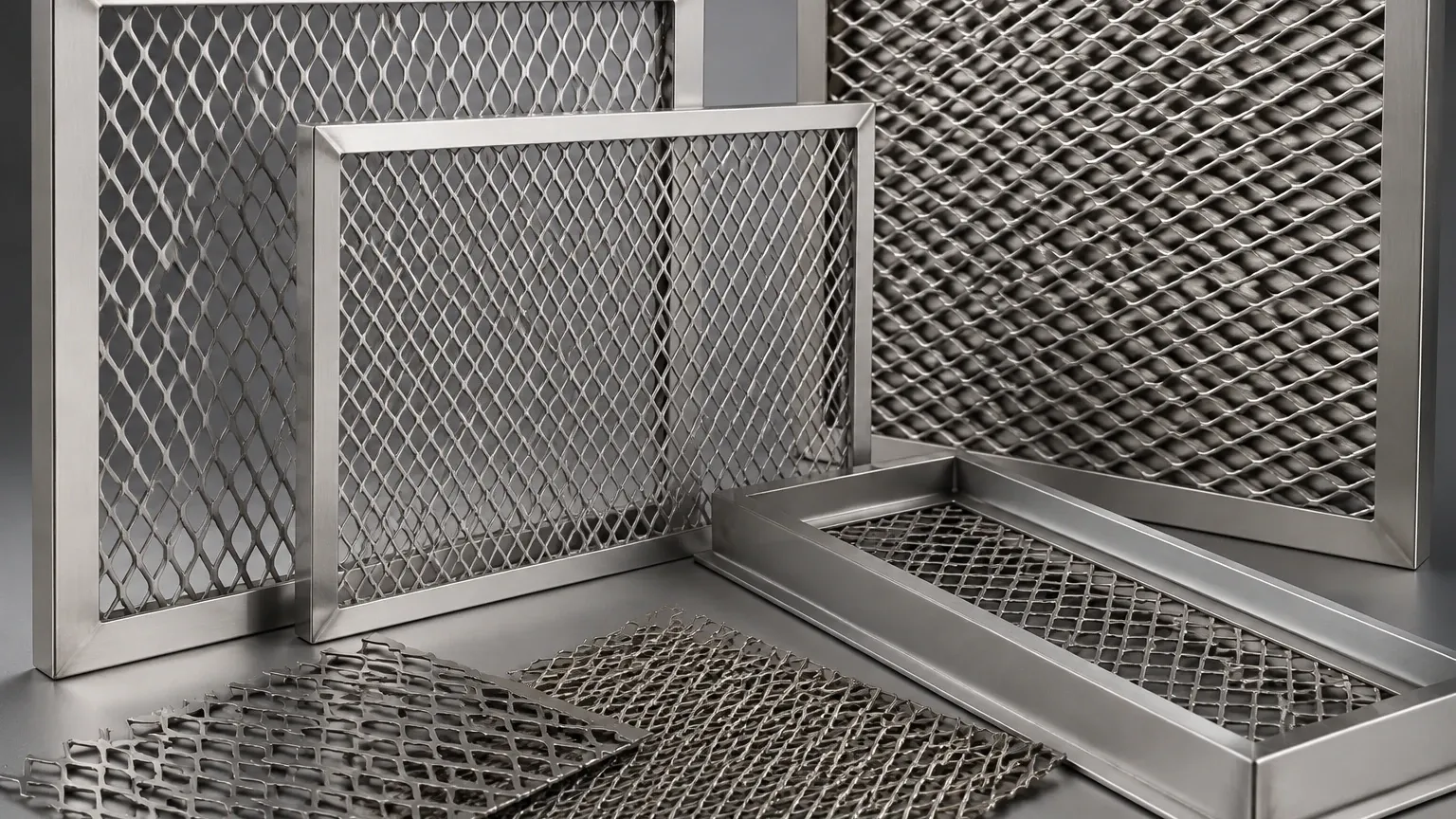
* U-Edging: A metal channel is welded around the perimeter of the expanded metal sheet. This covers the sharp "cut" edges of the diamonds, providing a safe, finished edge and increasing the structural rigidity of the panel.
* Angle Iron Frames: For heavy-duty industrial applications, panels are often welded into angle iron frames. This allows for easy bolting to existing structural posts or machinery housing.
* Flat Bar Framing: A simpler approach where flat bars are used to sandwich the expanded metal, often used for architectural partitions where a slim profile is desired.
Surface Treatments and Finishing
Depending on the environment, additional surface treatments may be applied to the stainless steel panels:
* Passivation: A chemical process that removes free iron from the surface and enhances the protective chromium oxide layer, maximizing corrosion resistance.
* Electropolishing: Provides a high-luster finish and further smoothes the surface, which is beneficial in food processing or pharmaceutical environments where hygiene and cleanability are paramount.
* Powder Coating: Used primarily for architectural applications or color-coding for safety (e.g., bright yellow for machine guards).
Common Applications for Expanded Metal Infill Panels
The versatility of expanded metal allows it to be utilized across a wide spectrum of industrial and commercial sectors.
1. Safety Railing and Balustrade Infill
In multi-level industrial facilities, expanded metal is widely used as infill for handrails and walkways. It provides a robust fall-protection barrier that does not collect dust or debris, unlike solid panels. The transparency ensures that operators have a clear view of the levels below, improving overall site awareness.
2. Machinery Guarding
Protecting personnel from moving parts is a critical safety requirement. Expanded metal infill panels allow for the construction of custom guards that fit around complex machinery. The mesh allows maintenance teams to inspect equipment visually without removing the guard, while the physical barrier prevents accidental contact with hazardous components.
3. HVAC and Equipment Enclosures
Sensitive equipment, such as HVAC units, generators, and transformers, requires protection from vandalism and debris while maintaining maximum airflow. Expanded metal panels provide a secure enclosure that facilitates natural ventilation, preventing equipment overheating.
4. Architectural Facades and Sunshades
Beyond industrial utility, expanded metal is increasingly used in architectural design. When used as a building facade or sunshade, the angle of the strands can be calculated to block direct sunlight during the hottest parts of the day while allowing natural light to enter the building, thereby reducing cooling costs.
Selection Criteria: What Engineers Should Confirm
Before finalizing a purchase order for expanded metal infill panels, technical teams should confirm the following details to ensure the product is fit for purpose:
* Load Requirements: Will the panel be subject to static loads, wind loads, or potential impacts? This determines the required gauge and strand width.
* Environmental Exposure: Is the installation located in a corrosive environment? This dictates the choice between 304 and 316 stainless steel.
* Opening Size (SWD/LWD): What is the minimum object size that must be prevented from passing through? What is the required percentage of open area for airflow?
* Orientation: The orientation of the diamonds (horizontal vs. vertical LWD) affects both the aesthetic appearance and the structural deflection of the panel.
* Tolerances: Precise dimensional tolerances are required for panels that must fit into pre-existing frames or structural openings.
Conclusion
Expanded metal infill panels represent a highly efficient engineering solution for modern industrial infrastructure. By leveraging the inherent strength of the expanded diamond pattern and the durability of stainless steel, these panels provide long-term reliability in safety, security, and filtration applications.
As a specialist in custom metal filtration and precision components, Kaifil provides technical support and manufacturing expertise to help engineers select the optimal configuration for their specific needs. Whether the priority is impact resistance for a machine guard or corrosion resistance for a marine walkway, the correct specification of expanded metal ensures a cost-effective and high-performance result. For detailed technical specifications and to explore customization options for your project, Review product options and application support.
