


Expanded Metal Jali
In the landscape of industrial filtration and structural support, expanded metal jali serves as a critical component, offering a unique combination of strength, permeability, and cost-efficiency. Unlike traditional woven wire mesh or perforated sheets, expanded metal is produced through a specific slitting and stretching process that creates a continuous, jointless piece of material. For engineers and procurement specialists, understanding the technical nuances of this material is essential for optimizing filtration performance and ensuring the longevity of industrial equipment.
At Kaifil, the focus remains on providing precision-engineered Perforated & Expanded Metal solutions that meet the rigorous demands of chemical processing, pharmaceutical manufacturing, and high-pressure hydraulic systems. This guide examines the technical specifications, material considerations, and application-specific criteria that define the selection of expanded metal jali in professional B2B environments.
Understanding Expanded Metal Jali in Industrial Applications
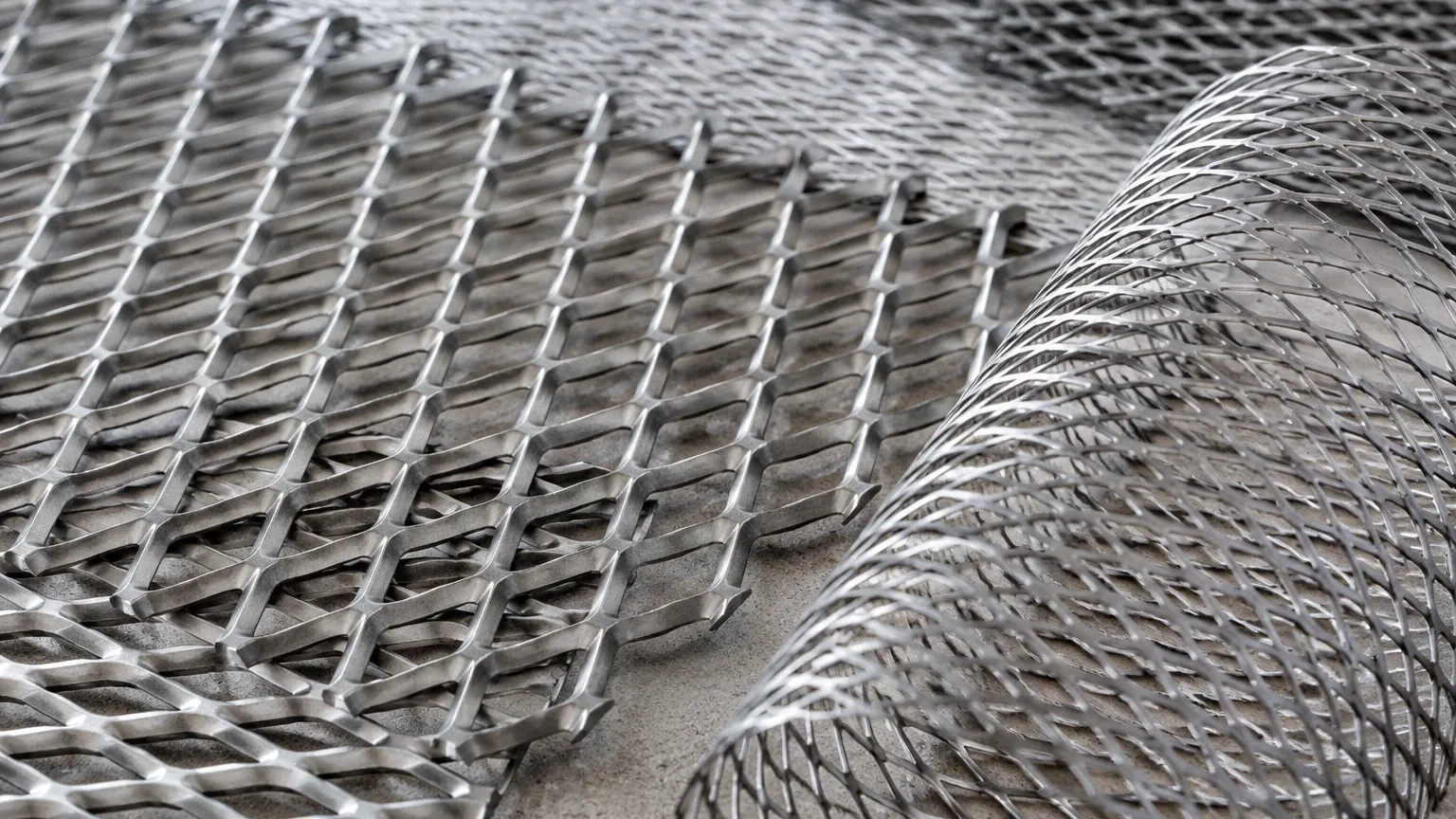
The term "jali" traditionally refers to a perforated or latticed screen. In a modern industrial context, expanded metal jali describes a metal sheet that has been simultaneously slit and cold-stretched into a diamond-shaped pattern. This process does not involve the removal of material, which distinguishes it from perforated metal where holes are punched out, resulting in scrap waste.
From an engineering perspective, the continuous structure of expanded metal provides superior structural integrity. Because the strands are not woven or welded but are part of a single piece of metal, the material resists unraveling even when cut into complex shapes. This characteristic is particularly valuable in filtration systems where the integrity of the support structure directly impacts the reliability of the primary filter media.
Manufacturing Process and Structural Integrity
The production of expanded metal jali involves a reciprocating knife that slits the metal sheet while stretching it forward. This creates a pattern of diamond-shaped openings. The resulting product can be supplied in two primary forms:
1. Standard (Raised) Expanded Metal: The strands and bonds are set at a uniform angle to the plane of the sheet. This provides maximum strength and rigidity, as well as a slip-resistant surface. In filtration, raised expanded metal is often used as a protective outer cage or a high-strength support layer.
2. Flattened Expanded Metal: Standard expanded metal is passed through a cold-rolling reducing mill, which flattens the strands and bonds into the same plane as the sheet. This results in a smooth, flat surface. Flattened jali is frequently used when the filter media (such as fine wire mesh) must sit flush against the support structure to prevent abrasion or uneven pressure distribution.
For industrial designers, the choice between raised and flattened profiles depends on the required flow dynamics and the physical sensitivity of the adjacent filter layers.
Material Selection: Stainless Steel and Specialized Alloys
Material compatibility is a primary concern in industrial filtration. Expanded metal jali must withstand the chemical environment, temperature fluctuations, and mechanical stresses of the application. Kaifil specializes in stainless steel variants, which offer the most robust performance across various sectors.
Stainless Steel 304 and 304L
Grade 304 is the most common choice for general industrial applications. It provides excellent corrosion resistance in non-saline environments and maintains its structural properties at high temperatures. It is widely used in food and beverage processing where hygiene is paramount.
Stainless Steel 316 and 316L
For chemical processing, pharmaceutical production, and marine environments, Grade 316 is the standard. The addition of molybdenum enhances resistance to pitting and crevice corrosion, especially in chloride-rich environments. The "L" (low carbon) variants, such as 316L, are preferred when welding is required, as they minimize carbide precipitation that can lead to intergranular corrosion.
Specialty Alloys
In extreme environments involving highly corrosive acids or ultra-high temperatures, specialty alloys like Monel, Inconel, or Hastelloy may be utilized. These materials ensure that the expanded metal jali does not become the point of failure in a critical filtration assembly.
Key Technical Specifications for Engineering Selection
When specifying expanded metal jali for a project, engineers must define several critical dimensions that dictate both the mechanical strength and the filtration characteristics of the component.
* LWD (Long Way of Diamond): The distance from the center of one bond to the center of the next bond across the long axis of the diamond.
* SWD (Short Way of Diamond): The distance from the center of one bond to the center of the next bond across the short axis of the diamond.
* LWO (Long Way of Opening): The actual width of the opening measured across the long axis.
* SWO (Short Way of Opening): The actual width of the opening measured across the short axis.
* Strand Width: The amount of metal fed between the upper and lower dies to produce one strand.
* Strand Thickness: The thickness of the base metal sheet.
* Open Area: Expressed as a percentage, this indicates the ratio of the area of the openings to the total area of the sheet. This is a vital calculation for determining pressure drop and flow rates in filtration systems.
Accurate measurement of these parameters ensures that the jali provides the necessary support without creating excessive resistance to fluid or gas flow.
The Role of Expanded Metal Jali in Industrial Filtration Systems
In most industrial filtration setups, expanded metal jali does not act as the primary filtering element for fine particles. Instead, it serves several secondary but essential roles:
Support for Pleated Media
In pleated filter cartridges, the expanded metal provides a rigid internal core or external cage. This prevents the pleated media from collapsing or deforming under high differential pressure. The diamond pattern is particularly effective here, as it offers a high open area while maintaining the necessary hoop strength.
Pre-Filtration and Trash Screening
In water treatment and intake systems, coarse expanded metal jali acts as a primary screen to remove large debris before the fluid reaches finer filtration stages. This protects sensitive pumps and high-precision filter membranes from damage.
Flow Diffusion
The angled strands of raised expanded metal can be used to diffuse flow, breaking up laminar streams and ensuring that the fluid is distributed evenly across the surface of the primary filter media. This prevents "channeling," where fluid flows through only a small portion of the filter, leading to premature clogging.
Customization Options and OEM Capabilities
Industrial applications rarely follow a one-size-fits-all approach. Customization is often required to meet specific spatial constraints or performance targets. Kaifil’s manufacturing capabilities allow for significant flexibility in the production of expanded metal jali.
Customization options include:
* Bespoke Diamond Sizes: Tailoring the LWD and SWD to match the specific support requirements of a unique filter media.
* Variable Open Areas: Adjusting strand width to achieve a precise balance between structural rigidity and flow capacity.
* Custom Dimensions and Shapes: Providing pre-cut circles, cylinders, or complex geometries that integrate directly into the customer’s equipment without further processing.
* Edge Finishing: Offering bonded edges or specific margins to facilitate easier installation and welding into larger assemblies.
By working closely with an OEM partner, engineering teams can ensure that the filtration components are optimized for the total system design rather than relying on off-the-shelf compromises.
Evaluating Total Cost of Ownership and Maintenance
While the initial purchase price is a factor, the total cost of ownership (TCO) for expanded metal jali is influenced by its durability and maintenance requirements. In high-demand industrial environments, a failure in a support structure can lead to catastrophic damage to expensive downstream equipment or significant production downtime.
Durability and Replacement Cycles
Stainless steel expanded metal is inherently durable. However, in abrasive environments or those with high vibration, the bonds of the diamonds can experience fatigue. Engineers should specify thicker strands or specialized alloys if the application involves frequent pressure cycling or abrasive slurries. A well-specified jali component should ideally outlast several cycles of the primary filter media replacement.
Cleaning and Reusability
One of the primary advantages of stainless steel expanded metal jali is its cleanability. Unlike synthetic or disposable components, metal jali can be cleaned using ultrasonic baths, high-pressure steam, or chemical solvents. This reusability significantly reduces the long-term operational costs and environmental impact of the filtration system.
Risk Mitigation
Common risks in selecting expanded metal include choosing a material with insufficient corrosion resistance or an open area that causes an unacceptable pressure drop. To mitigate these risks, it is recommended to conduct compatibility testing with the process fluid and perform flow simulations based on the specific LWD/SWD parameters provided by the manufacturer.
Conclusion
Expanded metal jali is more than just a simple screen; it is a highly engineered component that plays a vital role in the efficiency and safety of industrial filtration systems. From providing the structural backbone for pleated cartridges to acting as a robust pre-filter in harsh chemical environments, its versatility is unmatched.
For engineers and purchasing professionals, the key to success lies in precise specification and material selection. By focusing on the technical attributes—such as the diamond geometry, strand dimensions, and alloy properties—organizations can ensure they receive a product that meets their exact operational needs. As a professional manufacturer, Kaifil remains committed to delivering high-performance expanded metal jali solutions that support the most demanding industrial applications worldwide.
