


Expanded Metal Plate
In the landscape of industrial filtration and structural engineering, the expanded metal plate represents a versatile and highly efficient material solution. Unlike perforated metals, which are created by punching holes and removing material, expanded metal is manufactured through a simultaneous slitting and stretching process. This method results in a continuous, jointless mesh that retains the structural integrity of the original metal sheet while providing a specific open area for fluid or gas passage. For engineers and procurement specialists, understanding the nuances of expanded metal plate geometry, material properties, and manufacturing variations is essential for optimizing filtration performance and ensuring long-term durability in demanding environments.
Understanding the Manufacturing Process and Structural Integrity
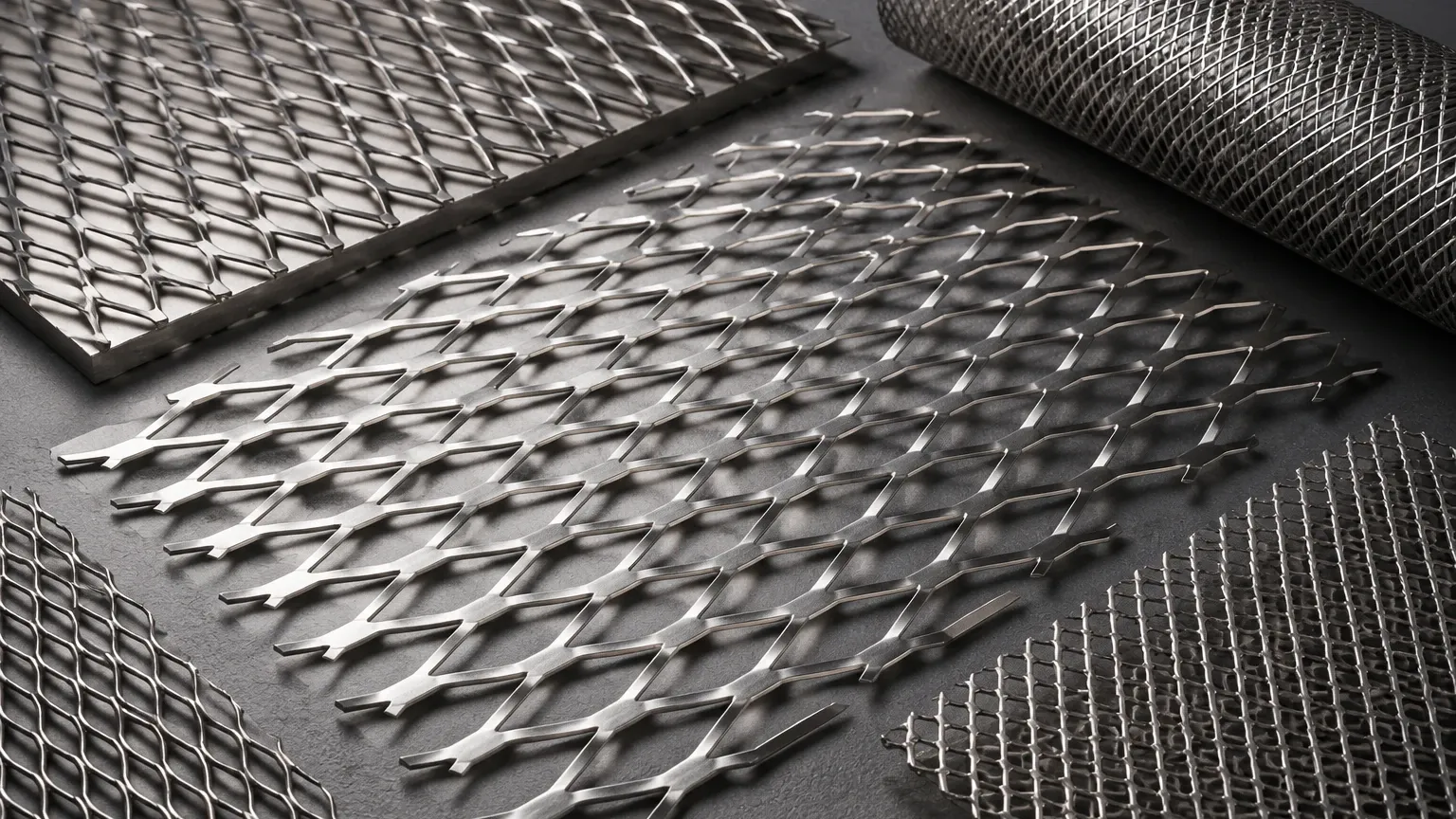
The production of an expanded metal plate begins with a solid sheet or coil of metal, typically stainless steel, carbon steel, or aluminum. The material is fed through an expanding machine where a series of knives slit and stretch the metal in a single motion. This process creates a diamond-shaped pattern of openings, though hexagonal and square patterns are also possible depending on the tooling used.
One of the primary engineering advantages of this process is that it produces no scrap material. Because the metal is stretched rather than punched, the final product can be significantly larger than the original sheet—sometimes up to ten times the original length—without a corresponding increase in weight. This makes the expanded metal plate an exceptionally cost-effective choice for large-scale industrial applications.
From a structural perspective, the "bonds" (the points where the strands intersect) are part of the original metal. There are no welds or joins that could fail under mechanical stress or thermal cycling. This inherent strength allows the plate to support significant loads while maintaining a high strength-to-weight ratio, which is a critical consideration when designing support structures for filter cartridges or protective guards in high-pressure hydraulic systems.
Standard vs. Flattened Expanded Metal Plates
When specifying an expanded metal plate, engineers must choose between two primary finishes: standard (raised) and flattened.
Standard (Raised) Expanded Metal
Standard expanded metal comes directly from the expanding machine. The strands and bonds are set at a uniform angle to the plane of the sheet. This creates a three-dimensional surface that offers several functional benefits:
* Increased Rigidity: The angled strands act as structural trusses, providing greater resistance to bending than a flat sheet of the same weight.
* Directional Flow Control: The orientation of the strands can be used to deflect or direct the flow of media, which is useful in certain specialized filtration and ventilation applications.
* Enhanced Grip: In non-filtration applications, such as industrial walkways or platforms, the raised edges provide excellent slip resistance.
Flattened Expanded Metal
Flattened expanded metal is produced by passing standard expanded metal through a cold-rolling reducing mill. This process levels the strands and bonds, resulting in a smooth, flat surface. Flattened plates are often preferred in filtration for several reasons:
* Uniform Thickness: The rolling process ensures a consistent thickness across the entire sheet, which is vital for precise integration into filter housings or multi-layer mesh laminates.
* Ease of Cleaning: A smooth surface is less likely to trap debris within the mesh structure, making it easier to perform backwashing or manual cleaning cycles.
* Safe Handling: Removing the raised edges reduces the risk of abrasion to adjacent filter media (such as fine wire cloth) and improves safety for maintenance personnel.
Technical Specifications and Terminology
To accurately specify an expanded metal plate for an industrial project, it is necessary to use standardized terminology. These parameters directly influence the filtration accuracy, pressure drop, and mechanical strength of the component.
1. SWD (Short Way of Diamond): The distance from the center of one bond to the center of the next bond measured across the short diamond diagonal.
2. LWD (Long Way of Diamond): The distance from the center of one bond to the center of the next bond measured across the long diamond diagonal.
3. SWO (Short Way of Opening): The clear distance between the inside edges of the diamonds across the short diagonal.
4. LWO (Long Way of Opening): The clear distance between the inside edges of the diamonds across the long diagonal.
5. Strand Width: The amount of metal fed into the machine between the knives for each stroke.
6. Strand Thickness: The thickness of the original base metal sheet.
For filtration applications, the SWO and LWO are the most critical measurements as they define the maximum particle size that can pass through the mesh. However, engineers must also calculate the "Open Area Percentage." This is the ratio of the area of the openings to the total area of the plate. A higher open area reduces the pressure drop across the filter but may compromise the structural support provided to finer filter layers.
Material Selection for Industrial Environments
The choice of material for an expanded metal plate is dictated by the chemical compatibility, temperature, and pressure requirements of the application. As a specialist in stainless steel filtration, Kaifil emphasizes the use of high-grade alloys to ensure longevity in corrosive environments.
* Stainless Steel 304/304L: The most common grade used in industrial filtration. It offers excellent corrosion resistance to a wide range of chemicals and is suitable for most food and beverage or general industrial applications.
* Stainless Steel 316/316L: Contains molybdenum, which provides superior resistance to chlorides and pitting. This is the preferred choice for marine environments, pharmaceutical processing, and aggressive chemical filtration.
* Specialty Alloys: For extreme conditions involving high temperatures or highly acidic/alkaline fluids, materials such as Duplex stainless steel, Monel, or Inconel may be utilized.
When selecting a material, it is also important to consider the "work hardening" that occurs during the expanding process. The stretching of the metal increases its hardness and tensile strength, which can be beneficial for structural applications but may require specific annealing processes if further forming or welding is required.
Applications of Expanded Metal Plates in Filtration
Expanded metal plates serve multiple roles within industrial filtration systems. Their primary function is often as a support or drainage layer, but they are also used as primary filter elements in coarser applications.
Support for Fine Filter Media
In many high-precision filter cartridges, the primary filtration is performed by a delicate layer of fine wire mesh or non-woven fiber. These materials lack the structural strength to withstand high differential pressures. An expanded metal plate is often used as an inner core or outer cage to provide the necessary mechanical support, preventing the fine media from collapsing or bursting.
Pre-Filtration and Debris Removal
In water treatment and intake systems, expanded metal plates act as effective pre-filters. They capture large debris, such as leaves, plastic, or stones, protecting downstream pumps and finer filtration stages from damage and clogging.
Flame and Spark Arrestors
Due to its high thermal conductivity and specific geometry, expanded metal is frequently used in flame arrestors. The mesh dissipates heat and breaks up flame fronts, providing a critical safety barrier in chemical processing and oil and gas facilities.
Diffusers and Flow Straighteners
In gas filtration and ventilation, the angled strands of a standard expanded metal plate can be used to diffuse flow and reduce turbulence. This ensures a more uniform distribution of the gas across the filter surface, improving overall efficiency and extending the life of the filter element.
Engineering Considerations: Open Area and Pressure Drop
One of the most frequent challenges for engineers is balancing the need for structural support with the requirement for low pressure drop. The open area of an expanded metal plate is a function of the strand width and the diamond dimensions.
Unlike perforated metal, where the open area is easily calculated by the hole diameter and pitch, the three-dimensional nature of standard expanded metal means that the "effective" open area can change depending on the angle of the fluid flow. For most calculations, the projected open area (looking directly at the plate) is used.
If the open area is too small, the velocity of the fluid through the openings increases, leading to a higher pressure drop and potential erosion of the strands. Conversely, if the open area is too large, the strands may be too thin to support the required pressure load. Technical teams should confirm the specific flow rates and maximum allowable pressure drop before finalizing the Perforated & Expanded Metal specifications.
Customization and OEM Solutions
Industrial filtration often requires bespoke solutions that off-the-shelf products cannot satisfy. Customization of an expanded metal plate involves more than just selecting the material and diamond size. It also includes:
* Custom Dimensions: Producing plates or coils to specific widths and lengths to minimize waste during the manufacturing of filter components.
* Edge Treatments: Providing plates with "random sheared" edges or "bond sheared" edges. For many filter assemblies, a bond-sheared edge is preferred as it eliminates sharp, protruding strands.
* Forming and Fabrication: Bending, rolling into cylinders, or welding the expanded metal into complex shapes for specific filter housing designs.
* Surface Finishes: Beyond flattening, plates can be electropolished to improve corrosion resistance and surface smoothness, which is particularly important in the pharmaceutical and food industries to prevent bacterial growth.
Kaifil works closely with engineering teams to develop these customized components, ensuring that the filtration accuracy and structural requirements are met for every specific application. By controlling the manufacturing process from material selection to final fabrication, it is possible to achieve a balance of performance and cost-effectiveness.
Conclusion: Selecting the Right Expanded Metal Plate
The expanded metal plate is a fundamental component in modern industrial filtration, offering a unique combination of strength, open area, and economic value. Whether used as a protective outer wrap, a rigid inner core, or a primary coarse filter, its performance depends on the precise configuration of its diamond pattern and the quality of the base material.
When evaluating expanded metal for a project, engineers should confirm the chemical environment, the required mechanical load, and the desired flow characteristics. By choosing the appropriate grade of stainless steel and deciding between standard or flattened finishes, purchasing teams can ensure they receive a product that enhances the reliability of their filtration systems. For those seeking technical guidance or specialized designs, reviewing the available options for Perforated & Expanded Metal is the first step toward achieving optimized industrial performance.
