


Midwest Expanded Metal
In the landscape of industrial manufacturing and filtration, material selection is a critical determinant of system longevity and operational efficiency. For engineering and procurement teams evaluating options for structural support, protective screening, or fluid filtration, the term "midwest expanded metal" often surfaces as a benchmark for industrial-grade metal mesh solutions. This reflects the region's deep-rooted history in heavy manufacturing, agricultural processing, and chemical production—sectors that demand rigorous performance from metal components.
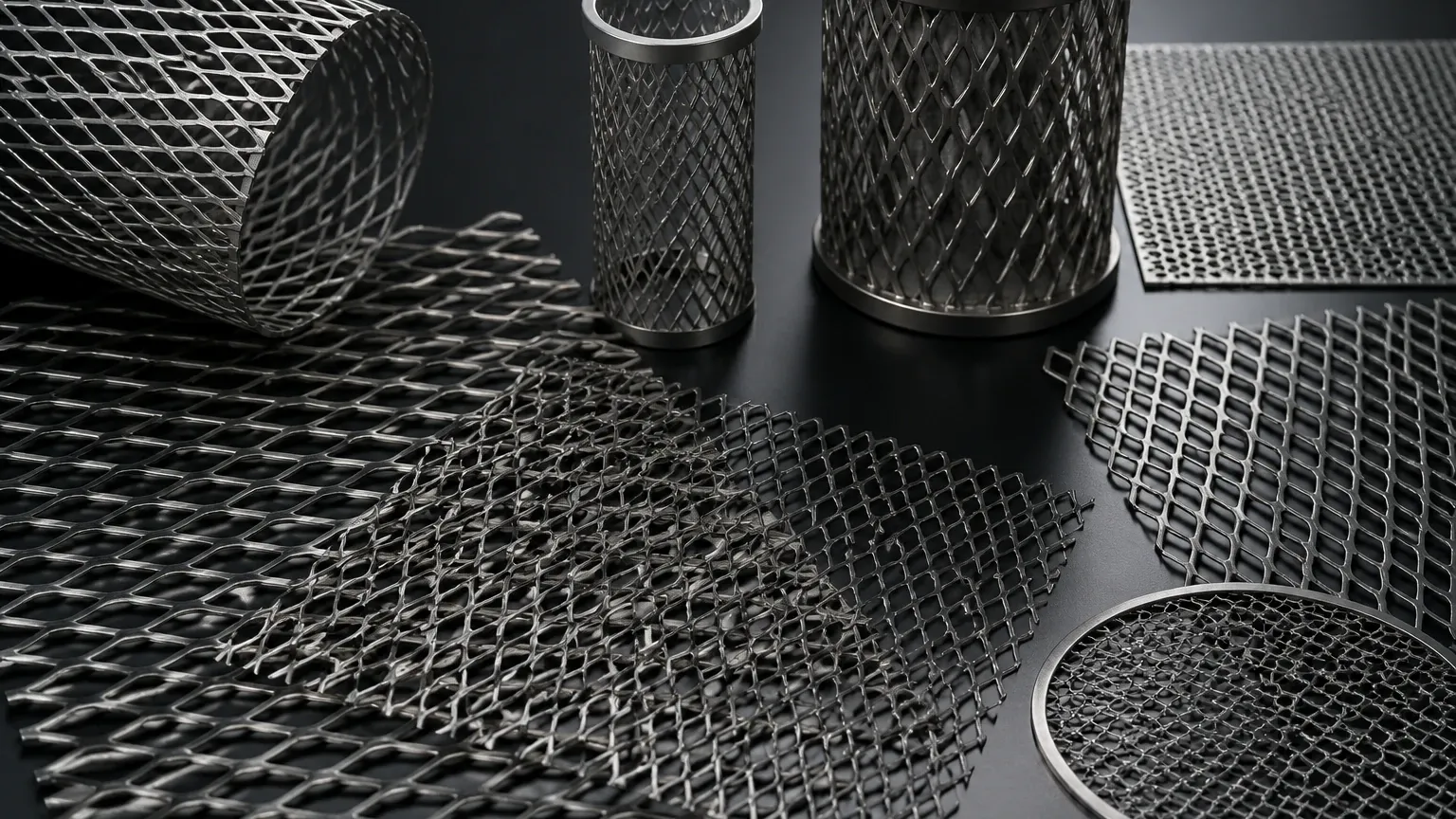
Expanded metal is a versatile material produced by simultaneously slitting and stretching a solid sheet of metal. This process creates a diamond-shaped pattern of openings, resulting in a product that is stronger, lighter, and more rigid than the original base metal. Unlike perforated metal, which involves punching out material and creating waste, expanded metal is produced through a cold-forming process that retains the structural integrity of the material without any scrap loss. This efficiency makes it a preferred choice for high-volume industrial applications where cost-effectiveness and durability are paramount.
The Engineering Principles of Expanded Metal
Understanding the technical specifications of expanded metal is essential for selecting the right component for industrial filtration or structural use. The geometry of the mesh is defined by several key parameters that engineers must confirm before procurement.
LWD and SWD Dimensions
Two primary measurements define the diamond pattern: the Long Way of Design (LWD) and the Short Way of Design (SWD). The LWD is the distance from a point on one diamond to the corresponding point on the next diamond across the long axis. The SWD is the equivalent measurement across the short axis. These dimensions determine the open area of the mesh, which directly impacts flow rates in filtration systems and visibility or ventilation in architectural or protective applications.
Strand Width and Thickness
The "strand" refers to the individual metal strips that form the sides of the diamond openings. The thickness of the strand corresponds to the thickness of the original metal sheet, while the strand width is the amount of metal fed into the machine between slits. By adjusting these two variables, manufacturers can create expanded metal that ranges from delicate, foil-like filters to heavy-duty industrial gratings capable of supporting significant weight.
Raised vs. Flattened Expanded Metal
Standard expanded metal, often referred to as "raised," features strands that are set at a sharp angle to the plane of the sheet. This creates a three-dimensional surface that provides excellent grip and high rigidity. However, for many filtration and precision engineering applications, the material undergoes an additional process called cold-rolling to produce "flattened" expanded metal. Flattened mesh is smoother and thinner, making it easier to integrate into multi-layer filter cartridges or to use in applications where a flush surface is required to prevent bypass or mechanical interference.
Material Selection for Demanding Environments
While expanded metal can be produced from various materials, industrial applications in the chemical, pharmaceutical, and food processing sectors typically require stainless steel. As a specialist in Perforated & Expanded Metal, Kaifil emphasizes the importance of matching material chemistry to the operating environment.
1. 304 Stainless Steel: This is the most common grade used in industrial settings. It offers excellent corrosion resistance and is suitable for most atmospheric conditions and many organic and inorganic chemicals. It is widely used in food and beverage processing due to its ease of cleaning and sanitization.
2. 316L Stainless Steel: For more aggressive environments, such as those involving chlorides or high-salinity conditions, 316L is the preferred choice. The addition of molybdenum provides superior pitting resistance, making it ideal for pharmaceutical manufacturing and marine-adjacent industrial facilities.
3. Carbon Steel and Aluminum: While carbon steel is used for general structural applications where corrosion is not a primary concern, aluminum is selected for its high strength-to-weight ratio and natural resistance to atmospheric oxidation. However, in the context of high-performance industrial filtration, stainless steel remains the gold standard for durability and chemical compatibility.
Applications in Industrial Filtration and Beyond
The utility of midwest expanded metal extends across a broad spectrum of industrial sectors. Its unique structure provides a combination of mechanical strength and open area that is difficult to replicate with other materials.
Support Media for Fine Filtration
In many high-pressure hydraulic or chemical filtration systems, fine wire mesh is used to achieve specific micron ratings. However, fine mesh lacks the structural rigidity to withstand high differential pressures. Expanded metal serves as an ideal support layer (or pleat protector) in these assemblies. By placing a layer of stainless steel expanded metal behind the fine mesh, engineers can prevent the media from collapsing or deforming under flow stress, thereby extending the service life of the filter cartridge.
Strainers and Pre-filters
For applications involving the removal of large particulates from liquid or gas streams, expanded metal can function as a standalone strainer. Its rigid, one-piece construction ensures that the openings do not shift or enlarge over time, a common failure mode in woven wire products. This makes it particularly effective in water treatment facilities and heavy-duty industrial intake screens.
Machine Guarding and Safety
Beyond filtration, expanded metal is widely utilized for machine guards and safety partitions in manufacturing plants. The diamond pattern allows for excellent visibility and airflow—critical for cooling machinery—while providing a robust physical barrier that protects personnel from moving parts. The high strength-to-weight ratio of expanded metal makes it easier to install and maintain than solid plate or heavy wire grilles.
Evaluating Quality and Performance Standards
When sourcing midwest expanded metal, purchasing teams must look beyond basic dimensions and consider the quality of the manufacturing process. Precision in the expansion process is vital to ensure consistency across the entire sheet or roll.
Tolerance and Flatness
Industrial filters often require tight tolerances to fit precisely into housings. Variations in LWD or SWD can lead to gaps that allow unfiltered bypass. Furthermore, the flatness of the sheet is critical for automated assembly processes. High-quality expanded metal should be free from "camber" (a bow in the sheet) and should lay flat without internal stresses that could cause warping during welding or cutting.
Edge Finish and Deburring
The process of slitting and stretching metal naturally creates sharp edges. In many B2B applications, especially those involving manual handling or delicate filter media, these edges must be managed. Manufacturers like Kaifil provide options for deburring or specific edge treatments to ensure the safety of personnel and the integrity of adjacent components in a filter assembly.
Customization and OEM Considerations
One of the primary advantages of working with a dedicated manufacturer is the ability to customize the expanded metal to meet specific application requirements. Standard off-the-shelf products may not always provide the optimal balance of flow rate and structural support.
Tailored Open Areas
By varying the strand width and the degree of expansion, manufacturers can precisely control the percentage of open area. This allows engineers to optimize the pressure drop across a filtration system. For instance, a higher open area might be prioritized for low-pressure gravity filters, while a tighter mesh with wider strands would be selected for high-pressure hydraulic return lines.
Custom Fabrication and Secondary Operations
B2B procurement often involves more than just raw material. Technical teams frequently require expanded metal that has been cut to size, formed into cylinders, or welded into specific frames. Kaifil’s expertise in custom stainless steel filtration solutions means that expanded metal components can be integrated into complex filter cartridges or multi-stage filtration assemblies during the manufacturing process, reducing the need for secondary processing by the end-user.
Total Cost of Ownership and Replacement Cycles
While the initial purchase price is a factor in procurement, the total cost of ownership (TCO) is a more accurate measure of value for industrial components. Expanded metal often offers a lower TCO than other materials due to its durability.
* Durability: Because it is made from a single piece of metal, there are no joints or weaves to unravel. This reduces the frequency of replacements in high-vibration or high-flow environments.
* Cleanability: In the food and pharmaceutical industries, the ability to thoroughly clean filtration components is essential. Stainless steel expanded metal can withstand high-pressure washdowns and aggressive cleaning chemicals without degrading.
* Waste Reduction: As previously mentioned, the expansion process produces virtually no waste, which can lead to lower material costs compared to perforated metal for certain specifications.
Technical Confirmation Before Purchase
Before finalizing an order for midwest expanded metal, engineers and purchasing agents should confirm several key data points with their supplier to ensure the product is fit for purpose:
1. Material Grade: Confirm if 304, 316L, or another alloy is required based on chemical exposure.
2. Style: Specify "Raised" for maximum rigidity/grip or "Flattened" for smooth integration.
3. Pattern Dimensions: Provide exact LWD and SWD requirements, along with strand width and thickness.
4. Open Area Percentage: Ensure the mesh meets the required flow characteristics for the specific application.
5. Finishing Requirements: Determine if the material needs to be degreased, passivated, or deburred prior to delivery.
By focusing on these technical details, industrial professionals can ensure they are selecting a material that not only meets the immediate structural or filtration needs but also contributes to the long-term reliability of their systems. Whether used as a robust support for fine filter media or as a durable screen in heavy industrial machinery, expanded metal remains a cornerstone of modern engineering design.
