


Perforated Metal Edge Trim
In industrial filtration and structural engineering, the utility of a perforated sheet is defined not only by its open area and hole pattern but also by its perimeter. The perforated metal edge trim refers to the specialized finishing applied to the boundaries of perforated or expanded metal sheets. For engineers and procurement specialists, selecting the correct edge treatment is a critical decision that impacts the structural integrity, safety, sealing capabilities, and overall service life of the filtration component.
While the primary function of a filter is to remove contaminants from a fluid or gas stream, the edge trim serves as the interface between the filter media and the housing or support structure. Without a properly engineered edge, perforated components may suffer from structural failure under pressure, bypass leakage, or accelerated corrosion at the weld points. This guide examines the technical considerations, material options, and engineering requirements for specifying edge trims in industrial applications.
The Role of Edge Trim in Industrial Filtration Systems
Edge trimming serves several functional purposes beyond simple aesthetics. In high-demand environments such as chemical processing or hydraulic systems, the edge of a perforated metal component is often the most vulnerable point for stress concentration.
Structural Reinforcement
Perforated sheets, by their nature, have a reduced cross-sectional area compared to solid plates. This makes them more susceptible to bending or buckling when subjected to high differential pressures. A robust perforated metal edge trim, such as a welded U-channel or a heavy-duty flat bar, provides the necessary rigidity to maintain the shape of the filter element. This is particularly important in large-scale industrial strainers where the mechanical load from fluid flow can be substantial.
Sealing and Bypass Prevention
In filtration, the goal is to force 100% of the media through the perforated openings. Any gap between the filter element and its housing allows for "bypass," where unfiltered fluid escapes the process. Edge trims are often machined or formed to precise tolerances to ensure a tight fit against gaskets, O-rings, or metal-to-metal seats. For custom filter cartridges, the edge trim often acts as the foundation for end caps, which are welded or bonded to create a hermetic seal.
Safety and Handling
The process of perforating or expanding metal leaves sharp edges and burrs. In a B2B environment where maintenance teams must frequently inspect, clean, or replace filters, these sharp edges pose a significant safety risk. A proper edge trim encapsulates these sharp points, providing a smooth surface for handling and reducing the risk of injury during installation and maintenance cycles.
Common Types of Perforated Metal Edge Trim
Choosing the right type of trim depends on the specific requirements of the application, including the thickness of the base material, the operating pressure, and the method of installation. Below are the most common configurations used in industrial settings.
1. Solid Margins (Unperforated Edges)
One of the most efficient ways to handle edges is to design the sheet with solid margins. This means the perforation pattern stops before reaching the edge of the sheet, leaving a solid border of the base metal. This approach is highly effective for Perforated & Expanded Metal components that will be welded directly into a frame or housing. Solid margins provide a clean, predictable surface for TIG or laser welding, ensuring a stronger bond than welding through a perforated pattern.
2. U-Channel Edging
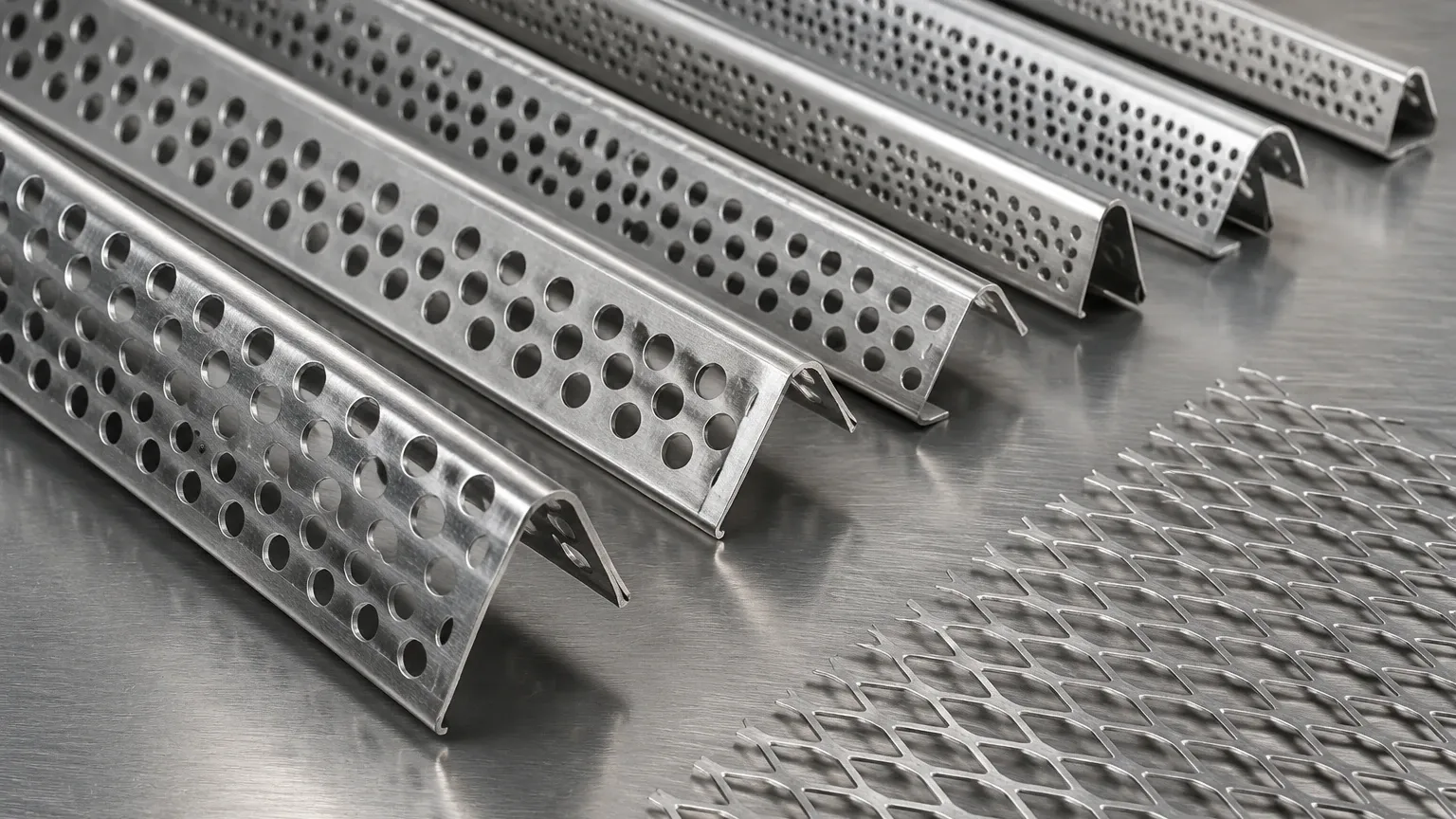
U-channels are perhaps the most versatile form of edge trim. These are pre-formed metal profiles in the shape of a "U" that are slipped over the edge of the perforated sheet and then secured. They can be attached via spot welding, continuous welding, or mechanical crimping. U-channels are ideal for expanded metal, which typically has uneven edges that are difficult to seal otherwise. They provide significant edge stiffness and are available in various thicknesses to match the structural requirements of the project.
3. Welded Flat Bars and L-Profiles
For heavy-duty applications, such as large industrial screens or floor grates, flat bars or L-shaped profiles (angles) are welded to the perimeter. This type of trim is used when the perforated component must be bolted into a frame or when it needs to support significant weight. The flat bar provides a wide surface area for bolt holes, while the L-profile can act as a mounting flange.
4. Hemmed or Folded Edges
In lighter-gauge applications, the edge of the perforated metal can be folded back on itself. This "hemming" process creates a smooth, rounded edge without adding additional components. While this does not provide as much structural reinforcement as a U-channel, it is an excellent solution for reducing handling risks and increasing the local stiffness of the sheet edge in low-pressure environments.
Material Selection and Compatibility
When specifying a perforated metal edge trim, material compatibility is paramount. Using dissimilar metals for the trim and the perforated sheet can lead to galvanic corrosion, especially in environments involving electrolytes, such as saltwater or acidic chemical processing.
* Stainless Steel (304, 316L): This is the standard for most industrial filtration applications. 316L is preferred for its superior resistance to pitting and crevice corrosion in chloride-rich environments. When welding the trim, using low-carbon variants (like 316L) is essential to prevent carbide precipitation, which can weaken the weld and lead to premature failure.
* Carbon Steel: Often used in hydraulic oil applications where corrosion is less of a concern. Carbon steel trims are typically galvanized or coated after fabrication to provide a basic level of environmental protection.
* Specialty Alloys: In high-temperature or highly corrosive pharmaceutical and chemical applications, trims may be constructed from Monel, Inconel, or Hastelloy. These materials ensure that the edge of the filter remains intact even when exposed to aggressive cleaning agents or extreme thermal cycling.
Engineering Considerations for Fabrication
Designing a perforated component with an integrated edge trim requires careful attention to fabrication tolerances. Engineers must account for the "stack-up" of tolerances between the perforated sheet, the trim profile, and the final housing.
Welding Techniques
The method of attachment significantly influences the performance of the trim. TIG (Tungsten Inert Gas) welding is the preferred method for stainless steel filtration components because it produces clean, high-quality welds with minimal spatter. For high-volume OEM production, laser welding offers extreme precision and a small heat-affected zone, which preserves the mechanical properties of the perforated metal near the edge.
Thermal Expansion
In applications involving high temperatures, such as steam filtration or hot gas emission control, the differential thermal expansion between the perforated sheet and the edge trim must be considered. If the trim is significantly thicker than the sheet, it may expand at a different rate, leading to warping or stress cracking at the weld points. Engineering the trim with similar thermal mass to the perforated section can mitigate these risks.
Drainage and Cleanability
In the food and beverage or pharmaceutical industries, "dead zones" where bacteria can accumulate must be avoided. When applying a U-channel or flat bar trim, it is vital to ensure that the interface is fully seal-welded or designed to allow for complete drainage during CIP (Clean-In-Place) cycles. Any gap between the trim and the perforated sheet can trap process fluids, leading to contamination or localized corrosion.
Evaluating Risks and Performance Expectations
Failure to specify the correct perforated metal edge trim can lead to several operational risks. The most common is mechanical fatigue. If a trim is too light for the application, the constant vibration or pressure pulsation in a fluid system can cause the welds to crack.
Another risk is the reduction of effective filtration area. A wide edge trim or a large solid margin reduces the total number of holes available for flow. Engineers must balance the need for structural support with the requirement for a specific flow rate and pressure drop. Over-engineering the trim can lead to an inefficient filter that requires higher pump energy to maintain flow.
Questions for Procurement and Engineering Teams
Before finalizing a purchase order for perforated components with edge trims, technical teams should confirm the following details with the manufacturer:
1. What is the required tolerance for the outer dimensions? Edge trims add thickness and width; ensure the final assembly fits the housing.
2. Is the trim material identical to the perforated sheet? Confirming material grades prevents galvanic corrosion issues.
3. What welding standard is required? For sanitary or high-pressure applications, specify full-penetration welds or specific surface finishes (e.g., Ra < 0.8 μm).
4. Will the trim interfere with flow? Calculate the open area reduction caused by the margins and trim profiles.
5. What is the expected pressure differential? This determines the necessary gauge and profile of the edge reinforcement.
By addressing these factors, industrial buyers can ensure they receive a filtration solution that is not only effective at removing particles but also durable enough to withstand the rigors of the industrial environment. Whether utilizing standard U-channels or custom-engineered solid margins, the edge trim remains a cornerstone of professional filter design.
For more information on material specifications and custom configurations, engineers can Review product options and application support to determine the best fit for their specific industrial requirements.
