


Perforated Metal Furniture
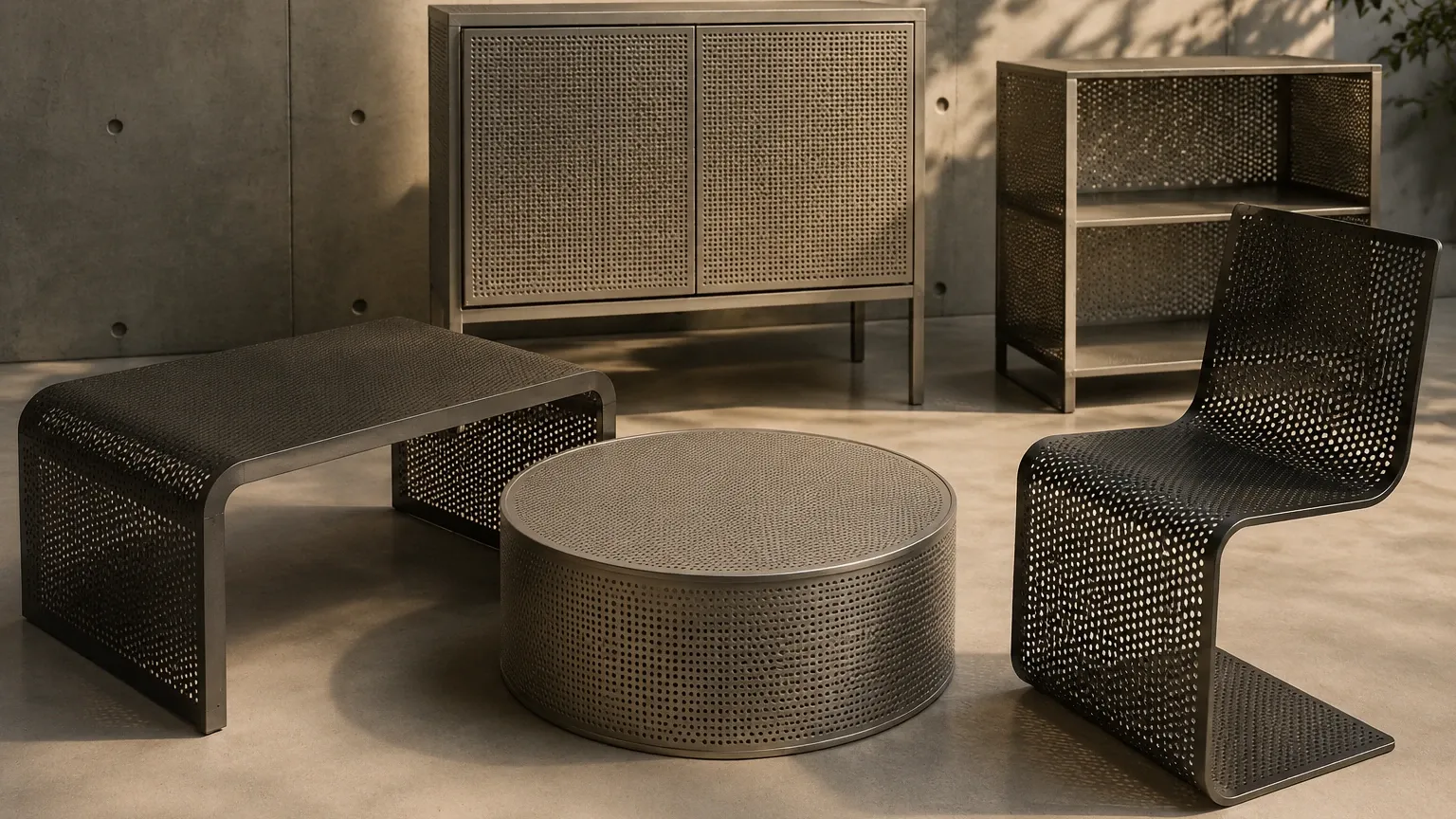
In industrial and commercial environments, the selection of furniture materials is dictated by a balance of structural integrity, environmental resistance, and functional performance. Perforated metal furniture has emerged as a primary solution for high-traffic public spaces, sterile laboratory environments, and heavy-duty industrial facilities. Unlike solid surface alternatives, furniture constructed from Perforated & Expanded Metal offers unique advantages in terms of weight reduction, ventilation, and drainage, while maintaining the high tensile strength characteristic of stainless steel and industrial alloys.
For engineers and procurement professionals, understanding the technical specifications of perforated metal is essential for ensuring that the final product meets the specific load-bearing and durability requirements of the intended application. This guide examines the engineering fundamentals, manufacturing considerations, and selection criteria for perforated metal furniture in B2B contexts.
Engineering Fundamentals of Perforated Metal in Furniture
The performance of perforated metal furniture begins with the geometric configuration of the perforations and the mechanical properties of the base material. The process involves punching or laser-cutting a specific pattern of holes into a metal sheet, which significantly alters the material's physical characteristics.
Material Selection and Mechanical Properties
The choice of material is the most critical factor in determining the lifespan of the furniture.
* Stainless Steel (Grades 304 and 316): These are the standard for industrial furniture. Grade 304 offers excellent corrosion resistance for indoor or general-purpose outdoor use. Grade 316, containing molybdenum, is specified for furniture used in chemical processing plants, coastal areas, or pharmaceutical cleanrooms where exposure to chlorides and corrosive cleaning agents is frequent.
* Carbon Steel: Often used for indoor industrial seating and shelving where cost-efficiency is a priority. It requires secondary finishing, such as powder coating or galvanization, to prevent oxidation.
* Aluminum: Selected for applications requiring a high strength-to-weight ratio and natural corrosion resistance, such as mobile workstations or lightweight outdoor seating.
Hole Patterns and Open Area Calculations
The "open area" is the percentage of the sheet that is occupied by holes. This calculation is vital for furniture that must allow for airflow, light penetration, or liquid drainage.
* Round Holes: The most common pattern due to its structural stability and ease of cleaning. Staggered round holes provide the highest strength-to-weight ratio.
* Square Holes: Often used for modern aesthetic designs or when a higher open area percentage is required for maximum ventilation.
* Slotted Holes: Frequently specified for drainage surfaces or filtration-adjacent furniture where liquid runoff is necessary.
Engineers must calculate the open area to ensure the sheet retains enough solid metal to support the anticipated static and dynamic loads without deforming. Excessive open area can lead to "oil-canning" or structural failure under stress.
Manufacturing Processes and Customization
Producing high-quality perforated metal furniture requires precision manufacturing to ensure that the edges are safe, the surfaces are flat, and the structural integrity is preserved through the bending and welding phases.
CNC Punching and Laser Cutting
Modern manufacturing utilizes CNC (Computer Numerical Control) punching for high-volume production of standard patterns. For complex custom designs or thicker gauges, fiber laser cutting is employed to achieve high precision without the mechanical stress of physical punching. This is particularly important for perforated metal furniture used in medical or food processing environments, where burr-free edges are a safety and hygiene requirement.
Forming and Fabrication
Once the sheet is perforated, it undergoes secondary fabrication processes:
1. Leveling: The punching process can introduce internal stresses that cause the sheet to curl. Precision leveling is required to ensure the furniture components are perfectly flat before assembly.
2. Bending and Folding: Perforated sheets behave differently than solid sheets during bending. The "K-factor" must be adjusted to account for the reduced material density at the bend line.
3. Welding: TIG (Tungsten Inert Gas) welding is preferred for stainless steel perforated furniture to ensure clean, strong joints that do not compromise the material's corrosion resistance.
Finishing and Surface Treatment
For B2B applications, the finish is not merely aesthetic but functional. Powder coating provides a durable, impact-resistant layer, while electropolishing is used for stainless steel furniture in sterile environments to remove surface impurities and enhance corrosion resistance. For outdoor industrial furniture, hot-dip galvanizing provides a sacrificial zinc layer that prevents rust even if the surface is scratched.
Structural Integrity and Load-Bearing Considerations
A common concern for engineers is whether perforated metal furniture can withstand heavy use compared to solid metal. The structural integrity is a function of the material gauge (thickness), the hole size, and the pitch (the distance between the centers of the holes).
Gauge Thickness and Stiffness
In industrial seating and worktables, a thicker gauge is often used to compensate for the material removed during perforation. For example, a 14-gauge stainless steel sheet with a 40% open area may provide similar structural stiffness to a 16-gauge solid sheet, but with significantly better drainage and ventilation properties.
The Role of Margins and Borders
To maintain the strength of the furniture, manufacturers often leave "unperforated margins" around the edges of the panels. These solid borders act as a structural frame, allowing for more secure welding and preventing the edges from warping or tearing under load. When specifying perforated metal furniture, engineers should define the required margin width to ensure compatibility with the support frame.
Industrial Applications and Environmental Suitability
Perforated metal furniture is utilized across various sectors due to its ability to solve specific environmental challenges.
Laboratory and Cleanroom Environments
In pharmaceutical and semiconductor manufacturing, airflow is critical for maintaining sterile conditions. Perforated workbenches and shelving allow laminar airflow to pass through the furniture, preventing the accumulation of dust and contaminants. Stainless steel is the material of choice here due to its ability to withstand rigorous sterilization protocols.
Food and Beverage Processing
Furniture in food processing plants must be easy to sanitize. Perforated surfaces allow for rapid wash-down and drainage, preventing the pooling of liquids that could harbor bacteria. The use of Perforated & Expanded Metal components in these settings ensures compliance with food safety standards while providing the durability needed for heavy-duty operations.
Public Infrastructure and Transportation
In transit hubs and outdoor public spaces, perforated metal furniture is selected for its resistance to vandalism and weathering. The perforated design prevents the accumulation of rainwater and reduces the surface temperature of the metal in direct sunlight, improving user comfort. Furthermore, the transparency of the material aids in security monitoring by reducing blind spots.
Integration with Filtration and Ventilation Systems
As a specialist in filtration solutions, Kaifil recognizes that perforated metal often serves a dual purpose. In industrial equipment housings or specialized workstations, perforated metal furniture acts as both a structural component and a coarse filter or ventilation screen.
For instance, in electronic assembly stations, perforated metal panels protect internal components from physical impact while allowing heat to dissipate. In chemical storage cabinets, perforated shelving ensures that any minor leaks do not pool, and that hazardous vapors are properly ventilated through the integrated HVAC systems. This intersection of furniture design and industrial filtration principles is where precision manufacturing becomes paramount.
Procurement and Specification Checklist
When sourcing perforated metal furniture for industrial projects, purchasing teams and engineers should confirm the following technical details to avoid common pitfalls:
1. Material Grade: Is the material appropriate for the environment (e.g., SS316 for high-salinity or acidic environments)?
2. Hole Specification: What is the hole diameter, shape, and pitch? Does the resulting open area meet the ventilation/drainage requirements without compromising strength?
3. Edge Conditions: Are there solid margins? Are the edges deburred and safe for human contact?
4. Load Requirements: Has the manufacturer provided a load-bearing rating for the perforated surface?
5. Finishing: Does the finish meet industry-specific standards (e.g., FDA-compliant coatings or ASTM-rated galvanization)?
6. Tolerances: What are the dimensional tolerances for the final assembly? In precision industrial settings, even a few millimeters of deviation can cause installation issues.
Total Cost of Ownership (TCO)
While perforated metal furniture may have a higher initial acquisition cost than plastic or wood alternatives, its total cost of ownership is significantly lower in industrial contexts. The durability of stainless steel reduces the frequency of replacement cycles, and the ease of maintenance lowers labor costs. Additionally, the recyclability of metal furniture aligns with corporate sustainability goals, providing a high residual value at the end of the product's lifecycle.
Conclusion
Perforated metal furniture represents a sophisticated engineering solution for demanding B2B environments. By leveraging the mechanical advantages of Perforated & Expanded Metal, facilities can achieve a balance of strength, safety, and functionality. Whether the application is a high-tech cleanroom, a rugged chemical plant, or a public transit hub, the key to success lies in precise material selection, rigorous structural calculation, and high-quality manufacturing. For engineers and procurement professionals, partnering with a manufacturer that understands the nuances of metal fabrication and filtration principles ensures that the furniture will perform reliably throughout its service life.
