


Perforated Metal Sheets Near Me
In the industrial procurement landscape, the search for "perforated metal sheets near me" often marks the beginning of a critical engineering decision. Whether for high-precision filtration, acoustic dampening, or structural support, the selection of perforated and expanded metal is a process that requires a deep understanding of material science, mechanical properties, and fluid dynamics. For engineers and purchasing teams, the proximity of a supplier is only one variable in a complex equation that includes filtration efficiency, structural integrity, and long-term cost-effectiveness.
Perforated & Expanded Metal components serve as the backbone for numerous industrial systems. While local stockists may offer standard sizes for general construction, specialized applications in chemical processing, pharmaceuticals, and food production demand a level of precision that often necessitates working with specialized manufacturers. This guide examines the technical considerations essential for selecting the right metal sheet solutions for industrial environments.
Understanding the Engineering of Perforated and Expanded Metal
Before sourcing materials, it is vital to distinguish between the two primary types of processed metal sheets used in industrial settings. While they may appear similar in function, their manufacturing processes and mechanical characteristics differ significantly.
Perforated Metal Sheets
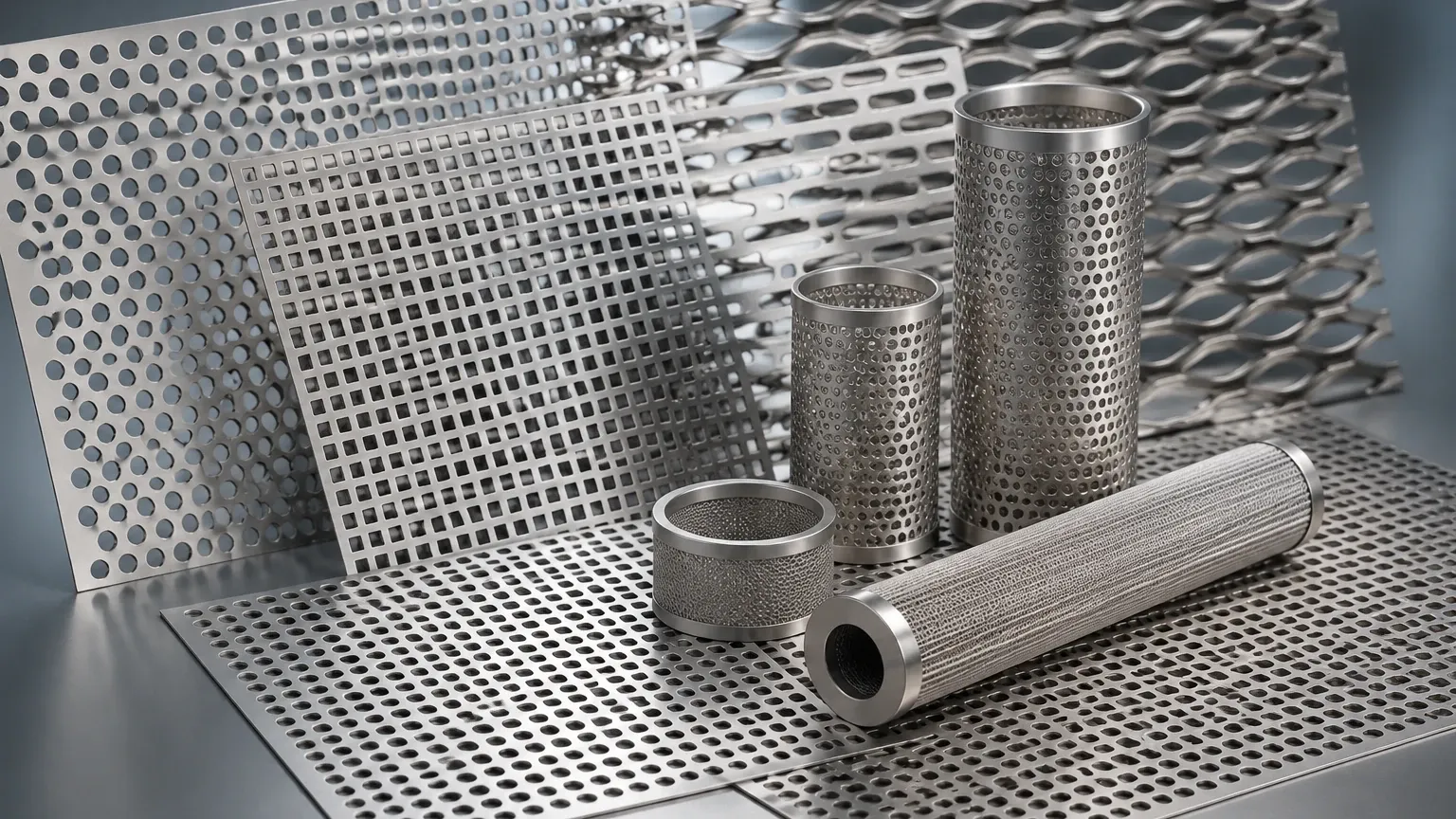
Perforated metal is produced by mechanically punching or laser-cutting holes into a solid metal sheet. This process allows for extreme precision in hole size, shape, and spacing. In filtration applications, this precision is paramount. Engineers can specify the exact open area required to manage flow rates and pressure drops. Common hole patterns include round, square, slotted, and hexagonal, each offering different advantages in terms of strength and sieving capability.
Expanded Metal Sheets
Expanded metal is created by simultaneously slitting and stretching the base material. This process results in a diamond-shaped mesh that remains part of a single piece of metal, ensuring structural continuity. Unlike perforation, expanding metal produces zero waste, as no material is punched out. This makes it a cost-effective solution for applications where high strength-to-weight ratios are required, such as in heavy-duty filtration supports or safety walkways.
Key Technical Parameters for Material Selection
When evaluating "perforated metal sheets near me," technical professionals must look beyond the physical location and focus on the technical specifications that will dictate the performance of the final component.
1. Open Area Calculation
The open area is the percentage of the sheet that is occupied by holes. This is perhaps the most critical metric for filtration and ventilation. A higher open area allows for greater flow but reduces the structural strength of the sheet. For a standard 60-degree staggered round hole pattern, the open area is calculated using the formula:
Open Area % = (D² × 90.69) / P²
*(Where D is the hole diameter and P is the pitch/center-to-center distance)*
2. Material Grade and Compatibility
In industrial filtration, the choice of material is dictated by the environment. Stainless steel is the industry standard due to its corrosion resistance and durability.
* SS304: Suitable for general industrial use, offering good corrosion resistance and formability.
* SS316L: The preferred choice for marine, pharmaceutical, and chemical processing due to its superior resistance to chlorides and acids.
* Specialty Alloys: For extreme temperatures or highly corrosive environments, alloys like Monel or Inconel may be required.
3. Hole Geometry and Pitch
The shape of the perforation affects how particles interact with the surface. Round holes are the most common for general filtration due to their structural stability. Slotted holes are often used in the food and beverage industry for sorting or dewatering, where the orientation of the particles matters. The pitch (the distance between the centers of adjacent holes) determines the density of the pattern and influences both the flow rate and the mechanical rigidity of the sheet.
Why "Near Me" May Not Always Be the Best Metric
For a maintenance manager or a project engineer, the convenience of a local supplier is clear. However, industrial-grade filtration components often require custom fabrication that local general-purpose metal distributors cannot provide. When searching for "perforated metal sheets near me," it is important to consider the following risks associated with sourcing from non-specialized local vendors:
* Limited Material Traceability: High-stakes industries like pharmaceutical and food processing require Mill Test Reports (MTRs) to ensure material purity. Local generalists may not always maintain the rigorous documentation required for compliance.
* Precision Tolerances: Standard architectural perforated metal often has wider tolerances. In hydraulic or precision chemical filtration, a variance of even a few microns in hole diameter can lead to system failure or contamination.
* Lack of Customization: Most local suppliers stock standard 4×8 or 5×10 sheets. If your application requires specific margins (unperforated areas), custom bolt hole patterns, or specialized forming (such as rolling into a filter cartridge), a specialized manufacturer like Kaifil is necessary.
Applications in Specialized Industrial Sectors
Perforated and expanded metals are versatile components used across various demanding sectors. Understanding these applications helps in defining the necessary specifications during the procurement process.
Chemical and Petrochemical Processing
In these environments, perforated sheets are used as support structures for fine wire mesh filters or as internal components in catalyst recovery systems. The material must withstand high pressures and aggressive chemical exposure without deforming or corroding.
Food and Beverage Industry
Hygiene is the priority here. Perforated stainless steel is used in grain drying, fruit juice filtration, and brewery lautering tuns. The surfaces must be smooth and free of burrs to prevent bacterial growth and ensure ease of cleaning (CIP – Clean-In-Place).
Pharmaceutical Manufacturing
Precision is non-negotiable in pharmaceutical applications. Perforated metals are used in fluid bed dryers and tablet coating machines. The uniformity of the perforation ensures consistent airflow and heat distribution, which is vital for product quality.
Hydraulic and Water Treatment
In hydraulic systems, perforated metal acts as a strainer to protect sensitive pumps and valves from large debris. In water treatment, it serves as a primary screen or as a lateral for underdrain systems in sand filters.
Evaluating Total Cost of Ownership (TCO)
When purchasing perforated metal, the initial price per sheet is only one part of the total cost. Engineers should consider the following to ensure long-term value:
1. Durability and Lifecycle: A cheaper, lower-grade material may require frequent replacement, leading to downtime and increased labor costs. Investing in high-quality SS316L from a reputable manufacturer can extend the service life of the component significantly.
2. Filtration Efficiency: Improperly specified open areas can lead to higher energy consumption in pumps as they struggle to overcome excessive pressure drops. Correct engineering at the start saves energy costs over the life of the system.
3. Ease of Maintenance: High-quality perforated sheets with precision finishes are easier to clean and less prone to blinding (clogging), reducing the frequency of maintenance cycles.
Customization and OEM Support
For many B2B buyers, the ideal solution is a custom-engineered component rather than a raw sheet. This is where the expertise of a manufacturer becomes invaluable. Customization options often include:
* Custom Margins: Leaving specific areas of the sheet unperforated for welding or mounting purposes.
* Forming and Welding: Rolling sheets into cylinders, cones, or baskets for use in filter housings.
* Surface Finishing: Options such as electropolishing, pickling, or powder coating to enhance corrosion resistance or aesthetic appeal.
* Bolt Hole Integration: Pre-drilling mounting holes to simplify the installation process on-site.
Conclusion: Making an Informed Procurement Decision
While the search for "perforated metal sheets near me" is a logical starting point, the complexities of industrial filtration and structural engineering require a partner with deep technical expertise. Choosing the right perforated or expanded metal involves a balance of material science, precise geometry, and an understanding of the specific operational environment.
By focusing on technical parameters such as open area, material grade, and customization capabilities, engineers can ensure they receive a product that not only fits their immediate needs but also contributes to the efficiency and longevity of their industrial systems. For those seeking reliable, high-performance filtration solutions, working with a specialized manufacturer ensures that every specification is met with the highest level of precision and quality control.
To explore specific material options or to discuss your custom engineering requirements, Review product options and application support to find the optimal solution for your industrial filtration challenges.
