


7 Inch Strainer
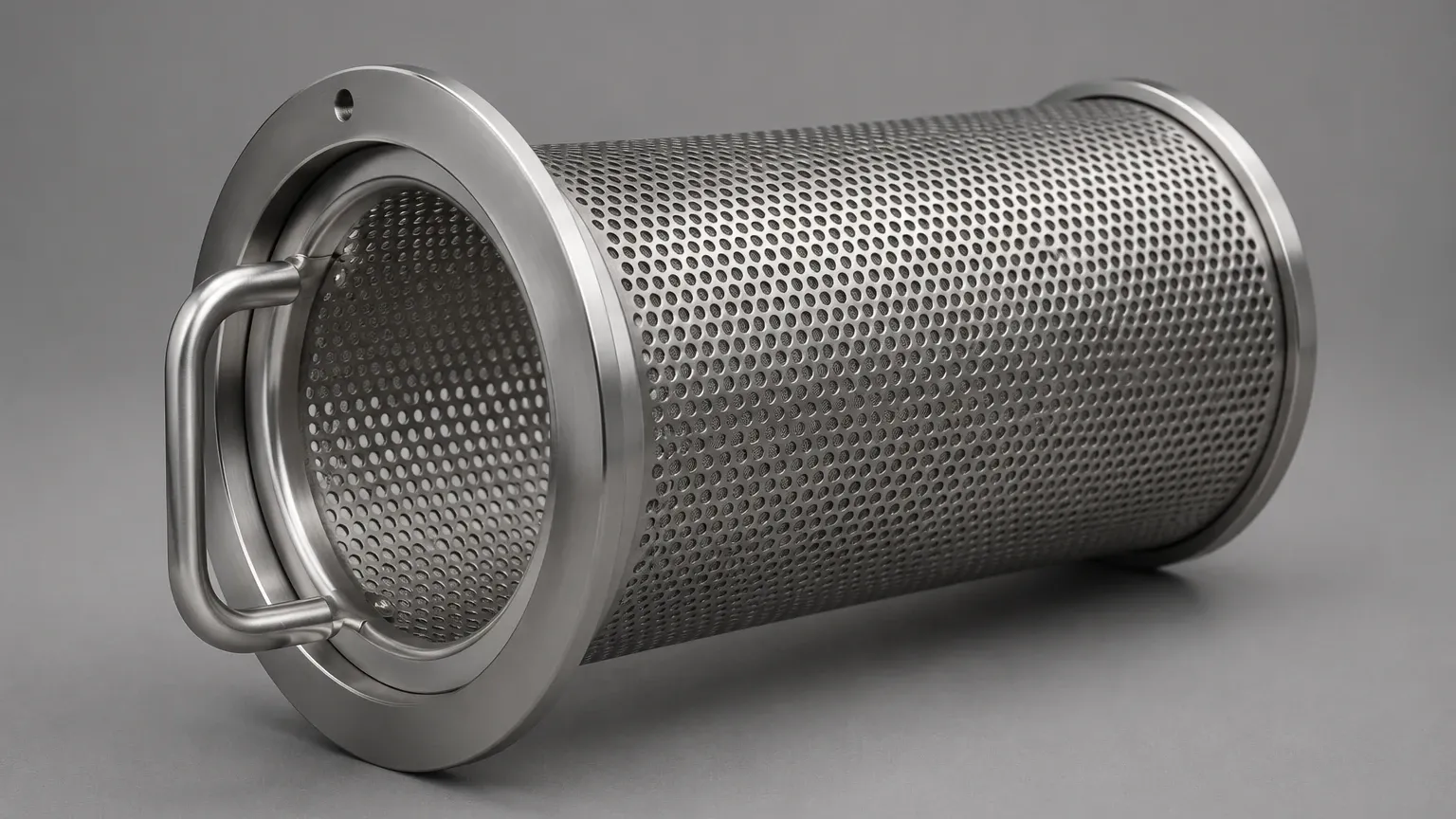
In industrial fluid handling, the 7 inch strainer serves as a critical line of defense for downstream equipment. Whether integrated into a simplex, duplex, or Y-type housing, these components are designed to remove gross solids from liquid streams, preventing damage to pumps, valves, and heat exchangers. Within the broader category of Strainers & Baskets, the 7-inch specification typically refers to the nominal diameter of the filtration basket or the internal diameter of the strainer housing, a size commonly associated with high-capacity industrial flow rates.
Selecting the correct 7 inch strainer requires a deep understanding of fluid dynamics, material compatibility, and the specific mechanical stresses of the application. Engineering teams must evaluate not only the particle size to be removed but also the impact of the strainer on the overall system pressure and flow efficiency.
Understanding the Role of the 7 Inch Strainer in Industrial Processes
The primary function of a 7 inch strainer is the mechanical separation of solids from a liquid medium. Unlike fine membrane filters that operate at the sub-micron level, industrial strainers are generally used for "coarse" filtration, typically ranging from 50 microns up to several millimeters.
In many systems, the 7-inch basket is a standard size for "Size 2" filter housings. These housings are ubiquitous in chemical processing and water treatment because they offer a significant surface area-to-volume ratio. By utilizing a 7-inch diameter basket, the system can handle higher flow velocities while maintaining a manageable pressure drop. This size is particularly effective in protecting large-scale centrifugal pumps where even small debris can cause catastrophic impeller failure or mechanical seal leakage.
Material Selection and Engineering Specifications
The longevity of a 7 inch strainer is dictated by its material of construction. Industrial environments often involve corrosive fluids, high temperatures, or abrasive particles, necessitating the use of high-grade alloys.
Stainless Steel 304 (SS304)
SS304 is the standard material for general-purpose industrial applications. It provides excellent resistance to atmospheric corrosion and is suitable for most water-based applications, food processing, and non-corrosive chemical streams. It offers a cost-effective balance between durability and performance.
Stainless Steel 316L (SS316L)
For environments involving chlorides, acids, or high-purity requirements, SS316L is the preferred choice. The addition of molybdenum enhances its resistance to pitting and crevice corrosion. In the pharmaceutical and biotechnology sectors, SS316L is often specified with a sanitary finish (electropolished) to prevent bacterial growth and ensure easy cleaning.
Specialized Alloys
In extreme cases, such as seawater filtration or highly aggressive chemical processing, materials like Monel, Hastelloy, or Duplex Stainless Steel may be required. These alloys provide the necessary mechanical strength and chemical inertness to withstand environments where standard stainless steels would fail prematurely.
Filtration Media: Perforated Plate vs. Woven Wire Mesh
The performance of a 7 inch strainer is largely determined by the type of media used in the basket construction. Engineers must choose between perforated metal and woven wire mesh based on the required filtration accuracy and structural integrity.
Perforated Metal Baskets
Perforated plate is used for heavy-duty straining. It consists of a metal sheet with punched holes, typically ranging from 1/32" to 1/2". These baskets are exceptionally strong and can withstand high differential pressures. They are often used as a "primary" strainer to catch large debris like scale, stones, or welding slag.
Woven Wire Mesh Liners
When finer filtration is required, a woven wire mesh liner is added to the perforated basket. The perforated plate provides the structural support, while the mesh determines the filtration rating. Wire mesh allows for much finer openings, down to 400 mesh (approx. 37 microns). When selecting a mesh liner for a 7 inch strainer, it is vital to consider the "Open Area Ratio." A higher open area results in lower initial pressure drop and longer intervals between cleanings.
Key Performance Indicators: Flow Rate and Pressure Drop
One of the most common mistakes in strainer selection is undersizing the unit, which leads to excessive pressure drop (Delta P) and reduced system efficiency. For a 7 inch strainer, the relationship between flow rate and pressure drop is non-linear.
Calculating Clean Pressure Drop
Engineers must calculate the clean pressure drop based on the fluid's viscosity and specific gravity. A standard rule of thumb is that the clean pressure drop should not exceed 2 PSI (0.14 bar) at the maximum intended flow rate. If the fluid is highly viscous, such as heavy oils or resins, the 7-inch basket may require a coarser mesh or a larger housing to maintain acceptable flow.
The Importance of the 6:1 Ratio
In high-quality industrial Strainers & Baskets, designers aim for a "net free area" ratio of at least 6:1. This means the open area of the strainer basket is six times the cross-sectional area of the inlet pipe. This ratio ensures that even as the basket begins to collect debris, the system can continue to operate without a significant increase in backpressure.
Application-Specific Considerations for 7 Inch Strainers
Different industries impose unique requirements on strainer design. A 7 inch strainer used in a cooling water loop has different engineering priorities than one used in a pharmaceutical batch process.
* Chemical Processing: Compatibility with aggressive solvents and high-temperature stability are paramount. The gaskets and seals (Viton, PTFE, or EPDM) must be carefully matched to the chemical profile of the fluid.
* Food and Beverage: Compliance with FDA and 3A standards is required. The strainer must feature smooth welds and a design that eliminates "dead zones" where organic material could accumulate and spoil.
* Hydraulic Systems: These applications often involve high operating pressures. The 7 inch strainer must be engineered to resist collapsing under sudden pressure surges or high-viscosity cold starts.
* Water Treatment: In municipal or industrial water intake, the focus is on high-volume throughput and ease of maintenance. Large baskets are often used to capture organic matter and silt.
Maintenance, Cleaning, and Replacement Protocols
The total cost of ownership for a 7 inch strainer is heavily influenced by its maintenance requirements. A well-designed basket should be easy to remove, clean, and reinstall to minimize downtime.
Monitoring Differential Pressure
The most effective way to manage maintenance is through differential pressure monitoring. Gauges installed upstream and downstream of the strainer provide a real-time indication of basket loading. Typically, a strainer should be cleaned when the differential pressure reaches 10-15 PSI. Allowing the pressure drop to exceed this range risks deforming the basket or forcing contaminants through the mesh.
Cleaning Procedures
Stainless steel baskets are generally reusable. Cleaning methods include:
1. Manual Rinsing: Using high-pressure water or air to dislodge particles.
2. Ultrasonic Cleaning: Effective for removing fine particles trapped within the weave of a wire mesh liner.
3. Chemical Soaking: Used when the contaminant is an adhesive or organic buildup that cannot be removed mechanically.
Identifying Wear and Tear
During maintenance, the strainer should be inspected for signs of "wire shifting" in the mesh, corrosion at the weld points, or deformation of the top flange. A compromised flange will allow fluid to bypass the strainer entirely, rendering the filtration system useless.
Customization and OEM Integration
While standard sizes exist, many industrial applications require customized 7 inch strainer solutions. Customization may involve unique handle designs for easier extraction, reinforced bottoms for high-pressure applications, or specialized magnetic inserts to capture fine ferrous particles that might otherwise pass through the mesh.
For original equipment manufacturers (OEMs), integrating a custom-engineered strainer into their machinery ensures that the filtration performance is perfectly matched to the equipment's requirements. This reduces the risk of field failures and ensures that end-users have a reliable, repeatable maintenance process.
By focusing on technical precision—from material selection to the calculation of open area ratios—engineers can ensure that their 7 inch strainer provides optimal protection and performance throughout its service life. Whether the goal is protecting a high-value pump or ensuring the purity of a chemical batch, the engineering details of the strainer basket are the foundation of process reliability.
