


Banjo Strainers
In industrial fluid handling and agricultural spray systems, the integrity of downstream components—such as pumps, nozzles, and flow meters—depends heavily on the efficiency of primary filtration. Banjo strainers, characterized by their robust glass-filled polypropylene construction and versatile configurations, serve as a critical line of defense against particulate contamination. These components are a specialized subset of the broader category of Strainers & Baskets, designed to provide reliable debris removal in environments where chemical resistance and ease of maintenance are paramount.
For engineers and procurement professionals, selecting a banjo strainer requires a deep understanding of fluid dynamics, material science, and the specific mechanical stresses of the application. Unlike heavy cast-iron strainers used in high-pressure steam lines, banjo strainers are engineered for liquid applications where corrosion resistance and lightweight design are prioritized without sacrificing structural integrity.
Understanding the Role of Banjo Strainers in Industrial Filtration
Banjo strainers are typically configured as Y-strainers or T-strainers. Their primary function is to intercept solid particles from a flowing liquid stream. This is achieved through a perforated or wire mesh screen housed within the strainer body. As fluid enters the inlet, it is forced through the screen, which traps solids while allowing the cleaned liquid to pass through to the outlet.
In the context of industrial systems, these strainers are essential for protecting centrifugal pumps from cavitation-inducing debris and preventing the clogging of precision spray nozzles. The "Banjo" designation often refers to the specific design language popularized by the manufacturer, characterized by high-grade polypropylene bodies and stainless steel internal components. These units are widely used in liquid fertilizer application, chemical processing, and water treatment due to their ability to handle aggressive fluids that would otherwise corrode standard metallic housings.
Material Engineering and Chemical Compatibility
The most distinctive feature of banjo strainers is their material composition. Most industrial-grade units are manufactured from glass-filled polypropylene. This material offers a unique balance of properties:
1. Chemical Resistance: Polypropylene is inert to a wide range of chemicals, including most acids, bases, and many organic solvents. This makes it the standard choice for agricultural chemicals and industrial detergents.
2. Structural Rigidity: The addition of glass fibers to the polypropylene matrix significantly increases the tensile strength and dimensional stability of the housing, allowing it to withstand internal pressures and external mechanical loads.
3. Thermal Stability: While not suitable for high-temperature steam, glass-filled polypropylene maintains its integrity at temperatures typically ranging from 32°F to 150°F (0°C to 65°C), covering the majority of ambient-temperature industrial processes.
Internally, the filtration element is almost exclusively made from 304 or 316 stainless steel. Stainless steel provides the necessary rigidity to resist collapsing under pressure (differential pressure) and ensures that the filtration mesh does not react with the fluid. For specialized applications, gaskets and O-rings are available in EPDM or FKM (Viton), allowing engineers to match the seal material to the specific chemical profile of the process fluid.
Technical Specifications and Performance Metrics
When evaluating banjo strainers for a project, several technical metrics must be confirmed to ensure the component meets the system's operational requirements. These include flow rate capacity, pressure ratings, and the "clean" pressure drop.
Pressure Ratings
Standard banjo strainers are typically rated for pressures between 75 PSI and 150 PSI at ambient temperatures. It is important to note that as the operating temperature increases, the maximum allowable working pressure (MAWP) of plastic housings decreases. Engineers must consult pressure-temperature derating charts to ensure the strainer remains within safe operating limits during peak thermal loads.
Flow Rate and Port Size
Banjo strainers are available in a variety of port sizes, commonly ranging from 1/2 inch to 3 inches. The port size should be selected based on the desired flow rate (GPM) and the allowable velocity of the fluid. Over-sizing a strainer can lead to sediment buildup in the housing due to low velocity, while under-sizing will result in excessive pressure drop and potential damage to the internal screen.
Pressure Drop (Delta P)
The pressure drop across a strainer is the difference in pressure between the inlet and the outlet. A high initial pressure drop indicates that the strainer is too small for the application or that the mesh is too fine. Ideally, a clean strainer should contribute no more than 2-3 PSI of pressure drop to the system. As the screen accumulates debris, this pressure drop will increase, signaling the need for cleaning.
Selecting the Right Mesh for Banjo Strainers
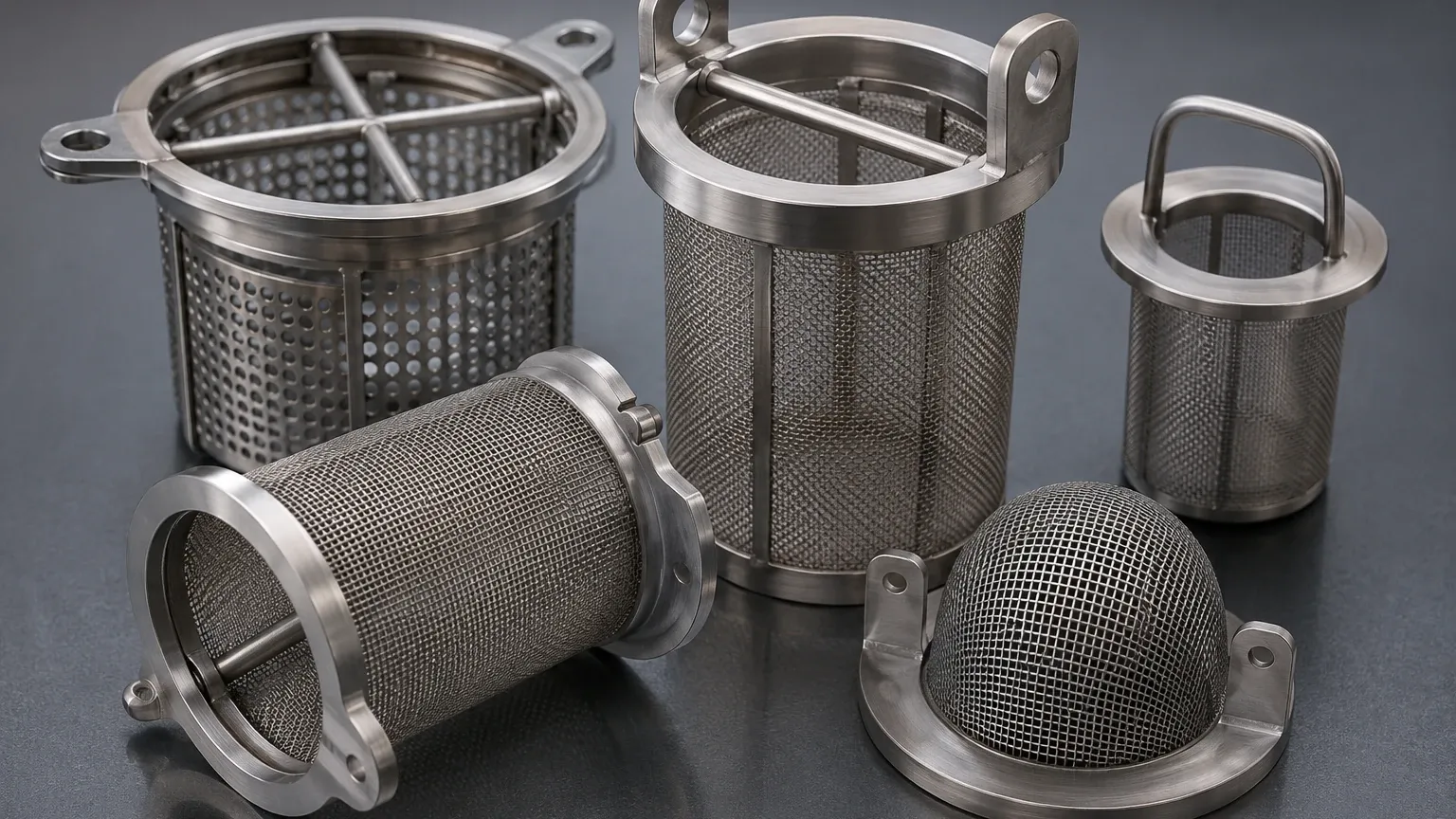
The most critical component of any unit in the Strainers & Baskets category is the screen. For banjo strainers, screens are defined by their "mesh count," which refers to the number of openings per linear inch. Choosing the correct mesh size is a trade-off between filtration precision and maintenance frequency.
* Coarse Mesh (e.g., 6 to 20 Mesh): Used for removing large debris such as pebbles, scale, or plastic fragments. These are ideal for suction-side filtration where protecting the pump is the primary goal.
* Medium Mesh (e.g., 30 to 50 Mesh): Common in agricultural sprayers to protect nozzles from clogging while maintaining a high flow rate.
* Fine Mesh (e.g., 80 to 100 Mesh): Used in precision applications where very small particles must be removed. Fine mesh screens have a smaller total open area, meaning they will clog faster and require more frequent cleaning.
Engineers should specify the mesh size based on the smallest orifice in the downstream system. A general rule of thumb is to select a mesh size that is approximately 1/2 to 1/3 the size of the smallest downstream opening to ensure adequate protection.
Application-Specific Considerations for Engineers
Banjo strainers are utilized across diverse sectors, each with unique engineering challenges. Understanding these contexts helps in specifying the correct configuration.
Agricultural and Turf Management
In these applications, strainers are often mounted on the suction or discharge side of spray rigs. They must handle abrasive suspensions and corrosive fertilizers. The ease of hand-removable bowls is a significant advantage here, allowing operators to clean screens in the field without specialized tools.
Chemical Processing
In chemical dosing or transfer, the primary concern is material compatibility. Engineers must ensure that the polypropylene housing and the chosen gasket material (EPDM vs. FKM) are compatible with the specific concentrations of chemicals being handled. Furthermore, in these environments, the durability of the stainless steel mesh is vital to prevent metal contamination in the chemical stream.
Industrial Water Treatment
Banjo strainers are frequently used as pre-filters for RO (Reverse Osmosis) systems or UV sterilization units. In these cases, they remove larger suspended solids that could foul expensive membranes or coat UV lamps. The ability to quickly inspect the strainer through a clear bowl (available in some models) or via a scheduled maintenance port is highly valued.
Maintenance, Cleaning, and Replacement Cycles
The longevity of a banjo strainer is directly tied to the maintenance protocol. Because these are mechanical filters, they do not "wear out" in the traditional sense, but the screens and seals are subject to fatigue and degradation.
Cleaning Procedures
Most banjo strainers feature a threaded bowl or a cam-lever assembly that allows for quick access to the screen. When cleaning, the system must be depressurized. The screen should be rinsed with a compatible solvent or water and inspected for any signs of "blinding" (permanent clogging of the mesh) or physical damage like tearing or collapsing.
Gasket Integrity
Every time the strainer is opened for cleaning, the gasket or O-ring should be inspected. Over time, these seals can take a "set" or become brittle, leading to leaks. Keeping a stock of replacement gaskets is a standard best practice for minimizing downtime.
Screen Replacement
Stainless steel screens are durable, but they can fail due to pressure spikes or corrosion over many years. If the mesh shows signs of deformation, it must be replaced immediately. Using a damaged screen allows bypass, which defeats the purpose of the strainer and risks damage to downstream equipment.
Customization and OEM Integration
For many industrial equipment manufacturers, standard off-the-shelf strainers may not meet specific spatial or performance requirements. This is where customization becomes essential. Manufacturers like Kaifil specialize in providing the internal stainless steel filtration components that power these systems.
Customization options often include:
* Variable Mesh Geometries: Tailoring the weave of the stainless steel mesh to handle specific particle shapes or viscosities.
* Reinforced Baskets: Adding perforated metal backings to fine wire mesh to prevent collapse in high-pressure-drop scenarios.
* Specialized Alloys: Utilizing 316L stainless steel or even exotic alloys for environments where standard 304 stainless steel might succumb to pitting corrosion.
By integrating high-quality Strainers & Baskets into the initial design phase, engineers can ensure the total cost of ownership is minimized through reduced maintenance and extended equipment life.
Conclusion
Banjo strainers represent a vital component in the management of industrial and agricultural fluid systems. Their combination of chemical-resistant polypropylene and precision stainless steel mesh makes them an ideal choice for demanding environments. By carefully considering factors such as chemical compatibility, mesh size, pressure ratings, and maintenance accessibility, engineers can select a filtration solution that provides reliable protection for their most sensitive downstream components. Whether for a standard agricultural sprayer or a complex chemical processing line, the right strainer configuration is the key to operational efficiency and system longevity.
