


Best Tea Strainers
In the context of industrial beverage production, the term "tea strainer" transcends simple kitchen tools and enters the realm of precision-engineered filtration. For commercial tea processors, bottling plants, and large-scale infusion facilities, selecting the best tea strainers is a critical decision that impacts product clarity, flavor consistency, and equipment longevity. These components, often categorized under industrial Strainers & Baskets, must withstand continuous operation, high temperatures, and rigorous sanitation protocols.
Industrial tea filtration requires a balance between flow rate and particle retention. Whether the application involves bulk cold brew extraction or high-speed hot tea bottling, the filtration system must effectively remove fine tea dust and botanical fragments without stripping the essential oils that define the beverage's profile. This guide examines the technical specifications, material considerations, and engineering designs that define high-performance industrial tea filtration solutions.
Defining the Industrial Standard for Tea Filtration
The "best" strainer for a commercial application is defined by its ability to meet specific micron ratings while maintaining structural integrity. Unlike consumer products, industrial tea strainers are designed to integrate into complex piping systems or large extraction vats. They are typically manufactured from high-grade stainless steel to ensure food safety and chemical resistance.
When evaluating filtration components, engineers look for three primary performance indicators:
1. Filtration Efficiency: The ability to capture particles of a specific size (measured in microns) consistently throughout the production cycle.
2. Flow Capacity: The volume of liquid that can pass through the strainer per hour without causing an excessive pressure drop.
3. Mechanical Durability: The capacity to resist deformation under the weight of wet tea leaves or the pressure of a pumped system.
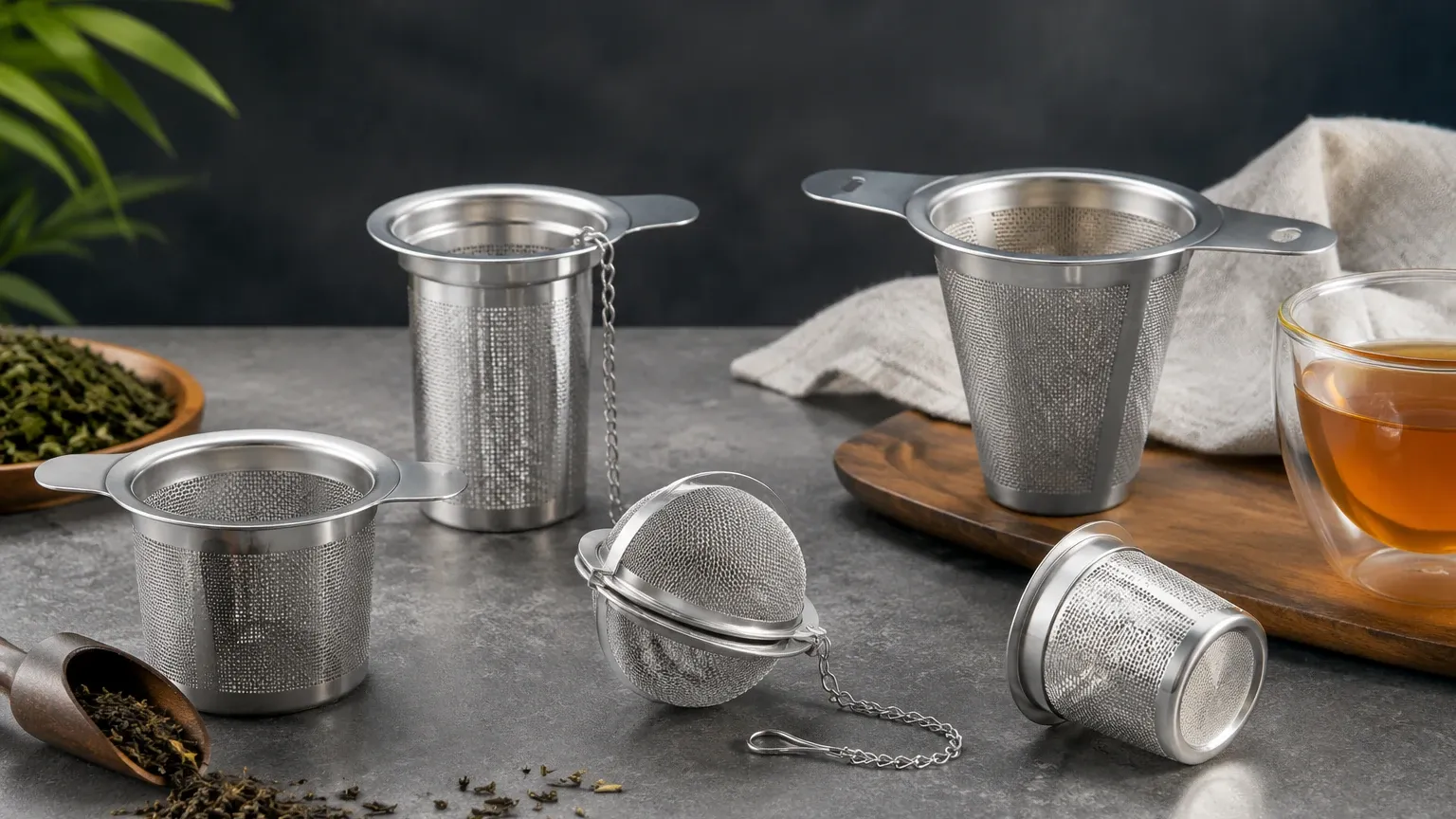
For most industrial tea applications, the use of precision wire mesh or perforated metal baskets is standard. These materials allow for custom-tailored aperture sizes, ensuring that even the finest fannings or dust are removed before the product reaches the final packaging stage.
Material Selection: Why Stainless Steel is Non-Negotiable
In the beverage industry, material selection is dictated by both performance and regulatory compliance (such as FDA or EU food contact standards). Stainless steel is the industry standard for the best tea strainers due to its inert nature and ease of sterilization.
Grade 304 vs. Grade 316L
While Grade 304 stainless steel is suitable for many general-purpose applications, Grade 316L is often preferred for high-end tea processing. The addition of molybdenum in 316L provides superior resistance to chlorides and organic acids found in certain tea varieties and cleaning agents. For facilities that use hot-fill processes or aggressive Clean-in-Place (CIP) chemicals, 316L offers a longer service life and better protection against pitting corrosion.
Surface Finish and Hygiene
The internal surface finish of a strainer is as important as the material itself. Industrial strainers should feature smooth, burr-free surfaces to prevent the accumulation of organic matter. Techniques such as electrolytic polishing are often employed to achieve a mirror-like finish, which reduces the risk of bacterial growth and simplifies the cleaning process. In the production of premium tea, preventing cross-contamination between batches is essential, making high-polish stainless steel the ideal choice.
Evaluating Filtration Precision: Micron Ratings and Mesh Types
The effectiveness of a strainer is largely determined by its mesh configuration. In the tea industry, the "best tea strainers" are those that match the specific cut size of the tea being processed. Tea leaves range from large whole leaves (requiring coarse filtration) to fine powders and fannings (requiring high-precision mesh).
Woven Wire Mesh
Woven wire mesh is the most common medium for fine tea filtration. It offers a high percentage of open area, which translates to lower pressure drops and higher flow rates. Common weave patterns include:
* Plain Weave: Suitable for general filtration where high flow is prioritized over extreme precision.
* Dutch Weave: Provides a denser, stronger mesh capable of capturing very fine particles while maintaining structural rigidity. This is often used for final polishing stages in tea production.
Perforated Metal
For primary filtration or bulk extraction, perforated metal baskets are often used as a pre-filter. These are designed to handle heavy loads of spent tea leaves. In many systems, a two-stage approach is used: a perforated basket to catch large leaves, followed by a fine wire mesh strainer to remove the "dust" or fines.
Structural Design: Comparing Inline Strainers and Basket Configurations
The physical housing and structure of the strainer must align with the facility's piping layout and operational workflow. There are two primary configurations used in industrial tea processing.
Inline Y-Strainers and T-Strainers
Inline strainers are integrated directly into the process piping. They are ideal for protecting downstream equipment like pumps, heat exchangers, and filling nozzles from stray particles. Y-strainers are typically used for liquid lines with low solids concentrations, whereas T-strainers offer a larger dirt-holding capacity and easier access for cleaning.
Basket Strainers
For applications involving high solids loading—such as the initial separation of tea leaves from the liquor—basket strainers are the preferred choice. These feature a large, removable basket that can hold a significant volume of material before requiring cleaning. In continuous production environments, "duplex" basket strainers allow for one side to be cleaned while the other remains in operation, preventing costly downtime.
Maintenance and Operational Longevity in Beverage Processing
The total cost of ownership for industrial filtration is heavily influenced by maintenance requirements and the replacement cycle of the filter media. The best tea strainers are designed for longevity and ease of service.
Clean-in-Place (CIP) Compatibility
In modern beverage plants, manual teardown of equipment is minimized. Strainers must be designed to withstand the pressures and temperatures of CIP cycles. This includes ensuring that gaskets and seals (typically made from EPDM, Silicone, or Viton) are compatible with both the tea product and the caustic cleaning solutions used in the industry.
Pressure Drop Monitoring
Engineers must monitor the differential pressure ($\Delta P$) across the strainer. As the mesh becomes loaded with tea particles, the pressure drop increases. High-quality industrial strainers are engineered to handle these pressure differentials without collapsing. If a strainer basket deforms, it can allow bypass, leading to contaminated product and potential damage to downstream bottling equipment.
Custom Engineering and OEM Solutions for Large-Scale Production
Every tea processing facility has unique requirements based on their specific product—whether it is herbal infusions, black tea, or matcha-based beverages. Standard off-the-shelf solutions often fail to meet the exact flow rates or space constraints of a specialized production line.
Customized Strainers & Baskets allow engineers to specify:
* Custom Dimensions: Fitting into existing pipework or extraction vessels without the need for extensive re-plumbing.
* Reinforced Structures: Adding support cages or perforated backings to fine mesh to handle high-pressure surges.
* Specialized Connections: Utilizing Tri-clamp, flange, or threaded connections that match the facility's sanitary standards.
By working with a manufacturer that specializes in custom stainless steel filtration, beverage companies can ensure that their "best tea strainers" are optimized for their specific viscosity, temperature, and particle load.
Critical Questions for Purchasing and Engineering Teams
Before finalizing a purchase for industrial tea filtration components, technical teams should confirm the following details to ensure the solution is fit for purpose:
1. What is the maximum allowable pressure drop? This helps determine the required open area and mesh size.
2. Is the tea acidic or alkaline? This dictates whether 304 or 316L stainless steel is necessary.
3. What is the cleaning frequency? If the solids load is high, a larger basket or a duplex system may be required to maintain production uptime.
4. Are there specific regulatory certifications required? Ensure the manufacturer can provide material mill certificates and food-grade compliance documentation.
Conclusion
Identifying the best tea strainers for industrial use requires a deep understanding of fluid dynamics, material science, and sanitary engineering. While a consumer might look for aesthetics, the industrial engineer prioritizes micron precision, structural durability, and CIP compatibility. By investing in high-quality stainless steel Strainers & Baskets, tea processors can guarantee a clear, consistent product while protecting their expensive downstream machinery. In the demanding environment of beverage manufacturing, the right filtration component is not just a peripheral accessory—it is a fundamental guarantor of quality and operational efficiency.
