


Basket Strainer 90mm Shaws
In industrial and commercial plumbing systems, the selection of drainage components is as critical as the filtration systems used in production lines. For facilities utilizing heavy-duty fireclay or deep-walled ceramic sinks, such as those produced by Shaws, a standard off-the-shelf waste kit often fails to meet the structural and chemical requirements of a professional environment. The basket strainer 90mm shaws configuration represents a specific engineering standard designed to bridge the gap between high-capacity drainage and precision debris retention.
For engineers and procurement teams, understanding the technical nuances of these components is essential for ensuring long-term system integrity. Whether the application is a commercial laboratory, a high-volume food processing facility, or a specialized chemical wash station, the Strainers & Baskets used must provide a perfect seal, corrosion resistance, and ease of maintenance.
Understanding the 90mm Basket Strainer Standard
The "90mm" designation refers to the standard aperture size for modern high-flow sink wastes. In the context of industrial filtration and drainage, this dimension is critical because it dictates the maximum flow rate and the volume of solid waste that can be captured before the system experiences a pressure drop or backup.
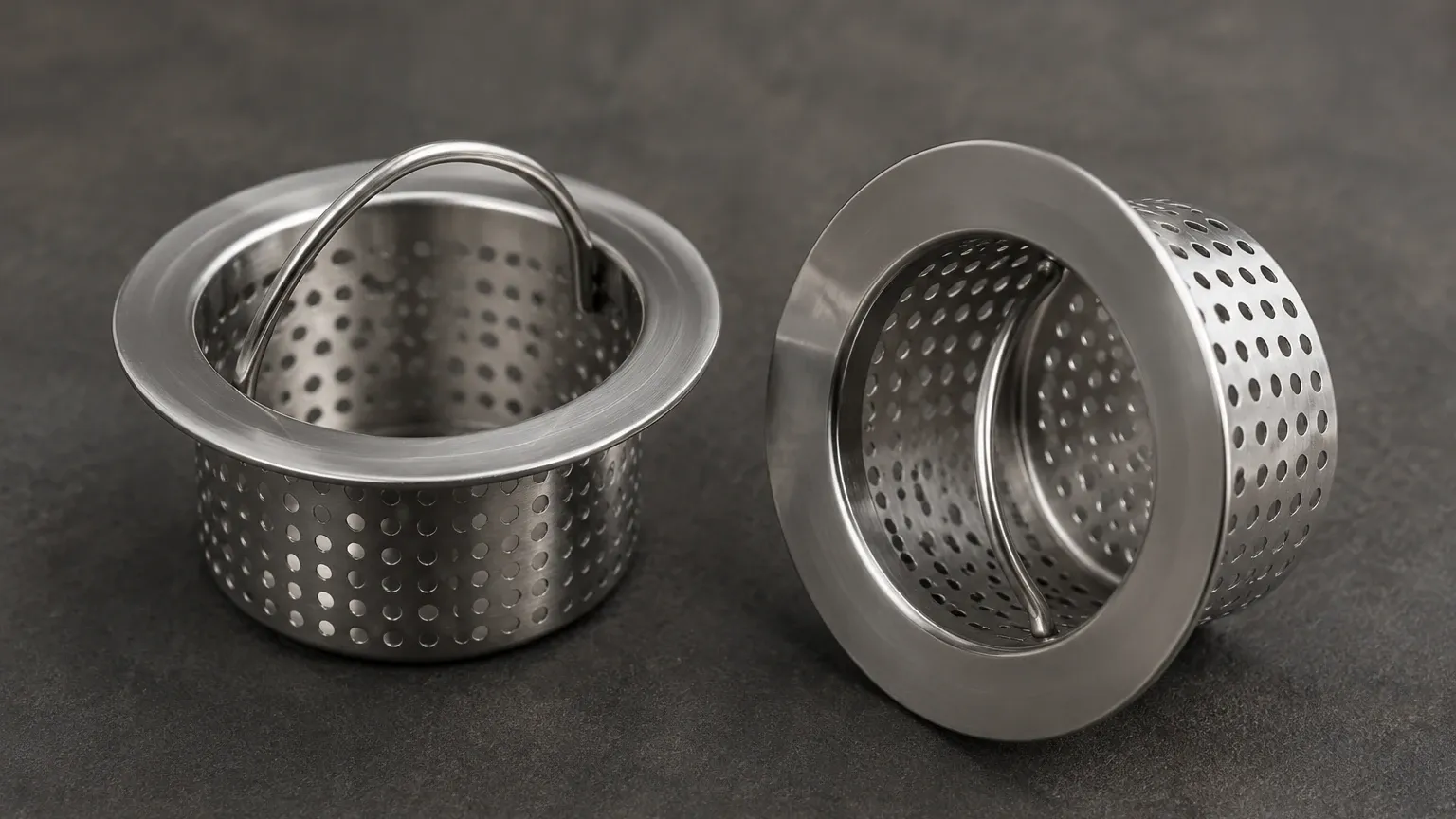
A basket strainer 90mm shaws assembly typically consists of a flange, a strainer body, a removable basket, and a sealing mechanism. Unlike standard residential strainers, industrial-grade versions must account for the specific geometry of fireclay sinks. Fireclay is significantly thicker than stainless steel or composite materials, often requiring a longer central fixing bolt and specialized gaskets to ensure a watertight seal against the porous ceramic surface.
From an engineering perspective, the 90mm standard allows for a generous drainage area, which is vital in applications where liquid must be evacuated quickly to prevent overflow or stagnation. The basket itself acts as a primary filtration stage, preventing large particulates from entering the secondary wastewater treatment system or clogging downstream piping.
Material Selection: Why Stainless Steel Dominates Industrial Filtration
When specifying a basket strainer for a Shaws-style sink in a B2B environment, material selection is the primary factor in determining the component's lifecycle. While plastic or plated brass may suffice for domestic use, industrial applications demand the durability of stainless steel.
304 vs. 316 Stainless Steel
Most high-quality basket strainers are manufactured from Grade 304 stainless steel, which offers excellent resistance to oxidation and common cleaning agents. However, in environments involving high saline concentrations, acidic chemicals, or pharmaceutical processing, Grade 316 stainless steel is the preferred choice. The addition of molybdenum in 316 stainless steel provides superior resistance to pitting and crevice corrosion, which is common in areas where liquids may sit in the strainer body for extended periods.
Surface Finish and Hygiene
In the food and beverage and pharmaceutical sectors, the surface finish of the strainer is not merely aesthetic. A high-polish or electropolished finish reduces surface roughness (Ra), making it more difficult for bacteria and biofilms to adhere to the metal. This is a critical consideration for maintaining sanitary standards and ensuring that the basket strainer 90mm shaws assembly can be effectively sanitized during CIP (Clean-in-Place) or manual cleaning cycles.
Engineering Compatibility with Shaws Ceramic Systems
One of the most common challenges engineers face when installing a basket strainer in a Shaws sink is the wall thickness. Standard waste kits are designed for 1mm to 2mm thick stainless steel sinks. A Shaws fireclay sink, however, can have a thickness ranging from 25mm to 40mm at the waste outlet.
Extended Ferrule and Bolt Requirements
To accommodate this thickness, the basket strainer 90mm shaws kit must include an extended ferrule and a longer stainless steel connecting bolt. If the bolt is too short, the threads will not engage sufficiently, leading to potential leaks or structural failure under the weight of a full sink. If the bolt is made of a lower-grade metal, it may corrode and seize over time, making future maintenance impossible without damaging the sink itself.
Sealing Gaskets and Compression
Achieving a seal on a ceramic surface requires high-quality elastomeric gaskets. Standard rubber can degrade when exposed to industrial detergents or high-temperature water. Professionals typically look for EPDM or Nitrile (Buna-N) gaskets, which provide excellent compression set resistance and thermal stability. The design of the strainer flange must also ensure even pressure distribution across the ceramic surface to prevent cracking the fireclay during installation.
Performance Metrics: Flow Rates and Debris Retention
The primary function of the basket in a 90mm strainer is to protect the plumbing infrastructure. However, the design of the basket's perforations significantly impacts the hydraulic performance of the sink.
Perforation Patterns
Baskets are typically available with either circular perforations or slotted openings. Circular holes (usually 2mm to 4mm in diameter) provide a high degree of structural rigidity and are effective at catching granular debris. Slotted designs may offer a higher open area ratio, which translates to faster drainage but may allow thinner, elongated debris to pass through.
Open Area Ratio (OAR)
The OAR is a critical calculation for engineers. It represents the total area of the holes divided by the total area of the basket surface. A higher OAR minimizes the risk of "vortexing" and ensures that even as the basket begins to fill with debris, the drainage rate remains within acceptable parameters. For custom industrial applications, Kaifil can provide baskets with specific mesh linings to capture smaller particles while maintaining the necessary flow characteristics.
Maintenance and Lifecycle of Industrial Strainers & Baskets
In a B2B context, the total cost of ownership (TCO) is more important than the initial purchase price. A low-quality basket strainer 90mm shaws assembly will require frequent replacement, leading to downtime and potential water damage.
Removable Basket Ergonomics
The basket must be easy to remove and empty, even when the operator is wearing industrial gloves. A sturdy handle, often made of reinforced stainless steel, is essential. In high-use environments, the spring-loaded ball or friction-fit mechanism that holds the basket in place must be tested for thousands of cycles to prevent the basket from floating or failing to seal when the sink needs to be filled.
Cleaning Protocols
Unlike domestic strainers, industrial baskets may be subjected to harsh cleaning protocols. Stainless steel components can withstand ultrasonic cleaning, high-pressure hosing, and chemical sterilization. Engineers should confirm that all components, including the internal seals and the handle assembly, are compatible with the facility's specific cleaning agents.
Custom OEM Solutions for Specialized Filtration Needs
While standard basket strainer 90mm shaws kits meet many needs, certain industrial applications require customized solutions. This is where a specialized manufacturer like Kaifil provides significant value.
Custom Mesh Liners
In some laboratory or precision manufacturing settings, standard 2mm perforations are too large. Custom baskets can be manufactured with a fine stainless steel wire mesh liner (ranging from 50 to 500 microns) welded inside the perforated frame. This allows for the capture of precious metal filings, microplastics, or specific chemical precipitates.
Specialized Alloys and Coatings
For environments handling highly corrosive substances, such as concentrated acids or specialized industrial solvents, standard stainless steel may not be enough. Custom orders can specify exotic alloys or specialized coatings (such as PTFE) to ensure the strainer remains functional in extreme conditions.
Integration with Industrial Waste Systems
For large-scale projects, the basket strainer is often just the first point of contact. Custom-engineered Strainers & Baskets can be designed to interface directly with secondary filtration units, grease traps, or automated waste monitoring systems, providing a seamless flow of data and material through the facility's infrastructure.
Procurement Considerations for Engineers and Buyers
When sourcing a basket strainer 90mm shaws for a project, several factors should be confirmed before finalizing the purchase order:
1. Dimensional Verification: Ensure the flange diameter, thread pitch, and bolt length are compatible with the specific Shaws sink model being used.
2. Material Certification: Request material test reports (MTRs) to verify the grade of stainless steel, especially if the application is in the food, beverage, or pharmaceutical industry.
3. Seal Compatibility: Confirm that the gasket materials are resistant to the specific chemicals and temperatures they will encounter in the facility.
4. Replacement Part Availability: In an industrial setting, the basket is a wear item. Ensure that replacement baskets and seals are readily available to prevent long-term system downtime.
5. Compliance Standards: Depending on the region and industry, components may need to meet specific certifications such as NSF/ANSI for food safety or WRAS for water regulations.
Conclusion
The basket strainer 90mm shaws is more than just a simple plumbing fixture; it is a critical interface between a high-value ceramic sink and the broader industrial waste system. By focusing on high-grade materials, precision engineering for thick-walled sinks, and the specific filtration requirements of the application, engineers can ensure a reliable and durable installation.
Kaifil’s expertise in stainless steel filtration solutions allows for the creation of components that go beyond standard retail offerings. By understanding the relationship between flow dynamics, material science, and mechanical compatibility, procurement teams can select Strainers & Baskets that deliver superior performance and a lower total cost of ownership in even the most demanding industrial environments.
