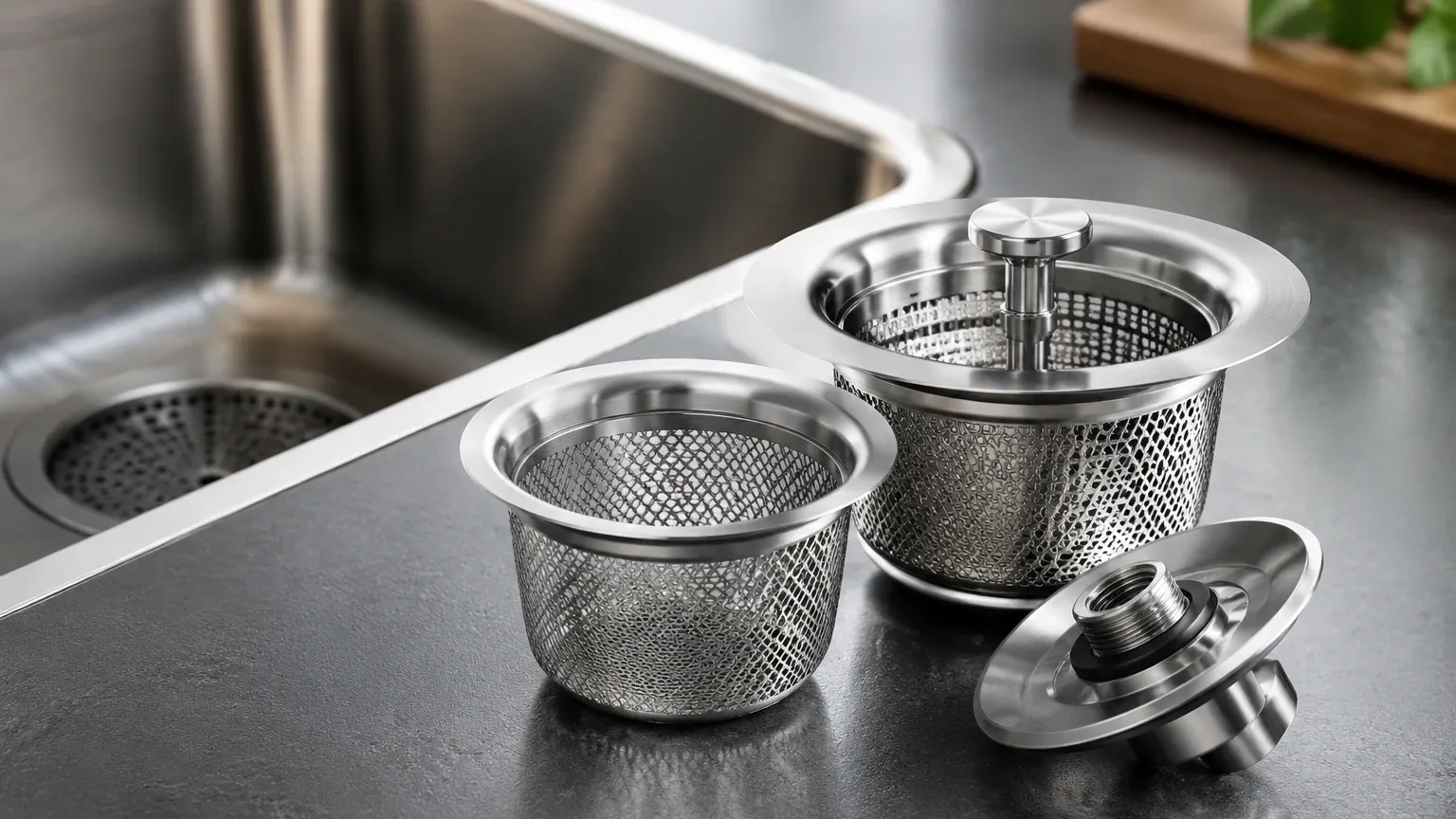
Basket Strainers for Kitchen Sinks
In industrial and commercial food service environments, the efficiency of drainage systems is directly linked to the quality of the primary filtration components installed at the source. While often viewed as a simple hardware item, basket strainers for kitchen sinks serve as a critical first line of defense in protecting downstream plumbing and wastewater treatment systems. For engineers and facility managers, selecting the appropriate strainer involves understanding material science, fluid dynamics, and mechanical durability to ensure long-term operational reliability.
The Engineering Role of Basket Strainers
A basket strainer is a specialized type of filter designed to remove large solids from a liquid stream. In the context of commercial and industrial sinks—such as those found in food processing plants, large-scale kitchens, and laboratories—the primary function of these components is to prevent debris from entering the piping system where it can cause blockages, anaerobic bacterial growth, and mechanical wear on pumps.
The "basket" design is intentional. Unlike flat disc strainers, the basket configuration provides a significantly larger surface area for filtration. This increased area allows for a higher volume of debris to be captured before the flow rate is negatively impacted. In high-flow environments, this design is essential for maintaining consistent drainage speeds while ensuring that even smaller particulates are effectively sequestered.
Material Selection: The Case for Stainless Steel
When specifying basket strainers for kitchen sinks in a B2B or industrial context, material selection is the most critical factor influencing the total cost of ownership. While residential markets may utilize plastic or thin-gauge plated brass, industrial applications demand high-grade stainless steel.
Stainless Steel 304
This is the standard for most commercial kitchen applications. It offers excellent resistance to corrosion from water and common food acids. Its structural integrity ensures that the basket does not deform under the weight of heavy debris or during the mechanical stress of frequent removal and cleaning.
Stainless Steel 316
For environments involving high salinity, heavy chemical cleaning agents, or acidic food processing (such as citrus or vinegar-based production), Stainless Steel 316 is preferred. The addition of molybdenum provides superior resistance to pitting and crevice corrosion, which is vital for maintaining hygiene standards and preventing structural failure in harsh environments.
At Kaifil, the focus remains on high-performance Strainers & Baskets that utilize these premium materials to meet the rigorous demands of industrial sanitation and fluid management.
Technical Specifications and Performance Metrics
Engineers must evaluate several technical parameters when selecting a basket strainer to ensure it matches the specific requirements of the facility’s drainage architecture.
1. Filtration Accuracy (Perforation and Mesh Size)
The effectiveness of a strainer is determined by its perforation size or the mesh count of its lining. In industrial sinks, a balance must be struck: holes must be small enough to catch problematic debris but large enough to prevent instantaneous clogging from grease or fine organic matter. Standard commercial basket strainers typically feature perforations ranging from 1mm to 3mm. For specialized applications requiring finer filtration, a secondary wire mesh lining can be integrated into the basket design.
2. Flow Capacity and Open Area Ratio
The "Open Area Ratio" is the relationship between the total area of the holes and the total area of the basket surface. A higher ratio results in a lower pressure drop across the strainer, allowing for faster drainage. For industrial kitchen sinks, maintaining a high flow rate is essential to prevent standing water, which can pose a safety hazard and a sanitation risk.
3. Connection Standards
Industrial sink strainers must adhere to standardized connection sizes to ensure compatibility with existing plumbing. The most common standard for commercial sinks is the 3.5-inch (90mm) opening, though custom industrial vats and large-scale processing sinks may require bespoke diameters and flange configurations.
Structural Integrity and Manufacturing Quality
The durability of basket strainers for kitchen sinks is a product of their manufacturing process. In a B2B setting, engineers should look for specific quality indicators:
* Deep-Drawn Construction: Baskets manufactured through deep-drawing processes lack seams, which reduces the risk of structural failure and eliminates crevices where bacteria can proliferate.
* Reinforced Rims: The top rim of the basket should be reinforced to withstand the impact of being knocked against waste bins during the emptying process.
* Precision Welding: If the strainer assembly involves multiple components, TIG (Tungsten Inert Gas) welding is preferred for its strength and clean finish, ensuring no sharp edges or weak points exist.
Industrial vs. Residential Grade: Key Differences
It is a common mistake in facility procurement to substitute residential-grade components for industrial applications. The differences are substantial:
| Feature | Residential Grade | Industrial/Commercial Grade |
| :— | :— | :— |
| Material Thickness | 0.4mm – 0.6mm | 0.8mm – 1.2mm+ |
| Corrosion Resistance | Low (often plated) | High (Solid SS304/316) |
| Seal Quality | Thin rubber gaskets | Heavy-duty EPDM or Teflon |
| Locking Mechanism | Friction fit or plastic nut | Metal-to-metal threaded lock |
| Longevity | 1-3 years | 10+ years with maintenance |
Using industrial-grade basket strainers reduces the frequency of replacements and the risk of emergency plumbing repairs, which are significantly more costly than the initial investment in high-quality hardware.
Selection Criteria for Engineering Teams
When choosing a supplier for Strainers & Baskets, engineering teams should confirm the following technical details:
1. Chemical Compatibility: Does the material withstand the specific detergents and sanitizers used in the facility?
2. Temperature Resilience: Can the strainer handle high-temperature discharge from industrial dishwashers or steam cleaning equipment without warping or seal failure?
3. Ease of Maintenance: Is the basket easily removable by staff without specialized tools, yet secure enough to prevent accidental displacement?
4. Replacement Part Availability: Are replacement baskets, seals, and stoppers readily available to prevent the need for replacing the entire assembly?
Maintenance and Total Cost of Ownership
To maximize the lifespan of basket strainers for kitchen sinks, a proactive maintenance schedule is required. In industrial settings, this involves more than just emptying the debris.
* Regular Inspection: Check for signs of pitting or surface rust, which could indicate the use of incompatible cleaning chemicals.
* Seal Integrity: Inspect the gaskets for hardening or cracking, which can lead to leaks and water damage to the sub-structure.
* Cleaning Protocols: Avoid using steel wool or abrasive pads on stainless steel strainers, as these can leave carbon steel particles that lead to localized rusting. Instead, use soft brushes and non-chloride cleaners.
From a total cost of ownership (TCO) perspective, a high-quality stainless steel strainer may have a higher upfront cost, but its durability and the protection it offers to the wider plumbing infrastructure result in significant long-term savings.
Custom OEM Solutions for Specialized Applications
Many industrial environments require filtration solutions that go beyond the standard off-the-shelf basket strainer. Whether it is a unique sink geometry in a pharmaceutical lab or a high-capacity drainage system in a meat processing plant, customization is often necessary.
Kaifil specializes in providing custom stainless steel filtration components, including bespoke basket designs that can be tailored to specific micron ratings, flow requirements, and physical dimensions. By working closely with a manufacturer that understands the nuances of metal filtration, engineers can ensure that their basket strainers for kitchen sinks are optimized for their specific operational environment.
Conclusion
Selecting the right basket strainer is an engineering decision that impacts the hygiene, efficiency, and maintenance costs of a commercial or industrial facility. By prioritizing high-grade materials like SS304 and SS316, focusing on structural integrity, and ensuring proper technical specifications, procurement teams can secure a reliable solution for waste management. For those seeking professional-grade filtration components, exploring specialized Strainers & Baskets is the first step toward a more resilient and efficient drainage system.