


Cell Strainers
In the landscape of industrial filtration and laboratory sample preparation, precision is the primary metric of success. Cell strainers represent a critical category of filtration components designed to isolate specific particles, dissociate tissues, or clear debris from fluid streams. While often associated with small-scale laboratory work, the engineering principles behind these components are essential for large-scale pharmaceutical, chemical, and food processing applications.
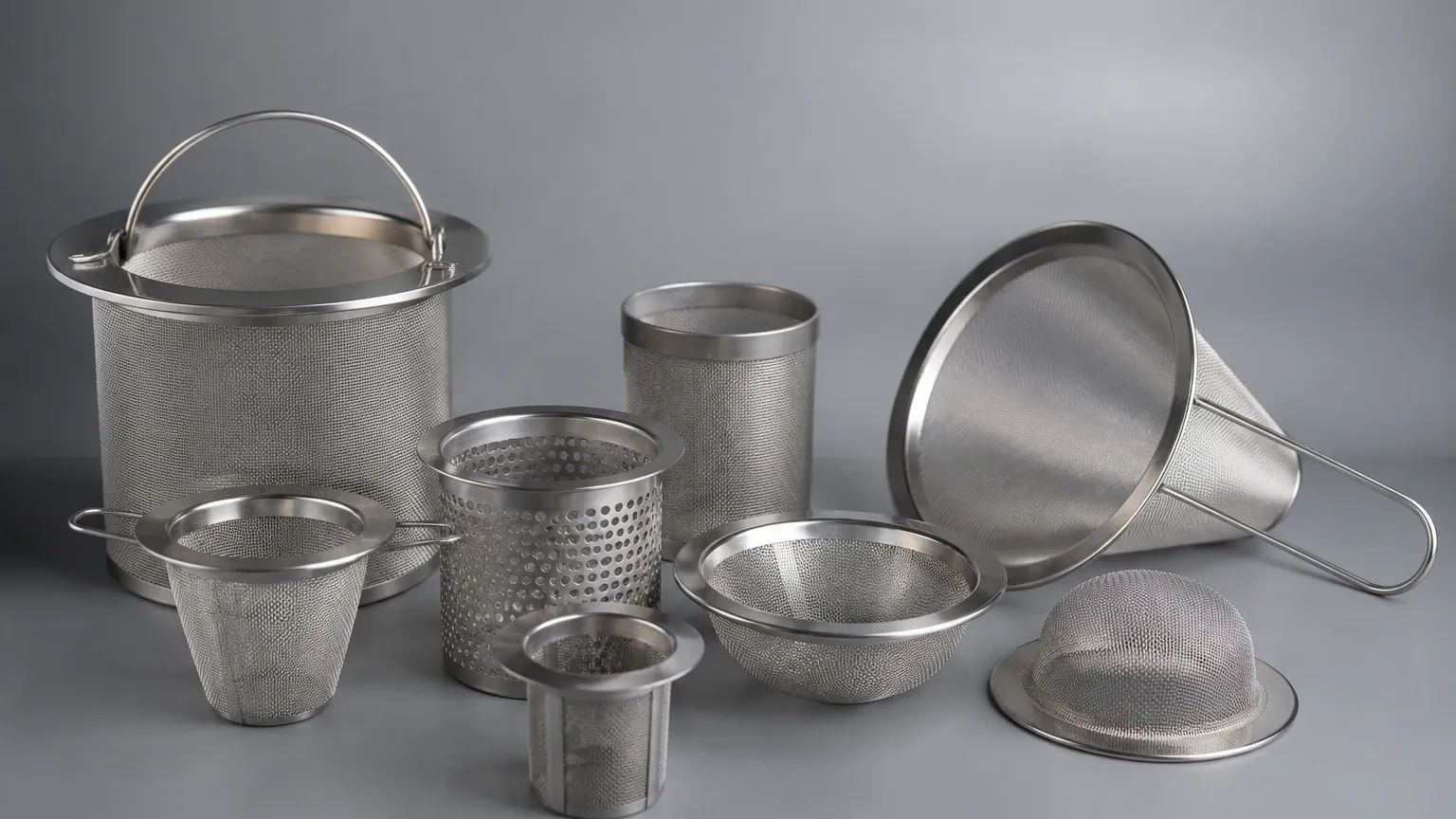
As a specialized manufacturer of stainless steel filtration solutions, Kaifil provides high-performance Strainers & Baskets that bridge the gap between delicate laboratory requirements and robust industrial processing. Understanding the technical nuances of cell strainers—from mesh geometry to material compatibility—is vital for engineers and procurement teams tasked with maintaining process integrity.
The Engineering Logic of Cell Strainers
At its core, a cell strainer is a surface filtration device. Unlike depth filters that trap particles within a thick matrix, cell strainers utilize a precise mesh to block particles larger than the specified pore size while allowing smaller constituents to pass through. This mechanism is vital for creating uniform single-cell suspensions or protecting downstream equipment from particulate contamination.
In industrial contexts, the "cell" in cell strainers may refer to biological cells in a bioreactor, but it also serves as a broader term for any fine particulate that requires high-accuracy separation. The performance of these strainers is dictated by three primary factors: aperture size, open area percentage, and mechanical strength.
Aperture Size and Micron Ratings
Standard cell strainers are typically categorized by their micron ratings, commonly ranging from 20µm to 100µm. For industrial applications, achieving this level of precision requires advanced wire weaving techniques. Stainless steel wire mesh offers a level of aperture consistency that polymer-based filters often struggle to maintain under varying temperatures or pressures. When selecting a strainer, engineers must account for the "nominal" vs. "absolute" rating to ensure that no particles above the threshold bypass the filter.
Open Area and Flow Dynamics
The "open area" refers to the percentage of the mesh surface that is not occupied by wire. A higher open area results in lower pressure drops and higher flow rates, which is critical for maintaining throughput in continuous processing lines. However, a higher open area often necessitates thinner wires, which can compromise the structural integrity of the strainer. Balancing these two factors is a key part of the design phase for custom filtration solutions.
Material Selection: Stainless Steel vs. Polymers
While disposable plastic cell strainers are common in low-volume laboratory settings, industrial environments demand the durability and chemical resistance of metal. Kaifil specializes in the production of stainless steel filtration components, which offer several distinct advantages over polymer alternatives.
Chemical and Thermal Resistance
Industrial processes often involve aggressive solvents, high-pH cleaning agents, or elevated temperatures. Stainless steel (specifically grades 304 and 316L) remains inert in the presence of most industrial chemicals. Furthermore, metal strainers can withstand autoclaving and steam-in-place (SIP) sterilization, which is a non-negotiable requirement in pharmaceutical and food-grade applications. Polymers, by contrast, may leach plastisols or deform under thermal stress, leading to bypass or process contamination.
Mechanical Integrity and Reusability
Stainless steel Strainers & Baskets are designed for longevity. In a high-pressure hydraulic or chemical system, a plastic strainer may burst or sag, altering the filtration accuracy. Metal mesh is structurally stable, maintaining its pore geometry even under significant differential pressure. This durability also allows for reusability; through ultrasonic cleaning or backwashing, stainless steel strainers can be restored to their original performance levels, significantly reducing the total cost of ownership compared to single-use disposables.
Key Applications Across Critical Industries
The utility of precision cell strainers extends across various sectors where particle size control is paramount. By integrating these components into larger filtration systems, manufacturers can ensure product purity and process efficiency.
Pharmaceutical and Biotechnology
In the production of vaccines, monoclonal antibodies, and cell therapies, cell strainers are used to remove cell clumps and tissue debris from media. This ensures that the resulting fluid is homogenous and ready for downstream purification steps like chromatography or tangential flow filtration (TFF). The use of 316L stainless steel is particularly prevalent here due to its superior corrosion resistance and biocompatibility.
Food and Beverage Processing
Precision filtration is used to clarify liquids, such as fruit juices or botanical extracts. Cell strainers help in removing fine pulp or seeds that could affect the texture or clarity of the final product. Because these strainers must be cleaned frequently to prevent microbial growth, the ability to withstand caustic cleaning-in-place (CIP) cycles is a primary reason engineers opt for stainless steel mesh.
Chemical and Fine Material Processing
In chemical synthesis, catalysts are often expensive and need to be recovered for reuse. Fine mesh strainers act as the primary barrier to capture these catalysts from the reaction stream. Additionally, in the production of specialty inks or coatings, cell strainers ensure that no oversized pigments or agglomerates enter the final packaging, which would otherwise clog spray nozzles or compromise finish quality.
Selection Criteria for Industrial Cell Strainers
When specifying cell strainers for a project, engineers should evaluate several technical parameters beyond just the micron rating. A mismatch between the strainer design and the operating environment can lead to premature clogging (blinding) or mechanical failure.
1. Fluid Viscosity: Highly viscous fluids require strainers with a larger open area or a reinforced support structure to handle the increased pressure needed to force the fluid through the mesh.
2. Particulate Loading: If the fluid contains a high concentration of solids, a standard flat-surface strainer may clog too quickly. In these cases, a basket-style strainer, which offers a larger surface area, is more appropriate.
3. Flow Rate Requirements: Engineers must calculate the maximum allowable pressure drop ($ΔP$) across the filter. If the flow rate is high, the strainer must be sized appropriately to prevent cavitation or flow restriction.
4. Housing Compatibility: The strainer must interface perfectly with the existing piping or vessel. Custom-designed flanges, gaskets, and support rings are often necessary to ensure a leak-proof seal.
Customization and OEM Solutions
One of the primary challenges in industrial filtration is that "off-the-shelf" solutions rarely meet the exact requirements of a specialized process. Customization is often necessary to optimize performance. Kaifil works closely with global customers to develop tailored filtration components that meet specific application needs.
Layered Mesh Configurations
For applications requiring both fine filtration and high strength, multi-layer sintered mesh can be used. This involves bonding a fine filtration layer to one or more coarser support layers. The result is a cell strainer that offers the precision of a 20µm mesh with the structural rigidity of a heavy-duty plate.
Geometry and Fitting
Beyond standard circular strainers, industrial systems may require conical, cylindrical, or pleated geometries. Pleating the mesh significantly increases the effective filtration area (EFA) within the same footprint, allowing for longer service intervals and higher dirt-holding capacity. Custom frames and handles can also be integrated to facilitate easy removal and cleaning by maintenance teams.
Maintenance and Total Cost of Ownership
While the initial investment in a high-quality stainless steel strainer is higher than that of a plastic disposable, the long-term economics favor the durable solution. To maximize the lifespan of Strainers & Baskets, a proper maintenance protocol is required.
* Cleaning Protocols: Depending on the contaminant, cleaning may involve solvent soaking, ultrasonic baths, or high-pressure air/water cleaning. It is essential to ensure that the cleaning method does not damage the delicate wire mesh.
* Inspection for Blinding: Over time, some particles may become permanently lodged in the mesh (blinding). Regular inspection under magnification can help determine when a strainer needs professional deep cleaning or replacement.
* Gasket Integrity: In many industrial strainers, the seal is as important as the mesh. Gaskets should be inspected for wear or chemical degradation during every maintenance cycle to prevent bypass.
Conclusion
Cell strainers are more than just simple sieves; they are precision-engineered components that play a vital role in the success of industrial processes. Whether the goal is to isolate biological cells, recover expensive catalysts, or ensure the clarity of a beverage, the choice of strainer material and design has a direct impact on throughput, purity, and operational costs.
By focusing on high-grade materials like stainless steel and offering deep customization capabilities, Kaifil enables engineers to implement filtration solutions that are both accurate and resilient. When selecting filtration components, confirming the material grade, mesh precision, and structural design with a specialist manufacturer ensures that the equipment will perform reliably in even the most demanding industrial environments.
