


Strainer Coles
In industrial fluid handling and process engineering, the selection of filtration components is a critical decision that impacts the longevity of downstream equipment, the purity of the final product, and the overall efficiency of the system. Among the various configurations used to remove unwanted solids from liquid or gas streams, specialized components often referred to in technical procurement as strainer coles or precision basket strainers play a vital role. These components are designed to provide a high-capacity, low-pressure-drop solution for protecting pumps, valves, and heat exchangers from debris.
For engineers and procurement teams, understanding the nuances of these filtration elements is essential. Whether you are replacing an existing unit or designing a new process line, the technical specifications—ranging from material grade to mesh geometry—must align with the specific operational demands of the application. This guide explores the engineering considerations, material science, and customization options associated with high-performance industrial strainers.
Engineering Principles of Industrial Strainers and Baskets
The primary function of Strainers & Baskets is the mechanical removal of solids from a flowing medium. Unlike fine membrane filters that may operate at the sub-micron level, industrial strainers are typically utilized for coarse filtration, capturing particles ranging from several millimeters down to approximately 40 microns. The engineering of these components focuses on balancing three competing factors: filtration efficiency, flow capacity, and structural integrity.
One of the most important metrics in strainer design is the Open Area Ratio (OAR). This is the ratio between the total open area of the mesh or perforated metal and the internal cross-sectional area of the inlet pipe. A well-engineered strainer coles configuration typically aims for an OAR of at least 6:1. A higher OAR ensures that the strainer can accumulate a significant amount of debris before the pressure drop (delta P) across the element becomes excessive. If the OAR is too low, the strainer will require frequent cleaning, leading to increased downtime and potential cavitation issues in suction-side pump applications.
Structural design also involves the consideration of flow direction. In basket strainers, the fluid typically enters the top or side of the basket and flows through the mesh to the outside. This design allows the debris to be captured within the basket, making it easy to remove and clean without spilling contaminants back into the downstream piping. For high-pressure applications, the basket must be reinforced with a heavier perforated metal backup tube to prevent the finer wire mesh from collapsing under the force of the fluid flow.
Material Selection for Demanding Applications
The longevity of a strainer is largely determined by its resistance to the chemical and physical environment of the process. In industrial filtration, stainless steel is the gold standard due to its durability and resistance to oxidation. When evaluating strainer coles for a specific project, engineers must choose between different grades of stainless steel based on the corrosivity of the fluid.
* Grade 304 Stainless Steel: This is the most common material for general industrial use. It provides excellent strength and good corrosion resistance for water treatment, food processing (where chlorides are low), and hydraulic oil applications. It is a cost-effective choice for non-corrosive environments.
* Grade 316/316L Stainless Steel: For applications involving chemical processing, pharmaceuticals, or marine environments, 316 stainless steel is preferred. The addition of molybdenum enhances its resistance to pitting and crevice corrosion, particularly in the presence of chlorides. The "L" (low carbon) version is essential for components that require extensive welding, as it prevents carbide precipitation that can lead to intergranular corrosion.
* Specialty Alloys: In extreme cases, such as highly acidic chemical lines or high-temperature steam applications, materials like Monel, Hastelloy, or Duplex stainless steel may be required. These materials offer superior resistance to stress corrosion cracking and chemical attack that would quickly degrade standard stainless steel.
Beyond the metal itself, the finish of the material is crucial in industries like food and beverage or pharmaceuticals. Electropolishing or mechanical polishing to a specific Ra (Roughness Average) value ensures that the strainer surface is smooth, reducing the risk of bacterial growth and making the cleaning process more effective.
Understanding Filtration Accuracy and Mesh Configurations
The performance of a strainer coles element is defined by its ability to stop particles of a specific size. This is achieved through the use of perforated metal, woven wire mesh, or a combination of both. Choosing the right configuration requires a deep understanding of the contaminant profile in the process fluid.
Perforated metal is generally used for the coarsest filtration tasks or as a support structure for finer mesh. It is characterized by the hole diameter and the pitch (the distance between the centers of the holes). While perforated metal is extremely robust, its open area is often lower than that of woven mesh. For finer filtration, stainless steel wire mesh is layered over the perforated support. Mesh is defined by the number of openings per linear inch. For example, a 100-mesh screen has 100 openings per inch in both directions.
When specifying mesh, engineers must distinguish between "nominal" and "absolute" filtration ratings. A nominal rating indicates that the mesh will stop a large percentage of particles of a certain size, while an absolute rating guarantees that no particle larger than the specified micron size will pass through. In precision applications where strainer coles are used to protect sensitive instrumentation, absolute ratings are often required. Furthermore, the weave type—such as plain weave, twilled weave, or Dutch weave—affects both the filtration accuracy and the flow characteristics. Dutch weaves, for instance, provide a much denser structure and are used for high-pressure, fine-filtration requirements.
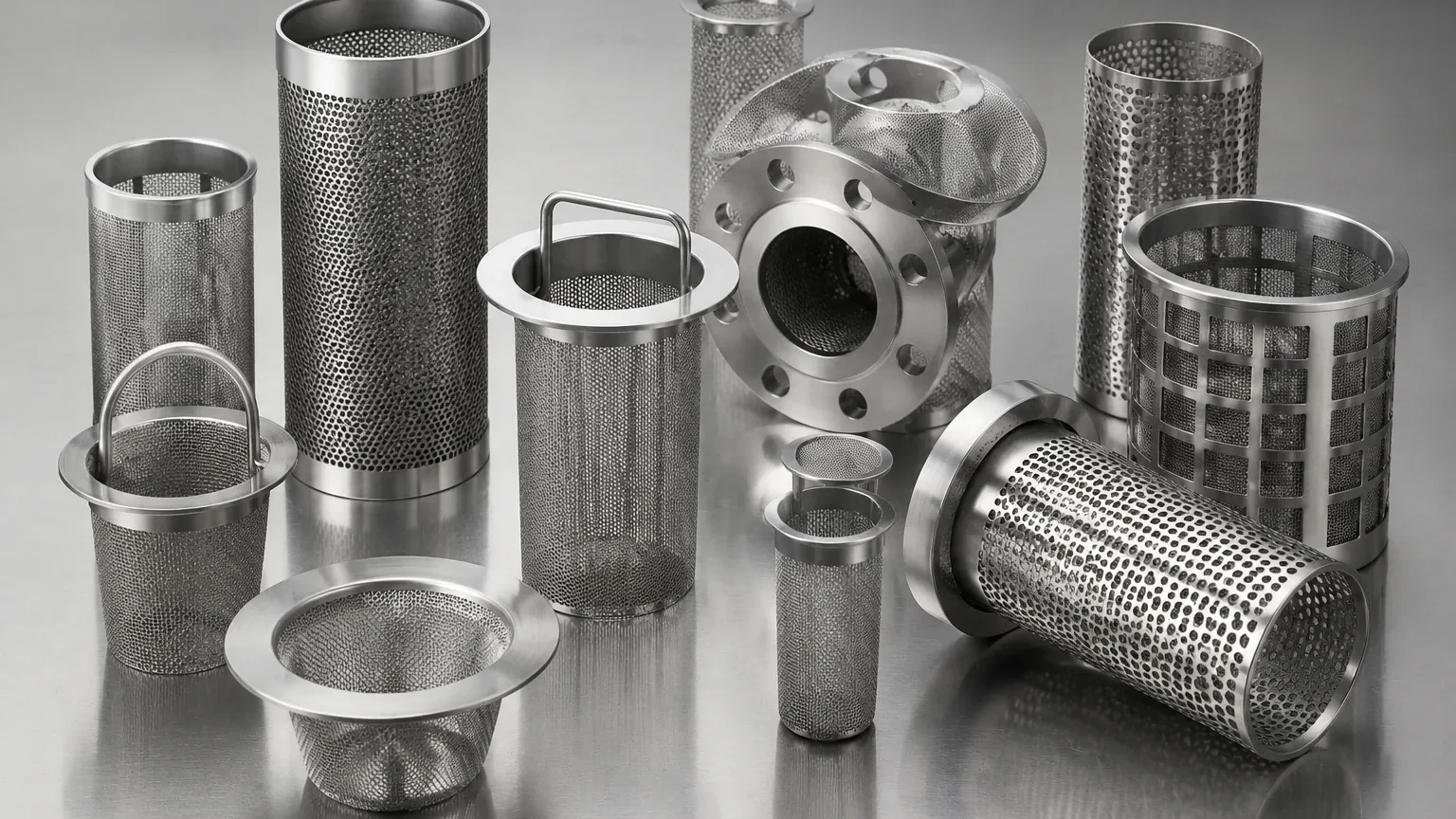
Customization and OEM Solutions for Specific Flow Requirements
Standard off-the-shelf strainers often fail to meet the unique constraints of specialized industrial systems. This is where the value of a custom manufacturer like Kaifil becomes apparent. Customization allows for the optimization of the strainer coles to fit specific housing dimensions, flow rates, and connection types.
Customization often begins with the physical dimensions of the basket or cylinder. In many retrofit scenarios, the internal dimensions of the strainer housing are fixed, requiring a replacement basket that matches the original specifications exactly to ensure a proper seal. A poor fit can lead to "bypass," where fluid flows around the edges of the strainer rather than through the mesh, rendering the filtration system useless.
Other customization options include:
* Flange and Connection Types: Strainers can be designed with various flange standards (ANSI, DIN, JIS) or threaded connections (NPT, BSPT) to integrate seamlessly with existing piping.
* Reinforced Handle Designs: For large baskets that accumulate heavy debris, heavy-duty handles or lifting lugs are necessary to ensure safe removal during maintenance.
* Magnetic Inserts: In hydraulic and machining applications, magnetic rods can be added to the center of the strainer basket to capture fine ferrous particles that might otherwise pass through the mesh.
* Multi-Layered Construction: Combining different mesh sizes can create a graduated filtration effect, extending the life of the inner fine mesh by capturing larger particles on an outer coarse layer.
By working with an OEM partner, engineering teams can ensure that the strainer is not just a commodity part, but a precision-engineered component tailored to the specific hydraulic dynamics of their system.
Maintenance, Replacement, and Total Cost of Ownership
While the initial purchase price of a strainer coles is an important factor, the total cost of ownership (TCO) is heavily influenced by maintenance requirements and the durability of the component. A low-quality strainer that requires frequent replacement or fails under pressure can cost a facility significantly more in lost production and equipment repair than a high-quality, custom-engineered solution.
Maintenance efficiency is largely determined by the ease of cleaning. Permanent stainless steel strainers are designed to be cleaned and reused, which is more sustainable and cost-effective than disposable filters. The cleaning cycle is typically triggered by a differential pressure gauge. When the pressure difference between the inlet and outlet reaches a pre-set limit (often around 10-15 psi), the strainer must be serviced. In continuous process industries, duplex strainers—which consist of two strainer housings connected by a diverting valve—allow one side to be cleaned while the other remains in operation, preventing system shutdowns.
To maximize the lifespan of a strainer, it is important to follow proper cleaning protocols. High-pressure water or steam cleaning is often effective, but care must be taken not to damage the delicate wire mesh. In some chemical applications, ultrasonic cleaning may be required to remove stubborn deposits from the mesh openings.
When evaluating replacement cycles, engineers should look for signs of mechanical fatigue, such as broken wires or distorted support frames. Choosing a manufacturer that utilizes advanced welding techniques, such as TIG (Tungsten Inert Gas) or resistance welding, ensures that the mesh-to-frame bonds are strong enough to withstand repeated cleaning and the stresses of high-velocity flow.
Conclusion: Selecting the Right Filtration Partner
The selection of strainer coles and industrial baskets is a technical process that requires a balance of material science, fluid dynamics, and mechanical engineering. By focusing on the specific needs of the application—whether it is the high-purity requirements of a pharmaceutical line or the rugged durability needed for wastewater treatment—purchasing teams can ensure they are investing in a solution that provides long-term value.
As a professional manufacturer, Kaifil specializes in providing these high-performance, custom stainless steel filtration solutions. From selecting the appropriate grade of stainless steel to designing complex, multi-layered mesh baskets, the focus is always on delivering reliability and precision. By understanding the engineering principles discussed in this guide, technical professionals can make more informed decisions, leading to optimized filtration performance and reduced operational risks across their industrial facilities.
