


Collapsible Strainers
In industrial process engineering, the management of particulate matter is critical to maintaining equipment longevity and product purity. While rigid filtration systems are the standard for permanent installations, specific operational scenarios require more versatile solutions. This is where the specialized design of collapsible strainers and modular filtration components becomes essential. As a subset of the broader category of Strainers & Baskets, these components offer unique advantages in terms of storage efficiency, portability, and adaptability in temporary or space-constrained environments.
For engineers and procurement professionals, selecting the right filtration hardware requires a deep understanding of mechanical stress, material compatibility, and filtration precision. This guide explores the technical nuances of collapsible and modular straining solutions, their role within industrial systems, and the engineering criteria necessary for successful implementation.
The Role of Strainers & Baskets in Process Engineering
Industrial filtration is rarely a one-size-fits-all application. Strainers and baskets serve as the first line of defense in a fluid handling system, protecting downstream equipment such as pumps, valves, and heat exchangers from damage caused by debris, scale, or foreign particles. Unlike fine filters that may target sub-micron particles, strainers are typically designed to remove larger contaminants that could cause catastrophic mechanical failure.
Within the hierarchy of filtration, Strainers & Baskets are categorized by their configuration—such as Y-strainers, T-strainers, or basket strainers—and their material composition. The introduction of collapsible strainers into this mix addresses specific logistical challenges. In mobile processing units, temporary bypass lines, or pilot plants where equipment must be frequently moved or stored, the ability to reduce the physical footprint of a filtration component without sacrificing structural integrity is a significant engineering advantage.
Engineering Specifications of Collapsible Strainers
When evaluating collapsible strainers for industrial use, the focus shifts from simple convenience to rigorous performance metrics. Unlike consumer-grade counterparts, industrial collapsible filtration units must withstand significant differential pressures and corrosive environments.
Material Selection and Durability
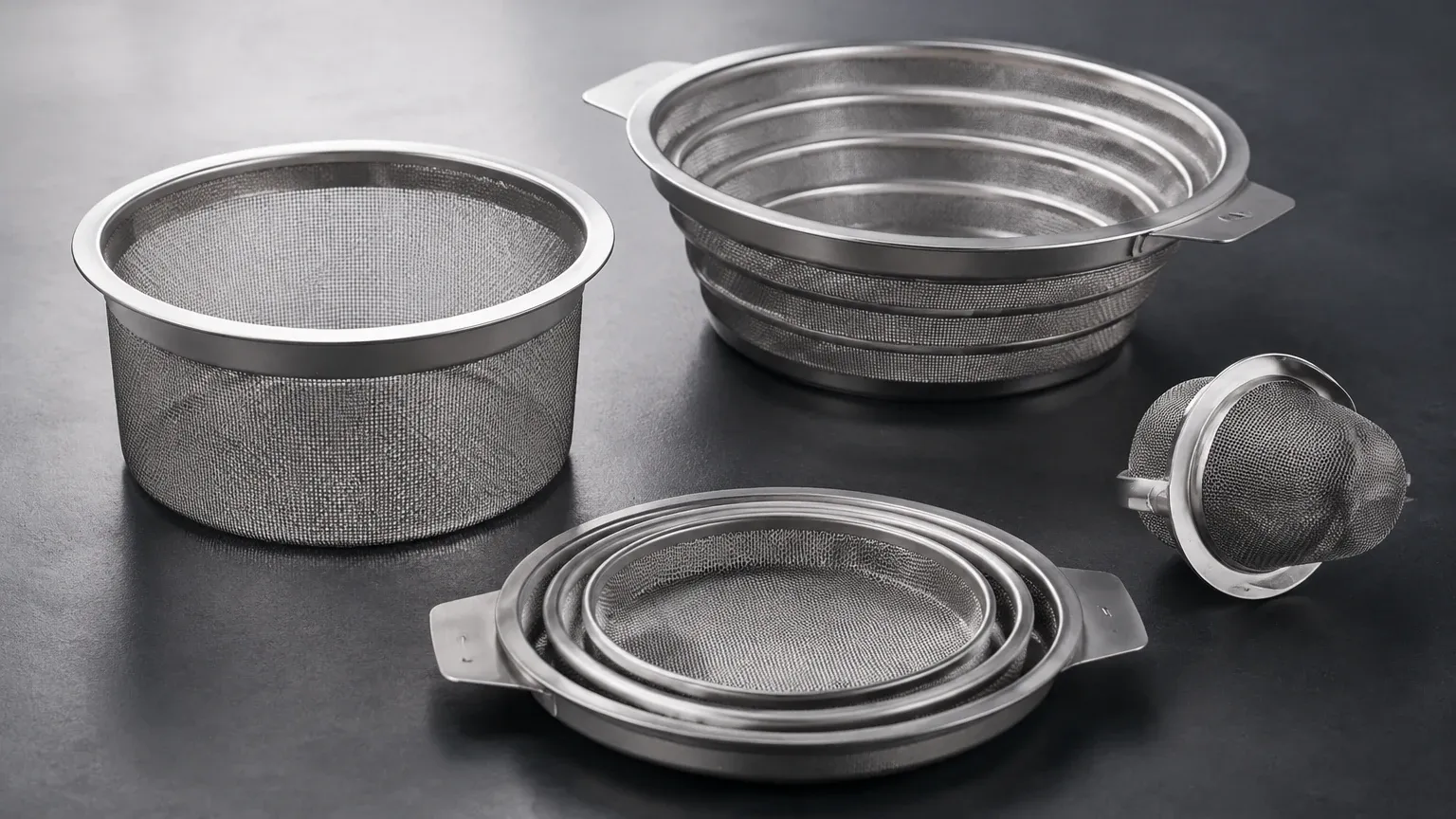
In most B2B applications, stainless steel is the preferred material due to its mechanical strength and resistance to oxidation. Industrial collapsible designs often utilize a combination of rigid stainless steel frames and flexible high-grade synthetic mesh or articulated metal links.
* SS304/SS316L: These grades are standard for ensuring that the strainer does not introduce contaminants into the process stream through corrosion.
* Mesh Integrity: The mesh used in collapsible strainers must be engineered to resist fatigue. Repeated folding or collapsing can stress the wire junctions, leading to "mesh migration" or pore enlargement. High-quality manufacturers use specialized weaving techniques to ensure the filtration rating remains constant regardless of the physical state of the strainer.
Filtration Accuracy and Micron Ratings
The primary function of any strainer is to provide a specific level of filtration. Collapsible designs are available in various micron ratings, ranging from coarse straining (1/4" openings) to fine mesh (down to 40 microns or less). Engineers must calculate the required open area ratio—the ratio of the total area of the holes to the total area of the strainer—to ensure that the introduction of the strainer does not cause an unacceptable pressure drop across the system.
Design Advantages and Structural Integrity
The primary driver for selecting collapsible strainers over rigid alternatives is often space management. However, the engineering behind these units must account for the inherent weaknesses that joints or flexible sections might introduce.
Space Optimization
In offshore oil rigs, chemical pilot plants, or specialized food processing skids, space is at a premium. A collapsible strainer can be stored in a fraction of the space required for a standard basket strainer. This is particularly useful for "start-up strainers"—temporary units installed during the initial flushing of a system to catch construction debris (welding slag, tools, rags) before being removed for permanent operation.
Structural Reinforcement
To prevent collapse under high flow rates, industrial collapsible strainers often feature internal support cages or external reinforcement ribs. These structures ensure that the fluid pressure does not deform the strainer, which could lead to bypass—where fluid flows around the filter media rather than through it. Proper sealing at the flange or housing interface is also critical; even a minor gap can render the filtration process ineffective.
Selection Criteria for Industrial Procurement
When purchasing Strainers & Baskets, procurement teams must look beyond the initial price point and consider the total cost of ownership (TCO). For collapsible strainers, several factors influence this calculation:
1. Flow Rate and Pressure Drop: Every strainer introduces resistance. Engineers must ensure the collapsible design can handle the maximum anticipated flow rate without exceeding the allowable pressure drop (ΔP). If the ΔP is too high, it can lead to pump cavitation or reduced system efficiency.
2. Chemical Compatibility: The fluid being filtered dictates the material requirements. For example, in pharmaceutical or food-grade applications, the materials must be FDA-compliant and resistant to Clean-in-Place (CIP) chemicals like sodium hydroxide or nitric acid.
3. Ease of Cleaning: One of the main advantages of basket-style strainers is the ease with which they can be removed and cleaned. Collapsible designs must be evaluated for how easily they can be decontaminated. If the folding mechanism creates "dead zones" where bacteria or solids can accumulate, it may not be suitable for hygienic applications.
4. Customization Requirements: Many industrial systems require non-standard dimensions. Working with a manufacturer that offers OEM and customized filtration solutions allows for the development of collapsible strainers that fit specific housing geometries or unique flow conditions.
Industry-Specific Applications
Collapsible strainers find their niche in several demanding sectors where flexibility and performance must coexist.
Food and Beverage Processing
In the food industry, seasonal production runs or frequent product changeovers require adaptable equipment. Collapsible strainers are often used in temporary lines for transferring juices, oils, or syrups. The ability to sanitize the unit and store it compactly during the off-season is a major operational benefit.
Chemical and Petrochemical
In chemical processing, collapsible strainers are frequently used as secondary safety filters during the loading and unloading of tankers. Their portability allows operators to move them easily between stations, ensuring that no large particulates enter the storage tanks or processing reactors.
Water Treatment and Hydraulics
For mobile water purification units used in disaster relief or remote mining sites, weight and volume are critical factors. Collapsible filtration components help reduce the overall shipping weight of the system while providing reliable protection for sensitive reverse osmosis membranes or high-pressure hydraulic pumps.
Maintenance and Operational Efficiency
The longevity of any filtration component is directly tied to its maintenance cycle. For collapsible strainers, inspection protocols must be more stringent than for rigid units.
* Inspection for Fatigue: During every cleaning cycle, the folding points or flexible mesh areas should be inspected for signs of metal fatigue or fraying.
* Replacement Cycles: While high-quality stainless steel strainers can last for years, the flexible components of a collapsible unit may have a shorter service life. Establishing a proactive replacement schedule based on the number of collapse cycles or total flow volume is essential for preventing unplanned downtime.
* Cleaning Protocols: Depending on the application, ultrasonic cleaning or high-pressure washing may be used. It is vital to ensure that the cleaning method does not damage the mechanical joints of the collapsible frame.
Conclusion: Making an Informed Decision
Collapsible strainers represent a specialized solution within the broader landscape of industrial Strainers & Baskets. By offering a balance between space-saving design and reliable filtration performance, they solve specific logistical and operational challenges that rigid strainers cannot address.
For engineers, the key to success lies in detailed specification. By confirming material grades, filtration accuracy, and structural reinforcement needs upfront, organizations can ensure that their filtration systems remain efficient and durable. Whether used for temporary start-up protection or as part of a modular mobile processing unit, these components are vital for maintaining the integrity of modern industrial processes. When selecting a partner for these solutions, prioritizing manufacturers with proven expertise in custom stainless steel fabrication and a deep understanding of industrial filtration principles is the most effective way to ensure long-term performance and reliability.
