


Glando Valves and Strainers
In industrial fluid handling and process engineering, the integrity of a piping system relies heavily on the synergy between flow control and contaminant removal. Glando valves and strainers represent a critical category of components designed to regulate media flow while protecting sensitive downstream equipment from particulate damage. For engineers and procurement specialists, understanding the technical nuances of these components—ranging from material compatibility to pressure drop calculations—is essential for ensuring long-term operational efficiency and minimizing unplanned downtime.
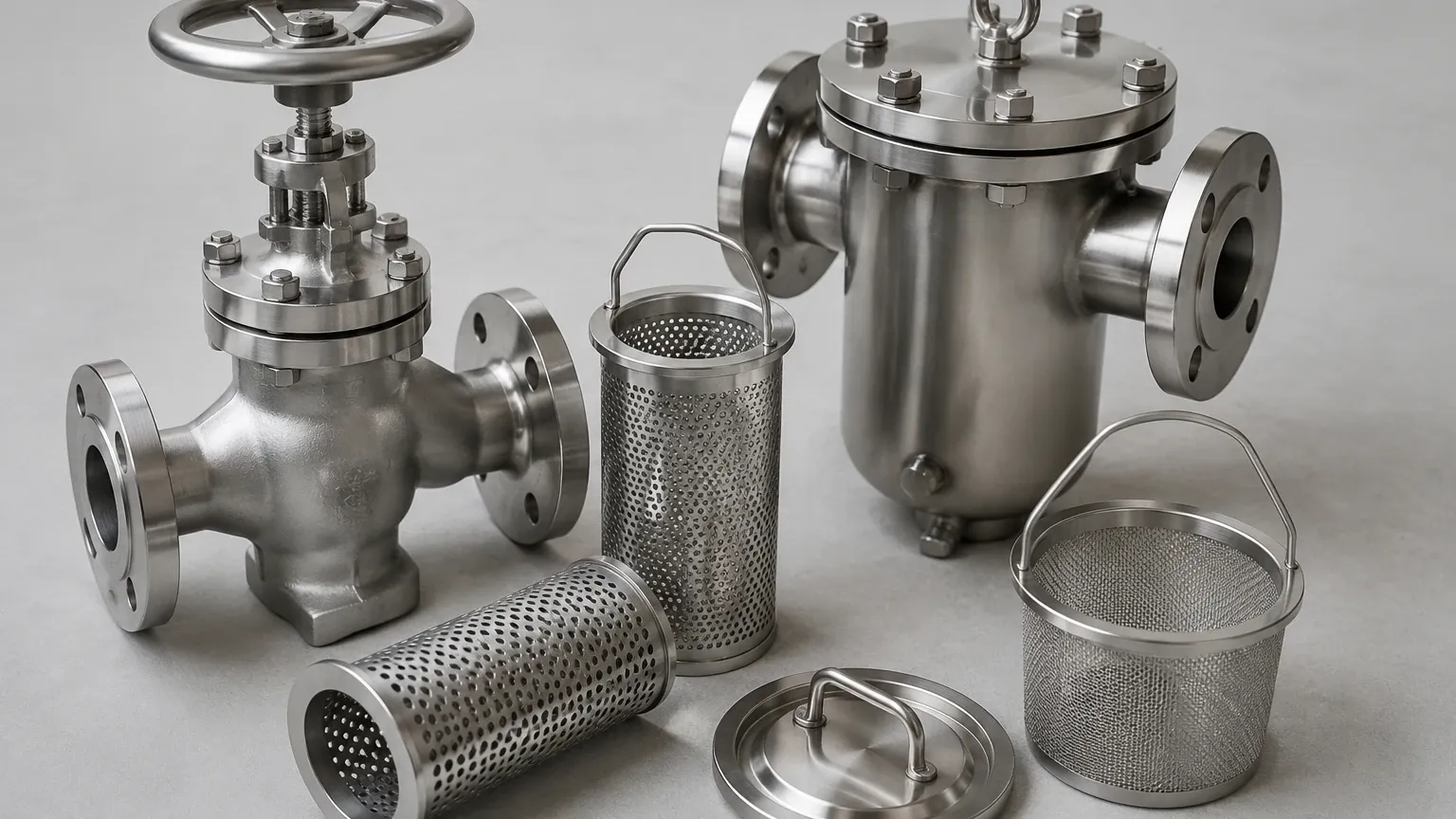
Industrial systems often utilize gland-packed valves (frequently associated with the term "glando" in specific regional or legacy contexts) alongside high-performance filtration units. These systems require a robust defense mechanism to prevent debris from scoring valve seats, clogging orifices, or damaging pumps. This is where the integration of Strainers & Baskets becomes a fundamental requirement for any high-stakes industrial environment.
Understanding the Role of Glando Valves and Strainers
Valves and strainers are the primary guardians of process purity and mechanical safety. While valves manage the start, stop, and throttling of fluids, strainers serve as the physical barrier against solids. In systems where glando valves and strainers are specified, the focus is typically on durability and the ability to withstand harsh operating conditions, such as high temperatures or corrosive chemical environments.
Strainers are typically installed upstream of valves and other critical components. Their primary function is to capture scale, rust, jointing compound, and metal chips that may be present in the pipeline. Without effective filtration, these particles can lead to valve leakage, reduced flow capacity, and eventual mechanical failure. By selecting the correct strainer configuration—whether it be a Y-type, T-type, or basket type—engineers can tailor the protection level to the specific flow dynamics and contaminant load of the application.
Engineering Specifications for Strainers & Baskets
When evaluating filtration components for industrial use, several engineering parameters must be prioritized to ensure the selected hardware meets the demands of the application. The performance of strainers and baskets is defined by their structural integrity and filtration accuracy.
Filtration Accuracy and Mesh Selection
The most critical specification is the micron rating or mesh count. This determines the size of the particles that the strainer will successfully intercept.
* Coarse Filtration: Used for primary protection, typically utilizing perforated metal screens with larger openings (e.g., 1/8" or 1/16").
* Fine Filtration: Employs stainless steel wire mesh linings to capture smaller particles, often down to 20 microns or less.
Engineers must balance the need for fine filtration with the risk of rapid clogging. A mesh that is too fine for the particulate load will result in frequent maintenance intervals and excessive pressure drops.
Open Area Ratio
The efficiency of a strainer is often measured by its "Open Area Ratio" (OAR). This is the ratio between the total open area of the strainer element and the internal cross-sectional area of the inlet pipe. A higher OAR (typically 4:1 or 6:1) indicates that the strainer can handle more debris before the pressure drop becomes critical, thereby extending the time between cleaning cycles.
Material Selection and Chemical Compatibility
The longevity of glando valves and strainers is dictated by their resistance to the media being processed. Stainless steel is the industry standard for high-performance applications due to its mechanical strength and corrosion resistance.
1. SS304 (AISI 304): Suitable for general industrial use, water treatment, and food processing where moderate corrosion resistance is required.
2. SS316/316L (AISI 316): The preferred choice for chemical processing, pharmaceutical manufacturing, and marine environments. The addition of molybdenum provides superior resistance to chlorides and acidic environments.
3. Specialty Alloys: For extreme conditions involving high-temperature steam or highly aggressive chemicals, alloys like Monel or Hastelloy may be integrated into the basket design.
Choosing the wrong material can lead to galvanic corrosion or stress corrosion cracking, particularly in systems where glando valves and strainers are exposed to fluctuating temperatures and pressures.
Evaluating Pressure Drop and Flow Efficiency
A common challenge in piping design is the "Delta P" or pressure drop across the filtration element. Every strainer introduces some level of resistance to the flow. Engineers must calculate the clean pressure drop to ensure the system pump has sufficient head to maintain the required flow rate.
As the strainer basket fills with debris, the pressure drop increases. If the pressure differential exceeds the design limits of the basket, the mesh may collapse or "blow through," allowing contaminants to bypass the filter and reach the glando valves downstream. Monitoring this differential pressure is a standard practice in industrial maintenance, often facilitated by installing gauges upstream and downstream of the strainer housing.
Maintenance Protocols and Replacement Cycles
To maintain the performance of glando valves and strainers, a proactive maintenance schedule is mandatory. Unlike disposable filters, industrial strainers and baskets are designed for cleaning and reuse, which significantly reduces the total cost of ownership.
Cleaning Procedures
* Blow-down Cleaning: For Y-strainers equipped with a blow-off valve, accumulated sediment can be flushed out without stopping the flow. However, this is only effective for loose, non-fibrous debris.
* Manual Extraction: For basket strainers, the system must be depressurized (or the flow diverted in duplex systems) to allow for the removal and manual cleaning of the basket. High-pressure water or ultrasonic cleaning may be used to clear fine mesh linings.
Replacement Indicators
While baskets are durable, they are subject to wear. Signs that a basket requires replacement include:
* Visible deformation or "waisting" of the mesh.
* Broken wire strands or holes in the perforated metal.
* Permanent clogging (blinding) that cannot be removed by standard cleaning methods.
Customization and OEM Solutions for Specialized Applications
Standard off-the-shelf strainers may not always meet the unique requirements of complex industrial processes. In many cases, customized filtration solutions are necessary to fit specific spatial constraints or to handle unique flow characteristics.
Custom Basket Designs
Customization options often include:
* Reinforced Structures: Adding heavy-duty support cages for high-pressure applications where standard baskets might fail.
* Magnetic Inserts: Integrating magnets within the basket to capture fine ferrous particles that might otherwise pass through a standard mesh.
* Multi-Stage Filtration: Designing baskets with multiple layers of different mesh sizes to provide graduated filtration and increase dirt-holding capacity.
For manufacturers like Kaifil, providing OEM solutions involves working closely with engineering teams to develop filtration components that integrate seamlessly with existing glando valves and strainers. This collaborative approach ensures that the filtration accuracy, material selection, and structural design are perfectly aligned with the operational realities of the plant.
Total Cost Considerations for Industrial Filtration
When procuring strainers and baskets, purchasing teams should look beyond the initial acquisition cost. The total cost of ownership (TCO) is influenced by several factors:
* Durability: A high-quality stainless steel basket may have a higher upfront cost but will last significantly longer than lower-grade alternatives.
* Maintenance Labor: Systems designed for easy access and quick cleaning reduce labor costs and downtime.
* Equipment Protection: The cost of a replacement strainer basket is negligible compared to the cost of repairing a damaged glando valve or a high-pressure pump.
By investing in precision-engineered Strainers & Baskets, industrial facilities can ensure the reliability of their fluid handling systems and protect the longevity of their critical infrastructure. Whether dealing with chemical processing, water treatment, or hydraulic systems, the correct selection of filtration components is a fundamental pillar of engineering excellence.
