


Strainer Grease Trap
In the landscape of industrial wastewater management, the effective mitigation of fats, oils, and grease (FOG) is a primary concern for facility engineers and environmental compliance officers. A strainer grease trap represents a critical mechanical intervention point, utilizing high-performance Strainers & Baskets to intercept solid waste before it can compromise the efficiency of the grease separation process. For industries ranging from food processing and commercial kitchens to chemical manufacturing, the selection of the right strainer components is not merely a maintenance decision but a fundamental engineering requirement to ensure system longevity and regulatory adherence.
Industrial grease traps function on the principle of differential gravity separation. However, the presence of heavy organic solids, food particles, and miscellaneous debris can significantly disrupt this process. By integrating a robust strainer grease trap system, facilities can protect downstream infrastructure, reduce the frequency of professional pump-outs, and maintain optimal hydraulic flow. This article examines the technical specifications, material considerations, and engineering best practices for selecting and maintaining these essential filtration components.
The Functional Necessity of Strainers in Grease Management
The primary role of a strainer grease trap is to provide a physical barrier that removes solid particulates from the effluent stream. In a typical industrial drainage system, wastewater contains a mixture of emulsified oils, suspended solids, and dissolved organic matter. Without a mechanical filtration stage, solids settle at the bottom of the grease interceptor, forming a thick sludge layer that reduces the effective volume of the tank and promotes anaerobic activity.
When the effective volume of a grease trap is reduced by sludge, the retention time—the period during which wastewater remains in the tank to allow grease to float—is diminished. This leads to "grease bypass," where FOG escapes into the municipal sewer system, potentially resulting in heavy fines and environmental damage. A well-engineered basket strainer captures these solids at the source. By utilizing specialized Strainers & Baskets, engineers can ensure that only liquid-phase waste enters the separation chamber, thereby maximizing the efficiency of the gravity separation process and extending the interval between comprehensive cleanings.
Engineering Parameters: Perforation, Mesh, and Flow Rates
Specifying the correct strainer for a grease trap requires a deep understanding of the hydraulic demands of the facility. The performance of a strainer grease trap is defined by its ability to capture specific particle sizes while maintaining a low pressure drop. Engineers must evaluate several key technical parameters during the selection process.
Open Area Ratio and Hydraulic Capacity
One of the most critical metrics in strainer design is the "Open Area Ratio" (OAR). This is the ratio of the total area of the holes in the strainer to the cross-sectional area of the inlet pipe. For industrial grease applications, an OAR of at least 4:1 or 6:1 is typically recommended. A high OAR ensures that even as the basket begins to accumulate debris, the flow of wastewater is not significantly restricted. If the OAR is too low, the strainer becomes a bottleneck, causing backups in the drainage lines and increasing the risk of overflows.
Perforation Patterns vs. Wire Mesh
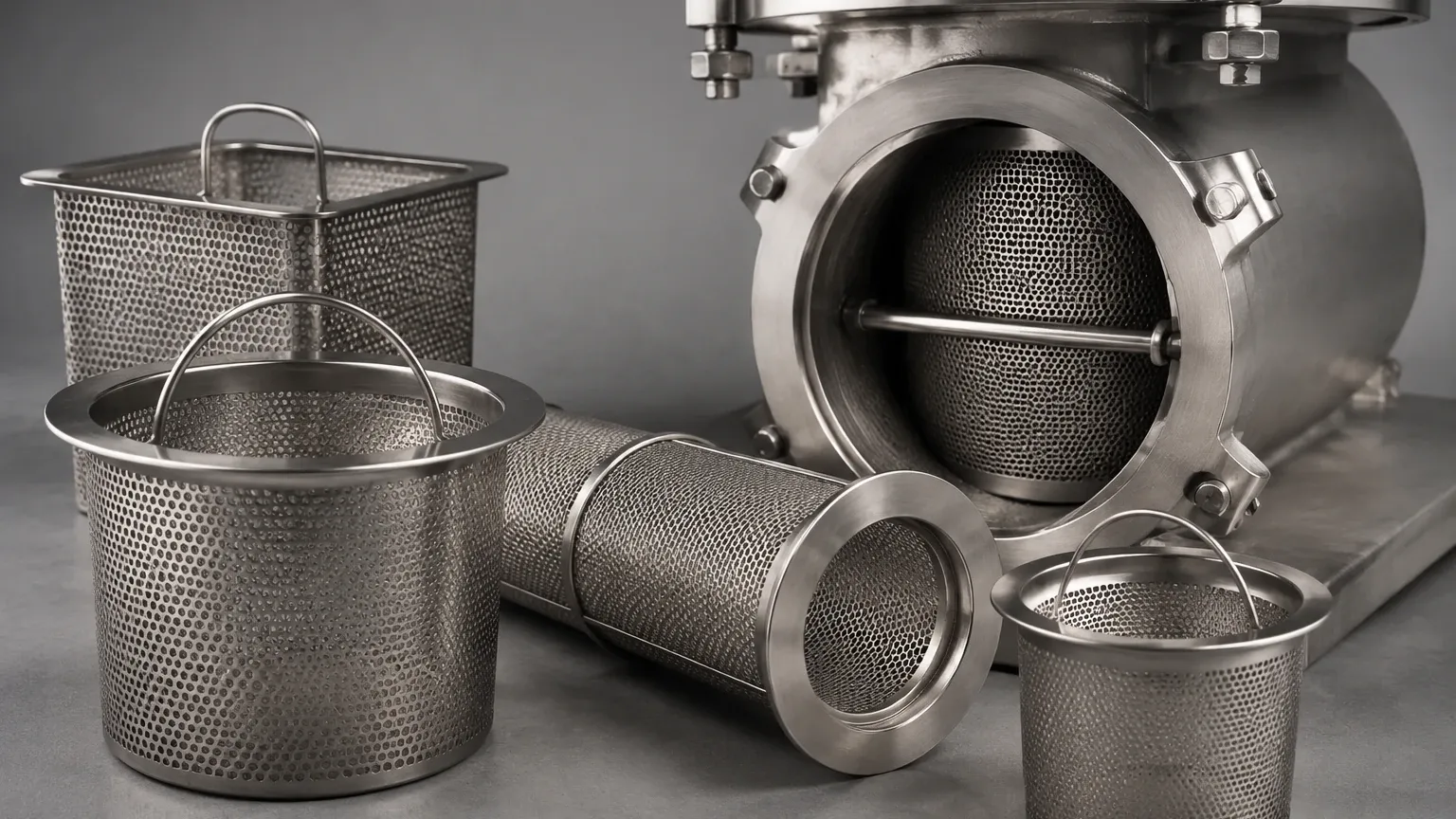
Strainer baskets are usually constructed from perforated metal, which provides the structural rigidity necessary to withstand high flow velocities and the weight of saturated solids. Common perforation patterns include staggered holes, which maximize open area while maintaining strength. However, for applications requiring the capture of finer particles—such as coffee grounds in food processing or fine sediment in industrial washing—a wire mesh liner can be added to the interior of the perforated basket. This dual-stage approach combines the strength of the perforated plate with the precision of fine mesh, providing a versatile solution for complex waste streams.
Material Durability in Corrosive Environments
The interior of a grease trap is a harsh environment. As organic matter breaks down, it releases fatty acids and hydrogen sulfide gas, which can rapidly corrode standard carbon steel or low-grade alloys. Therefore, material selection is paramount for the durability of a strainer grease trap.
Stainless Steel Grades: 304 vs. 316
Kaifil specializes in the fabrication of stainless steel filtration components, primarily utilizing Grade 304 and Grade 316.
* Grade 304 Stainless Steel: This is the industry standard for most food and beverage applications. It offers excellent resistance to organic acids and is highly durable under standard operating temperatures. It provides a balance of performance and cost-effectiveness for general grease trap use.
* Grade 316 Stainless Steel: For facilities dealing with high chloride concentrations, saline environments, or aggressive chemical cleaning agents, Grade 316 is the superior choice. The addition of molybdenum enhances its resistance to pitting and crevice corrosion, ensuring a longer service life in the most demanding industrial settings.
Surface Treatments and Sanitation
In many B2B sectors, particularly pharmaceuticals and food processing, the cleanability of the strainer is as important as its filtration capability. Surface treatments such as electropolishing can be applied to Strainers & Baskets to create a microscopically smooth finish. This reduces the ability of grease and biofilm to adhere to the metal surfaces, making the cleaning process more efficient and reducing the risk of bacterial growth within the filtration system.
Customization for Industrial OEM Applications
No two industrial facilities are identical, and standard off-the-shelf strainers often fail to meet the specific spatial or functional requirements of a customized grease management system. OEM manufacturers and facility engineers frequently require bespoke designs to optimize performance.
Dimensional Tailoring
Customization allows for the adjustment of basket depth, diameter, and handle configurations. In many industrial grease traps, the available space for a strainer is limited by existing piping or tank baffles. A custom-engineered basket can be designed to maximize the available filtration surface area within these constraints. Furthermore, specialized handle designs—such as telescoping or reinforced handles—can be integrated to facilitate easier removal from deep interceptors, improving operator safety and reducing maintenance time.
Integration with Monitoring Systems
Modern industrial filtration is increasingly data-driven. Custom strainer grease trap housings can be designed with ports for differential pressure sensors. These sensors monitor the pressure drop across the strainer basket in real-time. When the pressure reaches a pre-set threshold, the system can trigger an alert, notifying maintenance personnel that the basket requires emptying. This proactive approach prevents the system from reaching a state of total blockage and ensures continuous operation.
Installation Best Practices and Hydraulic Optimization
The effectiveness of a strainer grease trap is heavily influenced by its placement and the hydraulic conditions of the surrounding piping. Proper installation is essential to prevent turbulence, which can interfere with the separation of grease.
Turbulence Control
High-velocity influent can create turbulence within the grease trap, causing grease and water to mix into an emulsion that is much harder to separate. The strainer basket should be positioned in a way that helps dissipate the energy of the incoming water. Some advanced designs incorporate baffles or flow diffusers within the strainer housing to promote laminar flow as the water exits the filtration stage and enters the separation zone.
Accessibility for Maintenance
A strainer that is difficult to access will inevitably be neglected. During the design and installation phase, engineers must ensure there is sufficient overhead clearance to remove the basket. For large-scale industrial strainers, this may involve the installation of davit arms or lifting eyes to assist with the removal of heavy, debris-laden baskets. Ensuring that the strainer grease trap is easily serviceable is a key factor in reducing long-term operational costs.
Maintenance Strategies and Total Cost of Ownership
When evaluating Strainers & Baskets for a grease trap system, it is important to look beyond the initial purchase price and consider the total cost of ownership (TCO). A high-quality stainless steel strainer may have a higher upfront cost than a plastic or low-grade metal alternative, but its durability and efficiency provide significant long-term savings.
Cleaning Protocols and Longevity
The lifespan of a stainless steel strainer is largely dependent on the cleaning protocol. In industrial environments, baskets should be cleaned using non-abrasive tools and compatible chemical cleaners. Forcing debris through the mesh or using harsh scrapers can damage the filtration media and lead to bypass. Regularly scheduled inspections for signs of wear, such as broken welds or distorted mesh, allow for minor repairs before a total failure occurs.
Reducing Downstream Costs
The primary financial benefit of a robust strainer grease trap is the protection it offers to the rest of the system. By capturing solids early, the facility reduces the wear and tear on effluent pumps, prevents clogs in heat exchangers (in systems with heat recovery), and minimizes the volume of sludge that must be professionally removed from the main interceptor. Over the life of the equipment, these savings in maintenance and emergency repair costs far outweigh the investment in premium filtration components.
Conclusion
The strainer grease trap is a vital component in the industrial effort to manage wastewater responsibly and efficiently. By focusing on the technical details of Strainers & Baskets—including material grade, open area ratio, and custom design—engineers can implement a solution that not only meets current environmental regulations but also enhances the overall reliability of the facility’s infrastructure.
Kaifil remains committed to providing the engineering expertise and manufacturing precision required to solve complex industrial filtration challenges. Whether through OEM partnerships or customized facility upgrades, our focus on high-quality stainless steel construction and application-specific design ensures that every strainer grease trap performs at its peak, protecting both the environment and the facility's bottom line. For technical professionals seeking to optimize their grease management systems, selecting a partner with a deep understanding of industrial filtration principles is the first step toward long-term operational success.
