


Leaf Strainers
In industrial fluid handling systems, the management of large-volume debris is a critical prerequisite for protecting downstream equipment such as pumps, heat exchangers, and spray nozzles. Among the various configurations of Strainers & Baskets, leaf strainers serve as a primary defense mechanism, particularly in applications involving open-loop water systems, chemical processing, and primary filtration stages. These components are engineered to intercept organic matter, large particulates, and process-specific solids that could otherwise lead to mechanical failure or significant pressure drops.
Selecting the appropriate leaf strainers requires a deep understanding of fluid dynamics, material compatibility, and the mechanical stresses inherent in high-flow industrial environments. This guide examines the technical nuances of these filtration components, providing engineers and procurement teams with the factual data necessary to optimize their filtration infrastructure.
Technical Design and Structural Configurations
Leaf strainers are characterized by their high-surface-area designs, which are intended to maximize the "open area ratio"—the ratio between the total area of the holes in the mesh and the total area of the strainer surface. A high open area ratio is essential for minimizing initial pressure drop and extending the service interval between cleanings.
Material Selection
Industrial leaf strainers are predominantly manufactured from stainless steel due to its superior mechanical strength and resistance to corrosion. The two most common grades utilized are:
* AISI 304 Stainless Steel: Suitable for general industrial applications, including cooling water systems and non-corrosive chemical handling. It provides excellent durability and cost-effectiveness for standard environments.
* AISI 316/316L Stainless Steel: Specified for more demanding environments, such as marine applications, pharmaceutical processing, and highly acidic chemical lines. The addition of molybdenum in 316 stainless steel enhances its resistance to pitting and crevice corrosion, particularly in chloride-rich environments.
Construction Methods
The construction of leaf strainers typically involves a combination of perforated metal support structures and fine wire mesh overlays. For heavy-duty applications, the strainer may include internal or external reinforcement ribs to prevent collapse under high differential pressure. The mesh is often secured using precision welding techniques, such as TIG or resistance welding, to ensure a seamless interface that prevents bypass and maintains structural integrity during backwashing or manual cleaning.
Engineering Considerations: Flow and Pressure Drop
The primary engineering challenge when integrating leaf strainers into a piping system is balancing filtration efficiency with hydraulic performance. Every strainer introduces a degree of resistance to the flow, known as the pressure drop (ΔP).
Calculating Open Area Ratio
For a leaf strainer to function effectively without causing cavitation in pumps, the open area ratio should typically be at least 4:1 relative to the cross-sectional area of the inlet pipe. In systems with high debris loading, this ratio may be increased to 6:1 or 8:1. A larger surface area allows for a greater accumulation of solids before the differential pressure reaches a critical threshold that necessitates cleaning.
Velocity and Turbulence
Fluid velocity plays a significant role in the wear rate of the strainer. High-velocity flows can cause erosion of the mesh wires and may force soft debris through the openings. Engineers must calculate the "face velocity"—the speed at which the fluid passes through the strainer surface—to ensure it remains within the recommended limits for the specific mesh size and material grade. Laminar flow is preferred, as excessive turbulence can lead to vibration and fatigue of the metal components.
Applications in Industrial Processes
Leaf strainers are utilized across a diverse range of sectors, each with unique requirements for particle retention and chemical resistance. Their versatility makes them a staple in the broader category of Strainers & Baskets used in modern manufacturing.
Cooling Tower and Water Intake
In power plants and large-scale HVAC systems, leaf strainers are installed at the water intake to prevent leaves, twigs, and aquatic debris from entering the cooling circuit. In these scenarios, the strainers are often designed as large baskets or flat leaf panels that can be easily removed for manual clearing. The use of corrosion-resistant stainless steel is vital here, as these systems are often exposed to oxygen-saturated water and biological growth.
Food and Beverage Processing
In the food industry, leaf strainers are used to recover solids from wash water or to protect downstream pasteurizers and homogenizers. These strainers must adhere to sanitary design principles, featuring smooth surfaces and radiused corners to prevent bacterial accumulation. 316L stainless steel is the standard for these applications to withstand the aggressive Clean-in-Place (CIP) chemicals used during sterilization cycles.
Chemical and Petrochemical Sectors
In chemical processing, leaf strainers are often integrated into pressure leaf filters or used as standalone components in suction lines. They must be compatible with the specific chemical properties of the process fluid. For instance, in caustic environments, specialized alloys or high-grade stainless steels are required to prevent stress corrosion cracking.
Maintenance, Cleaning, and Operational Longevity
The service life of a leaf strainer is directly linked to the maintenance protocol and the accuracy of the initial specification. Failure to monitor and clean strainers can lead to "blinding," where the mesh becomes completely obstructed, causing a spike in pressure that can rupture the strainer or damage the pump.
Monitoring Differential Pressure
Installation of differential pressure gauges upstream and downstream of the strainer is the most effective way to monitor its condition. A common industry standard is to initiate a cleaning cycle when the differential pressure reaches 5-10 psi above the clean-start pressure. Waiting beyond this point increases the risk of mechanical deformation of the strainer basket or leaf.
Cleaning Procedures
Depending on the design, leaf strainers can be cleaned manually or through automated backwashing systems. Manual cleaning involves isolating the strainer, depressurizing the line, and removing the element for high-pressure water jetting or ultrasonic cleaning. For automated systems, the flow is momentarily reversed or a rotating spray arm is used to dislodge debris from the mesh surface. It is critical to inspect the mesh for signs of fraying, corrosion, or "wire shifting" during every cleaning cycle.
Indicators for Replacement
While stainless steel leaf strainers are highly durable, they are not permanent. Signs that a strainer requires replacement include:
* Permanent Deformation: Visible bulging or crushing of the support structure.
* Mesh Integrity Loss: Broken wires or enlarged openings that allow bypass.
* Irremovable Scaling: Chemical scaling that cannot be removed without damaging the base metal.
* Galvanic Corrosion: Evidence of material degradation caused by contact with dissimilar metals in the piping system.
Customization and OEM Solutions
Off-the-shelf filtration components often fail to meet the specific spatial or performance constraints of complex industrial systems. Custom-engineered leaf strainers allow for precise alignment with operational goals. When sourcing custom Strainers & Baskets, technical teams should provide the following data points to the manufacturer:
1. Fluid Characteristics: Viscosity, temperature, and chemical composition.
2. Debris Profile: The nature of the solids (fibrous, granular, or organic) and the required micron rating.
3. Flow Parameters: Minimum, normal, and maximum flow rates, along with the maximum allowable pressure drop.
4. Connection Standards: Flange types (ANSI, DIN, JIS) or threaded connections required for seamless integration.
5. Space Constraints: Dimensions of the existing housing or the available footprint for new installations.
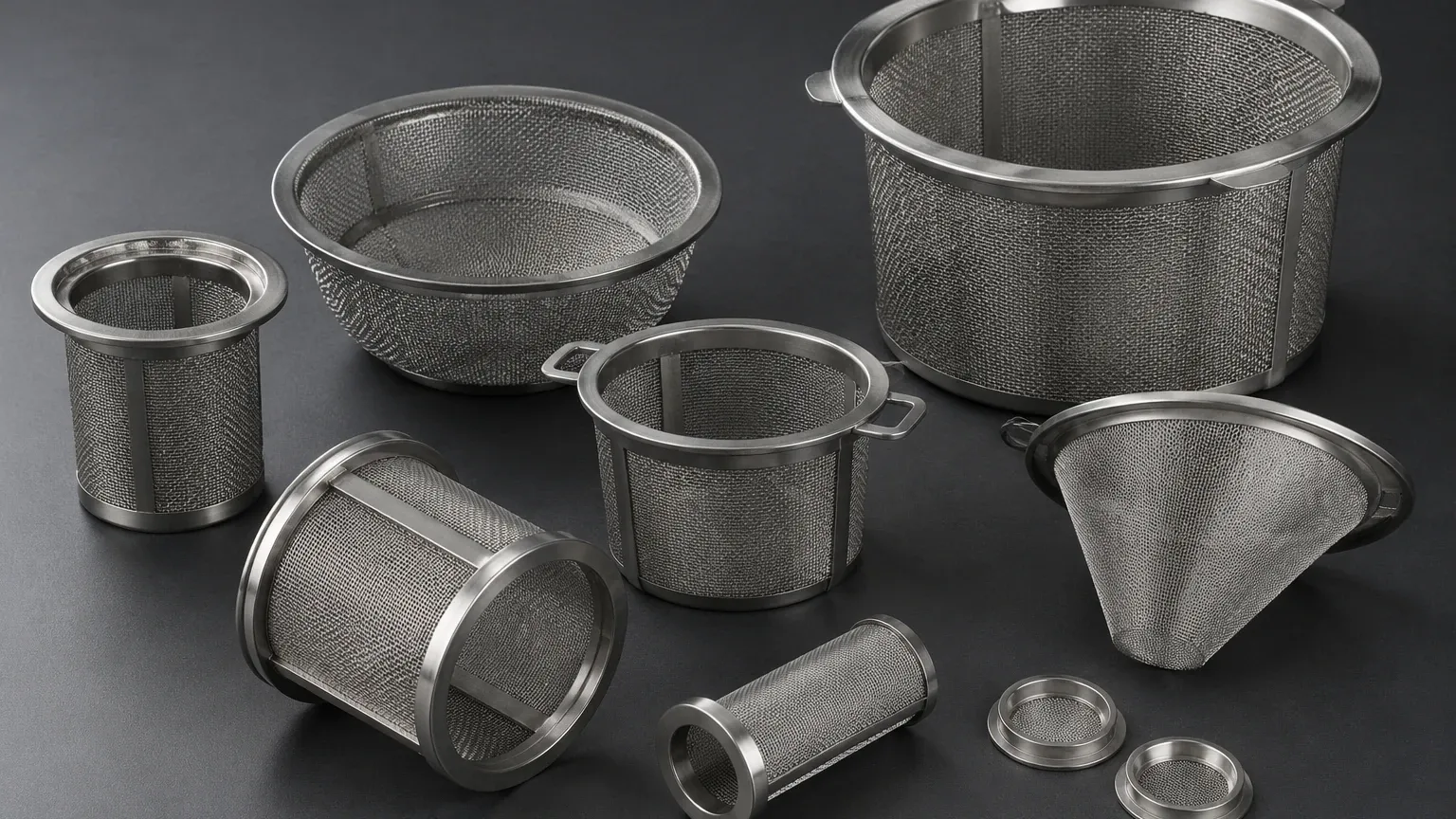
Customization also extends to the structural design, such as the addition of handles for easier extraction, reinforced bottoms for high-load applications, or multi-layered mesh configurations for graduated filtration (coarse to fine).
Conclusion
Leaf strainers are fundamental components in the protection and efficiency of industrial fluid systems. By selecting the correct material grade, calculating the necessary open area ratio, and implementing a rigorous maintenance schedule, engineers can significantly reduce downtime and equipment repair costs. Whether used in cooling water intake, chemical processing, or food production, these stainless steel components provide a reliable and durable solution for managing large-volume debris. For specialized applications, partnering with a manufacturer capable of providing custom-engineered Strainers & Baskets ensures that the filtration solution is perfectly matched to the technical demands of the process environment.
