


Strainers for Water
In industrial fluid handling, the integrity of downstream equipment often depends on the efficiency of primary separation components. Strainers for water serve as the critical first line of defense, removing macroscopic solids, debris, and particulate matter that could otherwise damage pumps, clog spray nozzles, or foul heat exchangers. Unlike fine filtration systems that target sub-micron particles, industrial strainers are engineered to handle high flow rates with minimal pressure drop, providing a robust mechanical barrier in diverse aqueous environments.
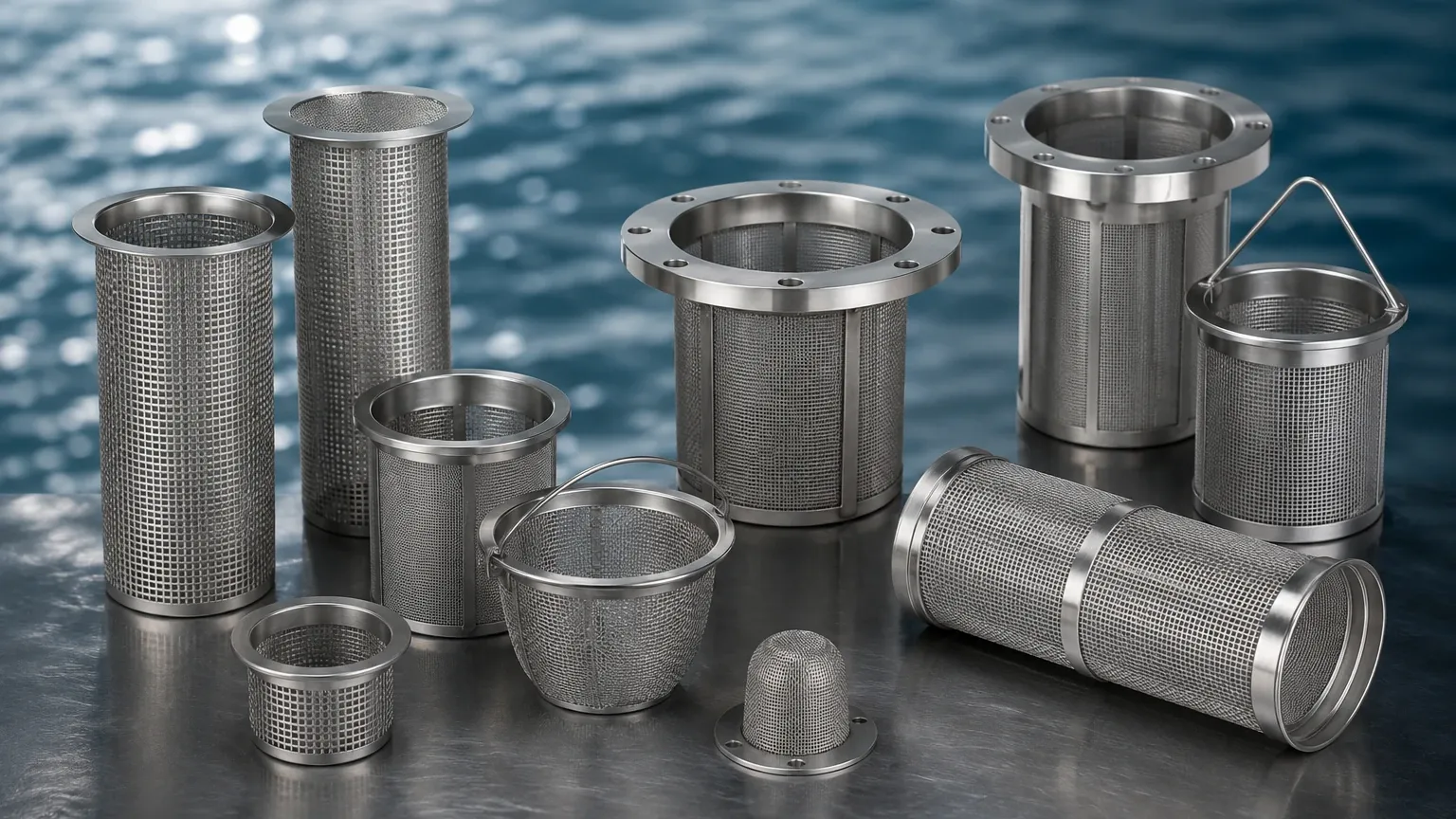
For engineering and procurement teams, selecting the correct configuration of Strainers & Baskets involves more than just matching pipe sizes. It requires a technical understanding of fluid dynamics, material science, and the specific mechanical demands of the application, whether it involves cooling water, process water, or wastewater treatment.
The Role of Strainers and Baskets in Industrial Water Systems
The primary function of a water strainer is to protect the process infrastructure. In B2B environments, water is rarely "pure"; it often carries pipe scale, sediment, or organic matter. If these contaminants reach sensitive components, the resulting downtime and repair costs can be substantial.
Protection of Downstream Assets
Centrifugal pumps are particularly vulnerable to solids. Large particles can cause impeller imbalance or catastrophic seal failure. Similarly, control valves with tight tolerances can become jammed by debris, leading to process instability. By implementing high-quality strainers for water, facilities ensure that these assets operate within their design parameters.
Straining vs. Filtration
While the terms are often used interchangeably, "straining" typically refers to the removal of larger particles (usually 40 microns and above) using a perforated metal or wire mesh screen. Filtration generally refers to the removal of smaller particles using disposable media or specialized membranes. In most industrial water circuits, a strainer is used upstream of a fine filter to extend the service life of the more expensive filter elements.
Engineering Considerations for Water Strainer Selection
When specifying strainers for water, engineers must evaluate several performance metrics to ensure the component does not become a bottleneck in the system.
Flow Rate and Pressure Drop (ΔP)
Every component added to a piping system introduces resistance. The pressure drop across a clean strainer should be kept to a minimum—typically less than 2 PSI (0.14 bar) at the design flow rate. As the strainer basket collects debris, the ΔP will increase. If the initial pressure drop is too high due to undersizing, the cleaning frequency becomes unsustainable, and the risk of element collapse increases.
Open Area Ratio (OAR)
The Open Area Ratio is the relationship between the total area of the openings in the strainer element and the cross-sectional area of the inlet pipe. A well-engineered water strainer typically maintains an OAR of at least 4:1. A higher OAR allows for longer run times between cleaning cycles and ensures that the fluid velocity through the mesh remains low, reducing the likelihood of particles being forced through the openings.
Mesh and Perforation Sizing
The selection of the straining media depends on the smallest particle that must be removed. This is usually defined by the "retention rating." For coarse protection, perforated plate (with holes ranging from 1/16" to 1/4") is common. for finer requirements, stainless steel wire mesh is layered over a perforated support basket to provide both structural integrity and precise particle capture.
Material Selection: Why Stainless Steel is Standard
Water applications present unique corrosion challenges. Depending on the source—municipal, well, or recycled process water—the fluid may contain chlorides, dissolved oxygen, or varying pH levels that can rapidly degrade inferior metals.
Grade 304 vs. Grade 316L
Stainless steel is the material of choice for industrial water strainers due to its durability and resistance to oxidation.
* Grade 304: Suitable for most general-purpose water applications, including cooling towers and basic process water.
* Grade 316L: Contains molybdenum, which provides superior resistance to pitting and crevice corrosion, especially in water with higher chloride concentrations or in pharmaceutical and food-grade applications where hygienic standards are paramount.
Durability Under Pressure
Unlike plastic or composite alternatives, stainless steel strainers for water can withstand significant pressure surges (water hammer) and thermal cycling without losing structural integrity. This is vital in high-pressure hydraulic systems or steam condensate return lines where mechanical stress is a constant factor.
Types of Strainers for Water Treatment and Industrial Processes
The physical layout of the piping and the required maintenance schedule will dictate the housing style of the strainer.
Y-Strainers
Y-strainers are compact and primarily used in applications where the amount of debris is relatively low. Their name comes from their shape, which allows for a streamlined flow path. They are often installed in pressurized lines, either horizontally or vertically (downward flow), and are favored for their lower initial cost and space-saving design.
Basket Strainers (Simplex)
Basket strainers feature a larger housing that holds a removable basket-shaped element. These are designed for systems where higher concentrations of solids are expected. Because the basket is typically larger than the screen in a Y-strainer, it offers a greater dirt-holding capacity and lower pressure drop. Maintenance is performed by depressurizing the line and removing the top cover to clean the basket.
Duplex Strainers
In critical processes where flow cannot be interrupted, duplex strainers are utilized. These consist of two separate strainer chambers connected by a diverter valve. When one side becomes clogged, the flow is shifted to the clean chamber, allowing the operator to service the dirty basket without shutting down the system. This is common in cooling systems for power plants or continuous chemical production lines.
Maintenance and Operational Efficiency
The total cost of ownership (TCO) for strainers for water is heavily influenced by maintenance requirements. A strainer that is difficult to clean or frequently clogs will lead to increased labor costs and potential system downtime.
Monitoring Differential Pressure
To optimize maintenance, industrial strainers should be equipped with differential pressure gauges or sensors. Relying on a fixed schedule for cleaning is often inefficient; cleaning based on actual ΔP ensures that the system is only opened when necessary, reducing the risk of seal damage or contamination during the maintenance process.
Cleaning Cycles and Basket Life
Stainless steel baskets are designed to be cleaned and reused. The cleaning method—whether manual rinsing, ultrasonic cleaning, or backwashing—should be compatible with the mesh size. Over time, mechanical fatigue can occur, especially if the strainer is frequently subjected to high-pressure cleaning. Inspecting the integrity of the mesh during each cycle is essential to prevent bypass.
Customization Options for Demanding Environments
Standard off-the-shelf strainers may not meet the needs of specialized industrial applications. Customization ensures that the filtration component aligns perfectly with the engineering requirements of the project.
* Connection Types: Depending on the piping standards, strainers can be manufactured with flanged (ANSI, DIN, JIS), threaded (NPT/BSP), or socket-weld connections to ensure a leak-proof fit.
* Reinforced Baskets: For high-viscosity fluids or systems with high flow velocities, baskets can be reinforced with internal supports or heavier gauge perforated metal to prevent deformation.
* Surface Treatments: In the pharmaceutical or food and beverage industries, strainers may require electropolishing to achieve a specific Ra (roughness average) value, ensuring that no bacteria can harbor in surface microscopic pits.
* Magnetic Inserts: For water lines in metal-working facilities, magnetic rods can be added to the center of the strainer basket to capture fine ferrous particles that might otherwise pass through the mesh.
Conclusion: Selecting the Right Partner for Filtration Solutions
Choosing the right strainers for water is a technical decision that impacts the longevity and efficiency of the entire industrial fluid system. By focusing on material quality, precise engineering of the open area ratio, and the specific debris load of the application, engineers can significantly reduce operational risks.
Kaifil specializes in the manufacture of high-performance stainless steel filtration components, providing the technical expertise required to develop custom solutions for the most demanding environments. From material selection to final production, the focus remains on delivering durable, reliable, and cost-effective Strainers & Baskets that meet the rigorous standards of global industrial sectors. When performance and precision are non-negotiable, a customized approach to water straining is the most effective path to system optimization.
