


Strainer Basket Oil and Gas
In the demanding environment of the oil and gas industry, the integrity of downstream equipment—such as pumps, valves, meters, and heat exchangers—depends heavily on the efficiency of mechanical filtration. A strainer basket oil and gas application is designed to remove large-scale particulate matter, including sand, pipe scale, weld slag, and other debris, from the fluid stream. These components serve as the primary line of defense, preventing catastrophic mechanical failure and reducing the frequency of unscheduled maintenance.
Industrial filtration in this sector requires more than just standard mesh; it demands precision engineering to withstand high pressures, corrosive fluids, and extreme temperatures. For engineers and procurement teams, selecting the right Strainers & Baskets involves a deep understanding of material science, fluid dynamics, and the specific operational constraints of the extraction, transport, or refining process.
The Critical Function of Filtration in Petrochemical Operations
Filtration requirements in the oil and gas sector vary significantly across upstream, midstream, and downstream operations. In each stage, the strainer basket plays a unique role in maintaining system stability.
Upstream Protection
In the exploration and production phase, fluids extracted from the well often contain significant amounts of formation sand and solids. Strainer baskets are integrated into drilling fluid systems and wellhead separators to protect high-pressure pumps and flowback equipment. Failure to capture these solids can lead to rapid erosion of pump impellers and valve seats.
Midstream Pipeline Integrity
During the transport of crude oil or natural gas through pipelines, internal corrosion and the accumulation of "black powder" (iron sulfides and oxides) can occur. Strainer baskets installed at compressor stations and pumping stations ensure that these contaminants do not damage the turbines or meters used for custody transfer. The reliability of the strainer basket oil and gas infrastructure here is vital for maintaining the accuracy of flow measurements.
Downstream Refining and Processing
Refineries utilize complex chemical processes where catalysts and heat exchangers are sensitive to particulate contamination. Strainer baskets are used to filter feedstock, cooling water, and process chemicals. In these environments, the filtration accuracy must be precisely balanced with the need to maintain high flow rates to ensure the refinery operates at peak efficiency.
Material Engineering for Corrosion and Pressure Resistance
One of the most critical factors in specifying a strainer basket for oil and gas applications is material selection. The fluids being processed are often chemically aggressive, containing hydrogen sulfide (H2S), CO2, or high brine concentrations.
Stainless Steel Grades
Stainless steel is the industry standard due to its balance of strength and corrosion resistance.
* SS304/304L: Suitable for general-purpose applications where corrosion risks are moderate and temperatures are stable.
* SS316/316L: The preferred choice for most oil and gas applications, particularly in offshore environments or where chloride-induced stress corrosion cracking is a concern. The addition of molybdenum enhances its resistance to pitting.
* Duplex Stainless Steel: For high-pressure or highly acidic environments, duplex alloys provide superior yield strength and exceptional resistance to localized corrosion.
Structural Reinforcement
Unlike light-duty industrial filters, a strainer basket oil and gas component must often withstand high differential pressures. If a basket becomes clogged, the resulting pressure drop can exert several tons of force on the mesh. To prevent collapse, high-performance baskets feature perforated metal backing or heavy-duty support cages that provide the necessary structural rigidity without significantly impeding flow.
Technical Parameters: Micron Ratings and Flow Dynamics
Engineers must evaluate the trade-off between filtration fineness and flow capacity. A finer mesh captures smaller particles but results in a higher initial pressure drop and more frequent cleaning cycles.
Filtration Accuracy (Microns vs. Mesh)
Filtration levels in the oil and gas industry are typically categorized by micron rating or mesh count.
* Coarse Filtration: Used for protecting large pumps, typically ranging from 40 mesh (400 microns) to 1/4" perforations.
* Fine Filtration: Used for protecting sensitive instrumentation or nozzles, often reaching down to 100 mesh (150 microns) or finer.
The Open Area Ratio
An essential engineering metric is the ratio of the total open area of the basket to the cross-sectional area of the inlet pipe. A high open area ratio (typically 6:1 or higher) ensures that the strainer can accumulate a significant amount of debris before the pressure drop becomes critical. This extends the service interval and protects the pump from cavitation caused by restricted suction.
Customization and OEM Integration for Specialized Systems
Standard off-the-shelf strainer baskets rarely meet the specific needs of specialized oil and gas equipment. Customization is often required to match the unique dimensions of existing strainer housings or to address specific fluid characteristics.
Tailored Mesh Configurations
Depending on the particle size distribution of the contaminants, a basket may require a multi-layer mesh design. A fine inner mesh can be sintered or welded to a coarser outer support mesh. This configuration provides the precision of fine filtration with the durability required for high-velocity fluid streams.
Handle and Seal Designs
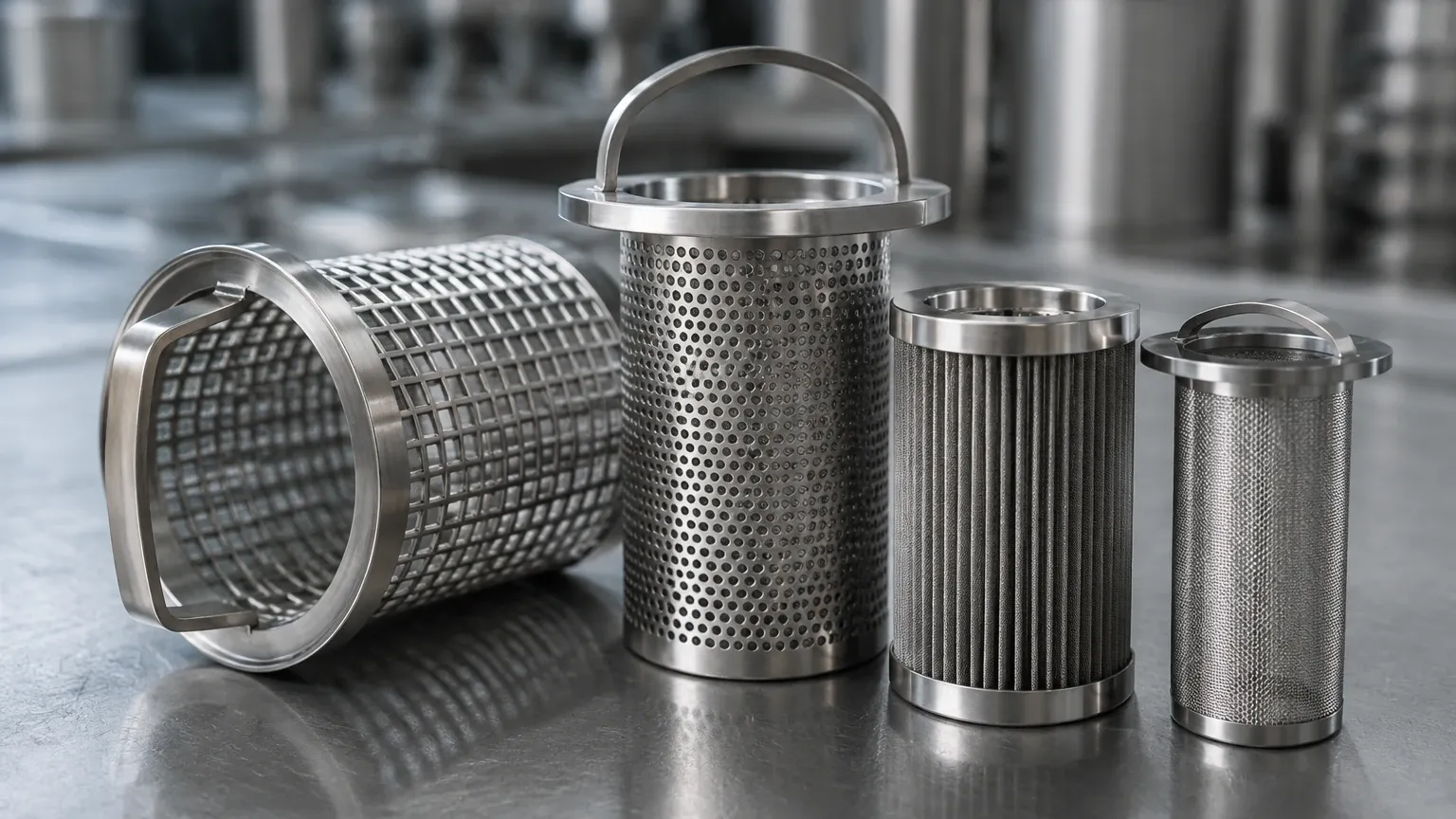
In the field, ease of maintenance is paramount. Custom strainer baskets can be designed with specialized handles (e.g., slant handles or heavy-duty bails) to facilitate rapid removal during turnaround. Furthermore, the sealing surface—whether it is a flat flange or an O-ring groove—must be manufactured to tight tolerances to prevent "bypass," where unfiltered fluid leaks around the basket and into the downstream system.
Operational Maintenance and Differential Pressure Management
The performance of a strainer basket oil and gas unit is monitored primarily through differential pressure (ΔP). This is the difference in pressure between the inlet and the outlet of the strainer.
1. Clean Pressure Drop: The baseline pressure drop when the basket is new or recently cleaned. This should be as low as possible to maximize system efficiency.
2. Alarm Level: The pressure drop at which the system alerts operators that the basket is reaching capacity.
3. Maximum Allowable ΔP: The point at which the basket must be cleaned or replaced to prevent structural damage to the filter element or the pump.
In continuous flow operations, duplex strainers are often used. These systems consist of two strainer housings connected by a diverting valve. When one basket becomes clogged, the flow is diverted to the second chamber, allowing the first basket to be cleaned without shutting down the entire process. This is a critical feature for midstream pipelines and refinery processes where downtime can cost thousands of dollars per hour.
Selection Criteria for Engineering and Procurement Teams
When sourcing Strainers & Baskets for oil and gas projects, engineering teams should confirm several key data points to ensure the longevity and performance of the filtration system.
Fluid Compatibility
Confirm the chemical composition of the fluid, including the presence of sour gas (H2S) or abrasive solids. This dictates the material grade and the need for specialized coatings or treatments.
Operating Conditions
Provide the maximum operating pressure and temperature. High-temperature applications may require specific alloy grades to prevent thermal expansion issues or loss of mechanical strength.
Flow Rate and Viscosity
The viscosity of crude oil can vary significantly based on temperature. A basket designed for light distillates will perform very differently when processing heavy crude. Engineers must calculate the pressure drop based on the highest expected viscosity.
Total Cost of Ownership (TCO)
While the initial purchase price of a strainer basket is a factor, the TCO is determined by its durability and ease of cleaning. A high-quality stainless steel basket that can be cleaned and reused multiple times is often more cost-effective than cheaper, disposable alternatives that require frequent replacement and lead to higher labor costs.
Conclusion
The strainer basket oil and gas industry relies on robust, precision-engineered components to maintain the safety and efficiency of global energy infrastructure. By focusing on material integrity, structural design, and specific application requirements, engineers can ensure that their filtration systems provide reliable protection for their most valuable assets. Whether for a remote offshore platform or a complex downstream refinery, the right strainer basket is a fundamental component of operational success.
