


Strainer Cleaning
In industrial fluid handling systems, the efficiency of filtration components directly impacts the longevity of downstream equipment such as pumps, valves, and heat exchangers. Among these components, Strainers & Baskets serve as the primary defense against particulate contamination. However, the effectiveness of these mechanical barriers is contingent upon a rigorous maintenance and cleaning regimen. Neglecting strainer cleaning not only compromises the purity of the process fluid but also introduces significant operational risks, including excessive pressure drops, reduced flow rates, and potential mechanical failure of the filter element itself.
For engineers and plant managers, understanding the technical nuances of strainer cleaning is essential for optimizing system performance and minimizing the Total Cost of Ownership (TCO). This guide explores the engineering principles, procedural best practices, and evaluation criteria necessary for effective industrial strainer maintenance.
The Critical Role of Maintenance in Industrial Filtration
Industrial strainers are designed to remove relatively large solids from liquid or gas streams. Unlike fine membrane filters that may be disposable, stainless steel strainers and baskets are typically designed for long-term reuse. Their durability is a hallmark of high-quality manufacturing, yet this durability relies on the removal of accumulated debris before it becomes embedded or causes structural deformation.
When a strainer becomes clogged, the open area of the mesh or perforated plate decreases. This restriction forces the fluid through a smaller surface area, significantly increasing the velocity and the differential pressure (ΔP) across the element. If strainer cleaning is delayed, the high ΔP can lead to "breakthrough," where particles are forced through the media, or even the complete collapse of the basket. In chemical processing or food and beverage applications, such failures can lead to costly batch contamination and unscheduled downtime.
Monitoring Performance: The Indicators for Strainer Cleaning
The most reliable method for determining when a strainer requires cleaning is the monitoring of differential pressure. Relying on fixed time intervals is often inefficient, as solids loading in a process stream can fluctuate based on upstream variables or seasonal changes in raw water quality.
Differential Pressure (ΔP) Thresholds
Most industrial systems are designed with a baseline pressure drop when the strainer is clean. As a general engineering rule, strainer cleaning should be initiated when the differential pressure reaches a predetermined limit—typically between 5 to 10 psi (0.35 to 0.7 bar) above the clean baseline, or when it reaches 50% of the maximum allowable pressure drop specified by the manufacturer.
Flow Rate Degradation
In systems without sophisticated pressure monitoring, a noticeable drop in downstream flow or pressure can indicate a heavily fouled basket. However, this is a reactive approach that often means the system is already operating at sub-optimal efficiency. For critical hydraulic or pharmaceutical applications, automated ΔP sensors integrated into the PLC (Programmable Logic Controller) are recommended to trigger maintenance alerts.
Technical Procedures for Manual Strainer Cleaning
Manual cleaning remains the standard for many basket strainers and Y-strainers. The process must be handled with precision to ensure the integrity of the stainless steel mesh is maintained.
1. System Isolation and Safety: Before any maintenance begins, the section of the piping must be isolated using upstream and downstream valves. The internal pressure must be vented, and the fluid drained into a secondary containment if it is hazardous. This is a critical safety step to prevent injury from pressurized fluids or chemical exposure.
2. Accessing the Element: Depending on the design, this involves removing a bolted cover or a quick-opening clamp. Care should be taken to inspect the cover gasket or O-ring during this stage; these components are vital for maintaining a leak-proof seal upon reassembly.
3. Removal of the Basket: The Strainers & Baskets should be lifted vertically from the housing. It is important to avoid dragging the mesh against the housing walls, which can cause abrasions or tears in fine wire mesh linings.
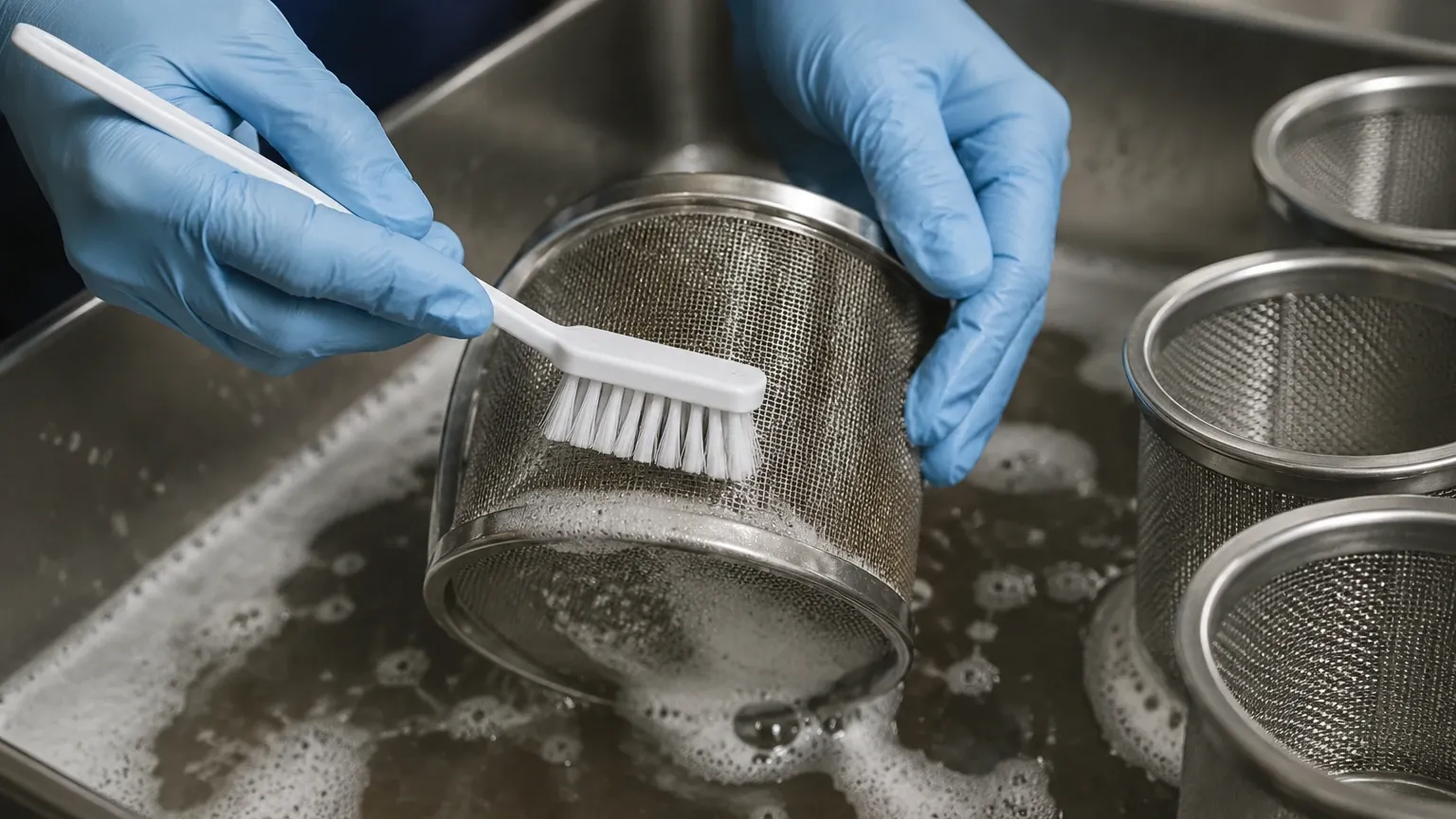
4. Initial Debris Removal: Large particulates should be removed manually or with low-pressure compressed air. For sticky or viscous fluids, a soft-bristle brush may be used, provided the bristles are compatible with the metal (e.g., stainless steel brushes for stainless steel baskets) to prevent cross-contamination or galvanic corrosion.
Advanced Cleaning Techniques for Stainless Steel Mesh
For applications involving fine filtration or stubborn contaminants (such as resins, oils, or biological films), basic rinsing may be insufficient. In these cases, advanced strainer cleaning methods are required to restore the original flux of the media.
Ultrasonic Cleaning
Ultrasonic cleaning is highly effective for precision wire mesh filters. By using high-frequency sound waves to create cavitation bubbles in a cleaning solution, this method can dislodge microscopic particles trapped deep within the mesh weave that mechanical brushing cannot reach. This is particularly useful in pharmaceutical and food processing where high levels of cleanliness are mandatory.
Chemical Soaking and Backwashing
In chemical processing, baskets may become fouled with scale or crystallized products. Soaking the element in a compatible solvent or mild acid solution (specifically formulated for 304 or 316 stainless steel) can dissolve these deposits. Additionally, high-pressure backwashing—directing a cleaning fluid in the opposite direction of the normal process flow—can be effective for dislodging wedged particulates.
Engineering Considerations for Maintenance Efficiency
When selecting or designing Strainers & Baskets, engineers should consider features that simplify the cleaning process. The ease of maintenance is a significant factor in the long-term operational cost of a filtration system.
* Quick-Opening Covers: For systems requiring frequent cleaning, replacing bolted flanges with quick-opening covers or swing-bolt designs can reduce downtime from hours to minutes.
* Duplex Configurations: In continuous processes where flow cannot be interrupted, a duplex strainer system allows one side to be cleaned while the other remains in operation. This ensures that strainer cleaning does not dictate the entire plant's production schedule.
* Material Selection: Using high-grade stainless steel (such as 316L) ensures that the basket can withstand aggressive cleaning chemicals and high-temperature sterilization (SIP) without degrading. The durability of the material directly affects how many cleaning cycles an element can survive before requiring replacement.
Common Risks and Troubleshooting in Strainer Maintenance
Even with a standard procedure, several risks can compromise the effectiveness of the cleaning process. Technical teams should be trained to recognize and mitigate these issues:
* Mesh Deformation: Using excessive mechanical force or high-pressure water jets at the wrong angle can distort the wire mesh, changing the micron rating of the filter. Always clean at a low angle and avoid sharp tools.
* Incomplete Cleaning: If residues are left on the mesh, they can act as a substrate for bacterial growth or provide a "seed" for faster clogging in the next cycle. Visual inspection under magnification is often necessary for fine mesh baskets.
* Gasket Failure: Reusing a compressed or nicked gasket after a cleaning cycle is a leading cause of external leaks. It is best practice to keep a stock of replacement seals and replace them if any wear is detected during the cleaning process.
* Bypass Risks: If the basket is not seated correctly in the housing after cleaning, fluid may bypass the filter element entirely. Verification of the seating surfaces and the integrity of the basket flange is a mandatory step in the reinstallation process.
Evaluating When to Replace vs. Clean
While industrial Strainers & Baskets are designed for longevity, they are not infinite. A critical part of strainer cleaning is the evaluation of the component's condition. If the mesh shows signs of fraying, significant corrosion, or if the baseline pressure drop remains high even after a thorough cleaning, the element has likely reached the end of its service life.
Maintaining a detailed log of cleaning frequency and the volume of debris removed can help in predictive maintenance. An increase in cleaning frequency often signals a change in the process fluid quality or upstream equipment wear, allowing for proactive adjustments before a system failure occurs.
Conclusion: Achieving Long-Term Filtration Reliability
Effective strainer cleaning is a cornerstone of industrial fluid management. By implementing a structured approach—utilizing differential pressure monitoring, employing appropriate cleaning technologies like ultrasonic baths, and selecting high-quality stainless steel components—engineers can ensure their systems operate at peak efficiency.
Investing in robust Strainers & Baskets and adhering to rigorous maintenance protocols protects critical downstream assets and ensures the consistency of the final product. As filtration requirements become increasingly stringent across the chemical, pharmaceutical, and water treatment sectors, the technical mastery of strainer maintenance remains a vital skill for operational excellence.
