


Strainers Cloth
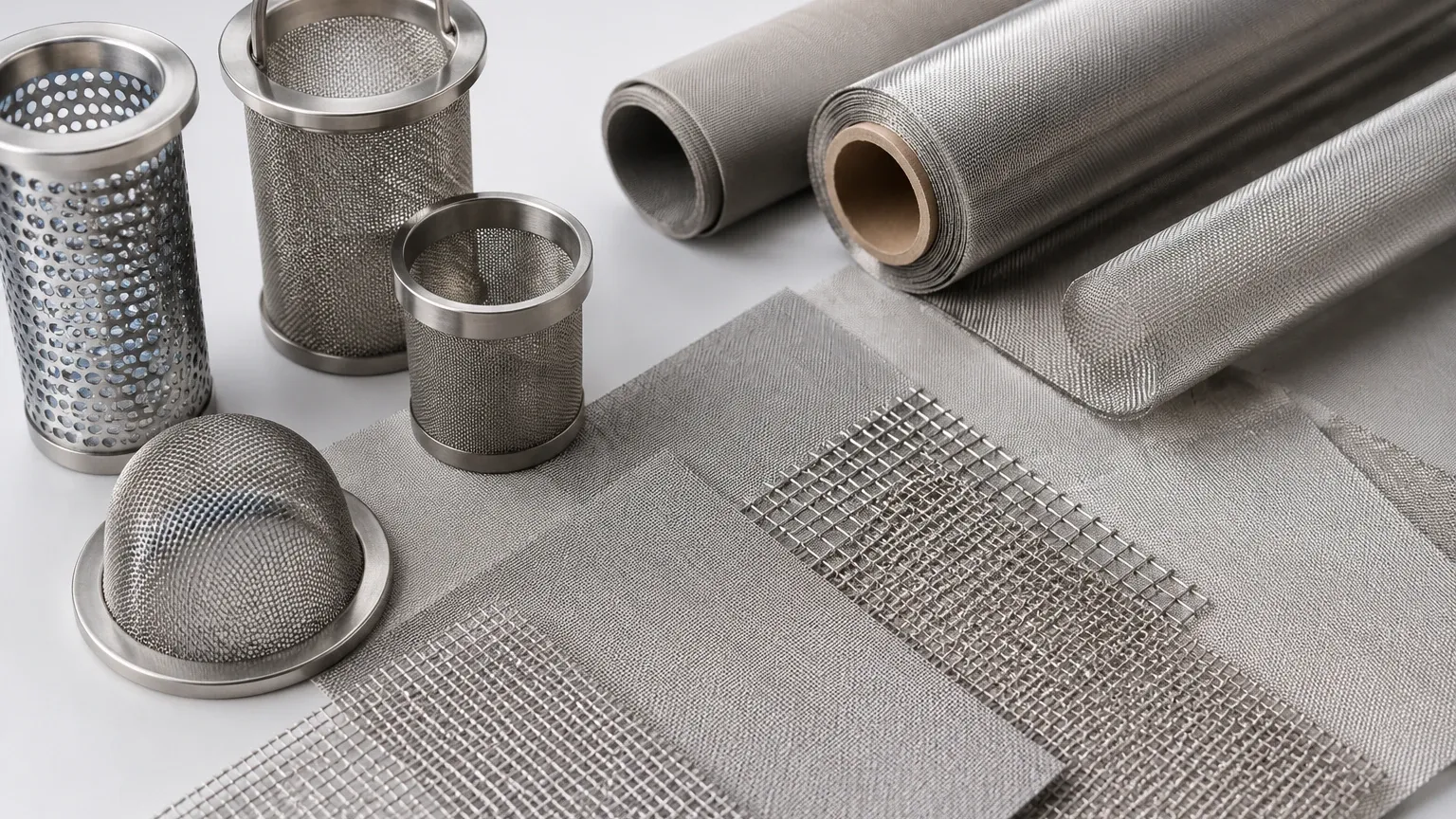
In industrial filtration, the term "strainers cloth" refers to the precision-engineered wire mesh or woven fabric that serves as the primary filtration medium within a strainer assembly. While the housing and support structures provide the mechanical integrity required to withstand system pressures, the strainers cloth determines the efficiency, flow rate, and particle retention capabilities of the entire unit. For engineers and procurement professionals, understanding the technical nuances of this material is essential for optimizing process performance and ensuring the longevity of downstream equipment.
Industrial strainers are used across a vast spectrum of sectors, from chemical processing and water treatment to food and beverage production. In these environments, the selection of the correct Strainers & Baskets configuration depends heavily on the characteristics of the cloth used. This article examines the technical specifications, material considerations, and engineering trade-offs involved in selecting and maintaining strainers cloth for industrial applications.
Technical Fundamentals of Strainers Cloth
Strainers cloth is typically constructed from metallic wires woven into a specific pattern. Unlike disposable filter media, industrial-grade cloth is designed for durability, cleanability, and consistent performance over long operational cycles. The performance of the cloth is defined by several key physical parameters.
Mesh Count and Micron Rating
The mesh count refers to the number of openings per linear inch. A higher mesh count indicates smaller openings and finer filtration. However, for industrial applications, the micron rating is often a more precise measurement, representing the maximum size of a particle that can pass through the mesh. Understanding the difference between nominal and absolute micron ratings is critical; nominal ratings indicate a percentage of particles retained, while absolute ratings represent the largest spherical particle that can pass through the cloth under controlled conditions.
Wire Diameter and Open Area
The diameter of the wire used in the weave significantly impacts both the strength of the cloth and its "open area." The open area is the ratio of the total area of the holes to the total area of the mesh, expressed as a percentage. A larger open area reduces the initial pressure drop across the strainer and allows for higher flow rates. However, increasing the open area often requires using thinner wires, which may reduce the mechanical strength and wear resistance of the cloth.
Material Selection for Demanding Environments
The chemical and thermal environment of a process dictates the material requirements for strainers cloth. Because these components are often exposed to corrosive fluids or high-temperature cleaning cycles, stainless steel is the industry standard.
Stainless Steel 304 and 304L
Grade 304 is the most common material for general-purpose industrial filtration. It offers excellent mechanical properties and good resistance to atmospheric corrosion and many organic and inorganic chemicals. 304L (low carbon) is preferred when the cloth must be welded into a basket structure, as it minimizes carbide precipitation that can lead to intergranular corrosion in the heat-affected zone of the weld.
Stainless Steel 316 and 316L
For applications involving chlorides, acids, or high-salinity environments, Grade 316 is the preferred choice. The addition of molybdenum enhances its resistance to pitting and crevice corrosion. In the pharmaceutical and food industries, 316L is frequently specified to meet stringent hygiene standards and to withstand aggressive Clean-in-Place (CIP) chemicals.
Specialized Alloys
In extreme cases involving highly corrosive chemicals or temperatures exceeding the limits of standard stainless steel, alloys such as Monel, Inconel, or Hastelloy may be utilized. These materials ensure the integrity of the strainers cloth in environments where standard steels would suffer rapid degradation.
Weave Patterns and Their Functional Impact
The way the wires are interlaced determines the cloth's filtration characteristics, surface texture, and structural rigidity. There are several primary weave types used in industrial strainers.
Plain Weave
This is the most straightforward weave pattern, where each warp wire crosses over and under each shute wire. Plain weave strainers cloth offers the highest percentage of open area and is ideal for high-flow applications where the required filtration is relatively coarse.
Twill Weave
In a twill weave, each wire passes over and under two successive wires. This allows for the use of heavier wires for a given mesh count, resulting in a stronger and more durable cloth. Twill weaves are often used when the cloth must support significant weight or withstand high-pressure differentials.
Dutch Weave (Plain and Twill)
Dutch weaves utilize different diameters for the warp and shute wires. The result is a dense, firm mesh with small, triangular openings. This weave type provides superior filtration accuracy and high mechanical strength, making it suitable for fine filtration in high-pressure systems. Dutch weave cloth is also easier to clean via backwashing due to its smooth surface structure.
Engineering Considerations for Selection
When specifying strainers cloth for a new or existing system, engineers must balance several competing factors to ensure optimal performance and total cost of ownership.
Pressure Drop (Delta P)
The pressure drop is the difference in pressure between the upstream and downstream sides of the strainer. An excessively high initial pressure drop indicates that the open area of the cloth is too small for the required flow rate, leading to increased energy consumption by pumps. Engineers must select a cloth that provides the necessary filtration without creating a bottleneck in the system.
Dirt Holding Capacity
The dirt holding capacity refers to the amount of contaminant the cloth can retain before the pressure drop reaches a critical level requiring cleaning or replacement. Cloth with a higher open area or a specialized weave may offer better capacity, extending the time between maintenance intervals.
Mechanical Support and Pleating
In many high-pressure applications, the strainers cloth is not strong enough to support the fluid load on its own. It is often backed by a perforated metal plate or a coarser support mesh. To increase the effective filtration area within a compact footprint, the cloth can be pleated. Pleating significantly increases the surface area, which lowers the flux (flow per unit area) and extends the service life of the component.
Customization and Manufacturing Precision
Industrial filtration requirements are rarely "one size fits all." Manufacturers like Kaifil specialize in the customization of Strainers & Baskets to meet specific application needs. Customization options for strainers cloth include:
* Custom Dimensions: Tailoring the cloth size and shape to fit unique housing designs.
* Edge Treatments: Using specialized welding, binding, or framing techniques to prevent fraying and ensure a bypass-free seal within the strainer body.
* Multi-Layer Composites: Sintering or diffusion-bonding multiple layers of mesh together to combine fine filtration with high structural strength.
* Surface Coatings: Applying specialized treatments to enhance corrosion resistance or to create a hydrophobic/hydrophilic surface depending on the process requirements.
Maintenance and Longevity
The lifespan of strainers cloth is determined by the material's compatibility with the process fluid and the effectiveness of the cleaning protocols. Unlike disposable filters, stainless steel cloth is designed to be cleaned and reused.
Cleaning Methods
* Backwashing: Reversing the flow of the fluid to dislodge particles trapped on the surface of the cloth.
* Ultrasonic Cleaning: Using high-frequency sound waves in a cleaning solution to remove fine particles from deep within the weave of Dutch or Twill meshes.
* Chemical Cleaning: Using acids or bases to dissolve organic or mineral scaling, provided the cloth material is chemically resistant to the cleaning agent.
Signs of Failure
Engineers should regularly inspect strainers cloth for signs of mechanical fatigue, such as broken wires or "blinded" areas where particles have become permanently lodged. Deformed mesh or thinning wires are indicators that the cloth is reaching the end of its service life and should be replaced to prevent particulate bypass and potential damage to downstream pumps, valves, or nozzles.
Conclusion
Strainers cloth is a critical component in the protection of industrial infrastructure. By selecting the appropriate material, weave type, and micron rating, organizations can ensure efficient particulate removal while minimizing energy costs and maintenance downtime. Whether the application involves simple debris removal or precision chemical processing, the technical integrity of the cloth is the foundation of reliable filtration.
For technical assistance in selecting the right mesh specifications or to explore customized filtration components, professionals should consult with manufacturers who offer deep expertise in stainless steel fabrication and industrial fluid dynamics. High-quality Strainers & Baskets engineered with the correct cloth specifications provide the durability and precision required for today’s demanding industrial environments.
