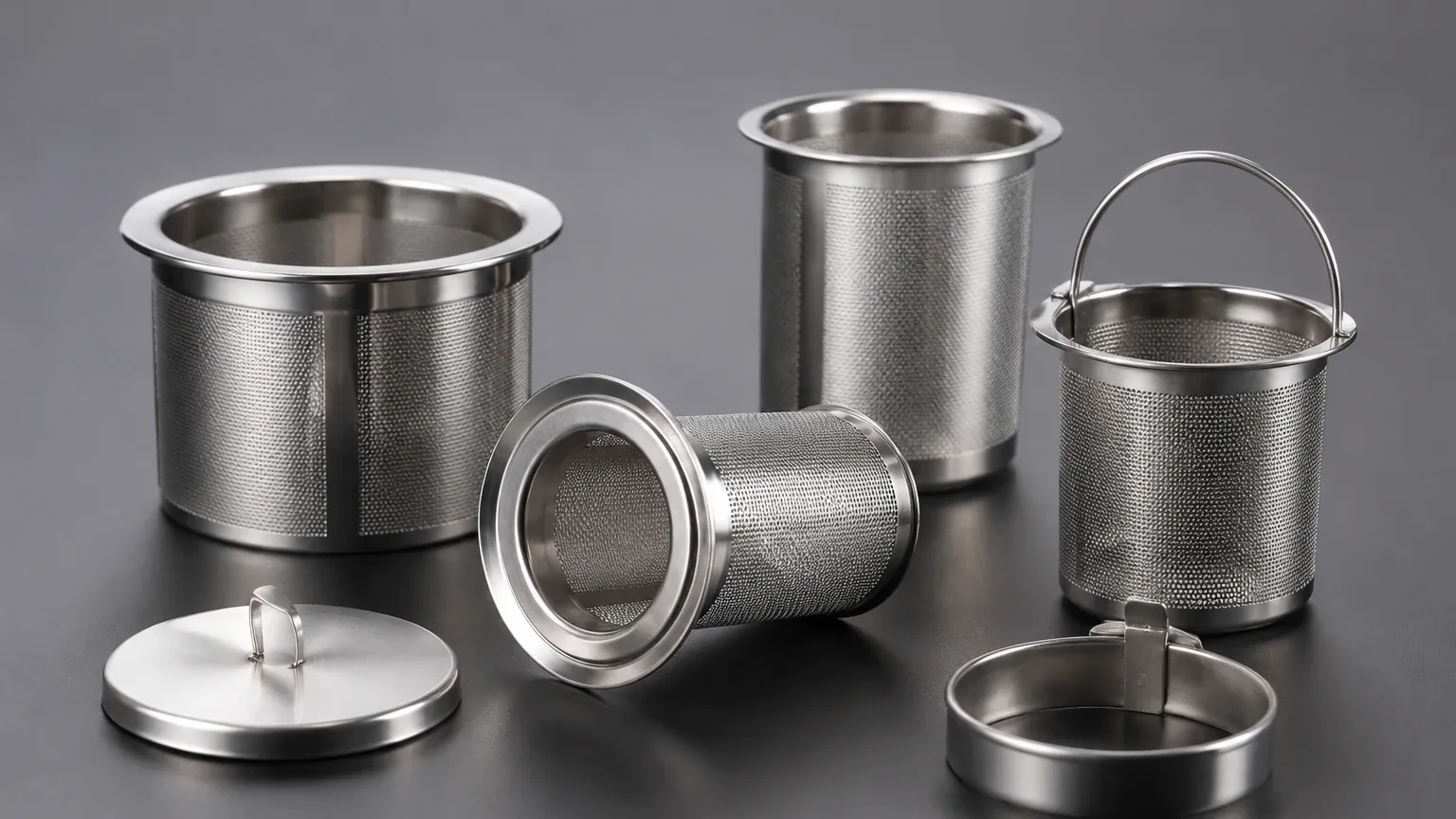
Strainer Cup
In industrial fluid handling, the strainer cup serves as a critical primary filtration component designed to protect downstream equipment from particulate contamination. As a specialized subset of Strainers & Baskets, these components are engineered to capture solid debris while maintaining the required flow characteristics of a system. For engineers and procurement professionals, understanding the technical nuances of strainer cup design, material selection, and performance metrics is essential for ensuring system reliability and minimizing the total cost of ownership.
Engineering Design and Structural Integrity
The fundamental design of a strainer cup involves a cylindrical or tapered body with a closed bottom, often referred to as a "basket" or "cup" configuration. Unlike flat strainers, the cup design provides a significantly larger surface area for filtration, which directly translates to a higher dirt-holding capacity and longer intervals between maintenance cycles.
Material Selection
Industrial environments demand materials that can withstand corrosive fluids, high temperatures, and mechanical stress. Stainless steel is the industry standard for strainer cups due to its durability and resistance to oxidation. Common alloys include:
* AISI 304: Suitable for general-purpose applications, including water treatment and mild chemical processing.
* AISI 316/316L: Enhanced with molybdenum, these alloys offer superior resistance to chlorides and organic acids, making them the preferred choice for pharmaceutical and marine applications.
* Specialty Alloys: For extreme environments, materials like Monel or Hastelloy may be utilized to prevent stress corrosion cracking or pitting.
Construction Methods
A high-quality strainer cup typically utilizes a dual-layer construction. An outer layer of perforated metal provides structural rigidity, preventing the filter medium from collapsing under high differential pressure. The inner layer consists of a precision wire mesh that dictates the filtration accuracy. These layers are joined using advanced welding techniques, such as TIG (Tungsten Inert Gas) or resistance spot welding, to ensure seamless transitions and eliminate bypass paths where unfiltered fluid could escape.
Key Performance Factors in Filtration
When evaluating a strainer cup for an industrial application, engineers must look beyond basic dimensions. The performance of the component is defined by its interaction with the fluid dynamics of the system.
Filtration Accuracy and Mesh Sizing
The filtration rating of a strainer cup is determined by the mesh opening size, typically measured in microns or mesh count. Selecting the correct rating involves a balance between protection and flow. If the mesh is too coarse, harmful particles may pass through and damage pumps or valves. If it is too fine, the strainer will clog prematurely, leading to frequent downtime. Engineers often follow the "1/3 rule," where the strainer opening is approximately one-third the size of the smallest orifice or clearance in the downstream equipment.
Open Area Ratio
The efficiency of a strainer cup is largely determined by its open area ratio—the ratio of the total area of the holes to the total area of the cup surface. A higher open area ratio results in a lower initial pressure drop ($ΔP$). In many industrial designs, a 6:1 ratio (where the open area of the strainer is six times the cross-sectional area of the inlet pipe) is targeted to ensure that the strainer does not become a bottleneck in the system.
Pressure Drop Considerations
Every filtration element introduces a degree of resistance to flow. The clean pressure drop must be calculated during the design phase to ensure the system pump has sufficient head. As the strainer cup captures debris, the $ΔP$ increases. Monitoring this pressure differential is the most effective way to determine when the cup requires cleaning or replacement.
Selection Criteria for Industrial Applications
Choosing the right strainer cup requires a comprehensive analysis of the operating environment. Failure to account for these variables can lead to premature component failure or system inefficiency.
Fluid Characteristics
The viscosity of the fluid significantly impacts the choice of strainer. High-viscosity fluids, such as heavy oils or syrups, require larger open areas and potentially reinforced mesh to handle the increased drag forces. Additionally, the chemical compatibility of the fluid with the strainer material and any gaskets or seals must be verified to prevent degradation.
Operating Conditions
* Temperature: High-temperature applications can affect the structural integrity of the metal and the performance of sealing components. Thermal expansion must be considered in the housing fit.
* Pressure: The strainer cup must be rated for the maximum system pressure, including potential surges or water hammer effects.
* Flow Rate: Constant high-velocity flow can cause erosion of the mesh over time, necessitating heavier gauge wire or specialized coatings.
Housing Integration
The strainer cup must interface perfectly with the strainer housing. This involves selecting the correct flange type, O-ring groove, or handle design. A handle or lift-out bail is often integrated into the cup design to facilitate easy removal during maintenance, which is a critical consideration for reducing labor costs in large-scale operations.
Maintenance and Operational Lifespan
The longevity of a strainer cup is dependent on both its build quality and the rigor of the maintenance protocol. In many B2B environments, the goal is to move from reactive maintenance to a predictive or scheduled approach.
Cleaning Procedures
Stainless steel strainer cups are generally designed to be reusable. Cleaning methods vary based on the contaminant:
* Mechanical Cleaning: Brushing or scraping for coarse debris.
* Ultrasonic Cleaning: Highly effective for removing fine particles trapped within the wire mesh weave.
* Chemical Soaking: Used when the contaminant is a scale or polymer that cannot be removed mechanically.
It is important to inspect the mesh for signs of "blinding" (permanent clogging) or mechanical fatigue after each cleaning cycle. If the wire mesh shows signs of fraying or if the perforated support is distorted, the cup should be replaced immediately to prevent catastrophic failure.
Replacement Cycles
While stainless steel cups are durable, they are considered wear parts. Factors that shorten the replacement cycle include abrasive particles in the fluid, frequent pressure spikes, and aggressive cleaning chemicals. Maintaining a stock of spare strainer cups is a standard best practice for minimizing unplanned downtime.
Customization Options for Specific Industrial Needs
Off-the-shelf solutions may not always meet the rigorous demands of specialized industrial processes. Customization allows engineers to optimize the strainer cup for specific performance targets.
Tailored Dimensions and Geometry
In OEM applications, the strainer cup may need to fit into a proprietary housing with non-standard dimensions. Custom manufacturing allows for variations in height, diameter, and taper angles to maximize the available filtration volume within a constrained space.
Specialized Mesh Weaves
Depending on the particle shape and size distribution, different weave types can be employed:
* Plain Weave: The most common for general filtration.
* Dutch Weave: Provides higher strength and finer filtration ratings by using heavier wires in one direction and finer wires in the other.
* Twill Weave: Allows for a heavier wire diameter in a given mesh count, increasing the mechanical strength of the cup.
Reinforcement and Support
For high-pressure applications, the strainer cup can be reinforced with internal or external rings, longitudinal ribs, or multiple layers of perforated metal. These modifications prevent the cup from deforming under the weight of heavy sludge or the force of high-velocity fluid.
Conclusion for Procurement and Engineering Teams
Selecting a strainer cup is a technical decision that impacts the efficiency and safety of the entire fluid system. By focusing on material grade, filtration accuracy, and structural design, organizations can ensure they are utilizing components that offer the best performance-to-cost ratio. When sourcing these components, it is vital to work with manufacturers who provide transparent technical specifications and have the engineering capability to support customized requirements. A well-specified strainer cup not only protects expensive downstream equipment but also contributes to a more stable and predictable industrial process.