


Strainer Container
In industrial fluid handling systems, the integrity of downstream equipment—such as pumps, valves, and heat exchangers—depends heavily on the effective removal of particulate matter. A strainer container, often referred to as a strainer basket or housing depending on the specific assembly, serves as the primary line of defense against mechanical damage and process contamination. For engineers and procurement professionals, selecting the correct Strainers & Baskets involves a deep understanding of fluid dynamics, material science, and the specific mechanical stresses of the application environment.
Industrial filtration is not a one-size-fits-all solution. The performance of a strainer container is determined by its geometry, the precision of its mesh or perforation, and its ability to withstand the differential pressures encountered during operation. This guide examines the technical considerations essential for specifying and maintaining high-performance straining components in demanding industrial sectors.
Engineering Principles of Industrial Strainer Containers
The primary function of a strainer container is to intercept solid particles while allowing the liquid or gas phase to pass with minimal resistance. This process is governed by the relationship between filtration surface area and flow velocity. In a well-engineered system, the "open area ratio" is the most critical metric. This ratio compares the total open area of the strainer mesh or perforations to the cross-sectional area of the inlet pipe.
For most industrial applications, a minimum open area ratio of 4:1 is recommended. This ensures that even as the strainer begins to collect debris, the pressure drop (ΔP) remains within acceptable limits, preventing cavitation in pumps and maintaining system efficiency. When the ratio is too low, the velocity through the remaining open pores increases, which can lead to particle "breakthrough" or structural deformation of the basket itself.
Furthermore, the internal flow path within the container must be designed to prevent dead zones. Stagnant areas can lead to the accumulation of fine sediments that are difficult to remove during standard cleaning cycles, potentially becoming a breeding ground for bacteria in food-grade or pharmaceutical applications.
Material Selection and Chemical Compatibility
Because strainer containers are often exposed to corrosive fluids, high temperatures, and abrasive solids, material selection is the foundation of long-term reliability. Stainless steel remains the industry standard due to its mechanical strength and resistance to oxidation.
1. Type 304 Stainless Steel: This is the most common material used for general-purpose industrial straining. It provides excellent strength and good corrosion resistance for water treatment, hydraulic oils, and mild chemical applications.
2. Type 316L Stainless Steel: For environments involving chlorides, acids, or high-salinity fluids, 316L is specified. The addition of molybdenum enhances pitting resistance. In the pharmaceutical and food industries, the "L" (low carbon) variant is preferred to prevent carbide precipitation during welding, ensuring the structural integrity of the strainer container remains intact after fabrication.
3. Specialty Alloys: In extreme cases involving highly aggressive chemicals or cryogenic temperatures, alloys such as Monel, Hastelloy, or Duplex stainless steel may be required. These materials are selected based on the specific chemical resistance charts and the expected lifecycle of the filtration component.
Beyond the base metal, the surface finish is equally important. For hygienic applications, electropolishing is often employed to achieve a Ra (Roughness Average) value that prevents particle adhesion and facilitates easier sterilization.
Structural Design and Customization Options
A strainer container must be robust enough to handle the maximum possible differential pressure of the system. If a basket becomes completely clogged, it may be subjected to the full system pressure. If the structural design is insufficient, the basket will collapse, sending both the captured debris and fragments of the strainer into the downstream process.
Perforated vs. Mesh Linings
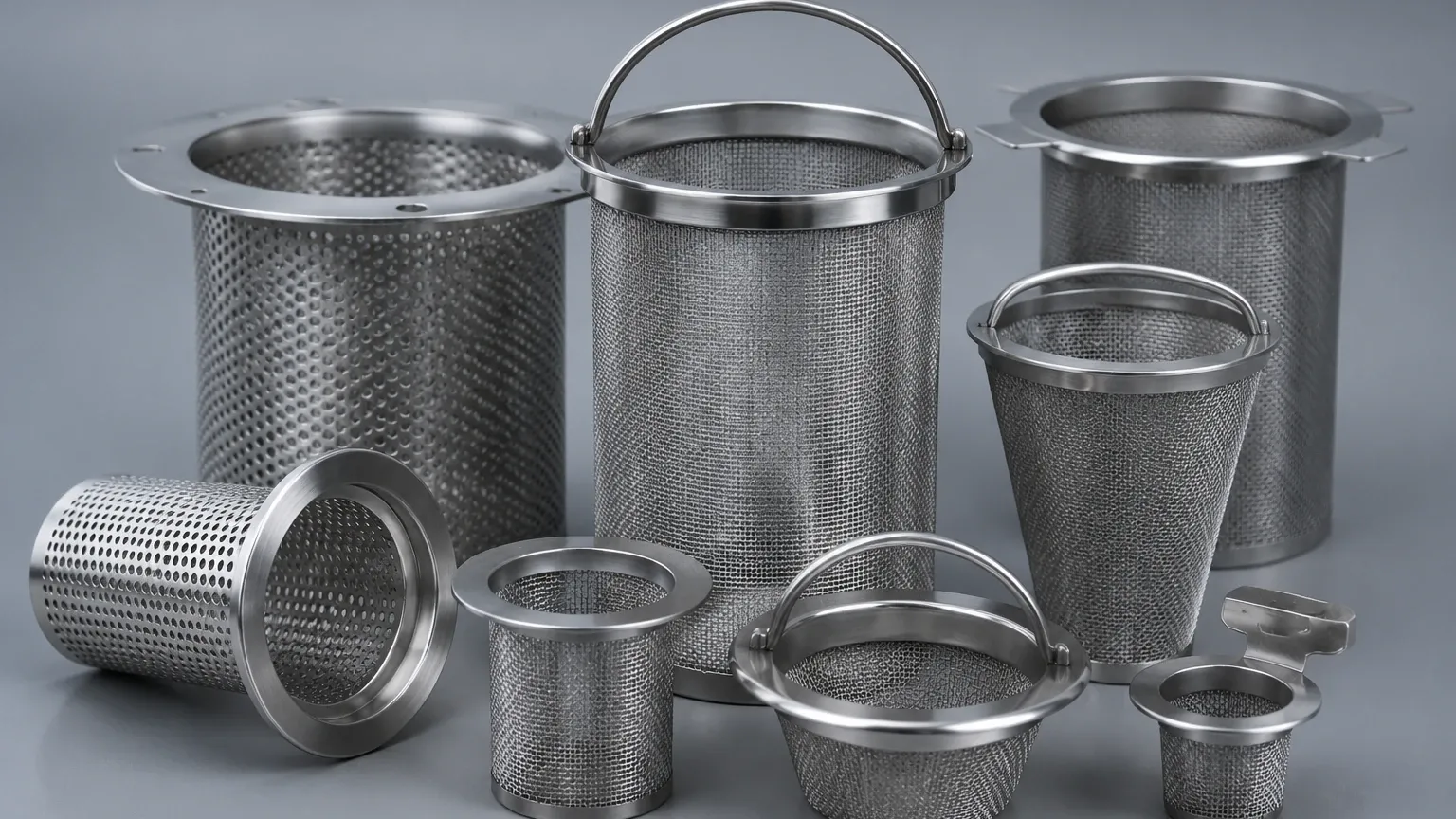
To balance strength and filtration fineness, many industrial containers utilize a dual-layer design. A heavy-gauge perforated metal plate provides the structural "skeleton," while a fine wire mesh lining provides the actual filtration rating. The mesh is typically spot-welded or sintered to the perforated support to prevent shifting under high flow rates.
Reinforcement and Support
For high-viscosity fluids or high-pressure systems, additional reinforcement such as external rings or longitudinal bars may be added to the container. This prevents the cylindrical or conical shape from deforming under the weight of the captured solids.
Handle and Sealing Configurations
Ease of maintenance is a key engineering consideration. Custom handle designs—such as slanted handles, lift-out bails, or heavy-duty lugs—allow operators to remove the strainer container safely, even when it is heavy with debris. Furthermore, the interface between the container and the housing must be perfectly sealed. This is usually achieved through a precision-machined flange or the use of specialized gaskets (EPDM, Viton, or PTFE) to ensure zero-bypass filtration.
Performance Evaluation and Selection Criteria
When specifying a strainer container for a new or existing system, engineers must confirm several variables to ensure the component meets performance expectations. Failure to account for these factors often leads to frequent downtime or premature component failure.
* Micron Rating vs. Mesh Count: It is vital to distinguish between the two. Mesh count refers to the number of openings per linear inch, while micron rating refers to the actual size of the particles that will be intercepted. A higher mesh count does not always mean better filtration if the wire diameter is not appropriately balanced.
* Viscosity Impact: High-viscosity fluids (such as resins, heavy oils, or syrups) create a significantly higher pressure drop than water. When dealing with these fluids, the strainer container must have a much larger surface area to maintain a functional flow rate.
* Total Suspended Solids (TSS): The concentration of solids in the fluid determines the required dirt-holding capacity. If the TSS is high, a larger container or a multi-basket system may be necessary to extend the time between cleaning cycles.
* Operating Temperature: Thermal expansion can affect the seal and the structural tension of the wire mesh. All components must be rated for the maximum operating temperature of the process.
Maintenance, Cleaning, and Lifecycle Management
The total cost of ownership for a strainer container is heavily influenced by its cleanability and durability. Unlike disposable filter cartridges, stainless steel baskets are designed for reuse, making them a more sustainable and cost-effective choice for many industrial processes.
Monitoring Pressure Drop
The most effective way to manage a strainer is through the use of differential pressure gauges. A clean strainer will have a baseline ΔP. Once the pressure drop reaches a predetermined limit (usually 10-15 psi depending on the system), the container should be removed and cleaned. Operating beyond this limit risks damaging the mesh or forcing contaminants through the media.
Cleaning Protocols
Cleaning methods vary based on the contaminant. For loose particulates, high-pressure water or air blasting is often sufficient. For sticky or organic materials, ultrasonic cleaning or chemical baths may be required. It is essential to inspect the mesh for any signs of fraying, broken wires, or corrosion after every cleaning cycle.
Replacement Indicators
While stainless steel containers are durable, they are not infinite. Signs that a strainer container requires replacement include:
* Permanent deformation of the support structure.
* Thinning of the wire mesh due to erosion or corrosion.
* Visible bypass gaps at the sealing flange.
* Recurrent clogging that cannot be resolved by standard cleaning (often indicating deep-seated pore blinding).
Application-Specific Considerations
Different industries impose unique demands on the design of a strainer container. Understanding these nuances is critical for compliance and performance.
Chemical Processing
In chemical plants, the primary concern is often the compatibility of the strainer with aggressive solvents or reagents. The design must also account for potential exothermic reactions that could spike the fluid temperature. Seamless construction is often preferred to eliminate crevices where corrosive agents could concentrate.
Food and Beverage
In this sector, hygiene is paramount. Strainer containers must be designed with "sanitary" features, meaning no sharp corners, smooth welds, and materials that are FDA-compliant. The ability to withstand CIP (Clean-in-Place) cycles, which involve high temperatures and caustic chemicals, is a standard requirement.
Water Treatment and Desalination
For large-scale water intake or desalination, strainers must handle high volumes of water and potentially abrasive sand or biological growth. In these environments, 316L or even Super Duplex stainless steel is often used to combat the corrosive effects of seawater and chlorine.
Conclusion
The selection of a strainer container is a critical decision that impacts the reliability and efficiency of an entire industrial process. By focusing on high-quality materials, precise engineering of the open area ratio, and robust structural design, facilities can significantly reduce maintenance costs and protect expensive downstream equipment.
Whether you are designing a new system or optimizing an existing one, working with a manufacturer that understands the complexities of Strainers & Baskets ensures that the filtration solution is tailored to the specific pressures, temperatures, and chemical environments of your application. Professional-grade stainless steel filtration components provide the durability and precision necessary to meet the rigorous standards of modern industrial production.
