


Strainer vs Stretcher
In the landscape of industrial fluid handling and component fabrication, technical terminology often overlaps, leading to confusion between functional components and the tools used to manufacture or maintain them. One such common point of inquiry for engineers and procurement specialists is the distinction between a strainer and a stretcher. While the terms may sound phonetically similar or appear in related manufacturing contexts, their roles in an industrial facility are fundamentally different.
Understanding the nuances of a strainer vs stretcher is essential for ensuring process integrity, protecting downstream equipment, and optimizing the lifespan of filtration components. This guide examines the technical definitions, mechanical functions, and engineering considerations for both, with a specific focus on how these concepts intersect in the production of high-performance Strainers & Baskets.
Defining the Industrial Strainer
An industrial strainer is a closed-loop filtration component designed to remove unwanted solids from a liquid or gas stream. Unlike a fine filter which may remove sub-micron particles, a strainer typically handles larger debris to protect sensitive equipment such as pumps, meters, control valves, and heat exchangers.
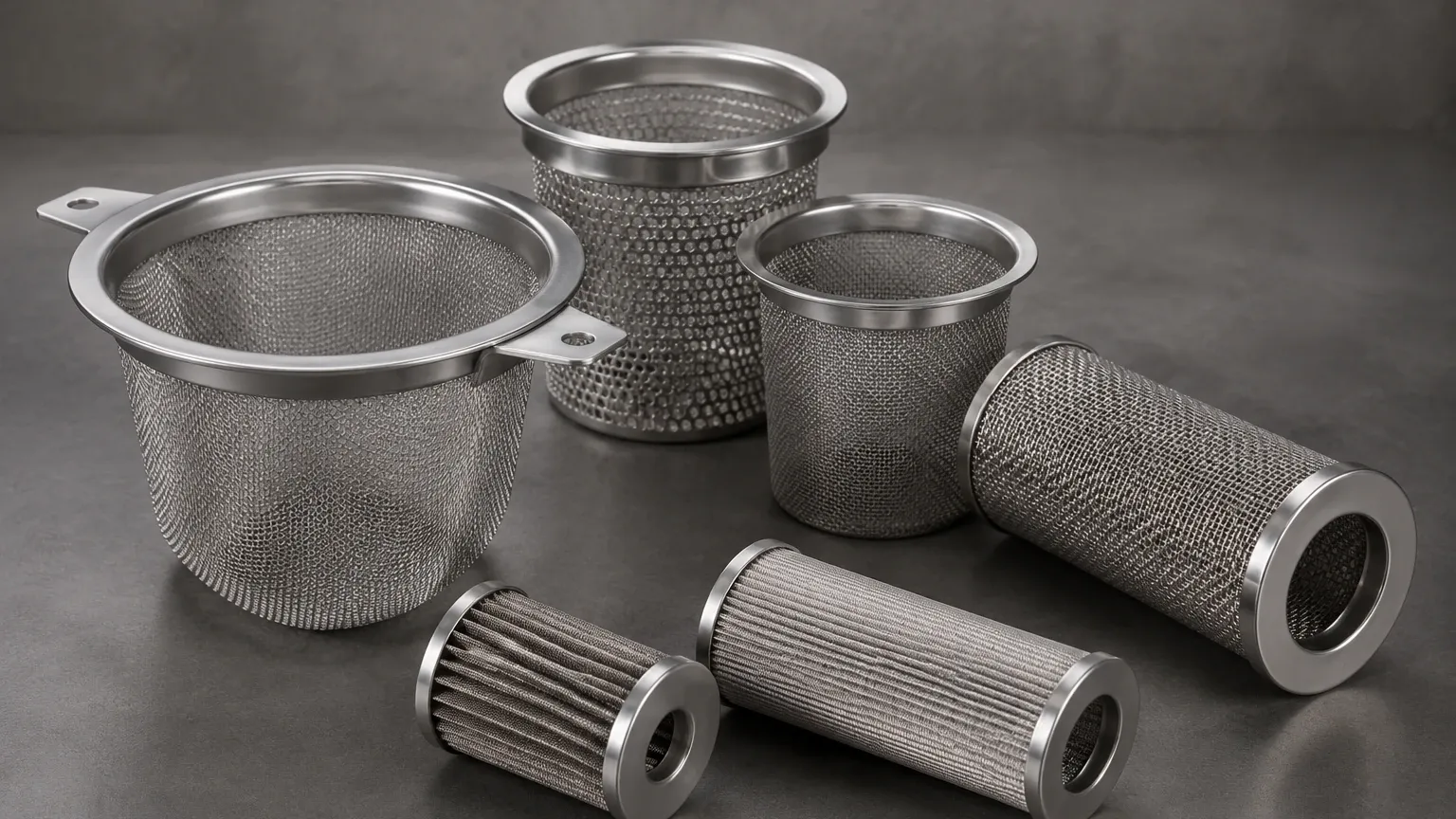
From a mechanical perspective, a strainer functions as a sacrificial barrier. It is installed in-line within a piping system, where the fluid passes through a perforated plate or a wire mesh element. The solids are captured within the basket or against the screen, while the clean fluid continues through the outlet.
Key Characteristics of Industrial Strainers
* Material Composition: Most industrial strainers are fabricated from stainless steel (SS304 or SS316L) to provide corrosion resistance and structural rigidity under high pressure.
* Configuration: Common designs include Y-strainers for high-pressure gas or steam lines and basket strainers for high-flow liquid applications where a larger holding capacity for debris is required.
* Permanent Installation: Strainers are generally intended to be permanent fixtures in a process line, requiring periodic cleaning or replacement of the internal element.
Defining the Industrial Stretcher
In contrast to the passive filtration role of a strainer, a "stretcher" in an industrial context usually refers to a mechanical tool or a process used during fabrication or maintenance. There are two primary contexts where the term stretcher is used in engineering:
1. Mesh Tensioning (Screen Stretching): In the fabrication of wire mesh filters and vibrating screens, a stretcher is a pneumatic or mechanical device used to pull the wire cloth taut across a frame. This ensures that the mesh openings remain uniform and that the material does not sag or vibrate excessively during operation.
2. Tube or Pipe Stretching: In piping maintenance, a stretcher (or expander) is a tool used to increase the diameter of a pipe end to allow for a slip-fit connection or to repair a deformed section of tubing.
When comparing a strainer vs stretcher, the former is the *product* that performs the work of filtration, while the latter is often the *tool* used to ensure the filter media is correctly tensioned or the housing is properly fitted.
Technical Comparison: Strainer vs Stretcher
To better understand the operational differences, we must look at the primary objectives, mechanical forces, and outcomes associated with each.
| Feature | Industrial Strainer | Industrial Stretcher (Mesh/Tube) |
| :— | :— | :— |
| Primary Function | Solid-liquid separation / Debris removal | Tensioning mesh or expanding metal |
| Operational Role | Passive process component | Active fabrication/maintenance tool |
| Mechanical Force | Hydrostatic pressure / Flow velocity | Mechanical tension / Radial expansion |
| Material Focus | Perforated metal, wire mesh, housings | Wire cloth, pipe ends, frames |
| End Result | Protection of downstream assets | Uniform mesh aperture / Fitted pipe joints |
Functional Divergence
The most significant difference in the strainer vs stretcher debate is the intent of the application. A strainer is selected based on its micron rating and its ability to withstand the differential pressure (ΔP) created as debris accumulates. A stretcher is selected based on the force it can exert to reach a specific tension (measured in Newtons per centimeter) or a specific dimensional tolerance in metal forming.
The Role of Tensioning in Filter Basket Fabrication
While they are different entities, the concept of "stretching" is critical to the performance of high-quality Strainers & Baskets. When a manufacturer produces a stainless steel filter basket, the wire mesh must be properly tensioned—or stretched—before it is welded to the support structure.
If the mesh is not sufficiently stretched during the fabrication of a strainer, several failure modes can occur:
* Aperture Distortion: Without proper tension, the wires in the mesh can shift under the force of the fluid flow. This changes the effective filtration rating, allowing larger particles to pass through the "stretched" openings.
* Fatigue Failure: Loose mesh is prone to vibration caused by turbulent flow. Over time, this leads to work-hardening of the stainless steel wires and eventual stress fractures at the weld points.
* Bypass Risks: If a mesh screen sags, it may pull away from the support basket, creating a bypass path where unfiltered fluid can escape the strainer element.
Therefore, while a customer purchases a strainer, they are relying on the manufacturer's expert use of a stretcher during the assembly process to ensure the long-term reliability of the component.
Engineering Considerations for Strainer Selection
When moving beyond the terminology and into the procurement phase, engineers must evaluate several technical factors to ensure the chosen strainer meets the demands of the application. The comparison of strainer vs stretcher highlights that the performance of the final product depends on precise engineering standards.
1. Flow Rate and Pressure Drop
Every strainer introduces a degree of resistance to the flow. Engineers must calculate the clean pressure drop to ensure the system pump can handle the additional load. As the strainer collects debris, the pressure drop increases. Selecting a basket with a high open-area ratio—often achieved through precision-stretched fine mesh—is vital for minimizing energy loss.
2. Micron Rating and Open Area
The micron rating defines the size of particles the strainer will capture. However, a finer micron rating often results in a lower percentage of open area, which increases the frequency of cleaning. Balancing the filtration requirement with the operational uptime is a key part of the selection process.
3. Material Compatibility
In chemical processing or food and beverage applications, the material of the strainer must be inert. Stainless steel 316L is frequently the standard due to its resistance to pitting and crevice corrosion. The structural integrity of the basket must also be considered; for high-viscosity fluids, a heavy-duty perforated support basket is often required to prevent the mesh from collapsing.
4. Customization and OEM Requirements
Off-the-shelf strainers may not fit specialized equipment. Custom-engineered Strainers & Baskets allow for specific flange configurations, handle designs for easy removal, and reinforced bottoms for high-pressure backwashing. Understanding the manufacturing process—including how the mesh is stretched and welded—provides confidence in the custom component's durability.
Common Risks and Maintenance Realities
In the context of strainer vs stretcher, the primary risk for the end-user is neglecting the maintenance of the strainer or misunderstanding the structural limits of the mesh.
Risk of Mesh Deformation:
If a strainer is subjected to a pressure differential that exceeds its design limit, the mesh may undergo "unintended stretching." This permanent deformation ruins the accuracy of the filtration. Unlike the controlled stretching performed during manufacturing, this deformation leads to mechanical failure.
Maintenance Cycles:
To prevent deformation, strainers should be equipped with differential pressure gauges. When the pressure reaches a predetermined limit (typically 5-10 psi over the clean drop), the basket should be removed and cleaned. For critical processes, duplex strainers allow for cleaning without shutting down the flow, as the fluid can be diverted to a second standby chamber.
Conclusion: Making Informed Purchasing Decisions
Distinguishing between a strainer and a stretcher is more than a linguistic exercise; it is about understanding the relationship between fabrication tools and functional process components. A strainer is the essential guardian of your piping system, while the stretching process is what gives that strainer its structural integrity and precision.
For engineers and purchasing teams, the focus should remain on the technical specifications of the filtration media and the quality of the fabrication. When evaluating suppliers for industrial filtration, confirm that their manufacturing process includes rigorous tensioning standards to prevent mesh migration and fatigue.
By prioritizing high-quality materials and precision-engineered designs, facilities can reduce the total cost of ownership, minimize downtime, and ensure that their downstream equipment remains protected from harmful contaminants. Whether you are replacing an existing element or designing a new process line, understanding the mechanics of Strainers & Baskets ensures that your filtration system performs exactly as intended.
