


Strainers Colanders
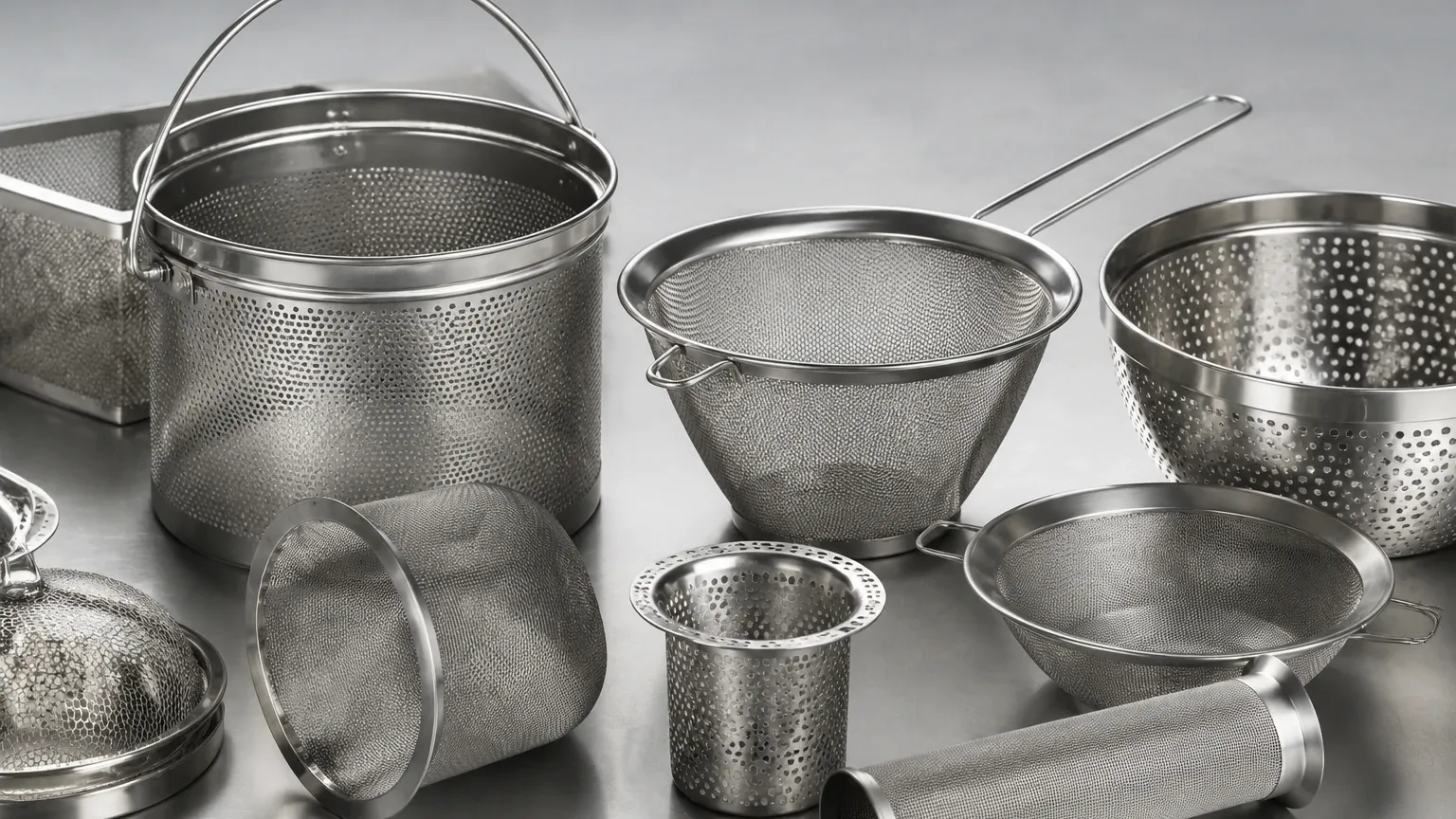
In the landscape of industrial filtration, the terms used to describe separation equipment often overlap with everyday terminology. While a "colander" is a familiar sight in domestic kitchens, its industrial equivalent—the basket strainer—is a precision-engineered component critical to the protection of downstream equipment and the purity of final products. Understanding the nuances of industrial strainers colanders and their more robust counterparts, Strainers & Baskets, is essential for engineers and procurement teams tasked with maintaining system integrity in demanding environments.
Industrial strainers are designed to remove unwanted solids from liquids or gases. Unlike standard domestic colanders, these components must withstand high pressures, corrosive chemicals, and extreme temperatures. Kaifil, as a specialist in stainless steel filtration, manufactures these components to meet rigorous industrial standards, ensuring that the transition from simple particulate separation to high-precision filtration is seamless and reliable.
The Engineering Distinction: From Domestic Colanders to Industrial Strainers
The primary difference between consumer-grade strainers colanders and industrial baskets lies in the engineering specifications. A domestic colander is typically designed for gravity-fed drainage with little regard for micron-level precision. In contrast, an industrial strainer basket is a pressure-rated component designed with specific flow dynamics in mind.
Structural Integrity
Industrial environments subject filtration components to mechanical stresses that would cause standard mesh to fail. High-performance baskets are often constructed with a multi-layer approach: a fine inner mesh for filtration accuracy, supported by a heavy-duty perforated metal outer layer. This "sandwich" construction allows the strainer to handle high differential pressures (ΔP) without deforming or bursting.
Material Composition
While plastic or low-grade steel may suffice for light-duty applications, industrial strainers require high-grade alloys. Stainless steel 304 and 316L are the industry standards due to their exceptional corrosion resistance and ability to withstand sterilization processes (such as CIP/SIP in the food and pharmaceutical sectors). 316L, in particular, is preferred in chemical processing due to its resistance to pitting and crevice corrosion in chloride-rich environments.
Key Design Parameters for Strainers and Baskets
When specifying strainers colanders for an industrial process, several technical factors must be evaluated to ensure the component performs as expected throughout its service life.
1. Micron Rating and Open Area Ratio
The micron rating determines the size of the particles the strainer will capture. This is achieved through either perforated plate holes or woven wire mesh. However, a finer micron rating often results in a lower "Open Area Ratio" (OAR). The OAR is the percentage of the total surface area that is open for flow. A low OAR increases the velocity of the fluid through the remaining openings, which can lead to higher pressure drops and accelerated wear. Engineering a balance between filtration fineness and flow capacity is a core part of the design process at Kaifil.
2. Flow Direction and Velocity
Most industrial basket strainers are designed for "inside-to-out" flow. This ensures that the solids are collected within the basket, making removal and cleaning straightforward. The velocity of the fluid must be carefully managed; excessive velocity can cause turbulence, which may push particles through the mesh or cause vibration-induced fatigue in the metal structure.
3. Connection Types and Sealing
Unlike a simple colander that sits atop a vessel, industrial strainers must integrate into a piping system. This requires precise flange connections (ANSI, DIN, or JIS) or sanitary tri-clamp fittings. Furthermore, the seal between the basket and the strainer housing is critical. Any bypass—where fluid flows around the basket rather than through it—negates the purpose of the filtration system.
Comparing Mesh and Perforated Metal Media
The choice of media within the strainer basket defines its application. Engineers must choose between woven wire mesh and perforated metal based on the nature of the contaminants.
* Perforated Metal: Best suited for coarse filtration (straining). It provides excellent structural strength and is ideal for removing large debris like scale, welding slag, or stones. The hole patterns can be round, square, or slotted, depending on the shape of the particles being targeted.
* Woven Wire Mesh: Used for finer filtration tasks. Mesh can be woven in various patterns (plain, twill, or dutch weave) to achieve specific micron ratings. Because fine mesh is delicate, it is almost always supported by a perforated metal cage in industrial basket designs.
Applications Across Industrial Sectors
The versatility of stainless steel strainers colanders allows them to be deployed across a wide range of sectors, each with unique requirements.
Food and Beverage Processing
In this industry, hygiene is paramount. Strainers must be manufactured with smooth surfaces (often electropolished) to prevent bacterial growth. They are used to strain fruit pulps, remove seeds, or protect bottling lines from stray particulates. The ability to withstand frequent Clean-in-Place (CIP) cycles using caustic chemicals is a mandatory requirement for these components.
Chemical and Petrochemical Industry
Here, the focus shifts to chemical compatibility and pressure ratings. Strainers are used to protect expensive pumps and valves from debris in the pipeline. In these applications, the durability of the 316L stainless steel ensures that the strainer does not degrade when exposed to aggressive solvents or acids.
Water Treatment and Desalination
Large-scale water intake systems use heavy-duty baskets to remove organic matter and silt. These strainers must be designed for high flow rates and are often equipped with handles or lifting lugs to facilitate the removal of heavy, debris-laden baskets during maintenance.
Customization: Tailoring Filtration to the Process
One size rarely fits all in industrial filtration. Customization is often necessary to optimize performance. As an OEM manufacturer, Kaifil provides tailored solutions that address specific engineering challenges:
* Variable Dimensions: Baskets can be manufactured to fit existing housings, even if the original equipment manufacturer is no longer in business.
* Reinforced Structures: For high-pressure applications, additional longitudinal or circumferential ribs can be added to the basket to prevent collapse.
* Handle and Lid Options: Depending on the frequency of cleaning, baskets can be fitted with slant handles, bail handles, or even magnetic inserts to capture ferrous particles that might pass through the mesh.
Maintenance and Total Cost of Ownership (TCO)
Selecting a high-quality industrial strainer is an investment in reducing the Total Cost of Ownership. While a lower-cost, poorly manufactured basket may seem attractive initially, it often leads to higher costs through:
1. Frequent Replacements: Low-grade welds or thin materials fail under pressure cycles.
2. Downstream Damage: If a strainer fails, the resulting debris can destroy pumps, clog nozzles, or contaminate batches of product.
3. Cleaning Inefficiency: Precision-manufactured baskets with smooth finishes are easier to clean, reducing downtime and labor costs.
Regular inspection of the mesh integrity and the integrity of the seams is vital. In many industrial processes, differential pressure gauges are installed across the strainer. A significant increase in pressure drop indicates that the basket is full and requires cleaning. Conversely, a sudden drop in pressure may indicate that the mesh has been breached.
Technical Considerations Before Purchase
Before finalizing a specification for strainers colanders or baskets, engineers should confirm the following data points with their manufacturer:
* Fluid Viscosity: Thicker fluids require larger open areas to maintain flow.
* Operating Temperature: High temperatures may require specific grades of stainless steel or specialized gasket materials.
* Particle Loading: If the fluid is heavily contaminated, a larger basket volume is needed to extend the time between cleaning cycles.
* Maximum Allowable Pressure Drop: The system must be able to handle the resistance introduced by the strainer when it is clean and when it is partially clogged.
Conclusion
Whether referred to as strainers colanders in a broad sense or more technically as industrial filter baskets, these components are the first line of defense in industrial fluid systems. By focusing on material quality, structural design, and precise filtration ratings, manufacturers like Kaifil ensure that industrial processes remain efficient and protected. For engineers, the key to success lies in moving beyond generic solutions and opting for precision-engineered Strainers & Baskets that are built to withstand the rigors of the modern industrial environment. Investing in high-quality filtration components is not just about capturing particles; it is about ensuring the longevity and reliability of the entire production chain.
