


Strainers Cocktail
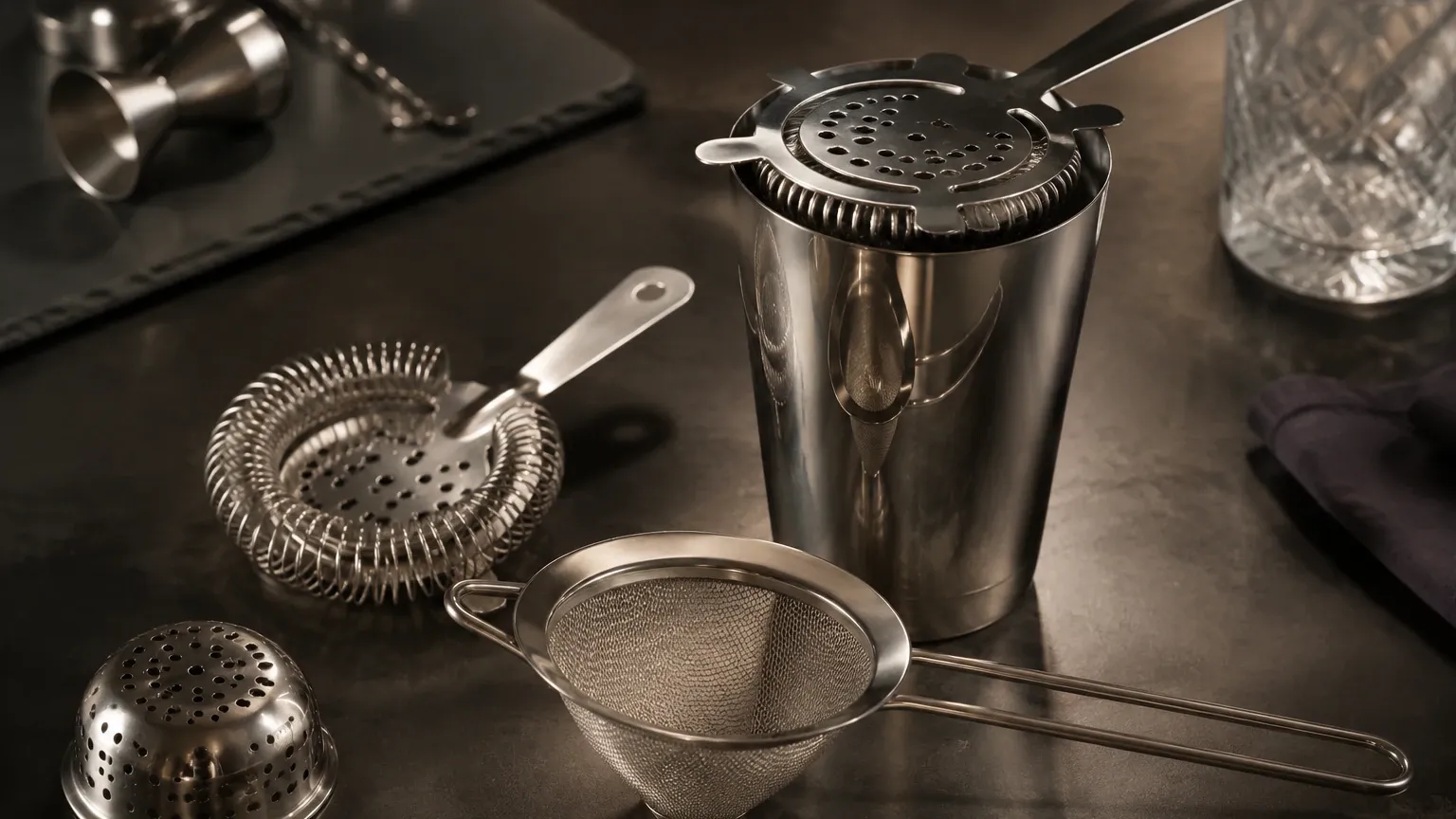
In the high-precision world of industrial beverage production and liquid processing, the clarity and purity of the final product are paramount. Achieving these standards requires a deep understanding of mechanical separation, specifically through the use of industrial-grade filtration components. While the term "strainers cocktail" often evokes images of professional barware, from an engineering and OEM perspective, it refers to the precision-engineered mesh and perforated components used in the large-scale production of clarified spirits, syrups, and botanical extracts.
For manufacturers and engineers, selecting the right Strainers & Baskets is not merely about removing large debris; it is about managing flow dynamics, ensuring food safety compliance, and maintaining consistent filtration performance under pressure. This article examines the technical considerations, material science, and engineering requirements for industrial strainers used in the beverage and liquid processing sectors.
Engineering Principles of Industrial Strainers & Baskets
Industrial strainers are the first line of defense in any fluid handling system. Their primary function is to protect downstream equipment—such as pumps, valves, and heat exchangers—from particulate damage while ensuring the fluid meets specific clarity requirements. In the context of beverage manufacturing, where "strainers cocktail" components are integrated into larger processing units, several engineering factors must be considered.
1. Mechanical Strength and Structural Integrity
Unlike consumer-grade tools, industrial basket strainers must withstand significant differential pressure ($ΔP$). As the mesh captures particles, the resistance to flow increases. If the basket is not engineered with sufficient structural support—often utilizing a perforated metal backup cylinder—the fine wire mesh can collapse or bypass. Engineers must calculate the maximum expected pressure drop to ensure the strainer housing and the internal basket remain intact during high-volume production cycles.
2. Effective Filtration Area (EFA)
The ratio of the open area of the strainer to the cross-sectional area of the inlet pipe is a critical metric. A higher EFA reduces the frequency of cleaning and lowers the initial pressure drop. For precision applications involving fine particulates, such as botanical infusions or fruit pulp removal, maximizing the EFA through pleated mesh or optimized basket geometry is essential for operational efficiency.
Material Selection: Why Stainless Steel is Mandatory
In the production of ingredients for the beverage industry, material compatibility is non-negotiable. The corrosive nature of fruit acids, the high alcohol content of spirits, and the rigorous cleaning chemicals used in Clean-in-Place (CIP) cycles demand high-performance alloys.
SS304 vs. SS316L
While Stainless Steel 304 is suitable for many general-purpose industrial applications, SS316L is the preferred choice for the "strainers cocktail" manufacturing process. The addition of molybdenum in SS316L provides superior resistance to pitting and crevice corrosion, particularly in environments containing chlorides or organic acids. Furthermore, the "L" (low carbon) variant ensures that the welded sections of the Strainers & Baskets remain resistant to intergranular corrosion, which is vital for maintaining the structural integrity of the filter over years of service.
Surface Finish and Hygiene
For food and beverage applications, the surface roughness (Ra) of the filtration component is critical. A smooth, electropolished surface prevents bacterial adhesion and ensures that the strainer can be thoroughly sanitized. Industrial manufacturers like Kaifil prioritize these finishes to meet stringent global hygiene standards, ensuring that no residual matter from previous batches contaminates the current production run.
Understanding "Strainers Cocktail" in Industrial Beverage Production
When we discuss strainers cocktail components in a B2B or OEM context, we are typically referring to the fine-mesh inserts and precision-perforated baskets used in the clarification of liquids. These components are designed to handle specific challenges inherent in beverage processing.
Fine Mesh and Micron Ratings
The removal of microscopic solids requires precise micron ratings. A standard "strainers cocktail" component might utilize a Dutch weave or a square weave wire mesh.
- Square Weave: Provides high flow rates and is ideal for coarse straining (e.g., removing seeds or large pulp).
- Dutch Weave: Offers a much tighter pore structure, capable of retaining particles down to the 5–10 micron range, which is necessary for achieving the "crystal clear" appearance required in premium spirits and cocktail bases.
The Role of Perforated Supports
Fine mesh is inherently delicate. In industrial basket strainers, the mesh is often sintered or mechanically fastened to a perforated metal basket. This hybrid construction allows the component to provide the fine filtration of a "strainers cocktail" tool with the rugged durability of an industrial pressure vessel component.
Customization Options for OEM Beverage Filtration
No two production lines are identical. Customization is the cornerstone of effective industrial filtration. When sourcing Strainers & Baskets, engineers must confirm several customization parameters with their manufacturer:
1. Connection Types: Whether the system requires NPT threads, flanged connections, or sanitary tri-clamp fittings, the strainer housing must integrate seamlessly into the existing piping architecture.
2. Handle and Lifting Mechanisms: For large-scale baskets, ease of removal is a safety and efficiency concern. Custom handles or heavy-duty lifting lugs are often integrated into the design.
3. Multi-Stage Filtration: Some applications require a "basket-within-a-basket" design. This allows for graduated filtration, where a coarse outer basket protects a fine inner mesh, significantly extending the service life of the fine filter media.
Performance Metrics: Flow Rate and Pressure Drop
Selecting a strainer based solely on pipe size is a common engineering error. The selection must be based on the fluid's viscosity, the specific gravity, and the allowable pressure drop.
Viscosity Considerations
In the production of cocktail syrups or liqueurs, the fluid viscosity can be significantly higher than that of water. High-viscosity fluids require larger surface areas and potentially coarser mesh to prevent excessive pressure buildup. Failure to account for viscosity can lead to pump cavitation and reduced throughput.
Flow Velocity
To prevent erosion of the mesh and to ensure effective particle capture, flow velocity through the strainer media should generally be kept within specific limits (typically below 5-10 feet per second for liquids). If the velocity is too high, particles can be forced through the mesh (deformable solids) or cause premature wear on the wire strands.
Maintenance and Longevity in High-Volume Production
The total cost of ownership (TCO) of a filtration system is heavily influenced by its maintenance requirements. Industrial Strainers & Baskets are designed for longevity, but their performance depends on a disciplined maintenance schedule.
- Differential Pressure Monitoring: Installing pressure gauges upstream and downstream of the strainer is the most effective way to determine when a basket needs cleaning. A sudden jump in $ΔP$ indicates a clog, while a sudden drop could indicate a media breach.
- Cleaning Protocols: Stainless steel baskets can be cleaned via backwashing, ultrasonic cleaning, or chemical soaking. The choice of cleaning method should be based on the nature of the contaminant (e.g., organic proteins vs. inorganic minerals).
- Gasket and Seal Replacement: Even the highest quality stainless steel strainer relies on elastomeric seals (such as EPDM, Viton, or PTFE) to prevent bypass. These seals should be inspected and replaced regularly to ensure system integrity.
Conclusion: Choosing the Right Filtration Partner
For engineers and purchasing teams, the procurement of strainers cocktail components and industrial Strainers & Baskets requires a partner who understands the intersection of material science and fluid dynamics. Kaifil provides the technical expertise necessary to design and manufacture filtration solutions that meet the rigorous demands of the beverage, pharmaceutical, and chemical industries.
By focusing on high-quality stainless steel construction, precise micron ratings, and customized engineering, manufacturers can ensure their processes remain efficient, their equipment remains protected, and their final products meet the highest standards of clarity and purity. When evaluating your next filtration project, consider the mechanical stresses, the chemical environment, and the specific particulate challenges to select a solution that delivers long-term reliability and performance.
