


Strainers Crossword Clue
In the world of puzzles and word games, a "strainers crossword clue" often leads to simple answers like "sieve," "filter," or "colander." However, for engineers and procurement professionals in the industrial sector, these terms represent critical components designed to protect downstream equipment, ensure product purity, and maintain the integrity of complex fluid systems. While a crossword puzzle might treat these words as interchangeable synonyms, the technical distinctions between various types of Strainers & Baskets are fundamental to operational efficiency and system longevity.
Industrial filtration is a precise science where the selection of a strainer is dictated by fluid viscosity, flow rate, pressure requirements, and the specific characteristics of the contaminants being removed. Understanding the engineering behind these components is essential for moving beyond the basic definitions found in a crossword and into the practical application of industrial fluid management.
The Technical Vocabulary of Filtration: Beyond the Crossword
When searching for a strainers crossword clue, the most common five-letter answer is "sieve." In a laboratory or industrial setting, a sieve refers to a device used for separating particles by size, often using a woven wire mesh. However, in heavy industry, the terminology becomes more specialized.
Strainers vs. Filters
While often used synonymously in casual conversation, there is a distinct engineering difference between a strainer and a filter. A strainer is typically used to remove larger, macroscopic particles from a liquid or gas stream. Its primary purpose is often the protection of pumps, valves, and meters from damage caused by debris. Filters, conversely, are designed to remove much smaller, microscopic particles, often measured in sub-micron levels. Strainers are generally designed to be cleaned and reused, whereas many industrial filters utilize disposable cartridges or bags.
The Role of the Basket
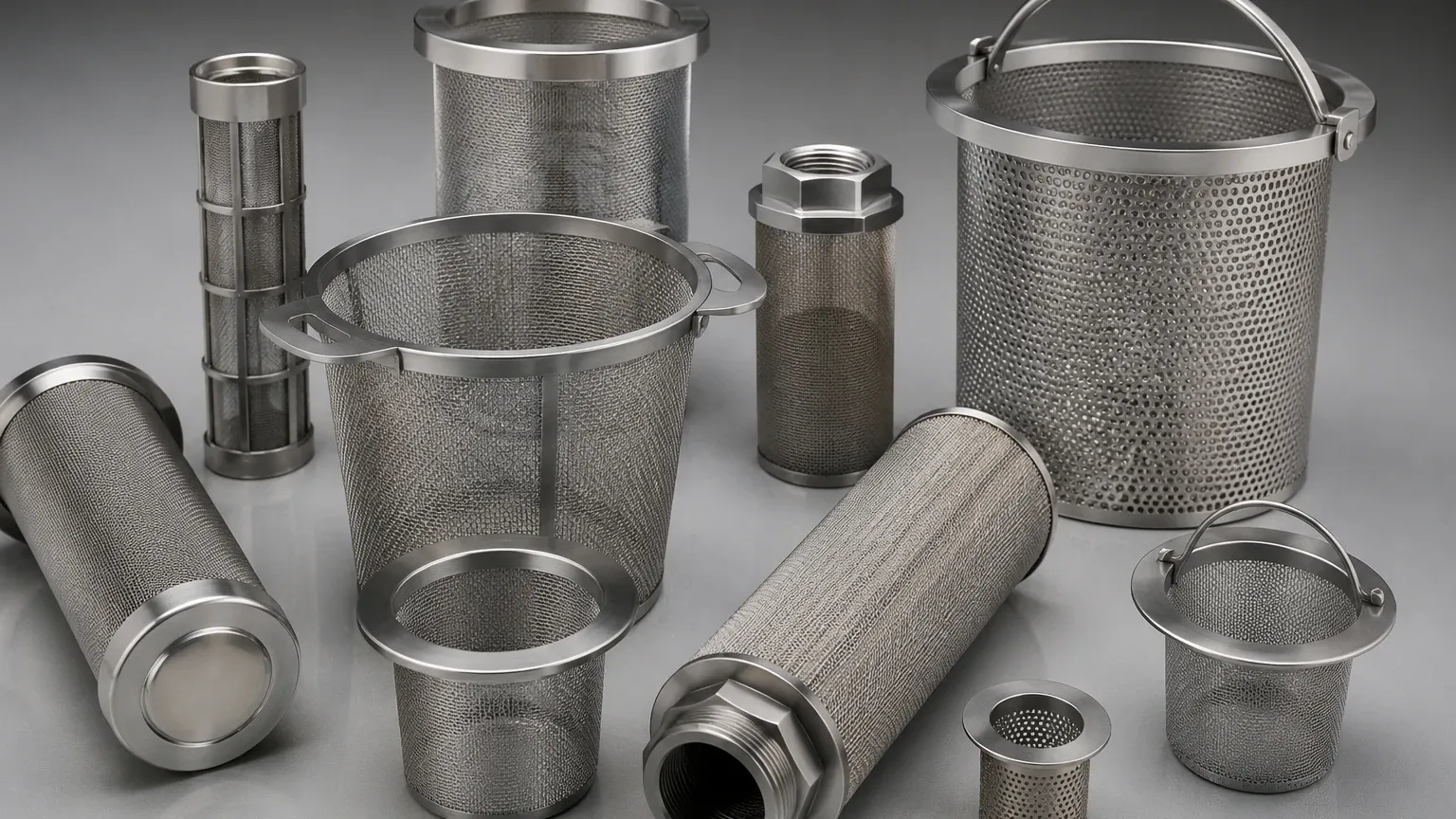
In the context of industrial equipment, a "basket" refers to the internal, removable component of a strainer that captures the debris. These baskets are constructed from perforated metal or woven wire mesh, depending on the required filtration accuracy. The design of the basket—its surface area, depth, and material—directly impacts the performance of the entire system.
Engineering Specifications of Industrial Strainers
Selecting the correct strainer requires a deep dive into technical specifications that go far beyond a dictionary definition. Engineers must evaluate several key factors to ensure the component can withstand the rigors of the application.
Mesh and Micron Ratings
The most critical specification for any strainer is its filtration level. This is usually expressed in terms of mesh size or micron rating.
- Mesh Count: This refers to the number of openings per linear inch of the screen. A higher mesh count indicates smaller openings and finer filtration. For example, a 20-mesh screen has 20 openings per inch, while a 100-mesh screen has 100.
- Micron Rating: A micron (micrometer) is one-millionth of a meter. This rating defines the smallest particle size that the strainer is guaranteed to capture.
Open Area Ratio (OAR)
The Open Area Ratio is the relationship between the total area of the openings in the strainer basket and the internal cross-sectional area of the inlet pipe. A high OAR is desirable because it allows for a lower initial pressure drop and longer intervals between cleanings. In many industrial applications, an OAR of 6:1 or 8:1 is standard to ensure the system does not experience significant flow restriction as the basket begins to fill with debris.
Pressure and Temperature Ratings
Industrial strainers must be rated for the maximum operating pressure and temperature of the system. This is often dictated by ASME (American Society of Mechanical Engineers) standards. Common ratings include Class 150, 300, and 600. The choice of housing material—typically stainless steel or carbon steel—is influenced by these ratings and the chemical compatibility of the fluid.
Comparing Basket Strainers and Y-Strainers
In industrial piping systems, two primary designs dominate the market: the Y-strainer and the basket (or Simplex) strainer. Each serves a specific purpose based on the nature of the application.
Y-Strainers
Y-strainers are named for their shape and are most commonly used in pressurized lines, either for liquid or gas. They are particularly effective in applications where the amount of debris to be removed is relatively small. Because of their compact design, they can be installed horizontally or vertically. However, cleaning a Y-strainer usually requires stopping the flow and opening the blow-off connection, which can be less convenient for high-debris liquid systems.
Basket Strainers
Basket strainers are typically used in horizontal lines and are designed for applications requiring high flow rates and a larger dirt-holding capacity. The "basket" design allows for easier removal and cleaning. In many chemical processing and food production environments, basket strainers are preferred because they can hold significantly more solid waste before requiring maintenance, thereby reducing downtime.
Duplex Strainers
For systems that cannot be shut down for cleaning, duplex strainers are employed. These consist of two separate strainer chambers connected by a diverter valve. When one basket becomes full, the flow is switched to the other chamber, allowing the operator to clean the first basket without interrupting the process. This is a critical requirement in continuous flow industries like power generation or oil refining.
Material Science in Strainer Construction
The durability of a strainer is largely determined by its material composition. Stainless steel is the industry standard for high-performance applications due to its corrosion resistance and mechanical strength.
Type 304 Stainless Steel
Type 304 is the most common grade of stainless steel used in filtration. It provides excellent resistance to a wide range of atmospheric environments and many corrosive media. It is frequently used in food and beverage processing where hygiene and oxidation resistance are paramount.
Type 316 and 316L Stainless Steel
For more aggressive environments, such as those involving chlorides or high-salinity fluids, Type 316 stainless steel is preferred. The addition of molybdenum enhances its corrosion resistance, particularly against pitting. 316L, the low-carbon version, is used in applications requiring extensive welding, as it minimizes carbide precipitation that can lead to corrosion at the weld sites.
Specialty Alloys
In extreme cases involving highly acidic or alkaline fluids at high temperatures, specialty alloys like Hastelloy, Monel, or Inconel may be used for the strainer mesh and housing. These materials ensure that the filtration system does not become a point of failure in the plant's infrastructure.
Customization and OEM Manufacturing for Specific Applications
Standard off-the-shelf strainers do not always meet the unique requirements of specialized industrial processes. This is where custom OEM (Original Equipment Manufacturer) solutions become vital. Manufacturers like Kaifil specialize in developing bespoke Strainers & Baskets tailored to specific engineering challenges.
Custom Mesh Configurations
Depending on the fluid's viscosity and the nature of the solids, a standard woven mesh might not be sufficient. Custom solutions can include multi-layered sintered mesh for high-pressure environments or reinforced perforated metal baskets for heavy-duty debris removal. Sintering involves bonding multiple layers of wire mesh together using heat and pressure, creating a filter medium that is exceptionally strong and easy to backwash.
Dimensional Customization
In retrofit projects, new strainers must often fit into existing piping footprints with limited space. Custom-fabricated strainer housings can be designed with specific inlet and outlet orientations, flange types (such as ANSI, DIN, or JIS), and overall dimensions to ensure seamless integration into the current system.
Specialized Coatings and Finishes
For pharmaceutical or food-grade applications, the surface finish of the strainer is critical. Electropolishing can be applied to stainless steel strainers to create a smooth, mirror-like finish that prevents bacterial growth and makes the component easier to sanitize. Additionally, specialized coatings can be applied to provide extra chemical resistance or to reduce friction in high-velocity systems.
Operational Considerations: Maintenance and Pressure Drop
A common question among maintenance engineers is: "When should I clean the strainer?" The answer lies in monitoring the pressure drop across the unit.
Monitoring Differential Pressure
As debris accumulates in the basket, the available open area decreases, causing the pressure on the outlet side to drop relative to the inlet side. This difference is known as differential pressure ($ΔP$). Most industrial systems are equipped with differential pressure gauges. A common rule of thumb is to clean or replace the basket when the $ΔP$ reaches 10-15 psi, although this varies based on the specific system design.
Total Cost of Ownership (TCO)
When evaluating strainers, it is important to look beyond the initial purchase price. The total cost of ownership includes the cost of downtime for cleaning, the cost of replacement parts, and the energy costs associated with pumping fluid through a restricted strainer. Investing in a high-quality stainless steel basket with a larger open area can lead to significant long-term savings by extending cleaning intervals and reducing pump strain.
Proper Installation Practices
To ensure optimal performance, strainers must be installed correctly. For basket strainers, this means ensuring they are level and that there is sufficient clearance above the unit to remove the basket. For Y-strainers in steam lines, the "leg" of the Y should point horizontally to prevent condensate from pooling, which can cause water hammer and damage the equipment.
Selecting the Right Filtration Partner
While a "strainers crossword clue" might be a simple diversion, selecting the right industrial strainer is a complex decision that impacts the safety and efficiency of an entire facility. Partnering with a manufacturer that understands the nuances of material science, fluid dynamics, and custom fabrication is essential.
Kaifil provides a comprehensive range of stainless steel filtration solutions, from standard wire mesh components to fully customized basket strainers designed for the most demanding industrial environments. By focusing on precision manufacturing and engineering support, Kaifil helps technical teams solve filtration challenges that go far beyond the basics of a dictionary definition.
Whether you are designing a new hydraulic system, upgrading a chemical processing line, or seeking reliable OEM components for water treatment, understanding the technical specifications of Strainers & Baskets is the first step toward achieving optimized process performance. For more information on selection criteria, material compatibility, or custom designs, consult with technical experts who can provide data-driven recommendations tailored to your specific application requirements.
