


Y Type Strainers in India
In the diverse industrial landscape of India, the protection of sensitive pipeline components is a critical engineering priority. From the massive chemical complexes in Gujarat to the pharmaceutical hubs in Hyderabad and the food processing units in Maharashtra, the demand for high-performance filtration solutions is constant. Among these solutions, Y-type strainers serve as the primary line of defense, removing unwanted solids from liquid, gas, or steam lines through a perforated or wire mesh straining element.
For engineers and procurement teams sourcing Strainers & Baskets, understanding the technical nuances of Y-type strainers is essential for maintaining system integrity, reducing downtime, and optimizing the total cost of ownership. This guide explores the engineering considerations, material standards, and selection criteria relevant to the application of y type strainers in india.
The Role of Y-Type Strainers in Industrial Pipeline Systems
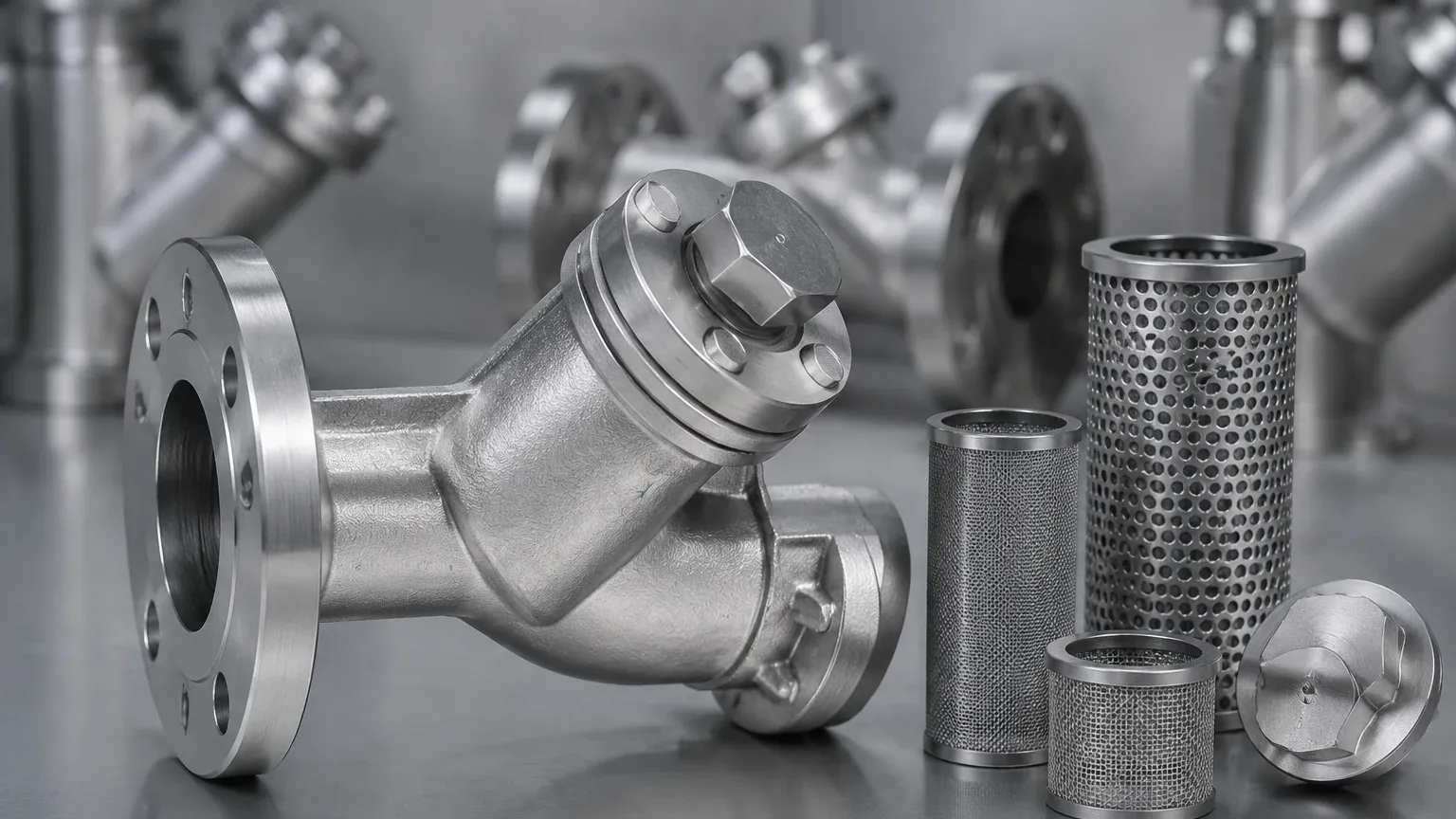
A Y-type strainer derives its name from its configuration, which resembles the letter "Y." This design allows the straining element—typically a stainless steel mesh or perforated plate—to be housed in a branch that intersects the main flow path at an angle. As fluid passes through the strainer, debris is trapped within the basket or mesh insert, while the cleaned fluid continues downstream.
The primary advantage of the Y-type design is its versatility. Unlike T-type or basket strainers, Y-strainers can be installed in either horizontal or vertical positions (provided the flow is downward in vertical applications). This flexibility is particularly valuable in the often-congested piping layouts found in Indian industrial facilities, where space optimization is a key design constraint.
Engineering Advantages
1. Compact Footprint: They require less space than basket strainers of equivalent pipe size.
2. Pressure Capability: Due to their cylindrical shape and robust construction, they can handle higher pressures than many other strainer types.
3. Ease of Cleaning: Many units are equipped with a blow-off port in the strainer cap, allowing for the removal of accumulated debris without stopping the flow or opening the strainer body.
Material Selection and Engineering Standards for the Indian Market
When evaluating y type strainers in india, material selection is the most significant factor influencing longevity and performance. The choice of material must align with the chemical properties of the fluid, the operating temperature, and the external environment.
Stainless Steel (SS304 and SS316)
Kaifil specializes in stainless steel filtration components because of the material's superior resistance to corrosion and oxidation. In Indian industries, SS304 is often the standard for general-purpose applications, including water treatment and mild chemical processing. However, for pharmaceutical and food-grade applications, or for environments exposed to chlorides (such as coastal industrial zones), SS316 or SS316L is preferred due to its molybdenum content, which provides enhanced resistance to pitting and crevice corrosion.
Pressure and Temperature Ratings
Engineers must ensure that the strainer body and the internal mesh are rated for the maximum operating pressure (MOP) and temperature of the system. In India, projects often adhere to ASME B16.34 standards for pressure-temperature ratings. Common pressure classes include Class 150, 300, and 600. Using an under-rated strainer can lead to catastrophic housing failure, while over-specifying can unnecessarily inflate project costs.
Key Performance Indicators: Pressure Drop and Filtration Efficiency
The efficiency of a strainer is not merely defined by what it catches, but by how it affects the overall system flow. For technical professionals, the relationship between mesh size and pressure drop ($\\Delta P$) is the most critical calculation.
Understanding Mesh and Micron Sizes
Filtration accuracy is measured in mesh or microns. A higher mesh count indicates a finer screen with smaller openings.
* Coarse Filtration: Used for protecting pumps from large debris (e.g., 20 to 40 mesh).
* Fine Filtration: Used for protecting spray nozzles or sensitive instrumentation (e.g., 100 to 200 mesh).
It is a common engineering mistake to specify a mesh that is too fine for the application. While a finer mesh captures more particles, it also creates a higher initial pressure drop and requires more frequent cleaning. The goal should be to select the coarsest mesh that still protects the downstream equipment.
Calculating Allowable Pressure Drop
The total pressure drop across a Y-type strainer is the sum of the drop across the body and the drop across the clean straining element. As debris accumulates, the $\\Delta P$ increases. Engineers typically design systems with a maximum allowable pressure drop (often 2 psi for clean strainers). If the pressure drop exceeds this limit, it can lead to cavitation in pumps or reduced flow rates that compromise process efficiency.
Customization and OEM Capabilities in Strainer Design
Standard off-the-shelf strainers may not meet the specific requirements of complex industrial processes. This is where customized Strainers & Baskets become necessary. Customization allows for the optimization of the filtration area, material thickness, and connection types.
Custom Mesh Inserts
Kaifil provides tailored wire mesh solutions where the internal element is reinforced to withstand high differential pressures. For high-viscosity fluids common in the Indian oil and gas or chemical sectors, a standard mesh might collapse under pressure. Reinforced baskets with internal or external support structures ensure structural integrity.
Connection Types
Depending on the piping standards used in a specific Indian facility, strainers may require different end connections:
* Flanged Ends: Common for larger pipe sizes and high-pressure applications.
* Threaded (NPT/BSP): Used for smaller diameter pipes.
* Socket Weld: Preferred in high-temperature and high-pressure systems where leak prevention is paramount.
Special Coatings and Finishes
In the food and beverage industry, the internal and external surfaces of the strainer may require electro-polishing to achieve a specific Ra (Roughness Average) value, ensuring that no bacteria can thrive in surface microscopic crevices.
Maintenance, Cleaning, and Replacement Protocols
The effective lifespan of y type strainers in india depends heavily on maintenance practices. In many Indian industrial regions, water quality can vary significantly, leading to faster scaling or debris accumulation than anticipated in standard design models.
The Blow-Off Valve
A blow-off valve installed on the strainer cap allows for "on-the-fly" cleaning. By opening the valve, the internal pressure forces the accumulated debris out through the blow-off port. However, this is only effective for loose debris. For sticky or fibrous materials, the strainer must be opened, and the element must be manually cleaned.
Indicators for Replacement
Engineers should monitor the following signs that a strainer element requires replacement rather than just cleaning:
* Permanent Deformation: If the mesh or perforated plate is buckled, it indicates it has been subjected to pressure beyond its design limit.
* Mesh Blinding: In some cases, particles become so deeply embedded in the wire mesh that they cannot be removed, permanently increasing the pressure drop.
* Corrosion: Any signs of thinning or pitting on the stainless steel element suggest that the material is not compatible with the fluid and should be upgraded to a higher grade of stainless steel or a specialized alloy.
Sourcing and Evaluating Y-Type Strainers for Large-Scale Projects
For purchasing teams in India, evaluating a supplier goes beyond the unit price. The total cost of ownership includes the initial purchase, installation costs, maintenance frequency, and the cost of potential downtime if the strainer fails.
Verification of Factual Specifications
When sourcing, ensure the manufacturer provides:
* Material Test Reports (MTRs): To verify the grade of stainless steel.
* Hydro-test Certificates: To ensure the body can withstand the rated pressure.
* Flow Coefficient (Cv) Data: To allow engineers to accurately model the pressure drop in their system designs.
The Importance of Local Context
In the Indian market, logistics and technical support are vital. Choosing a manufacturer like Kaifil, which understands the rigorous demands of global industrial standards while providing the flexibility of custom OEM designs, allows Indian firms to balance performance with cost-effectiveness.
Conclusion
Y-type strainers are indispensable components for the protection of industrial infrastructure. By focusing on high-quality materials, precise filtration ratings, and robust engineering designs, facilities can ensure long-term operational stability. Whether the application is a simple water line or a complex chemical reactor feed, selecting the right Strainers & Baskets is a foundational step in industrial excellence. For those seeking y type strainers in india, the priority remains a balance of technical compliance, material integrity, and application-specific customization.
