


Wedge Wire Screens
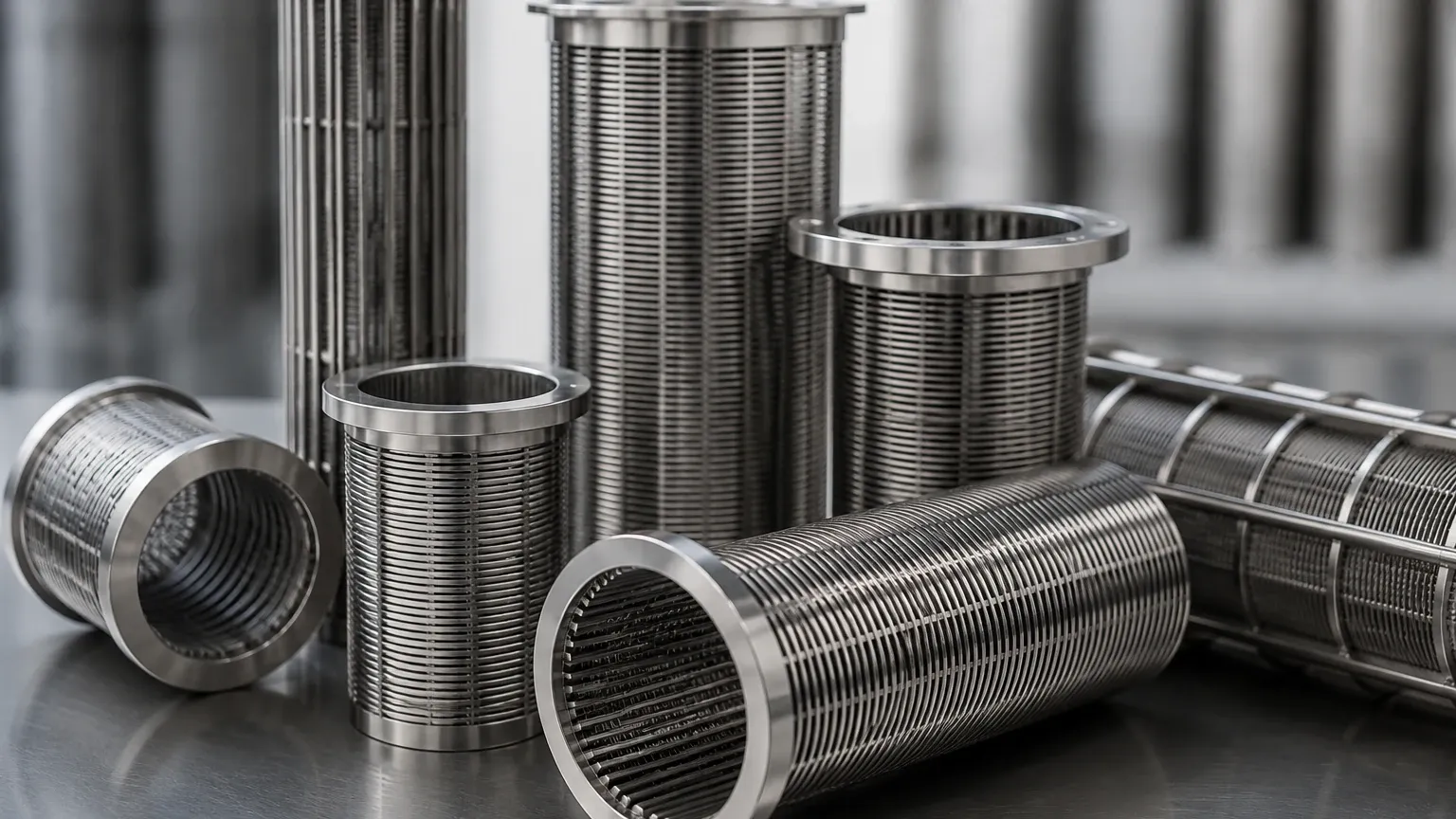
In industrial filtration and separation processes, the choice of filter media directly impacts operational efficiency, maintenance frequency, and the purity of the final product. Among the various technologies available, wedge wire screens stand out as a premier solution for demanding applications that require high mechanical strength, precise filtration accuracy, and a non-clogging design. These screens are engineered from V-shaped profile wires that are resistance-welded onto support rods, creating a robust, continuous slot that facilitates efficient solid-liquid or solid-gas separation.
For engineers and procurement professionals, understanding the technical nuances of wedge wire construction is essential for optimizing system performance. Unlike woven wire mesh or perforated plates, wedge wire offers a unique geometry that addresses the primary challenges of industrial filtration: pressure drop, blinding, and structural integrity under high-load conditions.
Technical Principles and Structural Design
The fundamental advantage of Wedge Wire Screens lies in their V-shaped profile. This design creates a slot that widens inwardly, ensuring that any particle passing through the narrowest point of the opening will continue through the screen without becoming trapped. This "two-point contact" principle is the primary reason why wedge wire is considered a non-clogging medium.
The Resistance Welding Process
During manufacturing, the profile wire is wrapped around longitudinal support rods. At every intersection, the wire is fused to the rod through high-precision resistance welding. This creates a single, integrated structure that can withstand significant internal or external pressure without deforming. The spacing between the profile wires determines the slot width, which can be controlled with extreme precision—often down to 20 microns depending on the application requirements.
Profile Wire vs. Support Rod Geometry
Engineers must specify both the profile wire shape and the support rod configuration. A deeper profile wire provides higher wear resistance and greater structural rigidity, which is vital for abrasive applications like mining or heavy-duty pulp processing. Conversely, thinner profile wires maximize the open area, reducing pressure drop and increasing flow rates in water treatment or food processing systems.
Material Selection and Corrosion Resistance
Material science plays a critical role in the longevity of filtration components. Because wedge wire screens are frequently exposed to corrosive chemicals, high temperatures, and abrasive slurries, selecting the correct alloy is a prerequisite for a successful installation.
* Stainless Steel 304/304L: The standard choice for general industrial applications where moderate corrosion resistance is required. It is widely used in food and beverage processing due to its hygienic properties.
* Stainless Steel 316/316L: Contains molybdenum, which provides superior resistance to chlorides and pitting. This is the preferred material for marine environments, pharmaceutical manufacturing, and chemical processing.
* Duplex and Super Duplex Steels: For extreme environments involving high pressure and highly corrosive media, Duplex alloys offer nearly double the yield strength of standard austenitic steels and exceptional resistance to stress corrosion cracking.
* Specialty Alloys: In specific petrochemical or high-temperature applications, alloys such as Hastelloy or Monel may be utilized to ensure the screen maintains its structural integrity under aggressive chemical attack.
Beyond the base material, surface treatments such as electropolishing or pickling and passivation can be applied to further enhance corrosion resistance and create a smoother surface finish, which is particularly important in sanitary applications to prevent bacterial growth.
Flow Dynamics and Performance Metrics
When evaluating wedge wire screens, the "Open Area" calculation is a primary metric. The open area is the ratio of the total slot area to the total screen surface area. A higher open area results in a lower approach velocity, which reduces the risk of particle impingement and minimizes the pressure drop across the screen.
Calculating Open Area
The formula for open area in a wedge wire screen is:
*Open Area (%) = (Slot Width / (Slot Width + Wire Width)) x 100*
For example, a screen with a 0.5mm slot and a 1.5mm wire width would have a 25% open area. Engineers must balance the need for a high open area with the mechanical strength required to support the differential pressure (ΔP). If the slot width is too wide relative to the wire width, the screen may fail under the mechanical load of the fluid or the accumulated solids.
Flow Direction Configurations
Wedge wire screens can be designed for two primary flow directions, which must be specified during the design phase:
1. Flow-In-To-Out (FITO): The profile wire is on the inside of the cylinder, and the support rods are on the outside. This is common in centrifuge baskets and internal drum filters.
2. Flow-Out-To-In (FOTI): The profile wire is on the outside, and the support rods are on the inside. This is the standard configuration for intake screens, well screens, and many cartridge filters.
Industrial Applications and Use Cases
The versatility of wedge wire allows it to be integrated into a vast array of industrial equipment. Its ability to be fabricated into flat panels, curved sieves, cylinders, and conical shapes makes it adaptable to various machinery.
Water Treatment and Intake Systems
In municipal and industrial water treatment, wedge wire is used for intake screens to protect pumps and downstream equipment from debris. The low-velocity flow through the slots helps protect aquatic life while providing a reliable barrier against large contaminants. Additionally, wedge wire is the industry standard for resin traps in ion exchange and carbon filtration systems, preventing the loss of expensive media in the event of a lateral failure.
Food and Beverage Processing
In the brewing industry, wedge wire lauter tun screens provide a precise and durable base for the grain bed, allowing for efficient wort separation. In sugar processing, these screens are used in continuous centrifugals to separate sugar crystals from molasses. The smooth surface and precise slots ensure high throughput and minimal product loss.
Petrochemical and Refining
Refineries utilize wedge wire for reactor internals, including center pipes, outer baskets, and support grids. These components must withstand high temperatures and significant mechanical stress while maintaining precise flow distribution. The rigid construction of wedge wire prevents the migration of catalyst beads, ensuring the stability of the chemical reaction.
Pulp and Paper
Wedge wire is used in pressure screens for pulp cleaning and fractionation. The high mechanical strength allows the screens to handle the high-frequency pulses generated by the rotors, while the precise slots ensure that contaminants like shives and plastics are efficiently removed from the fiber stream.
Maintenance, Cleaning, and Longevity
One of the most significant advantages of wedge wire over other filter media is its ease of cleaning. The V-shaped slot facilitates effective backwashing or back-pulsing. Because the slots widen inwardly, solids are easily dislodged when the flow is reversed, restoring the screen to its original flow capacity.
Mechanical Cleaning Methods
In many applications, such as rotating drum screens, mechanical scrapers or brushes are used to remove accumulated solids from the surface. The flat, smooth surface of the profile wire allows these cleaning mechanisms to operate with minimal wear on the screen itself. In high-solids applications, automated self-cleaning filters utilizing wedge wire elements significantly reduce manual labor and downtime.
Monitoring Wear and Replacement Cycles
While wedge wire is exceptionally durable, it is not immune to wear, especially in abrasive environments. Regular inspection should focus on slot width consistency. If the profile wires become worn down, the slot width may increase, leading to a loss of filtration accuracy. Conversely, in chemical applications, any signs of pitting or stress corrosion cracking should be addressed immediately to prevent catastrophic structural failure.
Engineering Selection Guide: Key Considerations
Before finalizing a specification for wedge wire screens, engineers should confirm the following parameters with the manufacturer to ensure the component is fit for purpose:
1. Slot Width Precision: Determine the required filtration rating. For fine particles, slot widths as small as 20-50 microns may be necessary, whereas coarse separation may require 2mm or larger.
2. Differential Pressure (ΔP): Calculate the maximum expected pressure drop across the screen, including potential surges. This determines the required support rod spacing and wire profile size.
3. Flow Rate and Velocity: Ensure the open area is sufficient to maintain the desired flow rate without exceeding the maximum allowable approach velocity.
4. Chemical Compatibility: Verify that the selected alloy can withstand the process fluid, including cleaning agents (CIP) and potential temperature fluctuations.
5. Mechanical Interface: Specify the required end fittings, such as flanges, threaded connectors, or reinforced rings, to ensure a leak-proof installation within the existing housing.
By focusing on these technical details, procurement teams can move beyond commodity-based purchasing and invest in filtration solutions that offer a lower total cost of ownership through extended service life and improved process yield. As a specialized manufacturer, Kaifil provides the engineering expertise necessary to customize Wedge Wire Screens for the most demanding industrial environments, ensuring that every component meets the exact performance requirements of the application.
