


Industrial Engineering Guide: Maintenance and Cleaning Wire Mesh Filter Systems
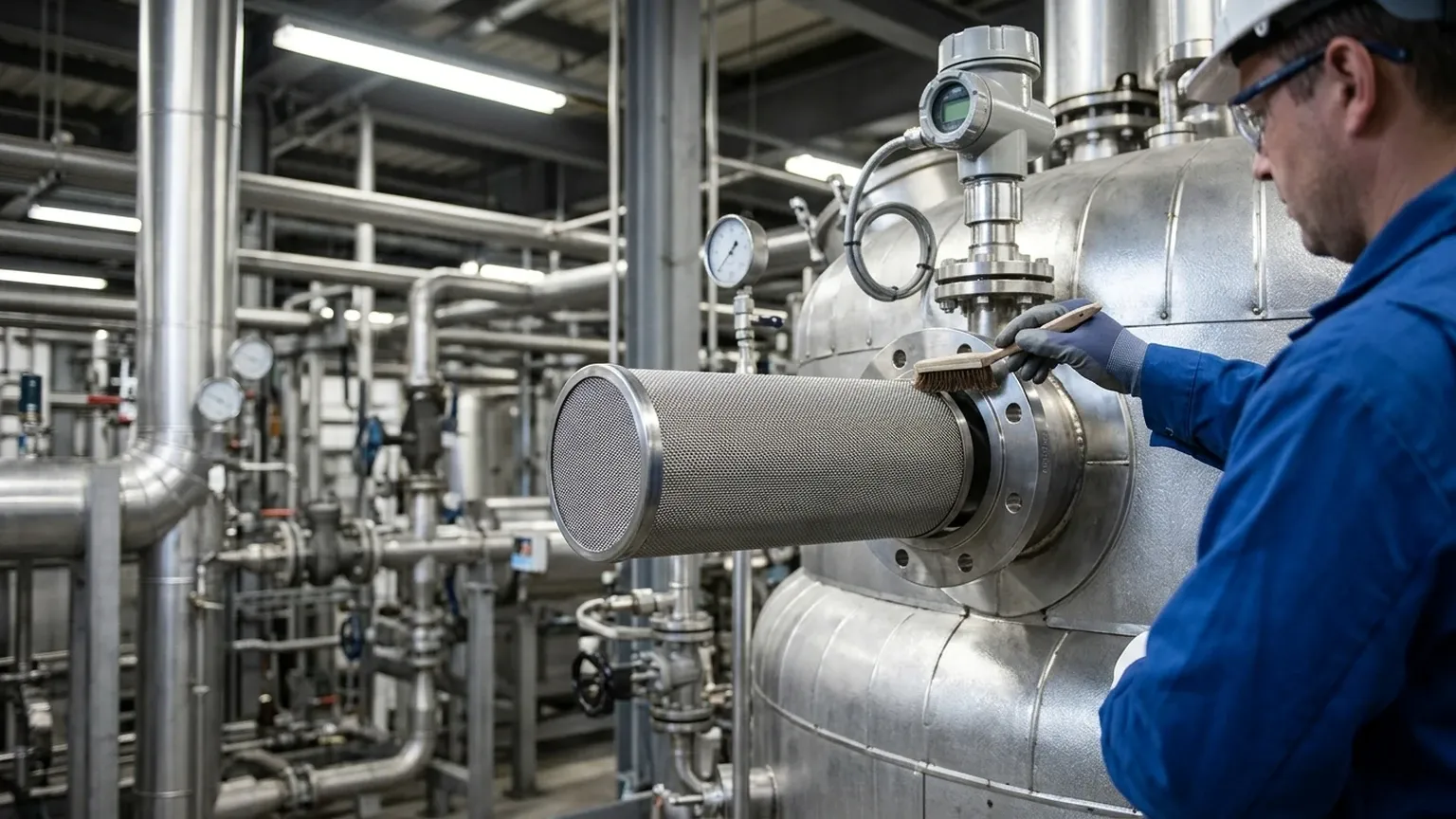
In industrial filtration, the transition from disposable media to reusable stainless steel components represents a significant shift toward operational efficiency and sustainability. Central to this shift are Wire Mesh Filter Cylinders & Tubes, which offer the mechanical strength and chemical resistance required for demanding applications in chemical processing, hydraulic systems, and food production. However, the long-term performance of these components is entirely dependent on the efficacy of the maintenance protocol. Understanding the technical nuances of cleaning wire mesh filter elements is essential for engineers and plant managers looking to optimize flow rates and extend the service life of their filtration hardware.
The Engineering of Wire Mesh Filter Cylinders & Tubes
Before addressing cleaning protocols, it is necessary to understand the construction of the filter itself. Industrial wire mesh filters are typically fabricated from stainless steel alloys, most commonly AISI 304 or 316L, due to their corrosion resistance and ability to withstand high thermal loads.
These filters are engineered in various configurations, including single-layer tubes or multi-layer sintered cylinders. In multi-layer designs, a fine filtration mesh is sandwiched between coarser support layers. This structure provides the necessary rigidity to withstand high differential pressures without deforming the delicate filter media. The choice of weave—whether plain, twill, or Dutch weave—determines the pore size and the particle retention characteristics. For instance, Dutch weave patterns provide a tortuous path that excels in fine filtration but requires more rigorous cleaning methods compared to simpler square meshes.
Why Cleaning is Critical: The Impact of Pressure Drop
In any industrial filtration circuit, the "clean pressure drop" is the baseline resistance of the filter media when it is new or fully regenerated. As the process fluid passes through the mesh, suspended solids are trapped on the surface (surface filtration) or within the mesh structure (depth filtration).
As these particles accumulate, they form a "filter cake." While this cake can initially improve filtration efficiency by capturing smaller particles, it also increases the resistance to flow. This results in a rising differential pressure ($ΔP$). If the $ΔP$ exceeds the design limit of the filter housing or the structural integrity of the wire mesh, several risks emerge:
1. Media Migration: The pressure may force the mesh to deform, potentially allowing contaminants to bypass the filter.
2. Pump Strain: Increased resistance forces pumps to work harder, leading to higher energy consumption and premature mechanical failure.
3. Collapse: In extreme cases, the internal support core of the filter cylinder may buckle under the external pressure.
Effective cleaning wire mesh filter procedures ensure that the differential pressure is returned to near-baseline levels, maintaining system equilibrium.
Technical Methods for Cleaning Wire Mesh Filters
The selection of a cleaning method depends on the nature of the contaminant (sticky, crystalline, abrasive) and the construction of the filter.
1. Backwashing and Backpulsing
Backwashing is the most common automated method for cleaning filters in situ. By reversing the flow of the process fluid (or using a separate cleaning fluid), particles lodged on the upstream side of the mesh are pushed off and flushed out through a drain valve.
* Backpulsing: This involves a high-pressure, short-duration burst of air or fluid. The sudden shockwave dislodges particles more effectively than a steady reverse flow, making it ideal for rigid Wire Mesh Filter Cylinders & Tubes.
* Engineering Consideration: The filter must be designed to handle reverse pressure. Without a robust internal support cage, backwashing can cause the mesh to balloon and rupture.
2. Ultrasonic Cleaning
For deep-seated contaminants or fine-micron meshes (below 40 microns), manual or backwash methods may be insufficient. Ultrasonic cleaning utilizes high-frequency sound waves to create cavitation bubbles in a cleaning solvent. When these bubbles implode near the mesh surface, they release energy that dislodges microscopic particles from the weave intersections.
* Advantage: This method is non-abrasive and reaches areas that are physically inaccessible.
* Requirement: The filter must be removed from the housing and placed in an ultrasonic bath, making this an offline cleaning process.
3. Chemical and Solvent Cleaning
In industries like chemical processing or polymer production, contaminants may be chemically bonded to the stainless steel. In such cases, the filter is soaked in caustic solutions, acids, or specialized solvents to dissolve the buildup.
* Compatibility: It is vital to ensure that the cleaning agent is compatible with the stainless steel grade (e.g., avoiding high-concentration chlorides which can cause pitting in 304/316 stainless steel) and any sealing materials like O-rings or gaskets.
4. Thermal Cleaning (Burn-off)
Used primarily in the plastics and fiber industries, thermal cleaning involves heating the filter in a controlled vacuum oven or fluidized bed to carbonize organic contaminants. Once the organic material is turned to ash, it can be removed via ultrasonic cleaning or high-pressure air.
Selection Criteria for Cleanable Filter Elements
When procuring Wire Mesh Filter Cylinders & Tubes, engineers must evaluate the "cleanability" of the design. A filter that is difficult to clean will have a higher total cost of ownership (TCO) due to frequent replacements and downtime.
* Material Grade: 316L stainless steel is preferred for applications involving corrosive cleaning agents or high-temperature sterilization (SIP).
* Weld Integrity: High-quality TIG or plasma welding ensures that the seams of the cylinder do not fail during high-pressure backpulsing or ultrasonic vibration.
* Micron Rating vs. Cleaning Method: Very fine meshes (1–10 microns) are delicate and may be damaged by high-pressure water jets. These typically require ultrasonic or chemical soaking.
* Surface Smoothness: Electropolished mesh surfaces can reduce particle adhesion, making the cleaning process faster and more effective.
Operational Risks and Maintenance Cycles
Establishing a maintenance cycle is a balance between maximizing uptime and protecting the equipment. Waiting too long to clean a filter can lead to "permanent fouling," where particles become so deeply embedded or compressed that no cleaning method can restore the original flow rate.
Common Application Risks:
* Cross-Contamination: In batch processing (e.g., food and beverage), improper cleaning can lead to residue from one batch contaminating the next.
* Fatigue: Repeated cleaning cycles, especially those involving high temperatures or pressure shocks, can eventually lead to metal fatigue. Regular visual inspections for broken wires or thinning mesh are mandatory.
Buyer’s Guide: Confirming Specifications for International Procurement
For international buyers and engineers, specifying the right filter requires clear communication with the manufacturer. When requesting a quote for custom stainless steel filtration solutions, ensure the following technical parameters are confirmed:
1. Operating Environment: Define the temperature, pressure, and chemical composition of the process fluid.
2. Contaminant Characteristics: Is the debris hard, soft, fibrous, or gelatinous? This dictates the mesh weave and the recommended cleaning method.
3. Dimensional Tolerances: For Wire Mesh Filter Cylinders & Tubes to seat correctly in existing housings, precise outer diameter (OD), inner diameter (ID), and length measurements are required.
4. End Cap Configuration: Specify if the filter needs double open ends (DOE), single open ends (SOE) with specific fittings like NPT threads, or flange mounts.
5. Cleaning Protocol Approval: Ask the manufacturer to verify if the proposed cleaning method (e.g., 100 psi backpulse) is within the structural limits of the filter design.
Conclusion
Stainless steel wire mesh filters are a cornerstone of modern industrial engineering, providing a durable and reusable alternative to disposable media. However, the economic and operational benefits of these systems are only realized through disciplined maintenance. By understanding the mechanical properties of Wire Mesh Filter Cylinders & Tubes and implementing the appropriate cleaning wire mesh filter techniques, industrial facilities can ensure consistent product quality, protect downstream equipment, and significantly reduce long-term filtration costs. Whether through automated backwashing or precision ultrasonic baths, the goal remains the same: maintaining the integrity of the filtration barrier while maximizing the lifecycle of the metal media.
