


Wire Mesh Circle Filter Manufacturer Delhi: Engineering and Selection Guide
In the landscape of industrial filtration, the precision of a filter component directly dictates the efficiency of the entire system. Among the various geometries used in industrial processing, wire mesh circle filters—often referred to as filter discs—serve as critical barriers against particulate contamination. For procurement officers and engineers searching for a wire mesh circle filter manufacturer delhi, understanding the technical nuances of material science, weave patterns, and structural integrity is essential for optimizing performance in chemical, pharmaceutical, and hydraulic applications.
While regional hubs like Delhi offer a concentrated market of fabricators, the selection of a filtration partner must be guided by rigorous engineering standards. Whether these filters are used as standalone discs or integrated into more complex Wire Mesh Filter Cylinders & Tubes, the quality of the wire cloth and the precision of the cutting process determine the filter's reliability under high-pressure conditions.
The Role of Precision Wire Mesh in Industrial Filtration
Wire mesh circle filters are primarily utilized for fine filtration in environments where polymer melts, hydraulic fluids, or chemical solvents must be cleared of microscopic debris. Unlike disposable paper or fiber filters, stainless steel wire mesh provides a permanent, cleanable, and heat-resistant solution.
Mechanical Integrity and Porosity
The performance of a circle filter is defined by its porosity and its ability to withstand differential pressure. In industrial settings, the "open area" percentage is a key metric. A higher open area allows for greater flow rates but may compromise the structural strength of the mesh if not supported correctly. Engineers must balance the required micron rating with the mechanical stresses the filter will encounter during the filtration cycle.
When sourcing from a wire mesh circle filter manufacturer delhi, it is vital to verify that the mesh count is consistent across the entire surface of the disc. Inconsistencies in the weave can lead to "channeling," where the fluid takes the path of least resistance through larger openings, thereby bypassing the intended filtration accuracy.
Material Engineering: Selecting the Right Alloy for Circle Filters
The choice of material is perhaps the most significant factor in the longevity of a filter. Industrial environments often involve corrosive fluids or extreme temperatures that would degrade standard carbon steel.
1. Stainless Steel 304: The most common grade, offering excellent durability and good corrosion resistance for general industrial use, such as water treatment and food processing.
2. Stainless Steel 316L: Containing molybdenum, this alloy provides superior resistance to chlorides and acids. It is the industry standard for pharmaceutical and marine applications where pitting corrosion is a risk.
3. Specialty Alloys: For highly specialized environments, materials like Monel, Inconel, or Hastelloy may be required to handle extreme chemical aggression or temperatures exceeding 800°C.
For components like Wire Mesh Filter Cylinders & Tubes, the compatibility of the alloy with the surrounding housing is also critical to prevent galvanic corrosion. A reputable manufacturer should provide Material Test Reports (MTRs) to certify the chemical composition of the wire used.
Evaluating a Wire Mesh Circle Filter Manufacturer in Delhi and Beyond
Delhi serves as a significant industrial cluster in Northern India, providing a wide array of metal fabrication services. However, for B2B buyers, the challenge lies in distinguishing between general-purpose mesh suppliers and specialized filtration engineers. When evaluating a wire mesh circle filter manufacturer delhi, consider the following technical benchmarks:
Precision Cutting Techniques
Circle filters must have clean, burr-free edges to ensure a proper seal within the filter housing. Manufacturing methods typically include:
* Die Stamping: Efficient for high-volume production of standard sizes. The tooling must be sharp to avoid deforming the mesh at the edges.
* Laser Cutting: Offers extreme precision for custom diameters and complex geometries without the need for physical dies. This method is ideal for small batches and prototypes.
* Plasma Cutting: Generally used for thicker, multi-layered sintered mesh where high energy is required to penetrate the material.
Edge Treatment and Safety
In many applications, the raw edge of a wire mesh circle can be a point of failure or a safety hazard. Manufacturers may offer "rimmed" or "bound" edges using aluminum, stainless steel, or copper. This not only protects the mesh from fraying but also provides a compression surface for gaskets, ensuring a leak-proof fit in high-pressure assemblies.
Technical Specifications for Custom Filter Components
To ensure that a filter meets the specific needs of an application, engineers must define several parameters beyond just the diameter of the circle.
Weave Types and Their Applications
* Plain Weave: The simplest pattern where wires cross over and under each other. It provides a high open area and is suitable for low-pressure filtration.
* Twill Weave: Allows for heavier wires to be woven into a finer mesh, increasing the strength of the filter disc.
* Dutch Weave: Uses larger diameter warp wires and smaller diameter shute wires. This creates a dense, tortuous path for the fluid, allowing for very fine micron ratings (down to 5-10 microns) and high pressure resistance.
Multi-Layer vs. Sintered Mesh
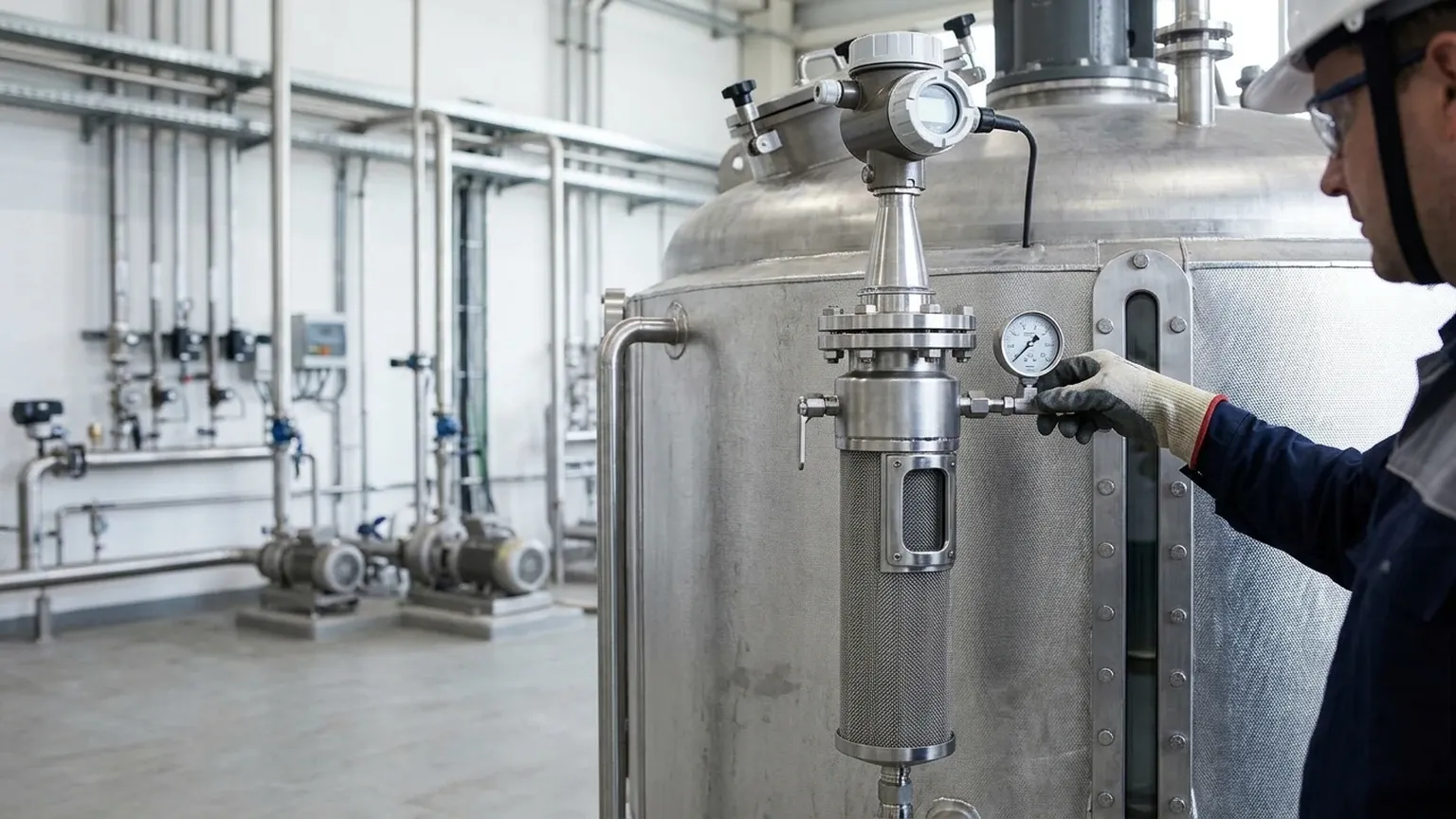
Single-layer circle filters are often sufficient for simple straining. However, in high-pressure hydraulic systems, multi-layer discs are used. These may consist of a fine filtration layer sandwiched between coarser support layers. Sintered mesh takes this a step further by heat-bonding the layers together, creating a monolithic structure that cannot migrate or deform under pressure. This is a common feature in high-end Wire Mesh Filter Cylinders & Tubes.
Operational Performance: Flow Rates and Pressure Management
One of the most common mistakes in filter selection is underestimating the pressure drop ($ΔP$) across the clean filter. As the filter accumulates debris, the pressure drop increases. If the initial $ΔP$ is too high, the operational window before cleaning is required becomes too narrow.
Calculating the Filtration Area
For a circle filter, the effective filtration area is $πr²$. If the flow rate required by the process exceeds the capacity of a single disc, engineers must either increase the diameter or move to a pleated design. Pleating a wire mesh allows for a significantly larger surface area within the same footprint, which is often seen in cylindrical filter configurations.
Micron Rating: Nominal vs. Absolute
When discussing requirements with a wire mesh circle filter manufacturer delhi, it is vital to clarify whether you need a nominal or absolute micron rating.
* Nominal Rating: Indicates the ability of the filter to retain a majority of particles of a certain size (e.g., 90% of 20-micron particles).
* Absolute Rating: Refers to the diameter of the largest hard spherical particle that will pass through the filter under specified test conditions. For critical pharmaceutical or aerospace applications, absolute ratings are mandatory.
Maintenance and Longevity in Demanding Environments
The primary advantage of stainless steel wire mesh circle filters over disposable media is their reusability. However, the cleaning process must be handled with care to avoid damaging the delicate mesh structure.
Cleaning Protocols
* Ultrasonic Cleaning: The most effective method for removing fine particulates lodged deep within the weave. High-frequency sound waves create cavitation bubbles that scrub the wire surfaces.
* Backwashing: In automated systems, reversing the flow of the fluid can dislodge the filter cake. This requires the filter to be structurally reinforced to prevent the mesh from bulging in the reverse direction.
* Chemical Cleaning: Using solvents or acids to dissolve organic or mineral deposits. The filter material (e.g., SS316L) must be chemically compatible with the cleaning agent.
Indicators for Replacement
Despite their durability, wire mesh filters eventually reach the end of their service life. Signs of failure include:
* Permanent Pressure Drop: When cleaning no longer returns the $ΔP$ to baseline levels.
* Mesh Blinding: Irreversible clogging of the pores by sticky or deformable contaminants.
* Mechanical Fatigue: Cracking or fraying of the wires due to repeated pressure cycling or vibration.
Total Cost of Ownership (TCO) Considerations
While the initial purchase price from a wire mesh circle filter manufacturer delhi may be higher than that of a plastic or paper filter, the Total Cost of Ownership is significantly lower for stainless steel solutions. The ability to clean and reuse the filter reduces waste disposal costs and minimizes downtime associated with frequent filter changes.
Furthermore, the precision of a high-quality wire mesh circle protects downstream equipment, such as pumps, valves, and spray nozzles, from damage. The cost of replacing a damaged high-pressure pump far outweighs the investment in a premium filtration component.
Conclusion
Selecting the right wire mesh circle filter requires a deep understanding of the intersection between material science and fluid dynamics. Whether you are sourcing components for a new project or seeking replacements for existing Wire Mesh Filter Cylinders & Tubes, prioritizing technical specifications over the lowest bid is essential for industrial safety and efficiency.
For those engaging with a wire mesh circle filter manufacturer delhi, the focus should remain on verifying material certifications, ensuring precision in edge finishing, and selecting the appropriate weave for the specific micron requirements of the application. By doing so, engineers can ensure that their filtration systems provide reliable, long-term service in even the most demanding industrial environments.
Download Wire Mesh Circle Filter Manufacturer Delhi as a PDF
