


Understanding Industrial Filtration: A Guide to Wire Mesh Filter Cylinders & Tubes and HSN Classification
In the landscape of industrial engineering, the efficiency of a fluid or gas system often depends on the precision of its filtration components. Among the most versatile and durable solutions are Wire Mesh Filter Cylinders & Tubes, which provide critical mechanical separation in sectors ranging from petrochemical processing to pharmaceutical manufacturing. For procurement teams and engineers operating on a global scale, technical specifications are only one part of the equation; understanding the regulatory and logistical framework, such as the wire mesh filter hsn code, is equally vital for seamless international trade and cost management.
This article examines the engineering principles, material considerations, and classification standards that define high-performance stainless steel filtration components.
The Role of the Wire Mesh Filter HSN Code in International Trade
The Harmonized System of Nomenclature (HSN) is an internationally standardized system of names and numbers to classify traded products. For industrial filters, selecting the correct code is not merely a clerical task but a critical step in determining customs duties, tax rates (such as GST), and regulatory compliance.
When searching for the wire mesh filter hsn code, engineers and logistics managers typically encounter two primary classifications depending on the product's state of manufacture:
1. HSN 7314: This category generally covers "Cloth, grill, netting and fencing, of iron or steel wire." If the filter is imported as bulk wire mesh or simple processed cloth not yet integrated into a specific machinery part, it may fall under this heading. Specifically, 7314.14 covers stainless steel wire cloth.
2. HSN 8421: This is the most common classification for finished industrial filtration components. It covers "Centrifuges, including centrifugal dryers; filtering or purifying machinery and apparatus, for liquids or gases." Subheading 8421.29 is frequently used for parts of machinery for filtering or purifying liquids, while 8421.39 covers gas filtration.
Correct classification ensures that the technical description of the filter cylinder matches the legal requirements of the importing country. Misclassification can lead to shipment delays, unexpected tariffs, or audits. When sourcing custom stainless steel filters, confirming the HSN code with the manufacturer helps align the commercial invoice with the technical nature of the product.
Engineering Principles of Wire Mesh Filter Cylinders
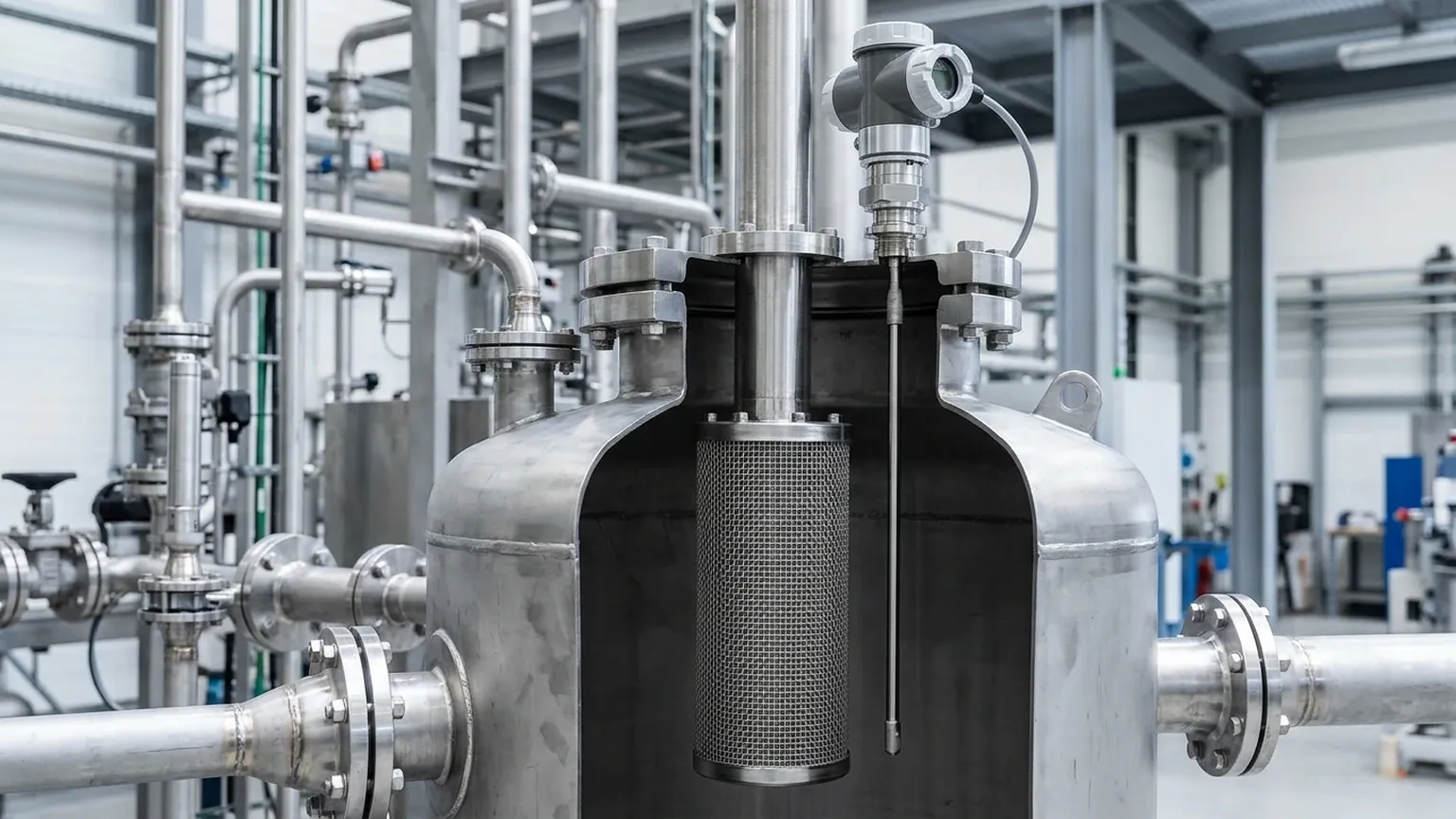
Wire mesh filter cylinders and tubes are engineered to provide a rigid, high-surface-area medium for removing solid contaminants from a process stream. Unlike disposable depth filters, these stainless steel components rely on surface filtration, where particles larger than the mesh opening are trapped on the upstream side of the medium.
Structural Integrity and Support
Industrial applications often involve high differential pressures. To prevent the mesh from collapsing or deforming, filter cylinders are frequently designed with a multi-layer structure. A typical high-pressure cylinder might include:
* The Control Layer: The fine wire mesh that determines the micron rating.
* The Support Layer: A coarser mesh that provides mechanical stability to the control layer.
* The Drainage Layer: Ensures even flow distribution across the filter surface.
* The Reinforcement Core: Often a perforated metal tube or a heavy-duty spiral-welded cage that provides the primary structural skeleton.
Weave Types and Their Impact
The performance of a filter tube is dictated by the weave of the wire mesh. The choice of weave affects flow resistance, cleaning ability, and particle retention:
* Plain Weave: The simplest over-under pattern, offering high open area and low pressure drop, ideal for high-flow applications with lower pressure requirements.
* Twill Weave: Allows for a heavier wire diameter in a given mesh count, increasing the strength and durability of the cylinder.
* Dutch Weave: Uses different wire diameters for the warp and shute. This creates a dense, tortuous path through the mesh, allowing for extremely fine micron ratings (down to 5-10 microns) while maintaining high mechanical strength.
Material Selection: Why Stainless Steel Dominates
In B2B industrial environments, the longevity of a filtration component is directly tied to its material composition. Stainless steel is the industry standard for wire mesh filter cylinders due to its resistance to corrosion, temperature extremes, and mechanical stress.
304 Stainless Steel
Grade 304 is the most common material for general industrial use. It provides excellent resistance to atmospheric corrosion and is suitable for most water treatment and food processing applications. However, it may be susceptible to chloride-induced pitting in marine or highly acidic environments.
316 and 316L Stainless Steel
For chemical processing, pharmaceutical production, and oil and gas applications, 316L is the preferred choice. The addition of molybdenum enhances resistance to pitting and crevice corrosion. The "L" (low carbon) variant is particularly important for filter cylinders that require extensive welding during fabrication, as it prevents carbide precipitation and maintains corrosion resistance in the heat-affected zones of the welds.
Specialty Alloys
In extreme environments involving high concentrations of sulfuric acid or high temperatures (above 500°C), manufacturers may utilize specialized alloys like Hastelloy, Inconel, or Monel. These materials ensure that the filter remains structurally sound where standard stainless steel would fail.
Performance Metrics: Flow Rate and Pressure Drop
When specifying Wire Mesh Filter Cylinders & Tubes, engineers must balance filtration efficiency with system performance. The two most critical metrics are the Clean Pressure Drop (ΔP) and the Dirt Holding Capacity.
1. Effective Filtration Area (EFA): The total surface area of the mesh that is open to flow. Increasing the EFA by using pleated designs or longer cylinders reduces the velocity of the fluid through the mesh, which in turn lowers the initial pressure drop and extends the time between cleaning cycles.
2. Micron Rating: This defines the size of the smallest particle the filter is designed to intercept. It is categorized as either "Nominal" (an approximate value) or "Absolute" (the size of the largest spherical glass bead that can pass through the mesh under laboratory conditions). For critical applications, an absolute rating is required to ensure process consistency.
3. Flow Velocity: High-velocity flows can cause erosion of the wire mesh or force deformable particles through the openings. Engineering a filter cylinder with sufficient diameter ensures that the face velocity remains within acceptable limits for the specific medium (liquid vs. gas).
Customization and OEM Capabilities
No two industrial processes are identical, which is why customization is a hallmark of high-quality filter manufacturing. Customizing a filter cylinder involves more than just choosing a diameter and length. Technical considerations include:
* End Cap Configurations: Cylinders can be fitted with threaded NPT/BSP fittings, flange mounts, 222/226 O-ring connectors, or simple flat caps. The seal type must be compatible with the process fluid and pressure.
* Welding Techniques: Precision TIG (Tungsten Inert Gas) or plasma welding is used to join the mesh seams and end caps. This ensures a bypass-free construction that can withstand thermal cycling.
* Surface Finishes: For the food and beverage or pharmaceutical industries, filters may undergo electropolishing to achieve a smooth, mirror-like finish that prevents bacterial growth and facilitates easier cleaning.
Maintenance and Total Cost of Ownership (TCO)
One of the primary advantages of stainless steel wire mesh filters over disposable cartridges is their cleanability. While the initial capital expenditure (CAPEX) for a stainless steel cylinder is higher, the total cost of ownership is significantly lower due to the elimination of replacement costs and reduced waste disposal.
Cleaning Methods
* Backwashing: Reversing the flow of the process fluid to dislodge accumulated solids. This is often automated in continuous process systems.
* Ultrasonic Cleaning: Utilizing high-frequency sound waves in a cleaning solvent to remove fine particles trapped deep within the mesh weave.
* Chemical Cleaning: Using acids or alkalis to dissolve organic or mineral scaling, provided the chemical is compatible with the stainless steel grade.
By implementing a regular cleaning schedule, industrial plants can maintain optimal flow rates and extend the service life of their filter tubes for several years.
Conclusion: Making Informed Procurement Decisions
Selecting the right filtration solution requires a synthesis of mechanical engineering, material science, and regulatory knowledge. From ensuring the correct wire mesh filter hsn code for international logistics to specifying the exact weave pattern for a high-viscosity fluid, every detail impacts the bottom line of an industrial operation.
For engineers and purchasing teams, partnering with a manufacturer that understands these nuances is essential. Reliable filtration components do more than just protect downstream equipment; they ensure product purity, reduce downtime, and contribute to a more sustainable manufacturing process. When evaluating your next filtration project, focus on the technical boundaries of your application—pressure, temperature, and chemical compatibility—to select a solution that offers both performance and longevity.
To explore specific configurations and technical data for your application, Review product options and application support to find the ideal match for your industrial requirements.
