


Engineering Guide to Stainless Steel Mesh Filter Aquarium Systems
In the design of high-end aquatic life support systems (LSS), public aquaria, and industrial aquaculture facilities, filtration efficiency is the primary determinant of biological stability and equipment longevity. While plastic and foam media are common in consumer-grade applications, industrial-scale projects require the structural integrity and precision of a stainless steel mesh filter aquarium solution. These components, often configured as Wire Mesh Filter Cylinders & Tubes, provide the mechanical filtration necessary to protect sensitive pumps, prevent the loss of aquatic specimens, and maintain water clarity under high-flow conditions.
Selecting the correct filtration hardware involves more than choosing a mesh size. It requires an understanding of fluid dynamics, material science, and the mechanical stresses inherent in continuous-duty pumping systems. This guide examines the technical considerations for implementing stainless steel wire mesh in aquatic environments from an engineering perspective.
1. Material Science: Selecting the Right Alloy for Aquatic Environments
The primary advantage of using a stainless steel mesh filter in an aquarium or aquaculture setting is its resistance to corrosion and biological degradation. However, not all stainless steels are suitable for every aquatic environment. Engineers must specify the alloy based on the salinity and chemical composition of the water.
AISI 304 Stainless Steel
Grade 304 is the standard for freshwater applications. It offers excellent mechanical strength and sufficient corrosion resistance for neutral pH environments. In large-scale freshwater displays or industrial koi ponds, 304 stainless steel provides a cost-effective solution for intake screens and pre-filtration cylinders. However, it is susceptible to pitting in the presence of high chloride concentrations.
AISI 316 and 316L Stainless Steel
For marine environments or brackish water, AISI 316/316L is the industry standard. The addition of molybdenum (2-3%) significantly enhances resistance to chloride-induced pitting and crevice corrosion. In saltwater aquarium systems, where the salinity typically ranges from 30 to 35 parts per thousand (ppt), 316L is essential for ensuring the long-term structural integrity of the Wire Mesh Filter Cylinders & Tubes. The "L" designation (low carbon) further improves weldability and reduces the risk of intergranular corrosion at the weld seams.
2. Mechanical Design of Wire Mesh Filter Cylinders & Tubes
The geometry of the filter element is critical for managing flow velocity and pressure drop. In aquarium applications, filter elements are typically manufactured as cylindrical tubes to maximize surface area within a compact footprint.
Structural Reinforcement
Fine wire mesh, while excellent for filtration, lacks the inherent stiffness to withstand the suction pressure of industrial pumps. To prevent collapse, these filters are often designed with a multi-layer structure:
* The Filtration Layer: A precision-woven wire mesh that dictates the micron rating.
* The Support Layer: A coarser mesh or perforated metal core that provides the necessary hoop strength to resist deformation under high differential pressure (ΔP).
* End Caps and Fittings: Custom-machined or deep-drawn stainless steel caps that ensure a bypass-free seal with the piping system.
Seam Integrity
In high-performance applications, the longitudinal seam of the cylinder is joined using TIG (Tungsten Inert Gas) welding or plasma welding. Unlike mechanical crimping, a welded seam ensures that there are no gaps larger than the mesh opening, which is vital when the filter is used to protect delicate larvae or prevent the escape of small organisms in research facilities.
3. Filtration Precision: Micron Ratings and Open Area
When specifying a stainless steel mesh filter aquarium component, engineers must balance filtration fineness with the required flow rate. This is defined by the mesh count and the percentage of open area.
Understanding Mesh Count vs. Micron Rating
Mesh count refers to the number of wires per linear inch. A higher mesh count results in a smaller aperture (micron rating). For aquarium intake protection, a mesh size of 500 microns to 1000 microns is often used to prevent debris from entering pumps without clogging too rapidly. For fine mechanical filtration or the removal of particulate matter in a sump system, ratings can go as low as 20 to 50 microns.
The Importance of Open Area
The "Open Area" percentage determines the initial pressure drop across the filter. A higher open area allows for higher flow rates with less resistance, which reduces the energy consumption of the circulation pumps. For example, a plain weave mesh with a high open area is preferable for gravity-fed systems, whereas a twilled Dutch weave might be used in pressurized canisters where high-pressure filtration is required but flow rates are lower.
4. Hydraulic Performance and Intake Velocity
In aquatic engineering, managing the intake velocity at the surface of the Wire Mesh Filter Cylinders & Tubes is critical for specimen safety. This is known as the "approach velocity."
Preventing Specimen Impingement
If the velocity of the water passing through the mesh is too high, small fish, invertebrates, or delicate corals can be sucked against the screen and pinned by the pressure (impingement). Industry standards for public aquariums often dictate a maximum approach velocity of 0.03 to 0.15 meters per second (m/s).
To achieve these low velocities while maintaining high total flow rates, engineers must increase the total surface area of the filter. This is why oversized cylindrical filters are often preferred over flat screens; the cylindrical geometry provides a much larger surface-to-volume ratio, effectively distributing the suction over a wider area and reducing the risk to aquatic life.
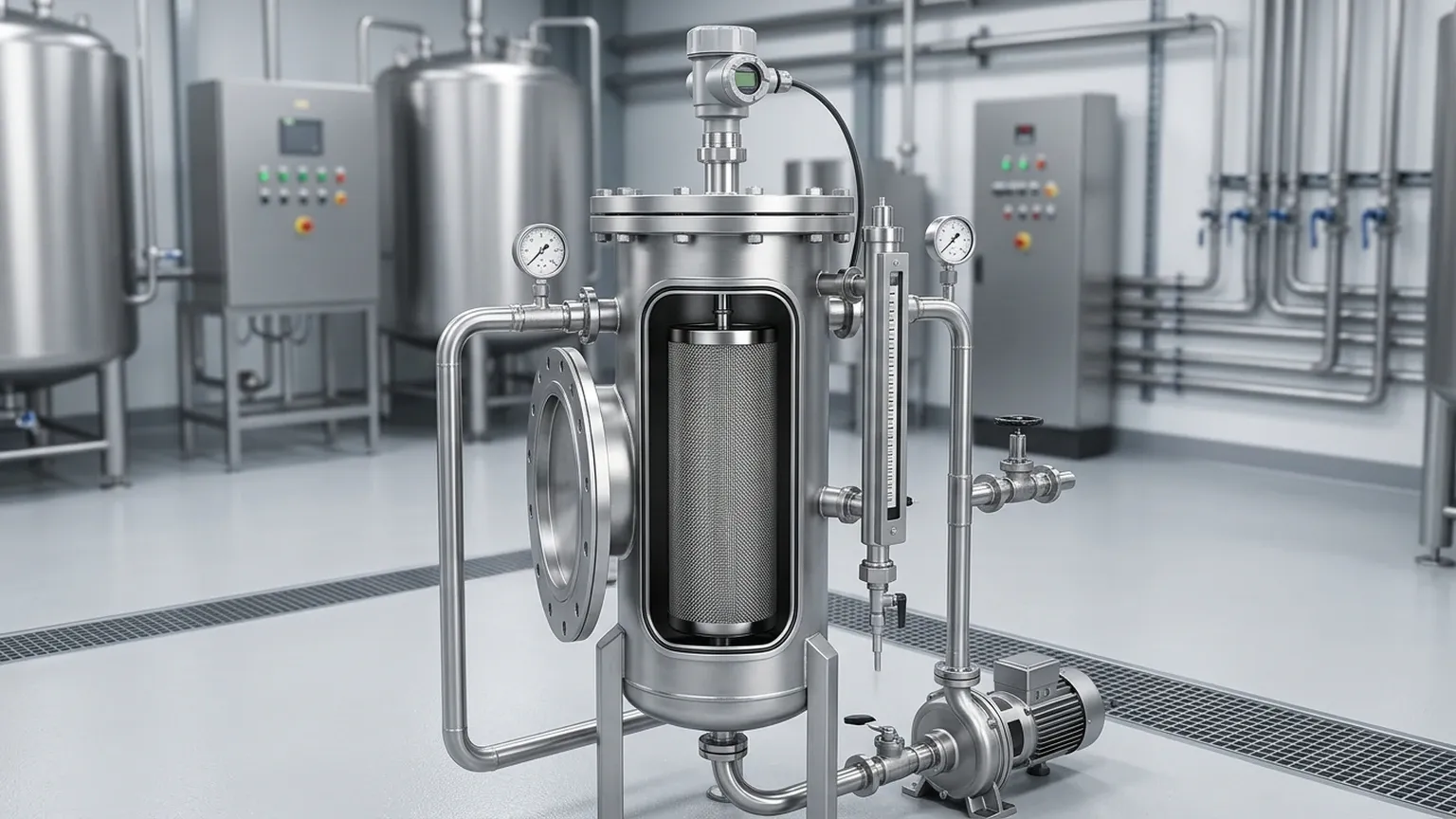
5. Maintenance, Biofouling, and Cleaning Cycles
One of the primary challenges in any aquatic filtration system is biofouling—the accumulation of algae, bacteria, and calcifying organisms on the filter surface. Unlike disposable synthetic media, stainless steel mesh is designed for repeated cleaning and long-term reuse.
Cleaning Methodologies
1. Backwashing: In automated systems, reversing the flow of water through the filter can dislodge accumulated solids. The rigid structure of stainless steel mesh allows for high-pressure backwashing that would destroy plastic mesh.
2. Ultrasonic Cleaning: For fine mesh filters that have become blinded by mineral deposits or organic films, ultrasonic cleaning in a mild citric acid solution can restore the mesh to its original flow characteristics.
3. Mechanical Scrubbing: The durability of 316L stainless steel allows for manual cleaning with stiff brushes without the risk of tearing the mesh or altering the aperture size.
Estimating Replacement Cycles
While stainless steel filters have a significantly higher upfront cost than plastic alternatives, their total cost of ownership (TCO) is lower in industrial applications. A well-maintained Wire Mesh Filter Cylinders & Tubes assembly can last for years, whereas plastic screens may become brittle due to UV exposure or ozone treatments and require frequent replacement.
6. Customization for Industrial and Research Applications
No two large-scale aquarium projects are identical. Customization is often required to meet specific spatial constraints or hydraulic requirements. When sourcing a stainless steel mesh filter aquarium solution, engineers should consider the following customizable parameters:
* Flange and Connection Types: Filters can be manufactured with NPT/BSP threads, tri-clamp fittings for sanitary applications, or custom flanges to match existing LSS piping.
* Variable Lengths and Diameters: Cylinders can be scaled to fit within narrow weir boxes or large intake chambers.
* Internal Baffles: For very long filter tubes, internal baffles can be added to ensure even flow distribution along the entire length of the mesh, preventing localized high-velocity zones that lead to premature clogging.
Conclusion: The Engineering Advantage
In the context of B2B industrial filtration, the transition from polymer-based filters to stainless steel mesh represents a move toward reliability, precision, and sustainability. For engineers and facility managers, the use of high-quality Wire Mesh Filter Cylinders & Tubes ensures that the filtration system can handle the rigorous demands of continuous operation while protecting the biological assets within the aquarium.
By carefully selecting the appropriate alloy, optimizing the mesh geometry for open area, and designing for low approach velocities, technical professionals can implement a filtration solution that minimizes maintenance and maximizes water quality. Whether for a public aquarium, a commercial aquaculture facility, or a high-end custom display, stainless steel filtration components provide the mechanical performance necessary for sophisticated aquatic engineering.
