


In industrial engineering and HVAC design, selecting the appropriate filtration media requires a precise understanding of performance metrics. One of the most common yet frequently misunderstood metrics in the context of permanent filtration is the metal mesh filter merv rating. While the Minimum Efficiency Reporting Value (MERV) is a standard primarily associated with disposable synthetic or fiberglass media, its application to stainless steel and aluminum mesh provides a benchmark for engineers to evaluate particle capture efficiency and airflow resistance.
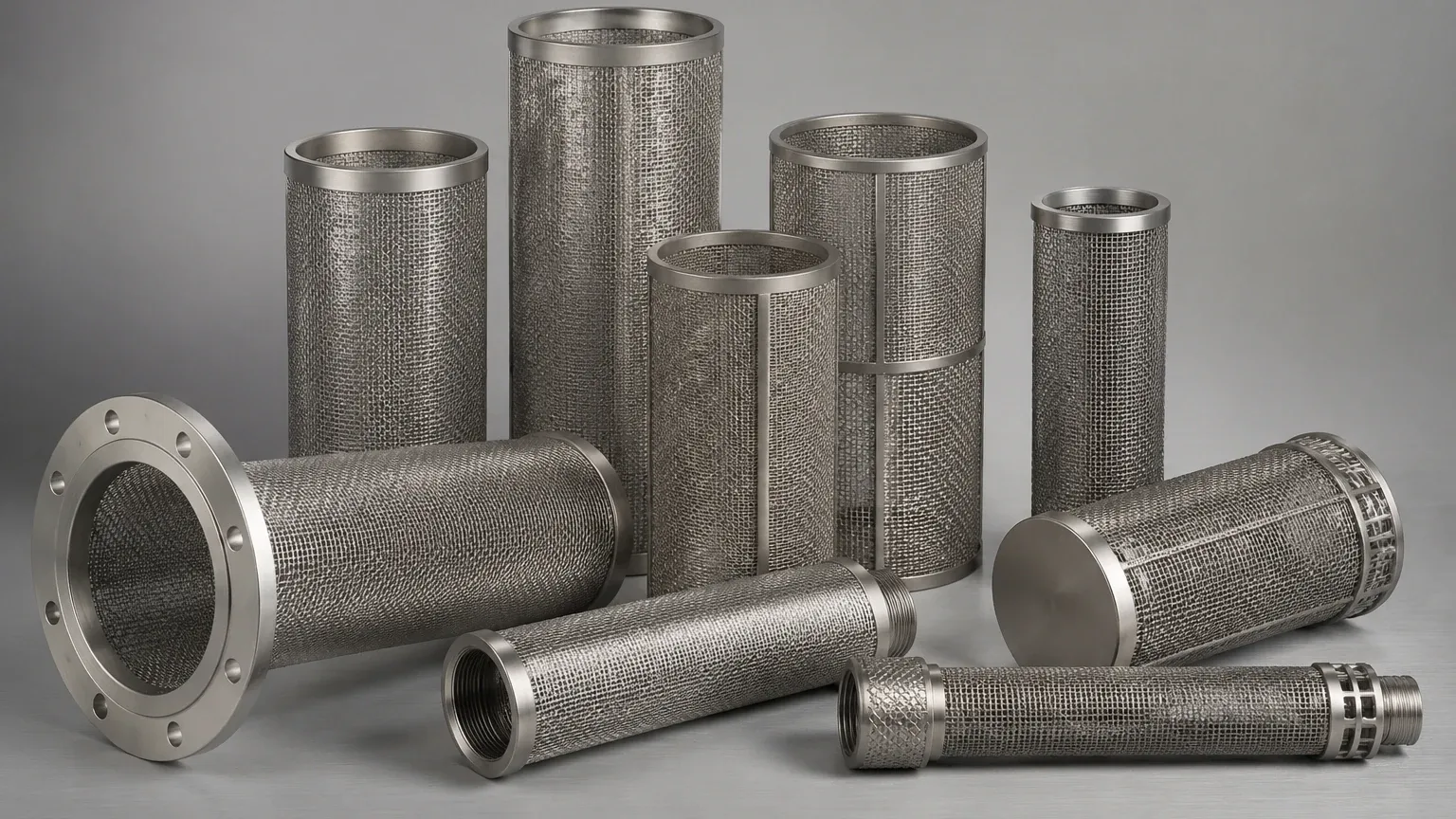
For industrial applications involving high temperatures, corrosive chemicals, or high-pressure fluids, standard disposable filters are often insufficient. This is where Wire Mesh Filter Cylinders & Tubes become critical components. Understanding how these metal components align with MERV standards helps procurement teams and engineers ensure system integrity while optimizing maintenance cycles.
The Role of MERV Ratings in Metal Mesh Filtration
The MERV rating system, defined by ASHRAE Standard 52.2, measures a filter's ability to capture particles between 0.3 and 10 microns. The scale ranges from 1 to 16, with higher numbers indicating a higher percentage of fine particles captured.
In the context of a metal mesh filter merv rating, most single-layer or multi-layer metal mesh filters fall within the MERV 1 to MERV 6 range. This classification identifies them primarily as "pre-filters" or high-velocity filters designed to capture large particulate matter such as lint, hair, grease, and large dust particles.
Why Metal Mesh Ratings Differ from Synthetic Media
Unlike pleated paper or synthetic fibers that rely on a dense matrix of microscopic strands to trap sub-micron particles, wire mesh filters utilize a precise geometric weave. While they may have a lower MERV rating for fine atmospheric dust, they offer advantages that synthetic media cannot match:
* Structural Rigidity: Metal mesh maintains its shape under high differential pressure.
* Permeability: They allow for significantly higher face velocities with minimal pressure drop.
* Surface Filtration: Particles are trapped on the surface, making the filter cleanable and reusable.
Structural Design of Wire Mesh Filter Cylinders & Tubes
When moving beyond flat panel filters to more complex geometries, such as Wire Mesh Filter Cylinders & Tubes, the engineering considerations shift toward structural integrity and surface area optimization. These components are typically manufactured using several layers of stainless steel wire cloth, often supported by a perforated metal core.
Weave Types and Filtration Accuracy
The filtration performance of a cylinder or tube is dictated by the weave of the wire mesh. Common types include:
1. Plain Weave: The most straightforward construction, where each warp wire crosses over and under each weft wire. This is ideal for high-flow applications with lower MERV requirements.
2. Dutch Weave: This utilizes a heavier warp wire and a finer weft wire, creating a dense, tortuous path for fluid or air. This configuration can achieve higher filtration accuracy, effectively pushing the performance closer to the upper limits of the MERV 5-8 range for specific industrial contaminants.
3. Twilled Weave: Used for finer meshes, allowing for a heavier wire diameter for a given mesh count, which increases the durability of the cylinder under pressure.
Reinforcement and Housing
Industrial filter tubes often require internal or external support to prevent collapse or bursting. Perforated metal tubes or expanded metal sleeves are integrated into the design, ensuring that the wire mesh remains taut and functional throughout its service life.
Performance Evaluation: Efficiency vs. Pressure Drop
For an engineer, the metal mesh filter merv rating is only one part of the performance equation. The relationship between filtration efficiency and pressure drop (resistance) is the most critical factor in system design.
Initial Resistance
Metal mesh filters are characterized by exceptionally low initial resistance. In an HVAC or process air system, this translates to lower energy consumption for fans and blowers. A MERV 4 metal mesh filter will typically have an initial pressure drop significantly lower than a MERV 8 disposable pleated filter, allowing for higher throughput in a smaller footprint.
Dust Holding Capacity (DHC)
Because metal mesh is a surface-loading medium, its DHC is lower than that of deep-loading synthetic media. However, in industrial environments where the contaminant load is heavy or consists of large particles (e.g., metal shavings, wood chips, or heavy grease), the metal mesh excels. It prevents the rapid "blinding" that would occur in a high-MERV disposable filter, which would otherwise require frequent and costly replacements.
Material Selection and Environmental Compatibility
The utility of Wire Mesh Filter Cylinders & Tubes is largely defined by the materials used in their construction. While aluminum is common for lightweight residential applications, industrial engineering demands the properties of stainless steel.
Stainless Steel 304 vs. 316
* Grade 304: The standard choice for most industrial filtration. It offers excellent strength and good corrosion resistance for general air and water filtration.
* Grade 316: Contains molybdenum, which provides superior resistance to chlorides and acids. This is the preferred material for marine environments, chemical processing, and pharmaceutical applications where the filter must withstand aggressive cleaning agents.
Temperature and Chemical Resistance
Synthetic filters are often limited to operating temperatures below 200°F (93°C) and can degrade when exposed to certain solvents. Stainless steel wire mesh filters can operate at temperatures exceeding 800°F (427°C) and are compatible with a vast range of industrial chemicals, making them indispensable for steam filtration and hot gas emission control.
Maintenance, Cleaning, and Life-Cycle Costs
One of the primary drivers for selecting a metal mesh filter over a higher-rated disposable alternative is the total cost of ownership (TCO). While the initial capital expenditure for a stainless steel filter cylinder is higher, the long-term savings are substantial.
Cleaning Protocols
Unlike disposable filters that contribute to industrial waste, metal mesh components can be cleaned and returned to service. Common methods include:
* Ultrasonic Cleaning: High-frequency sound waves create cavitation bubbles that remove fine particles from deep within the mesh weave.
* Backwashing: Reversing the flow of the fluid to dislodge accumulated debris from the surface.
* Chemical Bathing: Using specialized solvents to dissolve grease or scale without damaging the stainless steel structure.
Sustainability and Waste Reduction
In modern manufacturing, reducing the environmental footprint is a key KPI. By utilizing permanent Wire Mesh Filter Cylinders & Tubes, facilities can eliminate the recurring cost of purchasing, storing, and disposing of contaminated filter media.
Technical Considerations for International Procurement
When sourcing metal mesh filtration components for global projects, international buyers must confirm several technical parameters to ensure the product meets the required specifications.
1. Micron Rating vs. MERV: In many industrial contexts, the micron rating (absolute or nominal) is more relevant than the MERV rating. Buyers should request a conversion chart or specific particle retention data for the mesh count being ordered.
2. Mesh Count and Wire Diameter: Ensure the manufacturer specifies both the mesh count (number of openings per linear inch) and the wire diameter. These two factors determine the open area percentage, which directly impacts flow rate and pressure drop.
3. Weld Integrity: For cylinders and tubes, the longitudinal seam and the attachment to end caps must be high-quality (often TIG or plasma welded) to prevent bypass. A filter is only as effective as its weakest point; any gap in the seam bypasses the mesh entirely.
4. Certification and Standards: Confirm if the filters need to meet specific industry standards, such as FDA compliance for food and beverage applications or ISO 9001 for general manufacturing quality management.
Conclusion
While the metal mesh filter merv rating provides a useful starting point for evaluating efficiency, the true value of stainless steel wire mesh lies in its durability, cleanability, and performance in demanding environments. For engineers designing systems that require robust pre-filtration or the handling of aggressive media, Wire Mesh Filter Cylinders & Tubes offer a technically superior and cost-effective solution compared to disposable alternatives. By focusing on material grade, weave type, and structural reinforcement, procurement teams can secure filtration components that provide reliable service for years, rather than weeks.
