


Metal Mesh Filter Roll: Engineering Principles and Selection for Industrial Filtration
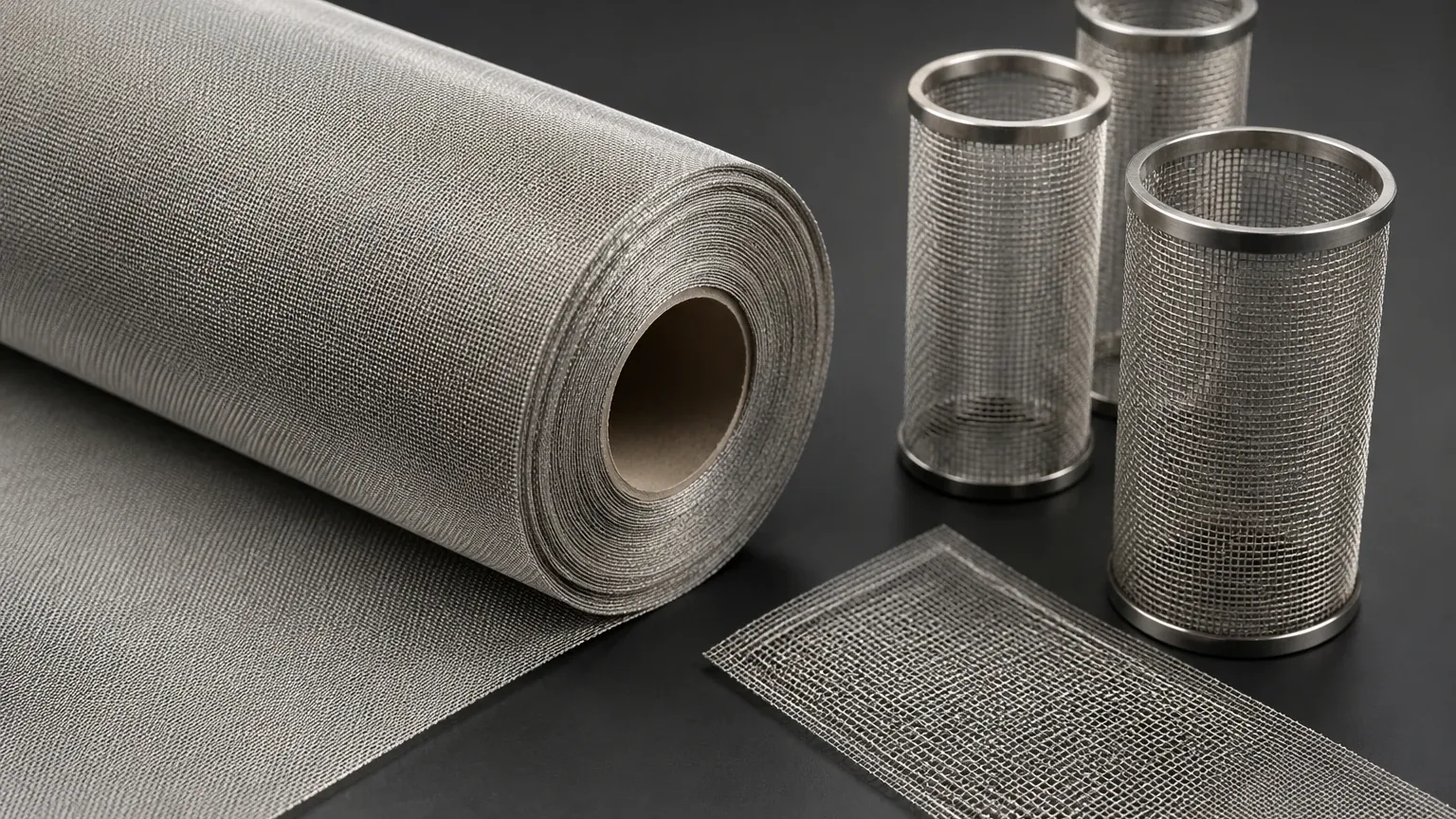
In the landscape of industrial process engineering, the selection of filtration media is a critical decision that impacts system efficiency, product purity, and long-term operational costs. The metal mesh filter roll serves as the foundational material for a vast array of specialized filtration components. While often viewed as a commodity, the engineering specifications of these rolls—ranging from alloy composition to weave geometry—determine the performance boundaries of the final fabricated products, such as Wire Mesh Filter Cylinders & Tubes.
For engineers and procurement professionals, understanding the technical nuances of metal mesh is essential for optimizing filtration systems in chemical processing, pharmaceutical manufacturing, and hydraulic applications. This guide examines the technical parameters of metal mesh filter rolls and the considerations required to transition from raw material to high-performance filtration components.
1. Material Science: Selecting the Right Alloy
The performance of a metal mesh filter roll begins with its metallurgical properties. Stainless steel is the industry standard due to its balance of mechanical strength and corrosion resistance. However, the specific grade must be matched to the chemical environment of the application.
Type 304 Stainless Steel
Type 304 is the most common grade used in industrial filtration. It provides excellent strength and good corrosion resistance for many aqueous and atmospheric environments. It is suitable for food and beverage applications where high-temperature sterilization is required but is susceptible to chloride-induced pitting.
Type 316 and 316L Stainless Steel
For more aggressive environments, Type 316 is preferred. The addition of molybdenum (2-3%) significantly improves resistance to pitting and crevice corrosion in chloride-rich environments. The "L" variant (316L) features lower carbon content, which is vital for components that require extensive welding, as it prevents carbide precipitation and maintains corrosion resistance at the heat-affected zones of the weld.
Specialized Alloys
In extreme conditions, such as highly acidic chemical processing or high-temperature gas filtration, alloys like Hastelloy, Inconel, or Monel may be used. These materials offer superior resistance to oxidation and chemical attack at temperatures exceeding the limits of standard stainless steel.
2. Weave Geometries and Filtration Characteristics
The weave pattern of a metal mesh filter roll dictates the pore size, flow rate, and mechanical stability of the medium. Engineers must select a weave that aligns with the particle size distribution of the contaminant and the required flow dynamics.
Plain Weave
This is the simplest and most common weave, where each warp wire crosses over and under each shute wire. It provides a high percentage of open area and a straight-through flow path, making it ideal for high-flow, low-pressure drop applications. However, it lacks the density required for fine micron filtration.
Twilled Weave
In a twill weave, each shute wire passes over and under two warp wires. This allows for the use of heavier wires in a given mesh count, providing greater mechanical strength and the ability to produce finer meshes that would be impossible in a plain weave due to wire bending limits.
Dutch Weave (Plain and Twilled)
Dutch weaves utilize different diameters for warp and shute wires. The shute wires are driven close together, creating a dense, wedge-shaped pore structure.
- Plain Dutch Weave: Offers high mechanical strength and is excellent for high-pressure filtration.
- Twilled Dutch Weave: Provides the finest filtration capabilities, often reaching down to 1–5 microns. The overlapping wires create a tortuous path that enhances depth filtration characteristics.
3. Transitioning to Fabricated Components
A metal mesh filter roll is rarely used in its raw form within an industrial housing. Instead, it is converted into precision-engineered Wire Mesh Filter Cylinders & Tubes. This conversion process involves several critical engineering steps that must maintain the integrity of the filtration rating.
Forming and Welding
The mesh is cut to precise dimensions and rolled into a cylindrical shape. The longitudinal seam is typically joined using TIG (Tungsten Inert Gas) welding or plasma welding. For fine meshes, specialized resistance welding or ultrasonic welding may be employed to ensure the seam does not create a bypass for contaminants or significantly reduce the effective filtration area.
Multi-Layer Sintering
To enhance the structural integrity of thin filter rolls, multiple layers of mesh are often sintered together. A typical construction might include a fine filtration layer protected by coarser drainage layers and supported by a heavy-duty reinforcement mesh. This creates a monolithic structure that can withstand high differential pressures without deforming.
Pleating for Surface Area
To increase the dirt-holding capacity and reduce the frequency of replacement cycles, the mesh roll can be pleated before being formed into a cylinder. Pleating significantly increases the effective filtration area within the same footprint, allowing for lower flux rates and longer service life.
4. Technical Specifications and Selection Criteria
When specifying a metal mesh filter roll for a project, engineers should evaluate the following parameters to ensure the component meets the application's demands:
* Micron Rating (Absolute vs. Nominal): Nominal ratings indicate the ability of the mesh to retain a majority of particles of a certain size, while absolute ratings define the size of the largest spherical particle that can pass through the mesh under laboratory conditions. For critical pharmaceutical or hydraulic applications, absolute ratings are mandatory.
* Open Area Percentage: This is the ratio of the area of the openings to the total area of the mesh. A higher open area reduces pressure drop but may compromise the mechanical strength of the roll.
* Wire Diameter and Mesh Count: These two factors work in tandem. A higher mesh count with thinner wires can achieve fine filtration but may be fragile. Conversely, thicker wires increase durability but reduce the number of openings per inch.
* Differential Pressure (ΔP) Tolerance: The filter must be able to withstand the maximum expected pressure drop across the media as it becomes loaded with contaminants. This is particularly important in hydraulic systems where pressure spikes are common.
5. Installation Constraints and Application Risks
Even the highest quality Wire Mesh Filter Cylinders & Tubes can fail if installation and housing design are not properly addressed.
Sealing and Bypass Prevention
The interface between the filter element and the housing is a common point of failure. Engineers must choose between O-ring seals, flat gaskets, or metal-to-metal seals based on the operating temperature and chemical compatibility. Any bypass at the seal renders the high-precision mesh roll ineffective.
Mechanical Stress and Fatigue
In applications with pulsating flows or high-velocity intake, the mesh can experience fatigue. If the mesh roll is not properly supported by an internal or external perforated core, the individual wires may work-harden and eventually fracture, leading to downstream contamination.
Chemical Incompatibility
While stainless steel is robust, certain chemicals, such as concentrated acids or high-temperature caustic solutions, can lead to uniform corrosion or stress corrosion cracking. A thorough review of the fluid chemistry is required during the selection of the metal mesh filter roll material.
6. Maintenance and Total Cost of Ownership
One of the primary advantages of utilizing a stainless steel metal mesh filter roll over disposable polymer media is the ability to clean and reuse the elements. This significantly reduces the total cost of ownership (TCO) and minimizes industrial waste.
Cleaning Methodologies
- Backwashing: Utilizing a reverse flow of clean fluid to dislodge particles from the surface of the mesh.
- Ultrasonic Cleaning: Using high-frequency sound waves in a cleaning solvent to remove fine particulates trapped deep within Dutch weave structures.
- Chemical Cleaning: Dissolving organic or inorganic scale using compatible acids or bases, followed by thorough neutralization and rinsing.
Replacement Cycles
Despite being cleanable, metal filters have a finite service life. Repeated cleaning cycles and mechanical stress will eventually lead to "pore blinding" or structural degradation. Engineers should monitor the clean pressure drop after each maintenance cycle; a steady increase in the baseline ΔP indicates that the element is reaching the end of its functional life and requires replacement.
7. Procurement Checklist for International Buyers
When sourcing metal mesh filter rolls or fabricated components from an OEM manufacturer like Kaifil, international buyers should confirm the following data points to ensure quality and compatibility:
1. Material Certification: Request Mill Test Reports (MTRs) to verify the alloy composition (e.g., confirming the molybdenum content in 316L).
2. Dimensional Tolerances: Specify the allowable variance in roll width, wire diameter, and mesh count.
3. Filtration Validation: For critical applications, ask for bubble point test data or glass bead challenge test results to verify the absolute micron rating.
4. Edge Treatment: Confirm how the edges of the roll will be finished (e.g., selvedge edge vs. cut edge) to prevent fraying during subsequent fabrication.
5. Compliance Standards: Ensure the material meets relevant industry standards such as ISO 9001 for manufacturing quality or FDA/EC 1935/2004 for food contact applications.
By focusing on these technical boundaries, engineering and purchasing teams can secure filtration solutions that provide reliable performance in the most demanding industrial environments. Whether the requirement is for a bulk metal mesh filter roll for in-house fabrication or finished Wire Mesh Filter Cylinders & Tubes, a data-driven approach to selection ensures the longevity and efficiency of the filtration process.
